Grand Legend
- 301.00
- 4.1
- Installs
- 10.00K
- Price
- Free

Screenshots
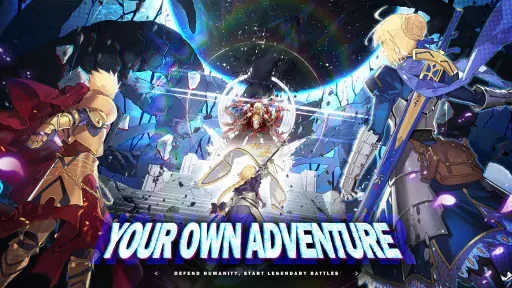

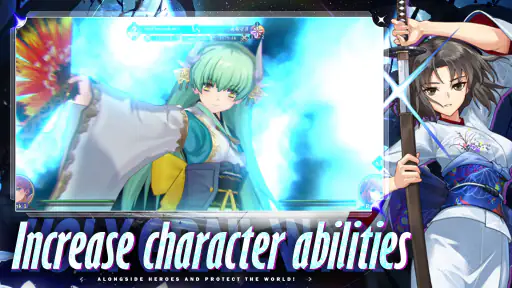

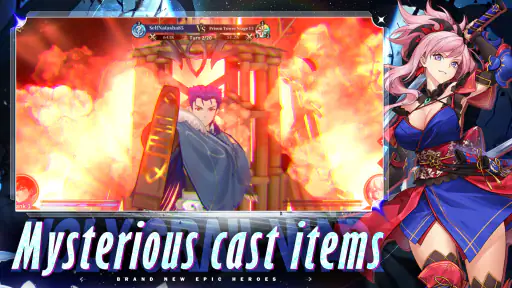

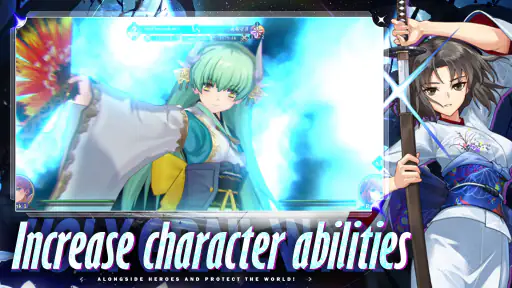
Analysis by Reviewed
I approached Grand Legend as a free role-playing game for Android, expecting a quick adventure rather than a huge, system-heavy production. That expectation matters because the game’s short store description gives very little away. After spending time with it, my main impression is that it is best judged as a compact fantasy experience: approachable for someone who wants to try an RPG without paying upfront, but less suitable for players who need extensive explanations, deep customization, or a perfectly smooth first session.
The game comes from Allmightech and is aimed at an Everyone audience. It first appeared on February 5, 2020, and the current release is version 1.0.8.3. Those details place it in an interesting middle ground: it is not a brand-new experiment, yet it also does not present itself as a massive, constantly expanding role-playing platform. I would recommend treating it as something to sample in short sessions, then deciding whether its pace and presentation match your taste.
Where the first session can become confusing
The biggest obstacle is not necessarily difficulty in the traditional RPG sense. It is the uncertainty that comes from starting a game whose public description is so brief. A player may install it expecting a particular type of adventure, only to discover that the opening rhythm, menus, or progression style does not match the mental picture they had formed. My practical advice is to give the opening enough time to establish itself before judging the whole experience, while still paying attention to whether the basic controls feel natural to you.
That first check is especially important on a phone. Role-playing games can feel very different depending on screen size, touch response, and whether the device is being held in one hand or two. If text, buttons, or menus feel cramped, changing your grip and closing other demanding apps can help you evaluate the game more fairly. I would not spend money immediately just because the opening seems promising; first confirm that the basic loop is comfortable and that you understand how progress is saved or carried forward.
Another common sticking point is assuming that every unexplained screen represents a bug. In a game with an adventure-focused presentation, a player can easily overlook a small prompt, a menu transition, or a required tap. When something appears unresponsive, I first tap the obvious active area once, wait briefly, and then return to the previous screen rather than repeatedly pressing everything. That simple habit avoids accidental selections and makes it easier to tell a genuine interruption from a missed instruction.
I also recommend beginning with notifications and unrelated apps out of the way. This is not a claim that Grand Legend needs unusual permissions or special hardware; it is simply a sensible way to remove distractions while learning an unfamiliar interface. If the game pauses when you switch away, assume that the current moment may not be safe for multitasking. Finish a short sequence before answering a message or opening another app.
What to check before blaming the game
Before installing, check that your Android device runs at least Android 6.0. That is a basic compatibility requirement, but it is easy to overlook when an older phone still handles everyday apps well. Compatibility is not the same as comfort: a device may meet the operating-system requirement and still struggle if its storage is nearly full, its background processes are crowded, or its battery-saving mode is aggressive.
I would also leave some breathing room in storage instead of installing with only a tiny margin available. Even when a game’s initial download completes, a crowded device can create problems during updates or temporary file handling. If installation stops, the first useful steps are to check available storage, confirm a stable connection, restart the device, and try again through the official app store. These are ordinary checks, but they solve more real-world failures than repeatedly pressing the install button.
Because the game is free to download, the financial risk of trying it is low. However, free access does not mean every part of the experience is cost-free. The game includes optional in-app purchases ranging from $0.99 to $99.99 per item. I would set a purchase password or device-level approval before handing the phone to a child, even though the content rating is Everyone. That is a practical safeguard, not a criticism of the game itself.
My preferred setup is simple: install on a reliable connection, launch with the phone charged, and avoid switching accounts or restoring the device during the first session. If you are testing it on a family phone, make sure the person who will play can use the same device consistently. Changing devices in the middle of an early adventure can make it harder to understand whether a problem comes from the game, the phone, or the way progress is handled.
Recovering when progress or a session goes wrong
When a game stops responding, I use a calm recovery sequence instead of immediately uninstalling. First, I wait a moment in case the screen is processing a transition. Next, I leave the current screen if the interface allows it. If that fails, I close the game normally, reopen it, and check whether the last completed action remains available. Only after those steps would I restart the phone or consider reinstalling.
Reinstallation should be the last resort because removing an app can affect local progress, depending on how that particular game handles saved information. I would not erase Grand Legend simply because one session behaved badly. Record what happened first: the screen you were on, whether the device was hot, whether the connection changed, and whether the issue appeared after returning from another app. That small note can prevent you from repeating the same conditions and gives you a clearer basis for deciding what to do next.
If an update is available, install it through the normal store process rather than relying on an old copy. The current version is 1.0.8.3, so users who have not opened the game for a while should make sure they are not judging an outdated installation. After updating, launch the game once while connected to a dependable network and allow it to settle before beginning a long session. I find this especially useful with older games that may need to refresh their local files after an update.
There is also a useful distinction between losing a battle and losing progress. If the game returns you to an earlier point after a defeat, that may be part of its design rather than a save failure. If the application closes, freezes, or repeatedly returns to the same screen, that is a different kind of problem. Keeping those situations separate helps you decide whether to adjust your play style or troubleshoot the installation.
Small habits that make the experience easier
My first non-obvious tip is to treat the opening as a calibration period. Do not rush through every prompt while simultaneously experimenting with menus. Learn one interaction at a time, then repeat it deliberately. This is particularly helpful if you are used to role-playing games with familiar conventions, because Grand Legend may present its adventure in a way that does not immediately match the controls you expect.
Second, keep your early choices conservative until you understand their consequences. In any choice-driven adventure, spending resources or committing to a path before learning the economy can create unnecessary friction. I would explore the available screens, note what can be changed, and only then make purchases or use valuable items. This approach is more useful than trying to optimize from the first minute without knowing how the game communicates its rules.
Third, use short sessions to test stability. A brief play period after installation tells you whether the game launches, responds correctly, and remains comfortable on your device. A longer session then tells you whether the pace suits you. These are different tests. A game can run perfectly but still feel too slow, too repetitive, or too menu-focused for your preferences.
For an everyday scenario, imagine having a few minutes during a commute or while waiting for an appointment. Grand Legend can make sense if you want to sample a fantasy RPG without committing to a purchase first. I would begin only after reaching a safe stopping point, because interruptions are common in those situations. If you need a game that can be abandoned instantly without concern for the current sequence, a simpler arcade title may be a better fit.
When the phone, connection, or expectations are the real issue
Not every failed launch or awkward session is caused by the game itself. An unstable connection can interrupt installation or an initial setup step. A nearly full storage drive can prevent a clean update. Battery restrictions can suspend an app in the background. Overheating can make any touchscreen game feel sluggish. I would test the same action after charging the phone, closing demanding apps, and moving to a stable network before reaching a firm conclusion.
Device age also affects comfort in ways that the minimum operating-system requirement cannot describe. Android 6.0 compatibility tells you whether the software can be installed on a supported system, not whether every older handset will offer the same responsiveness. If menus feel delayed across several apps, the phone is probably the first place to investigate. If only Grand Legend behaves strangely while other games run normally, then the game deserves closer scrutiny.
Expectations can create an equally misleading problem. The phrase “Grand Legend” may suggest a large-scale epic, but the available description does not promise a particular size, combat model, multiplayer mode, or visual style. I would therefore avoid comparing it with the biggest role-playing games on mobile. The fair comparison is with other free RPGs that ask players to learn an unfamiliar world and decide whether the adventure is worth continuing.
Against a traditional premium RPG, the free entry point is Grand Legend’s clearest practical advantage. You can try it without paying upfront and stop if it does not suit you. Against a highly polished, long-running mobile RPG, it may feel less reassuring for players who want abundant tutorials, extensive community guidance, or a very predictable progression path. Against a simple casual game, it asks more patience because role-playing usually involves learning context, making choices, and following a developing adventure.
The purchase range is another reason to decide your boundaries early. I would play without buying anything until I understood what the game actually offers and whether optional spending improves a problem I genuinely have. A free game can be enjoyable as a free game; there is no reason to turn a trial into an expensive commitment before you know that the core experience works for you.
Who should try it, and who should skip it
I think Grand Legend is most appealing to players who enjoy discovering a fantasy adventure at their own pace, especially those who want a free starting point and do not mind learning through experimentation. It is also a reasonable choice for a younger audience from an age-rating perspective, provided an adult manages device purchases appropriately.
I would be more cautious recommending it to someone who wants a fully explained game from the first tap. If unclear instructions frustrate you, or if you expect a large, feature-packed RPG with a clearly documented world, another option may be more satisfying. Players who dislike optional purchases should also decide in advance whether seeing purchase prompts or spending opportunities would bother them.
It is not the right pick for every situation. I would skip it when travelling with unreliable connectivity until I had already confirmed how well it behaves offline, and I would not use it as my first choice on a phone that is already struggling with storage or performance. Those are practical conditions, not judgments about the adventure itself.
My practical verdict after testing the fit
Grand Legend is a free role-playing game from Allmightech with a low barrier to entry, an Everyone rating, and enough mystery around its presentation to reward patient players. Its 4.1 average from over 600 ratings suggests a generally favorable reception, while the total of more than 300 written reviews shows that some players have taken the time to discuss their experience. I see those figures as encouragement to try it, not as a substitute for checking whether its style suits you.
The most sensible way to approach it is in stages: verify Android compatibility, install with stable storage and connectivity, learn the opening controls without rushing, and delay purchases until the basic adventure feels comfortable. If a problem appears, separate connection, device, and expectation issues before blaming the application. That workflow gives you a much clearer answer than judging it from one interrupted launch.
My final recommendation is conditional but positive. Try Grand Legend if you want a no-upfront-cost RPG adventure and are comfortable discovering its rhythm yourself. Give it a fair first session, keep spending under control, and use the recovery steps above if the setup feels rough. If you need a highly guided blockbuster or an instantly understandable casual game, choose something else. For everyone in between, this is a worthwhile game to test rather than dismiss from its sparse description.
Pros
- Classic RPG gameplay with familiar fantasy combat and progression
- Large world encourages exploration and discovery
- Character development offers satisfying long-term goals
- Story-driven quests provide structure beyond battles
- Suitable for players who enjoy traditional adventure games
Cons
- Some mechanics may feel dated compared with newer RPGs
- Progress can become repetitive after extended play sessions
- Limited information may make certain quests confusing
- Grinding may be needed to overcome tougher encounters
- Performance can vary depending on the device and operating system

- Category
- Role Playing
- Version
- 1.0.8.3