Go Speed: Street Rider
- 0.00
- 0.0
- Installs
- 50.00K
- Price
- Free

Screenshots
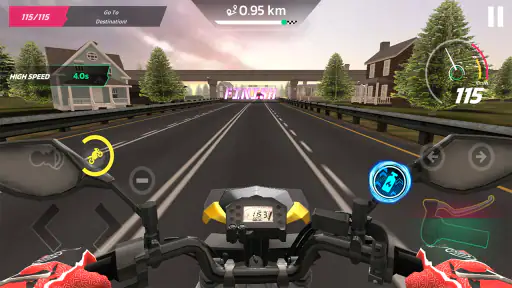
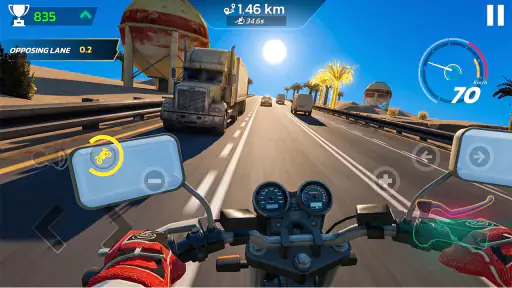
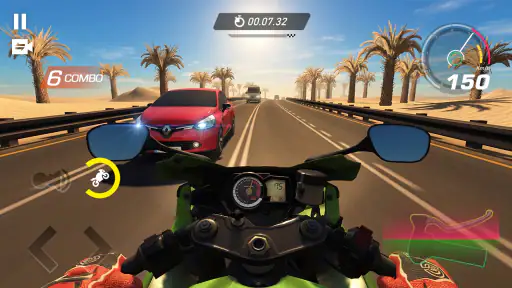
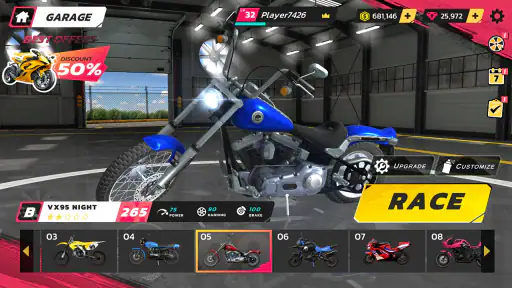
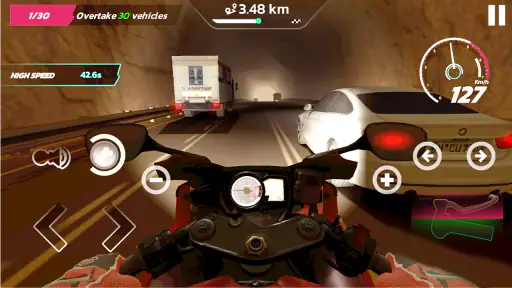
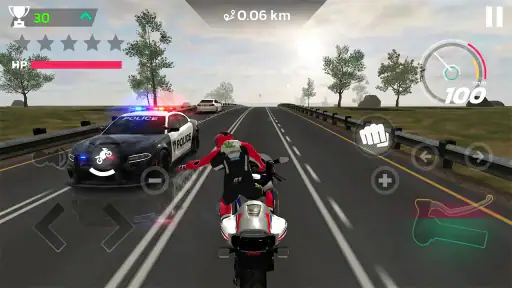
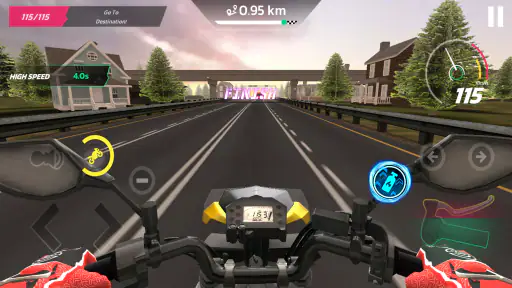
Analysis by Reviewed
Go Speed: Street Rider is a free racing game from SoftAIO that puts its entire identity behind one simple promise: getting you into fast street-racing action without a long explanation. I approached it as the kind of game you open when you have a few spare minutes and want movement, pressure, and a clear sense of speed rather than a slow tutorial or a complicated simulation. That focus is its biggest strength, but it also defines its limits.
The game is listed for players aged Everyone 10+, runs on Android 7.0 and later, and is currently at version 1.0.2. It has passed the early discovery stage with over fifty thousand installs, which gives it a modest but meaningful presence among mobile racing games. The download itself is free, while optional purchases range from under a dollar to just under twenty dollars per item. I would treat those purchases as a separate decision, not as a reason to judge the driving before trying the basic game.
Why the speed-focused design matters
The most important capability here is not a large collection of side activities or a deep simulation model. It is the way the game keeps your attention on forward motion. That sounds obvious for a racing title, yet many mobile racers interrupt the feeling of driving with menus, upgrades, lengthy explanations, or systems that ask you to manage more than you race. Go Speed: Street Rider is more appealing when you want the road itself to remain the center of the experience.
In my experience, that focus changes how I use the game. I do not approach it like a long evening commitment where I need to prepare a build, study a track, and plan a complete campaign. I approach it as a quick test of concentration. The useful question is not whether it replaces a full console racing game. It does not aim to be that kind of experience. The better question is whether it can turn a short break into a satisfying burst of street-racing tension.
The real benefit of the speed-first approach is reduced friction. When a game gets to its core activity quickly, it becomes easier to return to after a day away. I can remember the basic purpose immediately: drive, react, and try to do better. That makes the title approachable for someone who enjoys racing but does not want to learn a large collection of systems before having fun.
There is also a useful distinction between speed as a visual theme and speed as a practical demand on the player. A game can show fast vehicles while still feeling passive. Here, the appeal depends on whether the player stays alert and treats every run as a small exercise in timing. I found that the game works best when I stop expecting a relaxed sightseeing drive and instead give it my full attention for a short session.
How the core loop feels in practice
Go Speed: Street Rider benefits from being understood as a repeatable loop rather than as a one-time spectacle. I start a run, settle into the rhythm of the road, respond to what appears ahead, and then decide whether the result is good enough or deserves another attempt. That last choice is important. A compact racing game lives or dies by the quality of its retry cycle, because players will spend much of their time returning to the same basic action.
More From Our News Desk

Weather by Xiaomi Review: Clear at a Glance, Less Clear Up Close

X Under Pressure: Can It Recover When Posting Goes Wrong?

Clash of Clans Is Won Between the Battles

Android Auto Makes the Case for Quieter Car Software

MobiOffice: Transforming Mobile Productivity with Seamless Integration

EA SPORTS FC™ Mobile Soccer: Redefining Mobile Sports Gaming
For me, the most effective way to play is to treat each attempt as a short experiment. Instead of reacting emotionally to a poor run, I look for the moment where my attention slipped. Was I moving too aggressively? Did I focus on immediate speed and forget to read the road? Did I restart too quickly instead of learning from the mistake? This mindset makes the game feel more rewarding than simply chasing a vague feeling of velocity.
A practical tip is to begin with controlled inputs rather than making every movement dramatic. New players often assume that a street-racing game rewards constant aggression, but speed only helps when it remains manageable. I found better results by making small corrections and leaving myself room to respond. That approach is especially useful on a phone, where a finger can easily cover part of the screen or make an input feel less precise than intended.
Another non-obvious strength is how well the game suits a “two-attempt” routine. On the first run, I concentrate on understanding the pace and noticing where I lose control. On the second, I use that information instead of trying to improvise everything again. This turns a very short session into a measurable personal challenge. It is a simple habit, but it gives the game more structure without requiring a separate progression plan.
The trade-off is that players looking for extensive tuning, detailed vehicle behavior, or a highly technical racing model may find the experience too direct. The game’s value comes from immediate action, not from recreating every part of motorsport. If your favorite mobile racer is one where you spend as much time adjusting a setup as driving, this will probably feel lighter and less demanding in the wrong way.
The best everyday scenario
The strongest use case is a short break when I want something more engaging than scrolling but do not have the time or patience for a long game. Imagine waiting for an appointment or taking a quiet break between tasks. I can open the game, play a few focused runs, and put it away without feeling that I abandoned a complicated plan. That makes its speed-centered design more useful than a larger game with more content but a slower start.
It also works well as a reset after a frustrating day. Racing gives me a clear target: stay composed, read the road, and improve the next attempt. I do not need to remember a story or maintain a large inventory. The simplicity can be calming, even though the action itself is fast. The key is to play in short bursts rather than expecting every session to deliver a major milestone.
For younger players within the listed age guidance, the straightforward premise may be easier to understand than a racing game filled with realistic management systems. Adults can also enjoy that clarity, especially if they want a casual game that does not demand a large time investment. I would still recommend that parents consider the optional purchase structure before handing the game to a child. The base game is free, but individual items can cost from $0.99 to $19.99, so purchase controls are worth checking on the device.
One useful routine is to play with a specific goal before starting. I might decide to focus on smoother movement, surviving longer, or simply completing a run without panic. This is more effective than opening the game with no intention and judging it after a single mistake. Because the central action is compact, a small goal can make even an ordinary attempt feel purposeful.
Where the trade-offs become clear
The same directness that makes the game approachable can make it feel narrow for experienced racing fans. If I want a broad career, a rich garage, deep customization, or a realistic driving study, I would look toward a more specialized alternative. Those games are better when I want long-term planning and a stronger sense of ownership over a vehicle. Go Speed: Street Rider is better when I want the immediate sensation of racing without turning the session into a project.
There is also a difference between replayability and variety. A game can encourage repeated attempts because the action feels good, but that does not automatically mean it offers endless novelty. I would not choose this title solely because I expect every session to feel completely different. Its replay value depends more on my desire to improve reactions and maintain a clean run than on a promise of constant new systems.
The free entry is convenient, but the in-app purchase range means I would avoid making a decision based only on the word “free.” A sensible approach is to try the core experience first, decide whether the driving itself holds your attention, and only then consider whether an optional item adds enough value. Buying before understanding your own interest in the basic loop would be a poor trade-off.
Device compatibility is another practical advantage. Support for Android 7.0 and later means the game is not restricted to only the newest phones, although actual comfort can still depend on the device and the player’s preferred controls. On a smaller screen, precision may feel more demanding, so I would give myself a few runs before deciding that the handling is unsuitable. A rushed first attempt can say more about unfamiliarity than about the game.
The game’s current version, 1.0.2, also suggests that I should judge it as a relatively early release rather than as a mature racing platform with years of accumulated systems. That is not automatically negative. It simply changes what I expect. I look for a clean central idea and a usable basic loop first, while treating long-term depth as something that must be demonstrated over time.
Who gets the most from it
I would recommend Go Speed: Street Rider to casual players who want a free mobile racing game with a clear purpose and a quick route into action. It is a good fit for someone who enjoys repeating short challenges, learning from small mistakes, and chasing a better personal result. It is also suitable for players who prefer a game that can be understood without reading a long manual.
It may appeal particularly to people who usually abandon racing games because they become too complicated. The speed-focused design gives you a manageable entry point. You can concentrate on the road and your reactions instead of learning a large collection of menus. That does not make the game shallow by definition; it means its challenge is concentrated in execution rather than administration.
I would be more cautious recommending it to a dedicated racing enthusiast who wants simulation accuracy or a substantial long-term structure. That player may be happier with a title built around detailed physics, organized championships, or extensive vehicle customization. Choosing Go Speed: Street Rider in that situation could lead to disappointment, not because the game fails at its purpose, but because the purpose is smaller and more immediate.
It is also not the best choice for someone who dislikes repetition. The game’s strongest moments come from trying again with better control and sharper awareness. If repeating a similar type of run feels like work, the central design may not hold your attention for long. In that case, a racing game with a stronger story, broader event variety, or more exploration would be a better match.
My advice is to give the game a fair test through several focused attempts rather than one distracted run. Use the first attempt to learn the pace, the next to reduce unnecessary movement, and another to see whether improvement feels satisfying. That small test tells you more than the street-racing theme alone. If the process of refining your reactions is enjoyable, the game has found its audience in you.
My recommendation after playing
Go Speed: Street Rider succeeds when I ask it to be a fast, accessible racing game for short sessions. Its central capability—keeping the player focused on speed and immediate road awareness—has a real effect: I spend less time preparing and more time making decisions. That makes it easy to recommend to casual players who want a quick challenge rather than a full racing hobby.
I would not present it as a replacement for a deep racing simulator or a content-heavy alternative. Its appeal is narrower and more honest. The game gives me a simple reason to return, and the best sessions come from treating each run as practice instead of expecting a huge amount of variety. Optional purchases are present, so I would stay deliberate and test the free experience before spending anything.
SoftAIO has built a title with a clear starting point: open it, find the rhythm, and try to handle the speed better than before. For players who enjoy that loop, the free download and broad Android compatibility make it easy to try. For players who need extensive customization, detailed simulation, or a large career structure, another racing game will likely be the better choice. My final view is positive but specific: choose this game for quick, focused street-racing sessions, not for a complete motorsport simulation.
Go Speed: Street Rider Frequently Asked Questions
Who developed Go Speed: Street Rider, and what kind of game is it?
Go Speed: Street Rider is a racing game developed by SoftAIO. Its short description is “Go Speed,” while its tagline invites players to “Feel the Speed. Own the Streets.” That gives a clear sense of its focus: quick, energetic driving action. If you enjoy mobile racing games built around street-themed challenges, it may be worth exploring.
What age group is Go Speed: Street Rider suitable for?
Go Speed: Street Rider has an Everyone 10+ content rating, making it a game intended for players aged ten and older. Parents may still want to review the game themselves and consider whether its racing action suits their child. The game also includes optional in-app purchases, so it can be helpful to set up purchase controls on a device used by younger players.
What is Go Speed: Street Rider?
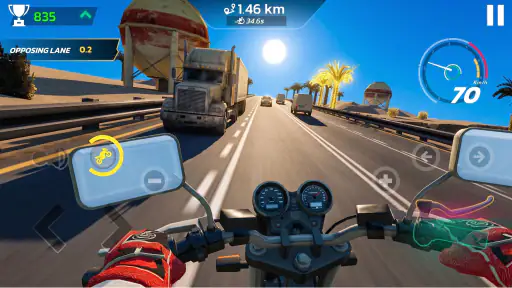
Go Speed: Street Rider is a mobile driving game focused on fast-paced street racing and motorcycle or vehicle-based challenges. Players navigate urban roads, avoid traffic, complete races, and work toward improving their performance. The game is designed for short, action-oriented sessions, making it suitable for players who enjoy arcade-style racing rather than a highly realistic driving simulator.
How does the gameplay work in Go Speed: Street Rider?
Gameplay generally revolves around controlling your rider or vehicle through busy streets while maintaining speed, avoiding obstacles, and completing objectives. Depending on the mode, you may need to finish a route, beat rival racers, collect rewards, or survive for as long as possible. Controls are usually simple enough for beginners, although faster sections require quick reactions and careful timing.
Can Go Speed: Street Rider be played offline?
The basic driving experience may be available without a constant internet connection, which is convenient when traveling or playing in areas with limited service. However, some features can depend on connectivity, including advertisements, online rankings, cloud-related functions, updates, or promotional rewards. It is best to launch the game once while connected and check which modes remain accessible when your device is offline.
Pros
- Responsive controls make quick lane changes easy to perform.
- Short races suit quick gaming sessions on mobile.
- Traffic patterns keep each run feeling unpredictable.
- Simple menus let new players start racing quickly.
- Progression encourages repeated runs to improve personal scores.
Cons
- Ads may interrupt play or appear frequently between races.
- Later challenges can feel repetitive without major gameplay changes.
- Precision driving is harder on smaller phone screens.
- The game may consume noticeable battery during longer sessions.
- Limited customization can reduce long-term appeal for some players.
- Category
- Racing
- Version
- 1.0.2