Go Hero Go — Roguelike RPG
- 63.00
- 4.4
- Installs
- 100.00K
- Price
- Free

Screenshots

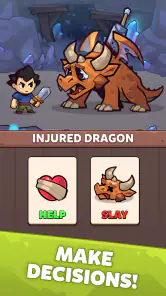

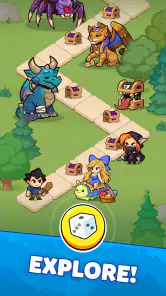
Analysis by Reviewed
I approached Go Hero Go — Roguelike RPG as a short-session adventure game rather than as a traditional role-playing campaign. That distinction matters. Its central appeal is the combination of board-game movement, roguelike uncertainty, and light RPG decision-making, so the experience is less about following a fixed story and more about making the best choice from the situation in front of me. If you enjoy games where a promising run can change because of one risky decision, this is an interesting free option to try.
The game comes from Puzzle Point Ltd and is listed for Everyone, which makes it approachable for younger players as well as adults who want something less intense than a combat-heavy role-playing game. It has passed the early discovery stage too, with more than one hundred thousand installs and an average rating of 4.4 from roughly five hundred ratings. Those figures do not make it automatically right for everyone, but they suggest that the basic idea has found an audience.
How I Decided Whether It Was Worth Playing
The board-game structure changes the usual adventure rhythm
My first question was whether the board-game format added meaningful choices or simply dressed up a conventional adventure. In this case, the format is important to the identity of the game. Moving through a changing path gives each run a different rhythm, and the attraction comes from weighing immediate rewards against the possibility of creating a harder situation later.
That makes the game a better fit for players who enjoy planning with incomplete information. I found myself thinking beyond the next move: should I take a safer route, accept a tempting reward, or preserve my options for a more difficult encounter? A straightforward action game usually answers those questions through reflexes. Here, the pressure comes from managing uncertainty.
The roguelike element also affects how I judge progress. A failed attempt is not necessarily wasted time, but it can feel disappointing if I was expecting a permanent, story-driven journey. The game asks me to treat each run as a fresh experiment. That mindset is essential, because someone looking for a predictable adventure with a clearly marked sequence of chapters may find the repeated structure less satisfying.
What I look for in a mobile roguelike RPG
For a phone game, I care about three things before anything else: whether a session can be stopped comfortably, whether decisions remain understandable on a small screen, and whether the game gives me a reason to try again after a setback. Go Hero Go works best when I want a compact decision-making experience rather than a long uninterrupted play session.
A practical example is a commute or a short break between tasks. I can begin a run with a clear goal, make a handful of choices, and put the phone away without needing the same level of concentration demanded by a large console RPG. That does not mean every moment feels casual; a risky choice can still matter. It means the overall structure is easier to fit around an ordinary day.
I also paid attention to how much of the enjoyment depends on understanding the game’s patterns. The first attempts are naturally exploratory. I had to learn which decisions felt worthwhile and which tempting options were likely to leave me exposed. This learning curve is part of the appeal, but it also means the opening experience may feel less rewarding to players who prefer immediate clarity.
The free entry point is useful, but it changes the decision
The game is free to download, so the barrier to testing the core experience is low. That is a real advantage over paid adventure games: I do not have to decide in advance whether the board-game roguelike concept will suit me. I can install it, play through several attempts, and judge the loop directly.
There are in-app purchases ranging from $0.99 to $99.99 per item. I would therefore approach the store elements carefully, especially if a child is using the device. The Everyone age rating describes the content audience, not how comfortable every player will feel with optional spending. My advice is simple: decide before playing whether you want to treat purchases as part of the experience, and do not make that decision while frustrated after a failed run.
This is one of the most useful ways to evaluate a free roguelike. First, play without spending and see whether the choices themselves are enjoyable. If the game is only appealing when progress is accelerated, it is probably not the right match for you. If the basic loop remains fun on its own, optional purchases become a personal convenience rather than a requirement for discovering whether the game works.
Where the game stands out
The strongest part of the experience is the meeting point between a board game and a role-playing adventure. Board games often make positioning, route choice, and risk assessment feel important, while RPGs usually provide character growth and a sense of becoming stronger. Go Hero Go brings those expectations into a compact mobile format instead of asking me to commit to a large world with a lengthy campaign.
I especially liked the way the format encourages deliberate play. When a run is built around choices rather than constant action, it is easier to pause and consider consequences. That gives the game a different mood from reflex-based adventure titles. It is more suitable when I want to think, experiment, and accept that a bad outcome can teach me something.
The game also has a useful middle position between a pure puzzle and a full RPG. It is not simply asking me to solve one isolated problem, because the adventure context gives choices a sense of direction. At the same time, it does not demand the extensive equipment management or long quest tracking that can make a larger role-playing game feel like another responsibility.
Three habits that make the runs more enjoyable
My first practical tip is to resist treating every attractive reward as automatically correct. In a roguelike, a reward has value only in relation to the route and risks that follow it. I got better results when I considered what the choice would help me do next, rather than selecting the most exciting option in isolation.
Second, I recommend using early attempts as information-gathering runs. Instead of becoming annoyed when a route fails, pay attention to the kind of decision that caused the problem. Was the risk worthwhile? Did the reward actually improve the next part of the run? This turns failure into a way of building personal knowledge, which is more useful than chasing a perfect result immediately.
Third, I would avoid beginning a serious run when I only have a few seconds available. The game is convenient for short sessions, but meaningful choices deserve enough attention to compare the options. A rushed decision can make the game seem more random or unfair than it feels when I am actually engaged with the route.
These habits are not obvious from the short store summary, but they make a noticeable difference. The game rewards a player who treats each attempt as a small plan rather than as a sequence of buttons to press. That is where its roguelike character becomes most convincing.
Where another type of game may fit better
I would not recommend this as a replacement for a story-first adventure. If your priority is a carefully scripted plot, memorable dialogue, and a fixed sequence of dramatic moments, a conventional narrative RPG will probably serve you better. The changing-run structure puts experimentation ahead of guaranteed storytelling.
It is also not the best choice for someone who wants immediate action. A fast combat game gives feedback through timing and movement, while this one asks for patience and judgment. Players who enjoy tapping through battles but dislike route planning may find the board-game layer slows down the experience.
There is a similar distinction between this game and a deep strategy title. Go Hero Go can offer meaningful decisions without becoming a complex simulation, which is useful on mobile. However, players who want extensive systems, long-term optimization, or a large number of interconnected mechanics may eventually prefer a more specialized strategy game.
The important trade-off is accessibility versus depth. The compact format makes it easier to start, but it also means the game should not be judged by the standards of a sprawling RPG. I enjoyed it most when I wanted a focused adventure loop, not when I was searching for a substitute for a major console or computer role-playing experience.
What switching from another mobile game feels like
If you are moving from a standard casual puzzle game, the biggest adjustment is that success is less immediate. A puzzle usually gives me a clear problem and a visible solution. Here, I may make a sensible decision and still end up in a difficult position because the run develops differently than expected. The reward is not perfect certainty; it is learning how to make better choices under pressure.
If you are moving from an action roguelike, the change goes in the opposite direction. You will spend less time relying on reflexes and more time reading the situation. That can feel calmer, but it may also feel less exciting if your enjoyment comes mainly from fast movement and direct control.
There is not much technical effort involved in trying it on a compatible device. The game supports Android starting with version 7.1, and its current version is 0.1.24. I would still allow myself a few sessions before deciding, because the first run mainly teaches the structure. The real question is whether the cycle of choosing, adapting, and trying again becomes enjoyable after the novelty fades.
The greater cost is attention, not installation. A player who already has several unfinished games may not need another title unless this particular mix of board-game choices and RPG progression fills a gap. On the other hand, if your current games are either too demanding or too repetitive, this provides a different kind of engagement without asking you to buy it first.
Who should try it, and who should skip it
I would suggest it to players who like roguelikes but want a slower, more thoughtful format. It is also worth trying if you enjoy board games, branching decisions, and adventure themes but do not want to learn a huge ruleset before having fun. The free entry point makes it especially suitable for curious players who are unsure whether a mobile roguelike RPG will hold their attention.
It may work well for families too, given the Everyone rating, but I would still supervise spending settings and explain that an unsuccessful run is part of the design rather than a reason to buy something immediately. Younger players may enjoy the adventure framing, while older players may appreciate the planning element more deeply.
I would skip it if you need a fixed campaign, dislike replaying similar structures, or want a game that can be mastered through quick reactions alone. I would also be cautious if optional purchases tend to make free-to-play games frustrating for you. In that situation, a paid game with a clearly defined purchase model may provide a more comfortable experience, even if it offers less flexibility to try before committing.
My recommendation after playing
Go Hero Go is a worthwhile recommendation for a specific kind of mobile player: someone who wants an adventure game built around uncertain routes and repeated attempts, with enough RPG flavor to make decisions feel personal. Its best quality is not a single spectacular feature. It is the way the board-game structure gives the familiar roguelike loop a more measured, thoughtful pace.
I would start by playing it free of charge, preferably across several short sessions rather than judging it after one attempt. Watch for whether you begin to recognize useful patterns, make more deliberate route choices, and feel curious about another run after failure. If those moments appear, the game is doing what it should.
My final view is positive but qualified. This is not a universal adventure recommendation, and it should not be mistaken for a full-scale story RPG or a rapid action game. For the right player, though, it offers a convenient way to turn a spare moment into a small strategic journey. Puzzle Point Ltd has chosen a focused concept, and that focus is exactly why I would recommend giving it a fair trial to anyone who enjoys mobile games where the next decision matters.
Pros
- Quick runs make it easy to play during short breaks.
- Randomized stages keep each attempt feeling different.
- Simple controls are accessible for newcomers to roguelike RPGs.
- Character upgrades provide satisfying long-term progression.
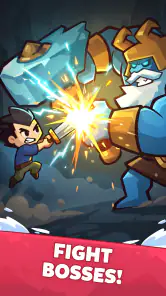
- Bright visuals and lively effects make combat easy to follow.
Cons
- Difficulty can spike suddenly
- especially during boss encounters.
- Some upgrades may feel dependent on luck rather than strategy.
- Repeated runs can become predictable after extended play.
- Progress may feel slow without frequent upgrades or rewards.
- Small-screen combat can become visually crowded during large battles.

- Category
- Adventure
- Version
- 0.1.24