Gangster Miami RP: Grand City
- 19.00
- 4.6
- Installs
- 1.00M
- Price
- Free
Screenshots
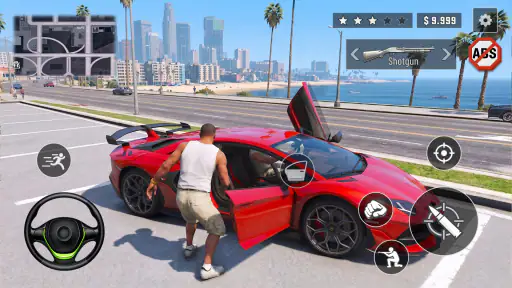
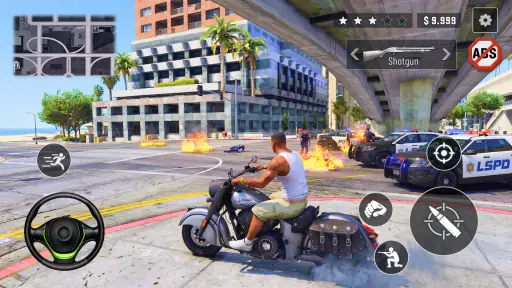
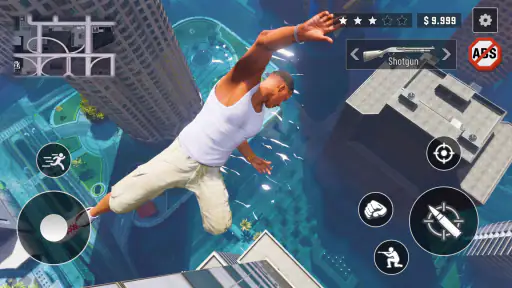
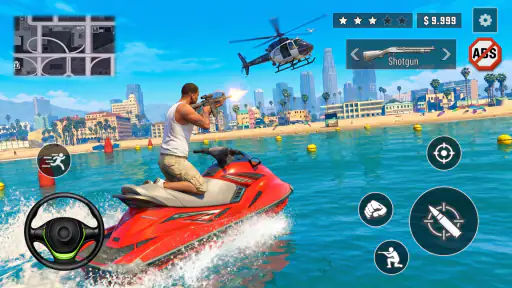
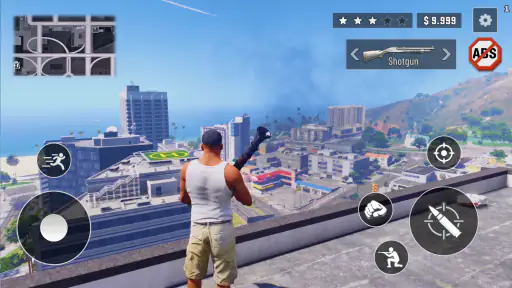
Analysis by Reviewed
I’m drawn to role-playing games that let me make a small plan, jump into trouble, and see how the city responds. Gangster Miami RP: Grand City is aimed at that mood: it puts open-world action at the center, rather than asking me to settle in for a long, menu-heavy role-playing campaign. Its appeal is the promise of moving through a city and choosing what to do next. The important question is whether that open-ended feel suits the way you like to play.
My first impression is that this is best approached as a game for short bursts of exploration and action, not as a detailed crime drama with a carefully written plot. The title signals a gangster setting, but the useful distinction is the play style: you are looking for freedom to roam and act, not necessarily a tightly guided sequence of story chapters. That makes it easier to pick up when I have a little time, while also making personal goals matter more.
From the first move to the next session
Starting with an action, not a long commitment
When I open an open-world game, I want to get moving before I have forgotten why I picked up my phone. This game’s central premise points toward that kind of immediate entry: take in the city, choose a direction, and turn a bit of free time into an action-focused outing. I would treat the first session as a chance to learn the feel of the world, rather than trying to judge the entire game by whether it delivers a full narrative straight away.
That approach is especially useful if you play in small windows—during a break, while waiting for someone, or after finishing a task at home. Give yourself one simple aim before you start, such as exploring a part of the city or testing how you prefer to approach an encounter. A self-chosen objective gives an open-world session shape without requiring the game to provide a mission checklist for every moment.
There is a trade-off here. Players who enjoy being pointed from one carefully staged objective to the next may find a free-roaming setup less focused. If you want a strong story hook, detailed dialogue, or a clear campaign path, a more narrative-led role-playing game is probably a better fit. I see this title as more appealing to someone who likes making their own immediate choices within an action setting.
How the action keeps its rhythm
The satisfying rhythm of an open-world action game comes from a short chain: I do something, the game reacts, I get a reason to continue, and then I decide whether to push on or stop. In Gangster Miami RP: Grand City, that loop is the main lens I would use to judge a session. The city provides a setting for action, while the player’s next choice supplies much of the momentum.
A practical tip is to avoid treating every session as a checklist. Pick one thing to try, pay attention to how the game responds, and then decide whether the next move follows naturally. This keeps wandering from becoming aimless. It also helps you notice whether you enjoy the moment-to-moment action itself, rather than assuming that a large city automatically means every minute will feel meaningful.
You May Like

Clash of Clans Is Won Between the Battles

Android Auto Makes the Case for Quieter Car Software

MobiOffice: Transforming Mobile Productivity with Seamless Integration

EA SPORTS FC™ Mobile Soccer: Redefining Mobile Sports Gaming

How Microsoft OneDrive Became a Mobile Productivity Giant

How Google Translate Breaks Language Barriers Effortlessly
Open-world games can also make transitions between exploration and action feel less tidy than a level-based game. If you prefer a clean start, a clear target, and a definite finish, the freedom here may feel like extra friction. I would go in expecting to create some of my own structure. That is not a flaw for everyone: for me, choosing when to roam and when to engage is part of the attraction, but it will not replace the satisfaction of a more guided mission design for every player.
What counts as a reward
In a game built around roaming and action, a reward does not have to be a dramatic plot twist. It can be the feeling that a risky choice paid off, that I handled an encounter better than before, or that the city offered a new reason to keep moving. The more you enjoy those local wins, the easier it is to find a satisfying stopping point even when you have not reached a major story milestone.
I recommend setting a modest personal target at the start of a play session. For example, decide to explore before committing to action, or focus on learning what kind of approach feels comfortable. This gives you a useful way to measure progress without inventing a long-term goal the game may not be built around. It also makes repeat visits feel less like aimless replay: you return with a fresh intention and compare your experience with the last one.
The limitation is that self-directed rewards work best for players who like supplying their own motivation. If you need a strong progression ladder, a constant stream of unlocks, or a deep character arc to make each action count, check whether this kind of open-world experience is what you are actually after. I would choose a more structured role-playing game if story and character development are the main reasons I play.
Ending a session without losing the thread
One reason I like city-based games on a phone is that I can stop when real life interrupts. To make that flexibility work, I try to leave myself a clear next step before I put the game down: remember what I was exploring, what I wanted to test, or which kind of action I planned to try. That small habit gives the next session a starting point and reduces the feeling of having to rediscover my own interest each time.
Think of the reset as a choice rather than a failure to finish. A short visit can be worthwhile if you had a specific aim and got the kind of action you wanted. If you find yourself wandering without enjoyment, that is a good cue to stop rather than extending the session in search of a payoff. An open world can make it tempting to keep going simply because there is more space, but more time is not automatically more fun.
This is also where the game’s fit becomes clearer. Someone who enjoys dipping into a city, making a quick decision, and returning later may appreciate the format. Someone who wants every session to end with a neat chapter conclusion may feel less satisfied. I would not expect a free-roaming role-playing game to deliver the same compact closure as a short, stage-based action game; the pleasure is more about choosing an activity than reaching a scripted finish.
Who should try it—and who may prefer another game
With a 4.6 average from around 4,500 ratings and more than a million installs, the game has attracted a substantial audience, though those figures alone cannot tell you whether its style matches yours. It is free to play, which makes trying it less of a commitment, and its Everyone age rating makes it broadly accessible by content classification. Universe Game Labs is the developer behind it.
I think it is most promising for players who want a mobile role-playing game with an open-world action focus, enjoy improvising their own short-term goals, and do not need a heavily guided plot to stay engaged. It is also a reasonable candidate if you are curious about a gangster-themed city setting but want to decide for yourself whether the action loop suits you before committing to a paid game.
It is less likely to satisfy players seeking a deep simulation, a clearly paced story campaign, or the tightly balanced encounters often found in stage-based action RPGs. Those alternatives usually offer more deliberate structure: you enter a level, work through a defined challenge, and see an obvious endpoint. Here, the freedom to choose what happens next is the draw, but it can also mean you need to bring your own focus.
For an everyday use case, I would open it when I have a few minutes and want to explore or act without starting a long campaign. I would not choose it when I am specifically in the mood for an intricate story or a carefully choreographed sequence of missions. That distinction is more useful than judging it against every other role-playing game as if they were trying to do the same job.
Practical fit and the final loop verdict
The current release is version 1.1.7, and the listed minimum operating-system requirement is 7.1. If your device meets that baseline, the next sensible question is not whether the game sounds ambitious, but whether you enjoy this specific rhythm: start with a small intention, act, see what follows, take the reward you find in that moment, and decide whether to reset for another visit. That is the loop I would keep in mind before downloading.
My verdict is that Gangster Miami RP: Grand City makes the most sense as a casual, self-directed action outing rather than a substitute for a story-first RPG. Its open-world premise gives you room to choose your own pace, and that can be appealing when you want a mobile game you can visit briefly. The same freedom can feel loose if you want explicit goals and a strong narrative payoff. I would give it a try if making your own next move sounds fun; I would look elsewhere if you want the game to make that decision for you.
A sensible way to test whether it clicks
For a first visit, I would keep expectations deliberately narrow. Rather than trying to decide immediately whether this can become a long-term favorite, spend the session noticing whether the city and action hold your attention between decisions. Ask yourself whether you naturally come up with another thing to try, or whether you are waiting for the game to supply a clearer purpose. That is a more useful test for this particular open-world style than simply counting how much ground you cover.
If you are choosing between this and a conventional mission-based mobile RPG, think about what you want from the next ten minutes. A stage-based game is usually the safer pick when you want a defined task and a neat endpoint; this is the more appealing choice when you want room to improvise in a gangster-themed city. I would also avoid starting it when I only have time for a very focused challenge and know that loose exploration tends to frustrate me.
One small habit can make the open-ended format easier to judge: after each visit, remember one thing you would like to try differently next time. It might be a new direction to explore or a different way of approaching an action moment, rather than a grand achievement. If that modest question makes you curious to return, the loop is doing its job for you. If you cannot think of a next step and would rather be handed one, that is a good sign to choose a more guided game instead.
Gangster Miami RP: Grand City Frequently Asked Questions
What is Gangster Miami RP: Grand City?
Gangster Miami RP: Grand City is a mobile game built around an open-world crime and role-playing theme. Players explore a city, take part in missions, and interact with activities associated with a gangster-style setting. The exact features and presentation can vary between versions, so check the game’s store listing and screenshots to confirm what is available on your device before downloading.
Is Gangster Miami RP: Grand City an online multiplayer game?
The “RP” in the title may suggest role-playing, but it does not by itself confirm that the game supports online multiplayer or interaction with other players. Check the current store description for details about internet requirements, multiplayer modes, and social features. If you want to play offline, look for an explicit offline-mode statement, since some functions may require a connection.
Is Gangster Miami RP: Grand City suitable for children?
The game’s gangster theme may include crime-related missions, action, or other content that parents may consider unsuitable for younger players. Its age rating and content descriptors can differ by platform and region, so review the rating shown on Google Play or the App Store before installing it. Parents should also check for chat, advertising, and in-app purchase features.
Does Gangster Miami RP: Grand City cost money to download or include in-app purchases?
Whether the game is free to download, contains advertisements, or offers in-app purchases depends on the current version and store listing. A free download does not necessarily mean every feature is free. Before installing, review the price, purchase information, and any available details about ads. If a child will play, consider using the device’s purchase controls to prevent accidental spending.
What should I check before installing Gangster Miami RP: Grand City?
Confirm that the game is available for your Android or iOS device, meets its listed operating-system requirements, and has enough storage space for installation and updates. Read recent user reviews and inspect the permissions requested during setup. Download it only from an official app store or another trusted source, and check whether an internet connection is needed for the features you plan to use.
Pros
- Open-world city gives players room to explore between missions.
- Role-playing focus lets you shape your character’s criminal story.
- Driving adds variety to the action and exploration.
- Grand City setting offers multiple locations to discover.
- Free-to-play access makes it easy to try without an upfront purchase.
Cons
- Online play may depend on a stable internet connection.
- Performance can vary across devices
- especially during busy scenes.
- Controls may take time to get used to on a touchscreen.
- Progression may involve repetitive missions or activities.
- In-app purchases may be offered for optional items or advantages.
- Category
- Role Playing
- Version
- 1.1.7