Frozen Feast
- 178.00
- 4.4
- Installs
- 10.00K
- Price
- Free

Screenshots

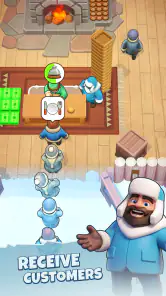
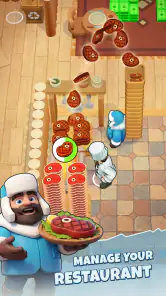
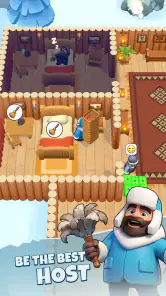



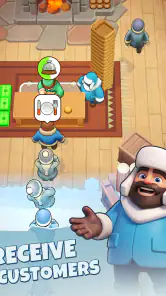
Analysis by Reviewed
Frozen Feast is the kind of role-playing game I would hand to someone who enjoys turning a small survival problem into a personal project. Its central idea is simple: gather what you can, make practical decisions, and gradually shape a shelter that feels like your own. I found the appeal less in rushing toward a finish line and more in the quiet rhythm of deciding what deserves attention next.
That makes it especially interesting on a shared phone or tablet. One person can collect materials, another can suggest where improvements should go, and a younger player can take part without needing to understand a complicated combat system first. The experience is still individual rather than a confirmed multiplayer activity, so household coordination happens through conversation and turn-taking, not through a built-in family mode. That distinction matters before you treat it as a group game.
How Frozen Feast feels in everyday use
A good fit for short shared sessions
In my experience, the strongest household scenario is a short evening session where one player controls the character and everyone else helps with priorities. Someone might say, “Look for the material needed to improve the shelter,” while another person remembers that a useful resource was left in a previous area. The game’s gathering-and-building loop gives those discussions a clear purpose without requiring everyone to hold the device.
This works well because the shelter acts as a visible record of progress. Even when the person playing changes, the group can usually understand the broad goal: collect materials, decide what matters, and make the refuge more useful. I like that this creates a natural handoff point. Instead of stopping in the middle of an unclear battle, you can finish a small gathering task or return to the shelter before passing the device along.
There is a trade-off, though. If you want a game where several people actively control characters at the same time, Frozen Feast is not the obvious choice. Its appeal is shared decision-making around one player’s progress, not confirmed simultaneous cooperation. For a family looking for a party game, a local multiplayer title would be better. For a household that enjoys watching, advising, and taking turns, this game has a more relaxed kind of value.
What to agree on before passing the device
Because the shelter represents long-term progress, I would establish a simple rule before letting several people use the same device: decide together whether the next session is for exploration, collecting, or construction. That small boundary prevents the common problem where one person spends all the available materials on a personal idea while another was saving them for a more useful improvement.
I also recommend agreeing on a stopping point. Returning to the shelter is a sensible moment to pause because it gives the next player a clear starting position. This is a practical habit rather than a special feature, but it makes shared use much less frustrating. A child can finish a manageable objective, an adult can inspect what changed, and nobody has to guess what happened during an unfinished expedition.
Another useful boundary is separating experimentation from the household’s main progress. If the same device is used by people with different play styles, one player may want to test an unusual building decision while another wants efficient development. Without separate progress spaces or a confirmed profile system, the safest approach is to discuss those expectations first. I would not assume that individual household members automatically receive separate accounts or isolated saves.
Coordination is part of the fun
The resource loop rewards a little planning. Rather than collecting everything without a purpose, I found it more satisfying to identify the next shelter improvement and work backward from it. That changes gathering from a repetitive chore into a small logistical puzzle: what is needed, where might it be found, and is it worth delaying another task?
This is one of the less obvious strengths of the game. The shelter is not merely a destination after exploration; it gives the materials a reason to exist. When several people are watching, this also creates useful conversation. One person can focus on remembering requirements, another can watch the route, and the player holding the device can make the final decision.
For a shared household routine, I would keep a very short spoken plan: the next improvement, the material still needed, and the point where the session ends. That is enough coordination to avoid confusion without turning a casual game into a project-management exercise. It also helps younger players understand why collecting one item may be more valuable than immediately spending everything.
The limitation is that this style depends heavily on patience. Players who dislike pauses, discussion, or delayed rewards may find the same coordination slow. Frozen Feast is more comfortable for people who enjoy steady progress than for those who want constant action and instant feedback.
Age context and trust
The game carries an Everyone content rating, which makes it easier to consider for a mixed-age household. I would still treat that rating as a starting point rather than a complete parenting decision. Children differ in reading ability, attention span, and comfort with survival-themed settings, so the first session is worth observing instead of handing over the device without context.
For younger players, the shelter objective is a helpful anchor. It gives them something concrete to work toward and makes the game easier to explain than a role-playing title built around dense menus or complicated character statistics. An adult can frame the experience as gathering and improving a safe place, then let the child choose between a couple of reasonable next steps.
Trust also matters because shared-device play can blur responsibility. I would make sure everyone understands whether they are allowed to spend materials, change the shelter’s direction, or continue without the previous player present. The game may be free to download, but that does not remove the need for household rules around device use or progress. Those boundaries should come from the adults and players sharing the device, not from assumptions about controls that have not been established.
If you are choosing it for a child who expects a fast competitive game, I would preview the opening and explain that the main satisfaction comes from gradual improvement. If the child enjoys collecting, arranging, and making choices, the fit is more promising. If they become bored when an objective takes several steps, a more immediate arcade-style game may be a better option.
Setup, access, and practical expectations
Frozen Feast is free, so the initial barrier is low for a household that wants to try it without committing to a purchase. It is listed for Android and requires at least Android 7.1, which means the operating-system requirement is not aimed only at recent devices. Even so, I would install it on the device that will actually be used rather than assuming every older phone will feel equally comfortable.
The game is from Feavy Games and is currently at version 1.0.3. That version detail is useful when several people in a household compare devices, because keeping the same installation current can avoid confusion about whether a difference comes from the game or from the device. I would also check that the chosen device has enough free space and that the screen is comfortable for whoever will be holding it, especially during longer gathering sessions.
One practical question many families have is whether they can give each person a completely separate experience. I would not promise that without a clearly available account or profile option. If the title presents one shared progression path, treat that as the household’s common world. If separate progress is important, a game with explicit profile or save management may suit you better.
The same caution applies to playing across multiple devices. I would not assume that progress automatically follows a player from one phone or tablet to another. For a single-device household, that uncertainty is less important. For a family expecting to move between devices, it is a deciding point to investigate before investing significant time in the shelter.
Where it differs from familiar role-playing games
Frozen Feast does not present itself to me as a traditional role-playing adventure centered on a large cast, elaborate combat, or a long chain of dramatic dialogue. Its identity is closer to a survival-flavored building journey, where gathering and shelter development provide the structure. That narrower focus is refreshing when I want a calmer session, but it may feel limited if my goal is character drama or tactical battles.
Compared with a typical crafting survival game, the shelter gives the experience a more personal destination. You are not simply collecting materials because the system tells you to keep collecting; you are working toward a place that represents progress. Compared with a conventional role-playing game, however, the satisfaction may be less about becoming powerful and more about becoming prepared.
This difference helps clarify who should skip it. I would choose another title for someone who wants a deep party-building system, highly competitive play, or a story that constantly pushes the player through major events. I would recommend Frozen Feast instead to someone who likes a visible home base, resource decisions, and the feeling of slowly making a harsh setting more manageable.
The game also seems better suited to players who can create their own small goals. If you need every session to deliver a dramatic new twist, the gathering loop may seem repetitive. If you enjoy asking what would make the shelter better and planning a route toward that answer, the same loop becomes the reason to return.
Three habits that make the loop more satisfying
My first useful habit is to choose the shelter goal before wandering too far. This avoids filling the session with random collecting and gives every trip a purpose. When the goal changes, I would pause and reassess rather than continuing automatically. That small reset keeps the resource decisions meaningful.
Second, I would avoid spending materials immediately just because an improvement is available. In a shared household, saving for a more important shelter decision can be better than making the first attractive change. This is particularly useful when several players have different ideas about what “progress” means. Discussing the next priority before spending creates cooperation without needing a formal team system.
Third, I would use the shelter as a meeting point for notes and handoffs. At the end of a session, say what was collected, what remains to be found, and what the next player should avoid changing. This is a simple workaround for shared use, and it turns a potentially messy save into a continuing household story. It also gives children a chance to practice planning without making the lesson feel like homework.
A fourth habit is to treat exploration as a choice rather than a default. If the current objective is nearly complete, a focused trip may be more rewarding than opening a completely new line of work. On the other hand, if the household is bored with the same material search, changing the goal can restore interest. The best rhythm comes from alternating efficiency with curiosity.
Who will enjoy it most
I think Frozen Feast is strongest for solo players who like calm role-playing progression and for households that enjoy taking turns around one shared device. It gives a younger player understandable tasks, while an older player can contribute planning and judgment. The Everyone rating supports that broad audience, although individual supervision and expectations still matter.
It is also a good choice for someone who wants a free game with a clear central loop rather than a large menu of unrelated activities. The combination of gathering and shelter improvement is easy to explain, but it leaves room for personal priorities. I appreciate that the game can be approached as a quiet solo project or as a conversation starter when other people are nearby.
I would be more cautious about recommending it to players who need confirmed online cooperation, separate family accounts, or a competitive structure. I would also hesitate for anyone who dislikes resource management. The game’s appeal depends on accepting that progress is built through repeated, purposeful steps rather than delivered all at once.
My household verdict
After spending time with Frozen Feast, I see it as a thoughtful free role-playing option for players who enjoy making a shelter feel earned. Its best quality is the way it turns ordinary gathering into a sequence of decisions: what matters now, what can wait, and how should the shared refuge develop? That focus gives the game a gentle identity of its own.
For a household, I would use one device, agree on spending rules, and end sessions at a natural shelter checkpoint. I would not assume separate accounts, automatic progress transfer, or simultaneous multiplayer unless the game clearly provides those functions in the version being used. Those are not deal-breakers for a shared, turn-based routine, but they are important boundaries for expectations.
The current release is version 1.0.3, with an average rating of 4.4 from around 2.3 thousand ratings and more than 10 thousand installs. Those figures suggest that the game has already attracted a modest audience, while its fairly focused design explains why it will not suit everyone. I would try it when I want a slower survival-building experience, especially with family members who like discussing choices.
My recommendation is simple: choose Frozen Feast when the pleasure is in building progress together, even if only one person is holding the device. Skip it when you need deep combat, instant action, or clearly separated household profiles. For the right player, the small shelter at the center of the game is enough to create a satisfying reason to keep gathering, planning, and returning.
Pros
- Charming frozen-food theme gives the game a distinctive visual identity.
- Short levels make it easy to play during quick breaks.
- Simple controls are approachable for younger and casual players.
- Progression offers a satisfying sense of improvement over time.
- Colorful presentation makes the game appealing to families.
Cons
- Some stages can feel repetitive after extended play sessions.
- Later challenges may rely more on patience than strategic depth.
- The small-screen interface can feel crowded on older phones.
- Progress may feel slow without spending additional time in the game.
- Players seeking competitive multiplayer may find the experience limited.

- Category
- Role Playing
- Version
- 1.0.3