Forest Cabin: Survive
- 548.00
- 4.4
- Installs
- 500.00K
- Price
- Free

Screenshots





Analysis by Reviewed
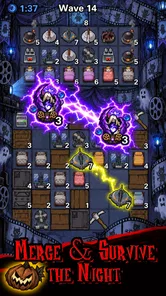
I like strategy games that give me a clear problem to solve without asking me to spend an entire evening on it. Forest Cabin: Survive has a focused premise: protect a cabin by combining towers and making use of changing Roguelike skills. That setup gives each run room for small tactical decisions, rather than making defense feel like a fixed routine. My main advice is to treat every tower placement and merge as a choice about the threats you expect next, not just a way to make the board look stronger.
Building a reliable defense, one run at a time
I find it useful to begin each run with one clear question: where is my defense most vulnerable right now? That keeps early choices grounded in the board instead of pushing me toward upgrades just because they are available. Once I can spot that weakness consistently, the next step is learning which settings and small adjustments make those decisions easier to carry out.
Start with a simple baseline
The safest way to approach a new run is to build a dependable core before chasing clever combinations. Merged towers are the central tool, so I would first learn how the available towers behave and what merging changes in practice. A stronger tower can be appealing, but combining pieces too early may leave a gap in your coverage. I prefer to ask whether a merge improves the defense I need now, rather than assuming that the biggest upgrade is always the best move.
That distinction matters in a game built around defending one vulnerable point. A defense that looks powerful on paper may still be poorly balanced if it cannot respond to the threats approaching the cabin. When I am unsure, I keep enough coverage to avoid making the whole plan depend on a single tower. Once the immediate pressure feels manageable, I look for an opportunity to consolidate and build a more efficient setup.
The Roguelike skills add a second layer to that routine. Since they can shape a run differently, I would not choose a skill only because its effect sounds impressive in isolation. Consider what your existing towers are doing and whether the skill helps shore up a weakness or strengthens the part of your defense already working. The useful question is not “Which choice is strongest?” but “Which choice makes this particular defense more coherent?”
This makes the game better suited to short sessions of active decision-making than to passive progress. You are responding to the current run, not simply repeating a memorized build. If you enjoy noticing a weak point, changing your approach, and seeing whether the adjustment holds, the central loop has a satisfying strategic pull.
Make settings part of your routine
I would check the available settings before settling into a regular play habit. The most practical reason is comfort: a strategy game is easier to judge when its presentation and controls suit the way you play. On a phone, small interface details can affect whether merging and placement feel deliberate or hurried. I would take a moment to make sure the display is comfortable and that I understand the controls before attempting a run where every choice feels urgent.
More From Our News Desk

Weather by Xiaomi Review: Clear at a Glance, Less Clear Up Close

X Under Pressure: Can It Recover When Posting Goes Wrong?

Clash of Clans Is Won Between the Battles

Android Auto Makes the Case for Quieter Car Software

MobiOffice: Transforming Mobile Productivity with Seamless Integration

EA SPORTS FC™ Mobile Soccer: Redefining Mobile Sports Gaming
I would also pay attention to any sound or visual options the game offers, adjusting them to fit the situation rather than assuming one setup works everywhere. A quiet commute, a break in a shared room, and a relaxed session at home call for different levels of feedback. I am not suggesting that a particular toggle changes the strategy; the useful habit is simply to make the game comfortable before you start, so the interface does not become an avoidable distraction.
It is worth checking the store details before installing, too. This is a free strategy game from Harvest Star Game, with optional in-app purchases priced from $0.99 to $99.99 per item. That range is broad enough that I would be cautious about treating every purchase prompt as part of the core experience. If you prefer to play without spending, decide that in advance and keep the game’s tactical choices separate from any temptation to buy something impulsively.
Use repeatable habits, not rigid builds
Experienced play in a game like this often comes from repeatable habits rather than a secret recipe. I would begin each run by checking what is already available, identifying the most obvious coverage gap, and delaying an irreversible merge until I have a reason for it. Then I would reassess after a meaningful change in the board or the skill choices. That small pause helps prevent a common mistake: upgrading out of excitement and only afterward noticing that the defense lost flexibility.
A useful personal routine is to give each decision one job. When considering a merge, ask whether it improves immediate protection, creates room for future choices, or supports a skill you intend to build around. If it does none of those things, waiting may be better. This is not a guaranteed winning formula; it is a way to make your choices easier to understand when a run goes wrong. You can then tell whether the issue was a weak combination, poor timing, or a gap you failed to notice.
The same approach helps with Roguelike skills. Rather than selecting whatever seems most powerful, I would make a quick note of what the current defense lacks and choose accordingly. If your towers already cover the threats you are seeing, a skill that reinforces that strength may be more useful than one that solves a problem you do not have. If the defense feels lopsided, prioritizing balance can be a better bet than doubling down.
One realistic use case is a short break when you have enough time to focus but not enough for a long, involved strategy campaign. I would start a run, make a few considered adjustments, and stop when I need to return to something else rather than trying to multitask through decisions. The game’s appeal is in responding to a changing defense puzzle; if you are distracted, it is easy to merge or choose a skill without understanding the trade-off.
Where the strategy has limits
The central loop will not suit everyone. Players who want a sprawling campaign, a large cast of characters, or a story-led adventure may find the cabin-defense focus too narrow. It is a strategy game, but its distinctive hook is the combination of tower merging and run-specific skills; someone who prefers long-term base management or a wide set of tactical units may be happier with a different kind of strategy title.
There is also a learning trade-off in merging. Combining towers can make a defense more efficient, but it can also reduce the number of pieces available for flexible coverage. If you tend to merge as soon as the option appears, you may discover that the board is less adaptable than you expected. I recommend treating every merge as a commitment, especially when your current layout is only just holding together.
Roguelike variation can be a strength when you enjoy adapting, but it can frustrate players who want the same plan to work in the same way every time. A run may invite a different skill choice or encourage a different balance of towers. That means mastery is less about finding one perfect sequence and more about learning which choices remain sensible under changing circumstances. If you strongly prefer a fixed build that you can repeat without much adjustment, this may not be your ideal strategy game.
Spending is another reason to set expectations. The game is free to start, but purchases are available, and the listed price range reaches $99.99 per item. I would approach those options with a clear budget and avoid assuming that a purchase is necessary to enjoy the strategy. If you are choosing a game specifically because you want a fully purchase-free experience, take care around optional offers and decide whether their presence is acceptable to you.
Who should give it a try?
I would recommend it to players who enjoy compact tactical decisions, tower combinations, and the uncertainty of adapting a plan during a run. It is a particularly good fit if you like thinking through trade-offs: whether to keep coverage broad, consolidate pieces, or choose a skill that changes the direction of your defense. The game’s Teen content rating is useful context for families, though it should not replace a parent’s own judgment about whether a particular game suits a young player.
It has also found a sizable audience: the game has over 500,000 installs and an average rating of 4.5 from around 11,000 ratings, alongside 548 written reviews. Those figures suggest that players have responded well overall, but they are not a substitute for matching the game to your own tastes. The most relevant question is whether you enjoy repeated tactical runs more than a campaign with a broad range of modes and long-term systems.
For compatibility, the listed minimum operating system is Android 8.0, and the current version is 2.10.002. I would check that your device meets the requirement before downloading. The game was released on December 15, 2025, so it is a relatively recent entry; if you prefer games with a long-established history of community strategies, that may affect how much outside guidance you expect to find.
A measured verdict on learning the game
What I find most appealing about Forest Cabin: Survive is the tension between improving a tower and preserving a flexible defense. The best habit is to pause before each merge, check what your layout actually needs, and then choose a skill that supports the plan you can realistically maintain. That turns a simple-looking defense loop into a sequence of understandable decisions rather than a scramble for the largest upgrade.
I would skip it if you want a story-first game, dislike run-to-run variation, or prefer strategy titles where long-term expansion is the main reward. I would also avoid approaching it as something to play carelessly while distracted: its most interesting choices depend on noticing how your defenses fit together. But if you want a free mobile strategy game that asks you to think in small, repeatable steps, this is worth trying. Go in with a modest plan, stay cautious with merges, and let each run teach you which parts of your defense are genuinely dependable.
Forest Cabin: Survive Frequently Asked Questions
What is Forest Cabin: Survive about?
Forest Cabin: Survive is a survival-themed game centered on making it through a dangerous wilderness while using a cabin as a place to rest and prepare. Players can expect to gather resources, manage basic needs, and respond to threats in the environment. The exact objectives and available features can vary by version, so check the store listing and in-game tutorial for details before downloading.
Is Forest Cabin: Survive free to download, and does it include in-app purchases?
The game may be available to download without an upfront charge, but pricing and optional purchases can differ between Android and iOS, regions, and versions. Check the current store page for the listed price and whether it offers in-app purchases or advertisements. If you are downloading for a child, review purchase settings and parental controls before play to avoid unexpected charges.
Can I play Forest Cabin: Survive offline?
Whether Forest Cabin: Survive works without an internet connection depends on the current version and how its features are delivered. Some survival gameplay may be available offline, while ads, updates, cloud saves, or other online features may require a connection. To avoid interruptions, check the app-store description and test the game after installation while connected before relying on it offline.
Is Forest Cabin: Survive suitable for children?
Suitability depends on the game's content and the player’s age and preferences. Survival games may include danger, tense encounters, or resource-management challenges, and the experience can also include advertising or optional purchases. Review the age rating, screenshots, and content notes on the relevant app store. Parents should also check privacy disclosures and supervise play when appropriate.
What should I check before downloading Forest Cabin: Survive?
First, confirm that the listing is the correct game and that your device meets its operating-system and storage requirements. Then review the latest update date, user ratings, privacy information, permissions, and any notes about ads or in-app purchases. These details can change over time and may differ by platform, so consult the official Google Play or Apple App Store listing before installing.
Pros
- Simple controls make it easy to get started.
- Survival tasks give each session a clear purpose.
- A forest setting creates an immersive atmosphere.
- Resource gathering adds a layer of strategy.
- Suitable for players who enjoy solitary survival games.
Cons
- Survival gameplay may feel repetitive over time.
- Progress can be slow for players seeking quick rewards.
- The isolated setting offers limited social interaction.
- Some players may find survival challenges unforgiving.
- The experience may appeal less to players who prefer story-driven games.