Football Legacy Manager 24
- 34.00
- 3.5
- Installs
- 10.00K
- Price
- Free

Screenshots

Analysis by Reviewed
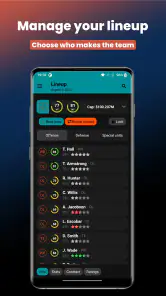
I approached Football Legacy Manager 24 as a quiet, decision-focused sports game rather than a fast match-day experience. Its central idea is simple: I take responsibility for an American football team as general manager and try to build a lasting legacy through the choices available to me. That makes it a very different proposition from an arcade football title. I am not mainly testing reflexes or controlling every play; I am looking for a satisfying management rhythm in which each decision gradually gives the team a clearer identity.
The game is free to install, aimed at Everyone, and developed by Hockey Legacy Manager. It sits in the sports category, although its appeal is closer to a compact front-office simulator than to a conventional action game. The current version is 24.1.16, and it runs on Android devices using version 5.0 or later. With more than 10K installs and an average rating of 3.5 from roughly 128 ratings, it has a modest but visible player base. I would not treat those figures as a final verdict, but they do suggest a niche game that will appeal most to people who already enjoy roster planning and long-term team building.
How the first goals shape the opening hours
The strongest part of the opening is the promise of responsibility. I am given a team-building role, so even a small decision feels more meaningful than simply pressing through a series of matches. The early goal is not just to win immediately. It is to understand what kind of manager I want to be, what I am trying to improve, and how patient I am willing to be while the team develops.
That distinction matters because management games can feel confusing when they present too many choices before the player understands the purpose of each one. Here, the basic fantasy is easy to grasp: build a team, make decisions, and pursue a legacy. If you enjoy sports games where the reward comes from seeing a plan take shape, the premise gives you a reason to keep examining your choices instead of treating every result as an isolated event.
I found the best way to approach the beginning was to set a narrow objective for each session. Rather than trying to solve the entire organization at once, I would focus on one practical question: what needs attention first? That might mean thinking about the team’s immediate direction, considering how a decision affects future seasons, or simply learning which parts of the management experience deserve the most attention. This creates a more comfortable entry point than trying to play as if every choice has to be perfect.
The game is especially suitable for short sessions because its appeal comes from thinking between events rather than from demanding constant physical input. I can imagine opening it during a commute or while taking a break, making a few decisions, and stopping once I have reached a natural point. It is less suitable if I want the instant excitement of a live football match, because its satisfaction is delayed and depends on following the consequences of my management.
Why the opening feels different from ordinary football games
Most football alternatives put the player close to the action. They reward timing, movement, passing, and quick reactions. Football Legacy Manager 24 asks a different question: can I make a series of choices that leaves the organization better than I found it? That change in viewpoint is the game’s clearest strength.
It also changes what counts as a successful session. In an action game, I can finish a match feeling that my performance was good even if the wider team remains unchanged. Here, I am more likely to judge a session by whether I understand the team better or have made a decision that supports a longer plan. Players who enjoy sports management for its delayed rewards will recognize that feeling quickly.
My advice for new players is to resist the urge to chase every possible improvement at once. The most useful early habit is to connect each choice to a goal. If a decision does not support the direction I have chosen, I treat it as a lower priority. This makes the opening less noisy and helps reveal whether the game’s management style suits me.
Progress signals and the satisfaction of building a legacy
The phrase “legacy” gives the game a useful long-term focus. It encourages me to think beyond one result and pay attention to the shape of the team over time. That is important for retention because management games need more than a single successful moment to remain interesting. They need progress that I can recognize, even when the final reward is still far away.
In my experience, the most satisfying progress signal is not necessarily a dramatic victory. It is the feeling that my decisions are becoming more deliberate. At the start, I am learning the language of the game and deciding where to place my attention. Later, the enjoyment comes from remembering why I made an earlier choice and seeing whether it supported the direction I wanted. That creates a personal story, which is more compelling than a checklist alone.
This also means the game rewards note-taking more than I expected. I do not need a complicated spreadsheet, but writing down a few intentions can prevent me from making random decisions. For example, I might record the kind of team I want to build and the areas I plan to review next. When I return later, I have a reference point rather than starting every session with a vague feeling that I should improve everything.
The most useful progress is the progress I can explain. If I can say why the team is moving in a particular direction, the game feels like a management simulation. If I am only tapping through options without understanding their consequences, the experience becomes much less rewarding. That is a meaningful trade-off: the game gives more to attentive players than to people looking for constant spectacle.
A practical routine for keeping progress meaningful
I recommend dividing a longer session into three stages. First, I review the current situation without immediately changing anything. Second, I choose one or two priorities instead of reacting to every possible issue. Finally, I look back at what changed and decide whether the next session should continue the same plan or correct it. This routine keeps the game from turning into aimless menu browsing.
That approach is also useful for players who worry about making a bad decision. A management game is more interesting when choices have consequences, but uncertainty can be frustrating if every action feels irreversible or impossible to evaluate. By treating each session as a small experiment, I can learn from a result without feeling that the entire legacy has been ruined.
The same method works well in an everyday scenario. Imagine having fifteen minutes before leaving home. I can open the game, review the team, make one focused adjustment, and stop after checking the result. I do not need to complete a full match-like sequence to feel that the session mattered. That makes it more practical than many sports games for players who prefer thoughtful bursts of play.
Challenge, pacing, and the point where patience matters
The challenge in Football Legacy Manager 24 comes from managing uncertainty and time rather than from physical difficulty. I have to accept that a good plan may not produce an immediate payoff. That can be satisfying, but it also creates the game’s main pacing risk. Players who expect a clear reward after every action may find the experience slow.
I think the difficulty curve works best when I allow the game to breathe. The opening is about orientation and establishing priorities. The middle portion becomes more interesting once I have a clearer idea of what I am trying to accomplish. At that point, decisions feel less like isolated buttons and more like parts of a larger argument about how the team should be run.
However, the game’s appeal depends heavily on my tolerance for delayed feedback. If I want an obvious upgrade, a constant stream of new content, or a visible burst of excitement every few minutes, this is probably not the right sports title. Its challenge is quieter. I may spend more time thinking about a decision than executing it, and the result may only become satisfying after I have continued playing.
One useful tactic is to separate short-term and long-term goals. A short-term goal gives me something concrete to evaluate during the current session, while a long-term goal protects the sense of legacy. Without that separation, I can become impatient and make choices only for immediate comfort. With it, I can accept a slower step if it supports the broader plan.
Another important trade-off is specialization. Trying to make every part of the team perfect at the same time sounds attractive, but it weakens the sense of direction. I get more enjoyment when I choose a recognizable identity and judge decisions against it. That does not mean every choice has to be rigid; it means I have a standard for deciding what deserves attention first.
Where the pacing may lose some players
The game is not an ideal fit for someone who wants a cinematic presentation or direct control over football action. It also may not satisfy players who prefer a highly guided career mode that constantly tells them what to do next. The management premise assumes that I am willing to create some of my own goals, and that freedom can feel like a lack of momentum if I need stronger direction.
The average rating of 3.5 shows that the game has not produced universal enthusiasm, and I can understand why reactions may differ. A sports manager can be deeply absorbing for one player and overly slow for another, even when both understand the same mechanics. I would read that rating as a reminder to approach the game for its niche strengths rather than expecting it to replace every other football experience.
There is also a financial consideration. The game is free, but in-app purchases range from $4.49 to $10.99 per item. That does not automatically make the free experience unattractive, yet it means I would pay attention to how comfortable the game feels before spending anything. My recommendation is to play it long enough to understand the core management loop first. If the planning itself is not enjoyable, a purchase will not solve that problem.
Retention pressure and the reasons to return
The game’s retention comes from the desire to see whether a decision becomes part of a successful legacy. That is a stronger reason to return than a simple daily habit for players who enjoy long-term sports stories. I want to know whether the team’s direction is working, whether a weakness has become more manageable, and whether my earlier priorities still make sense.
At the same time, the pressure to return is not equally strong for everyone. A player who needs constant unlocks or frequent novelty may lose interest once the initial learning period ends. The game’s loop is built around continued management attention, so its retention depends on whether I enjoy revisiting the same organization with a new question each time.
I found that setting personal milestones helps. Instead of waiting for the game to provide a dramatic reason to continue, I can define a challenge such as building a more coherent team identity, correcting a recurring weakness, or reaching a point where my original plan needs revision. These goals are not substitutes for good design, but they make the legacy theme more active and less passive.
There is a subtle risk here: long-term games can encourage me to keep playing simply because I have already invested time. I try to distinguish genuine curiosity from obligation. If I am returning because I want to test a new idea, the session feels worthwhile. If I am returning only because stopping would make previous time feel wasted, I take a break. That is good advice for any progression-focused game, but it is especially relevant here because the central reward is gradual.
Who should play and who should skip it
I would recommend this game to fans of American football who enjoy the general manager perspective, players who like planning more than reflexes, and people who want a sports game that can fit into short, thoughtful sessions. It is also a good choice for anyone who enjoys creating a personal story from decisions rather than following a fixed script.
I would skip it if my priority is direct match control, rapid action, or a strongly visual football presentation. I would also be cautious if I dislike games that ask me to invent my own objectives. In those cases, a conventional football action game or a more heavily guided sports career mode would probably be a better match.
It is suitable for an Everyone-rated audience, but the age label should not be confused with a guarantee that every player will enjoy the pacing. Younger players may understand the football theme while still finding the management structure less immediately exciting. The best audience is defined less by age than by patience and interest in team-building decisions.
My progression verdict after weighing the full loop
Football Legacy Manager 24 succeeds when I treat it as a patient team-building game with an American football setting, not as a replacement for playing football directly. Its early goals are clear enough to establish the fantasy, its progress is most rewarding when I track the reasoning behind my choices, and its difficulty comes from waiting for plans to develop rather than mastering fast controls.
The pacing is both its identity and its limitation. I appreciate that it gives long-term decisions room to matter, but I also recognize that the same design can feel uneventful to players who need immediate rewards. The free entry point makes it easy to test that difference for myself. I would not spend on an in-app purchase until I knew that the core loop had earned a place in my routine.
My final recommendation is therefore selective but positive. If I wanted a compact football management experience, I would try it and give the opening enough time to reveal its rhythm. I would set personal goals, make decisions with a clear team identity in mind, and judge progress by the quality of my plan rather than by instant results. If I wanted action, spectacle, or constant unlocks, I would choose another sports game instead.
For the right player, the lasting appeal is simple: I get to look back at a team and feel that its direction reflects my decisions. That is not the loudest form of sports entertainment, but it can be a genuinely satisfying one. Football Legacy Manager 24 is worth trying when the journey toward a legacy sounds more interesting than controlling every play.
Pros
- Deep squad management with transfers
- contracts
- tactics
- and player development.
- Playable offline
- making it convenient for travel or limited data connections.
- Detailed historical databases let you manage clubs across multiple football eras.
- Matches progress quickly
- keeping the focus on decisions rather than long animations.
- Strong customization options for clubs
- competitions
- and career settings.
Cons
- The interface can feel dense and takes time to learn for new management-game players.
- Large databases may require patience while loading on older phones or tablets.
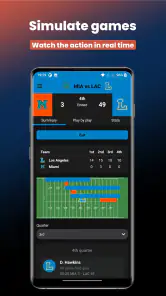
- Match visuals are basic compared with action-focused football games.
- Some advanced features may be locked behind in-app purchases or premium access.
- Long careers can become repetitive once your club reaches consistent success.

- Category
- Sports
- Version
- 24.1.16