Flip Trickster - Parkour Simul
- 6.47K
- 3.7
- Installs
- 10.00M
- Price
- Free
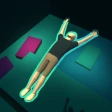
Screenshots
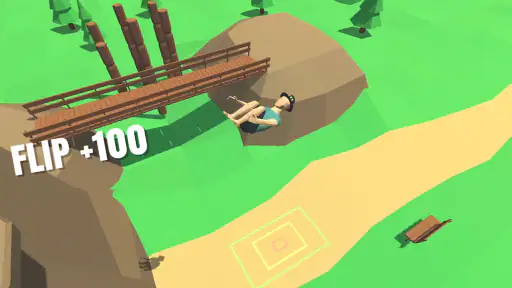
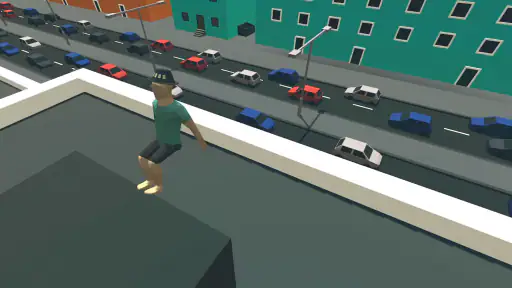
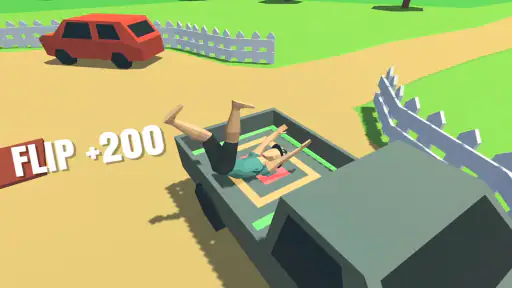
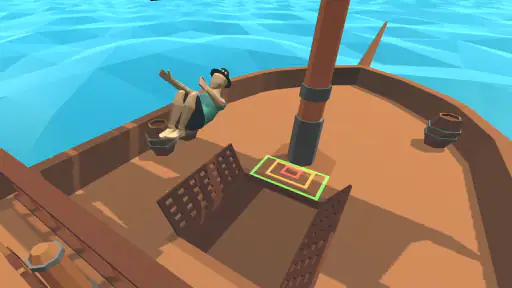
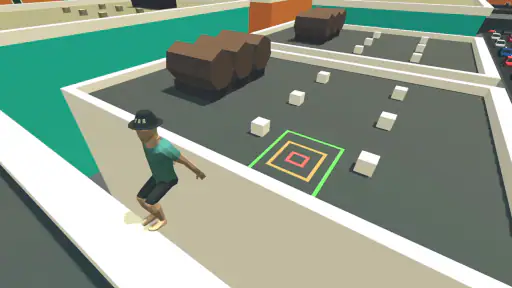
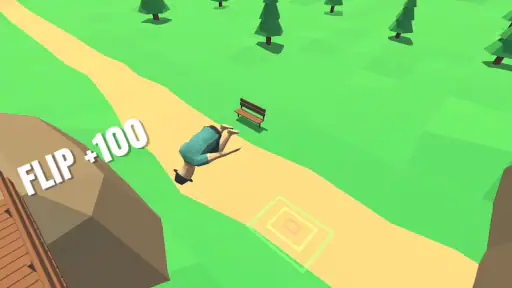
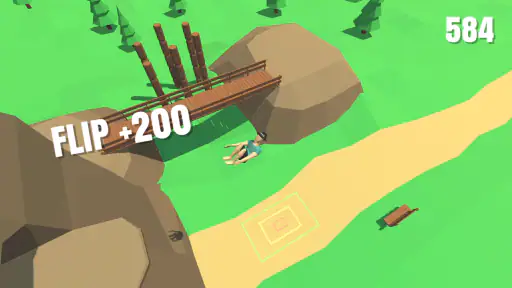
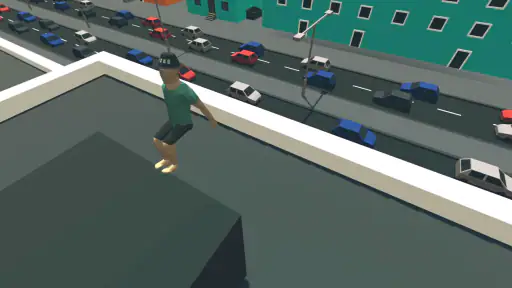
Analysis by Reviewed
Flip Trickster - Parkour Simul turns a simple idea into a surprisingly demanding mobile game: you launch a character from a platform, control the rotation in midair, and try to land safely. I found that its real appeal is not the promise of becoming a parkour champion, but the way one small input can completely change a jump. The game is free, made by 7 Minute Games, and sits in the simulation category, although its quick attempts and exaggerated stunts make it feel more like an arcade challenge than a realistic training tool.
The central capability is precise control over a flip. That sounds narrow, yet it gives every attempt a clear purpose. I am not managing a large character roster, building a complicated park, or memorizing a long list of commands. I am watching the takeoff, judging the character’s rotation, and deciding when to correct the movement before the landing. The best part is how clearly the game turns timing into the main skill.
That focus makes the game easy to understand within a few moments. It also explains why I kept retrying difficult jumps. A failed attempt usually feels connected to something I did: I started the rotation too early, held it too long, or misread the landing. The experience is much more satisfying when I treat each miss as information instead of tapping randomly and hoping for a better result.
Why the flip mechanic carries the whole experience
One action, several decisions
The controls are built around the character’s movement through the air. The important decision is not simply whether to flip, but how long to commit to the rotation and when to stop correcting it. A jump can look promising at the beginning and still fall apart just before contact with the ground. That late adjustment is where the game becomes more interesting than its basic presentation suggests.
I like this kind of design because it gives the player a short feedback loop. I try a jump, see the result, adjust my timing, and try again. There is no need to spend several minutes preparing a run before discovering that my approach was wrong. This makes it suitable for a quick break, but the same structure can also keep me playing longer than planned when I am close to improving a jump.
The control style rewards restraint. Beginners may be tempted to keep making corrections throughout the entire flight, but that often creates a less stable landing. I had better results when I treated the jump as a sequence: observe the launch, establish the rotation, then make a deliberate correction instead of constantly interfering. That is one of the less obvious lessons in the game, and it is useful almost immediately.
Why repeated attempts do not feel completely empty
Many mobile stunt games rely on spectacle alone. They show a dramatic movement, then ask the player to repeat it without giving much sense of progress. Here, the repeated attempt has more value because the movement itself is readable. I can compare a short rotation with an over-rotated one and understand what changed. The game is at its strongest when I pay attention to that difference.
There is also a nice tension between confidence and caution. A timid attempt may not travel far enough or may leave the character poorly positioned, while an aggressive flip can look impressive but become difficult to control. I found myself choosing safer corrections when I was trying to complete a jump and taking bigger risks when I wanted to experiment. That makes the same basic mechanic work for both careful players and people who enjoy spectacular failures.
The store summary asks whether the player is the next parkour champion, but I would describe the experience more modestly. It is a focused physics-style stunt game about learning a movement through repetition. That distinction matters because anyone expecting a full parkour simulation may find the scope limited. Anyone looking for a compact game where timing and visual judgment matter will understand the appeal much faster.
How I approach a difficult jump
My most reliable workflow is to stop thinking about the entire jump as one dramatic motion. I first watch the takeoff and identify the direction of the character’s body. Then I use the rotation control with a specific goal: either gain enough movement to reach the landing or prepare the body for contact. The final phase is about avoiding unnecessary input. In practice, the last moment often rewards doing less rather than more.
This approach also helps with frustration. When I fail, I can label the problem more precisely. Was the character under-rotated? Did I correct too late? Did I commit to a risky movement when a simpler one would have worked? That kind of diagnosis is more useful than simply blaming the level. It turns the game into a small timing exercise instead of a sequence of arbitrary retries.
A useful tip is to separate progress from performance. A successful landing is the first goal, even if the movement looks awkward. Once I understand how much rotation a particular jump needs, I can experiment with style and risk. Trying to make every attempt spectacular from the beginning made me less consistent, while prioritizing control gave me a better base for later attempts.
A realistic everyday use case
I can see this working well during a short wait: a few minutes before an appointment, during a commute pause, or while taking a break from work. I can start an attempt quickly, fail without losing a long session, and put the phone away without needing to remember a complicated storyline. The game’s structure suits fragmented time better than a large simulation that expects a long uninterrupted session.
It also works as a casual challenge between friends, even without treating it as a serious competitive game. One person can try a jump, explain what went wrong, and let the next person attempt a different approach. The fun comes from watching the small timing difference produce a completely different landing. For this use, the game is more engaging when everyone accepts that failure is part of the entertainment.
On the other hand, I would not choose it when I want a relaxing game with almost no pressure. The repeated need to judge rotation can become tiring, especially when several attempts fail in a row. It is also not the right pick for someone looking for a broad parkour world, character development, or a story-driven experience. Its strength is concentration on one mechanic, and that is also its main limitation.
Where the free model fits
The game is free to download, with in-app purchases ranging from $0.99 to $19.99 per item. I would begin without spending anything and first decide whether the timing-based gameplay suits me. Since the core appeal comes from learning the movement, purchasing something would not replace the need to understand the controls. Players who dislike optional purchases in free games should inspect the purchase flow carefully before committing to extended play.
The age rating is Everyone, which matches the straightforward stunt concept and accessible presentation. That does not mean every player will enjoy it equally. Younger or less experienced players may need time to understand why a visually impressive flip can still end in a poor landing. I would present it as a light challenge game rather than as a realistic lesson in parkour technique.
How it compares with other mobile simulation choices
Compared with management simulations, this game asks for immediate physical judgment instead of planning resources, schedules, or upgrades. Compared with racing games, it replaces steering and speed control with body rotation and landing accuracy. That makes it a better fit for someone who enjoys short, skill-based attempts than for someone who wants a long progression system.
It is also more focused than many physics playgrounds. A sandbox can offer more freedom, but that freedom can make it harder to understand why one attempt worked and another failed. Here, the limited objective gives each try a clearer question: did I control the flip well enough to land? The trade-off is variety. Players who need constant new mechanics may find the concentrated design repetitive.
Arcade alternatives may feel more immediately forgiving because they often emphasize quick reactions and visible rewards. Flip Trickster - Parkour Simul is less about reacting to a single sudden event and more about managing a short movement from beginning to end. That difference is important. I would recommend it to someone who enjoys practicing a small technique, not necessarily to someone who wants nonstop action.
What the technical details mean for a new player
The game was released on March 1, 2018, and the current version is 1.11.67. It requires Android 6.0 or later. Those details make it approachable for people using older compatible Android devices, although the experience can still depend on the phone’s responsiveness and how comfortable the player is with touch controls.
Its reach is substantial, with over ten million installs. The average rating is 3.7 from around eighty-two thousand ratings, alongside roughly six and a half thousand written reviews. I read that combination as a sign of a game with a recognizable appeal but also clear friction. It is not a universal favorite, and I think that is understandable: a narrow, repetition-based control system can be satisfying for one person and dull for another.
7 Minute Games has chosen a concept that is easy to explain but harder to master. That is a sensible fit for mobile play, where a player can understand the objective quickly. The challenge is keeping that objective interesting after the novelty of the flips fades. For me, the answer depends on whether I enjoy refining timing. If I do, the simplicity becomes a strength; if I do not, the game can feel like repeating the same experiment.
Small habits that improve consistency
I found three habits particularly useful. First, I avoid changing several things at once. If I alter the timing, the amount of rotation, and the landing correction together, I cannot tell which change helped. Second, I watch the character’s body position rather than judging success only by distance. A jump that travels far may still need a different final adjustment. Third, I stop after a short run of frustrated attempts and return later. Because the game depends on fine timing, impatience can make the controls feel worse than they are.
Another practical choice is to use safer attempts to learn the environment before trying to show off. A controlled landing tells me more than a dramatic miss. Once I know the basic movement, I can deliberately push the flip farther and see how much correction remains available. This turns experimentation into a planned step instead of an accidental loss.
I also recommend treating the camera view as part of the challenge rather than expecting it to provide every answer. The player has to interpret the character’s movement and anticipate the landing. That visual judgment is why the game can feel rewarding even when the input itself is simple. It is also why playing while distracted is a poor match; missing a small change in body position can ruin the attempt.
Who will get the most from it
The best audience is someone who likes compact skill games, physics-based movement, and retrying a challenge until a technique becomes familiar. It is especially suitable for players who enjoy seeing a mistake and immediately testing a correction. The game can also appeal to people who want a casual parkour theme without committing to a large open-world title.
I would be more cautious recommending it to players who need a strong narrative, deep customization, or a constantly changing set of objectives. The game’s identity comes from its flip-and-land focus, so expecting it to behave like a full sports simulation will lead to disappointment. It is also a weak choice for anyone who finds repeated failure irritating rather than motivating.
For parents considering it for a child, the Everyone rating makes the content approachable, but I would still explain that success depends on patience. The game is not difficult because the rules are complicated; it is difficult because small timing errors matter. That can be a useful lesson in persistence, although it may not be enjoyable for a player who wants immediate success.
My final take after focusing on the mechanic
Flip Trickster - Parkour Simul succeeds because it commits to one clear capability: controlling a flip well enough to land. I appreciate that the game does not need a complicated explanation to create a meaningful challenge. The strongest moments come when I make a small adjustment, see the character settle into a better position, and realize the landing worked because of that decision.
Its limitations are equally clear. The narrow focus can become repetitive, the controls demand patience, and the free-to-play structure includes in-app purchases. I would skip it if I wanted a broad simulation or a relaxed game that never asks me to retry. But for short sessions built around timing, visual judgment, and gradual improvement, it is an easy game to try without paying first.
My recommendation is simple: install it if the idea of practicing a single stunt sounds appealing, and give yourself time to learn rather than judging it after a few failed jumps. This is at its best when the goal is not merely to flip, but to understand why the landing succeeded. That focused feedback is what gives the game more substance than its short description suggests.
Pros
- Responsive controls make flips and landings feel satisfying.
- Many levels offer varied obstacles and increasingly difficult challenges.
- Replay value comes from improving scores and mastering perfect landings.
- Simple visuals run smoothly on most modern Android and iOS devices.
- Short stages are ideal for quick gaming sessions.
Cons
- Physics can feel inconsistent when landing near edges or obstacles.
- The free version may include frequent ads between attempts.
- Progress can become repetitive once the main tricks are mastered.
- Some advanced content may require in-app purchases to unlock.
- Precise movements take practice and may frustrate casual players.
- Category
- Simulation
- Version
- 1.11.67