Eternal Vortex
- 49.00
- 3.8
- Installs
- 100.00K
- Price
- Free

Screenshots



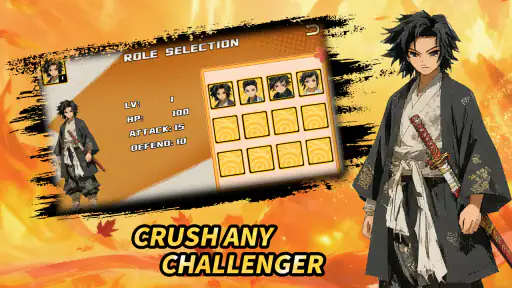
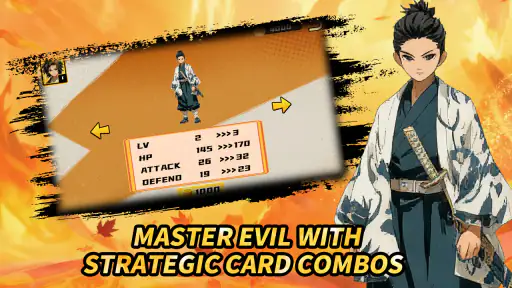
Analysis by Reviewed
Eternal Vortex is an adventure game from Astra Square Games that caught my attention because it presents itself as an action-focused experience rather than a slow, story-only journey. I approached it as something to play in short sessions, the kind of game I could open when I wanted immediate movement and a little tension without committing to a long evening. That first impression is important here: this is best viewed as a free action adventure to sample, not as a guaranteed replacement for a large premium console-style game.
The game is available at no upfront cost, carries an Everyone age rating, and has passed the early discovery stage with more than a hundred thousand installs. Its average sits at 3.8 from roughly 1.8 thousand ratings, which gives me a more mixed impression than a universally polished hit. The current release is version 8.0, and it runs on Android 7.0 or later. Those details make it approachable for people using older compatible phones, although a compatible operating system alone does not tell me how smoothly every device will handle the action.
What the action adventure feels like in everyday use
My main recommendation is to treat Eternal Vortex as a game for testing your own tolerance for its rhythm. The store summary calls it a new action game, but that description is too brief to explain what kind of player will enjoy it most. I would put it in the hands of someone who likes exploring an adventure setting while staying ready for action, rather than someone searching for a carefully paced narrative or a deep role-playing system.
A useful everyday scenario is a short commute or a break between tasks. I would open it with a simple goal in mind: play for a few minutes, see whether the next encounter or area gives me enough momentum to continue, then stop without feeling that I had to reorganize my day around it. That approach also helps reveal whether the game’s progression feels rewarding or whether it begins to lean too heavily on repeated play.
On a phone, action games live or die by clarity. The screen is smaller than a television, fingers cover part of the view, and interruptions are common. I therefore pay attention to whether the game gives me enough visual information to understand what is happening without staring at tiny details. Eternal Vortex is more suitable for players who are comfortable learning an unfamiliar action interface than for people who want a completely effortless first minute.
I also would not recommend judging it solely by the fact that it is free. Free access removes the initial financial barrier, but it does not automatically make a game generous with time, attention, or progress. The more useful question is whether the core loop remains enjoyable before spending becomes relevant. In my view, that should be the first test: install it, play naturally, and decide whether the basic adventure is satisfying without treating optional purchases as part of the starting requirement.
A sensible way to begin
When I start a free action game, I avoid spending during the opening session. That is especially sensible here because the purchase range extends from a small amount to a much larger amount per item. I would first learn the controls, identify what the game expects me to repeat, and notice whether progress feels understandable. This is not a criticism of the developer; it is simply a good habit whenever a game combines free entry with optional purchases.
I would also suggest playing with a clear stopping point. For example, finish one meaningful objective or stop after a short trial rather than continuing because a reward is almost within reach. That small boundary makes it easier to tell whether I am enjoying the adventure itself or merely reacting to the promise of the next unlock. It is one of the most practical ways to evaluate a progression-based game without letting the game dictate the session.
Another useful habit is to keep track of what actually improves your play. If a purchase only makes numbers rise but does not make the controls, encounters, or exploration more enjoyable, it may not be good value for you. Conversely, if the free portion already feels complete enough for casual use, there is no reason to spend simply because an item is available. The strongest spending rule here is to buy only after the free experience has proved its value.
Progression, pressure, and the cost of continuing
Progression is where my opinion becomes more cautious. A free game can create pressure in several ways: by slowing advancement, presenting tempting upgrades, or making the next step feel more difficult than the previous one. I cannot treat any one of those possibilities as a confirmed feature of this particular release, so I would not promise that Eternal Vortex is either completely relaxed or aggressively monetized. What I can say is that its purchase structure makes it worth watching how the game handles your time.
The listed in-app purchases range from forty-nine cents to ninety-nine dollars and ninety-nine cents for each item. That is a broad spread, and it means different players can encounter very different spending decisions. A small optional purchase may feel harmless, while a high-priced item deserves a much more deliberate decision. I would not assume that the most expensive option is necessary, and I would not assume that buying once will settle every future decision.
For a younger player, the Everyone rating makes the game broadly accessible from an age-classification perspective, but accessibility is not the same as spending readiness. I would still want a parent or guardian to discuss purchase boundaries before handing over a device with payment access. Setting a clear rule such as “play first, ask before buying” is more useful than relying on the game’s age label alone.
For adults, the main trade-off is simple: free entry makes experimentation easy, but optional spending can change the way I judge progress. If I am already impatient, tired, or frustrated, that is the worst moment to make a purchase. I would close the game, return later, and decide with a cooler head. This is particularly important when an item can cost close to one hundred dollars, because the difference between a casual add-on and a serious expense is substantial.
Is the experience fair for players who do not spend?
Fairness is harder to judge than price. A game can include purchases and still offer a satisfying free path, while another can make non-paying play feel like a long queue. Eternal Vortex’s public purchase range tells me that spending is part of its structure, but it does not by itself prove whether purchases affect power, speed, appearance, convenience, or access. I therefore would not label the game pay-to-win or fully fair without direct evidence of how those items function.
My practical test would be to compare two kinds of progress: what I can achieve through ordinary play and what a purchase appears to accelerate. If the free route allows me to understand the adventure and improve through skill, that is a positive sign. If the game repeatedly interrupts progress with pressure to buy, I would consider that a meaningful weakness even if the initial download costs nothing.
Players who care about competitive fairness should be especially careful. The available information establishes that Eternal Vortex is an action game, but it does not establish a competitive mode or explain whether players are matched against one another. I would not assume that it is a competitive title, and I would not evaluate it by the standards of a ranked multiplayer game unless the actual play experience clearly places it in that category.
For me, fairness also includes how clearly the game communicates a purchase. Before confirming anything, I want to know what I am receiving, whether it is a one-time item, and whether it changes the way I play. If the explanation is unclear, I would skip the purchase. That is a reasonable standard for any free-to-start adventure, and it protects the player without requiring a negative assumption about Astra Square Games.
Where it fits beside other mobile adventures
Compared with a premium adventure game, Eternal Vortex has the obvious advantage of being free to try. That matters when I am unsure whether its action style will suit me. A paid alternative usually asks for trust before I play, while this one lets me make that decision after installation. The trade-off is that a free game with in-app purchases may require more attention to spending and progression than a single-purchase game.
Compared with a relaxed puzzle adventure, this is the better choice for someone who wants action in the foreground. A puzzle-focused alternative would usually be more comfortable for quiet play and may demand less rapid attention. I would choose Eternal Vortex when I want movement and immediate engagement, not when I am looking for a calm experience during a tired evening.
Compared with a large, established action franchise, it is sensible to lower expectations about depth and polish. Eternal Vortex is a newer release, and its presence at version 8.0 shows that it has already moved through several updates, but a version number alone does not tell me that it matches a long-running series. Its appeal is easier access and the chance to try something different, not a promise of the same scale as a major console or mobile blockbuster.
It is also a less suitable choice for someone who wants a fully transparent purchase-free experience. In that case, a premium game with one clear price may be a better fit, even if the initial commitment is higher. I would choose the free model when I value experimentation more than absolute simplicity, and I would choose the paid model when I want to remove purchase decisions from the experience entirely.
Questions I would ask before installing
“Will it run on my phone?” The basic requirement is Android 7.0 or later, so owners of compatible older devices can at least meet the stated operating-system threshold. I would still leave some practical room for the game to perform differently across phones, because an operating-system requirement is not a guarantee of identical frame rate, loading behavior, or control comfort.
“Do I have to pay to start?” No. The game is free to download and try. The important distinction is that optional purchases are available, with individual items ranging from a low-cost option to a very high-cost option. I would start without spending and use the opening experience to decide whether the game earns more of my time.
“Is it appropriate for children?” Its content rating is Everyone, which makes it broadly suitable by age classification. I would still supervise payment access, particularly on a shared device. The age rating answers a content question, not a household budgeting question.
“Is it already established or still very new?” It was released on October 10, 2025, so I would approach it as a relatively new adventure rather than a long-proven classic. The player response is not uniformly glowing: the average is 3.8, based on about 1.8 thousand ratings and a smaller set of written reviews. That does not make it a poor choice, but it does support trying it personally instead of relying on reputation alone.
“Who should skip it?” I would skip it if I strongly dislike free-to-play purchase structures, if I need a guaranteed premium-quality campaign, or if I only enjoy games with clearly documented competitive rules. I would also skip it when I am looking for a completely passive experience, because an action-oriented adventure is unlikely to suit that mood.
My trust verdict after weighing the trade-offs
I see Eternal Vortex as a reasonable try-before-you-commit adventure for Android players who want action without paying at the door. Astra Square Games has made the barrier to entry low, and the Everyone rating broadens its potential audience. The game’s current version and install reach suggest that it is not an obscure experiment that nobody has tried, while the 3.8 average reminds me to keep expectations measured.
My trust in it depends less on the existence of purchases than on how responsibly I choose to use them. The range from forty-nine cents to ninety-nine dollars and ninety-nine cents is wide enough that I would never recommend impulse buying. I would first establish whether the free loop is enjoyable, then make only a small, clearly understood purchase if the game continues to earn my attention. If progress feels pressured, I would stop rather than pay to remove frustration.
The most honest recommendation I can give is conditional. Try it as a free action adventure, but judge its fairness through your own progress before spending. It is a good candidate for curious players who enjoy discovering a newer mobile game in short sessions. It is not the right choice for anyone who wants a guaranteed purchase-free structure, a fully established competitive ecosystem, or the predictable completeness of a premium release.
I would keep it installed if the moment-to-moment action stayed enjoyable without turning every pause into a sales decision. If that balance works for you, the free entry makes Eternal Vortex easy to explore. If it does not, there are better alternatives: a premium adventure for clearer costs, a puzzle game for calmer play, or a proven action franchise for a more established experience. That is why I recommend trying it, not blindly committing to it.
Pros
- Fast-paced battles keep matches engaging and easy to replay.
- Distinct character abilities add variety to team-building strategies.
- Stylish visual effects make combat feel energetic and rewarding.
- Short sessions suit quick play during commutes or breaks.
- Regular events can provide fresh objectives and limited-time rewards.
Cons
- Progression may feel grindy when upgrading stronger characters.
- Some content can favor players who spend money on premium resources.
- The interface may feel crowded for new players at first.
- Online features require a stable connection to work properly.
- Repeated battles can become monotonous after extended play.

- Category
- Adventure
- Version
- 8.0