Egg, Inc.
- 227.08K
- 4.7
- Installs
- 10.00M
- Price
- Free

Screenshots





Analysis by Reviewed
I approached Egg, Inc. as a short-session simulation game rather than a traditional farm builder, and that distinction matters. Its central idea is simple: I manage a growing egg business, expand production, improve the farm, and keep making decisions that turn a modest operation into something much larger. The presentation is cheerful and approachable, but the progression has enough planning behind it to make each return visit feel purposeful.
That makes it an easy game to recommend to someone who enjoys watching numbers grow without needing a complicated story or fast reflexes. It is free to play, rated for Everyone, and developed by Auxbrain Inc. On Android, the current version is 1.37.2 and it requires Android 7.0 or later. The game has reached over ten million installs, with a 4.7 average from around 1.4 million ratings, so it is clearly more than a niche idle experiment.
How to decide whether this farm simulator suits you
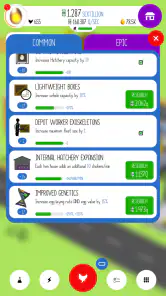
The first question is not whether you like eggs. It is whether you enjoy gradual optimization. Egg, Inc. asks me to balance immediate progress against longer-term growth. I can improve the parts of the farm that increase production, strengthen the systems that support expansion, or save resources for a more meaningful upgrade. The satisfaction comes from seeing a small choice improve the entire rhythm of the farm.
That loop works particularly well when I have only a few minutes. I can open the game while waiting for a bus, collect progress, make an upgrade, adjust the farm, and leave again. It does not demand a full uninterrupted play session. At the same time, it gives me enough decisions to reward a longer visit when I want to compare upgrade paths or prepare for the next stage.
I would not choose it for someone looking for a detailed agriculture simulator with realistic machinery, crop schedules, weather, or a large open world. This is a focused, stylized management game. The farm is a framework for progression, not an attempt to reproduce every part of working agriculture. That focus is one of its strengths, but it also defines its audience.
The game is free to download, with optional in-app purchases ranging from $3.99 to $19.99 per item. I can play without paying, but the presence of purchases is worth considering before installing. Players who dislike any temptation to speed up progress may prefer a premium simulation with a fixed price. Players who are comfortable treating optional purchases as a convenience rather than a requirement will find the free entry point useful.
The first hours are about learning the rhythm
At the beginning, the farm feels deliberately manageable. I am not buried under a huge collection of menus or complicated production chains. That gives me space to understand the basic relationship between earning, upgrading, and expanding. The game teaches through repetition: I make a change, watch the result, and gradually learn which improvements matter most for the situation in front of me.
One useful habit is to avoid spending every resource immediately. Early upgrades can make the farm feel faster, but holding back for a more influential improvement often creates a better jump in progress. I found that the game becomes more interesting when I stop treating every purchase as equally valuable and start asking what will remove the current bottleneck.
That bottleneck changes as the farm grows. Sometimes production is the issue; at other times, capacity or income becomes the limiting factor. Looking only at the largest available upgrade can be misleading. A smaller improvement in the system that is currently holding everything back may produce a better result than an expensive upgrade that looks impressive on paper.
Why the idle structure feels different from a typical farm game
Many farming games are built around planting, harvesting, decorating, and returning at specific times. Egg, Inc. is closer to an incremental management game. Its appeal comes from continuous production and the decisions surrounding it, not from manually tending a wide variety of crops. That makes the experience less about daily chores and more about building momentum.
Compared with a conventional farm simulator, it is easier to pick up and put down. I do not need to remember a large map or maintain a long list of seasonal tasks. Compared with a very simple clicker, however, it gives me more to think about than merely tapping the same button repeatedly. The best moments come from recognizing a useful sequence of upgrades and seeing the farm accelerate afterward.
There is also a different kind of patience involved. The game encourages me to accept that some progress will happen while I am away. If I need constant action, this can feel slow. If I enjoy setting up a system and checking whether my decisions worked, the waiting becomes part of the reward rather than dead time.
Where Egg, Inc. earns its place
The strongest part of the experience is its clarity. I can usually tell what I am trying to improve and why a particular upgrade matters. That is important in an incremental game because confusing menus or unexplained systems quickly turn progress into routine clicking. Here, the farm gives my decisions a visible context, so growth feels connected to the operation I am building.
I also like the way the game creates small planning problems inside a friendly theme. I may have enough resources for one significant improvement or several modest ones. Choosing between immediate production and a more durable foundation gives the game more texture than its playful appearance suggests. It is not a demanding strategy title, but it is not entirely mindless either.
Another advantage is its flexibility around session length. A quick check can be worthwhile, while a longer session can involve more deliberate restructuring of the farm. That makes it suitable for people who play in fragments throughout the day. I can use it as a gentle break instead of committing to the kind of session expected by a larger simulation or strategy game.
The visual theme helps too. The egg-farm setting is unusual enough to give the game personality, yet simple enough that the mechanics remain easy to follow. I never felt that the presentation was trying to hide a shallow loop with excessive spectacle. The humor and bright style support the management concept instead of distracting from it.
Practical habits that improve the experience
My most useful approach was to identify the current constraint before spending. If the farm is producing quickly but cannot hold enough, increasing production alone may create wasted potential. If capacity is comfortable but income is lagging, improving the supporting side can be more effective. This sounds obvious, but the game becomes noticeably smoother once I make upgrades according to the problem rather than the decoration of the menu.
I also recommend treating return visits as planning checkpoints. Instead of opening only to collect progress, I use the moment to ask what the next target should be. That prevents the game from becoming a repetitive sequence of claiming rewards and buying whatever happens to be available. Even a simple goal, such as preparing for the next expansion, gives a short session a clear purpose.
A third tip is to resist judging progress by one screen or one upgrade. The farm works as a connected system, so a choice that looks modest can improve later decisions. I found it more helpful to compare how the whole operation feels after a few cycles than to expect every purchase to produce an immediate dramatic change.
For players who enjoy optimization, the game also rewards keeping mental notes about what caused the last slowdown. I do not need a spreadsheet to enjoy it, but remembering whether production, capacity, or spending was the issue makes future choices more deliberate. That extra layer is optional, which is a good design choice: casual players can stay relaxed, while more analytical players can create their own goals.
The everyday scenario where it works best
Imagine I have ten minutes before leaving for work. I open the farm, collect the progress that accumulated while I was away, and check which improvement will make the next period more productive. I spend carefully, watch the operation settle into its new pace, and close the game. Later, during a lunch break, I return to see whether that decision solved the earlier bottleneck.
That scenario captures the game’s practical appeal. It gives me a sense of progress without requiring a full evening. It also avoids making every visit feel identical, because the right action depends on the farm’s current stage. For someone who wants a low-pressure game to fill small gaps in the day, this is a convincing use case.
The trade-off is that the same structure can become background noise. If I open it automatically without setting a goal, the session may feel like routine maintenance. The game is at its best when I engage with the management choices, even briefly, rather than treating it as a reward-collection screen.
When another type of game may fit better
Players who want direct control over individual workers, buildings, or realistic production chains may be happier with a deeper farming simulator. Those games usually ask for more time and attention, but they can offer a stronger sense of place and a broader range of activities. Egg, Inc. is not trying to replace that experience; it offers a more concentrated form of farm management.
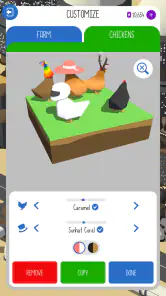
Players who prefer decoration and social routines may also find the focus too narrow. A traditional life-and-farming game can provide characters, exploration, customization, and a stronger sense of daily life. Here, the farm’s identity comes mainly from its growth and the decisions behind it. If decorating a homestead is the main reason you play farming games, this may feel limited.
On the other hand, players who usually choose clickers may appreciate the extra structure. The egg theme gives the numbers a setting, and the upgrade decisions create more direction than a pure tapping loop. Still, anyone who dislikes waiting or incremental progression should know that the game’s core pleasure is gradual accumulation. There is no way to turn it into a fast arcade game without losing what makes it distinctive.
The purchase model is another reason a different option might be better. The game costs nothing to start, but optional items are available. I did not see that as a reason to dismiss the experience, yet players who want a completely fixed-cost game may prefer an alternative with no purchase prompts. The right choice depends less on the dollar amount than on how comfortable you are with free-to-play design.
What switching away would mean
Moving from Egg, Inc. to a deeper simulator means accepting more complexity and more responsibility. You may gain richer systems, but you will probably spend longer learning menus, planning schedules, and completing tasks. Moving to a simpler idle game has the opposite trade-off: faster understanding, but fewer meaningful decisions once the initial novelty fades.
That makes this game a useful middle ground. It is lighter than a full management simulator and more structured than a bare clicker. If you switch because the progression feels too slow, another idle game may not solve the underlying problem; many games in that category rely on the same patience. If you switch because you want richer farming detail, then a conventional simulation is the more logical direction.
I would also consider how much attention I want to give the game over time. Its low-effort sessions are convenient, but that convenience can reduce the feeling of occasion. A larger simulation may be better when I want a hobby that absorbs me. Egg, Inc. is better when I want a compact system I can revisit without preparation.
My recommendation after spending time with the farm
I recommend Egg, Inc. to anyone who likes incremental progress, light strategy, and games that fit naturally into spare minutes. It is especially good for players who enjoy finding the current bottleneck, choosing an upgrade, and returning later to see whether the decision improved the whole operation. The Everyone rating and approachable presentation also make it easy to suggest to a broad audience.
I would skip it if you need constant action, realistic agriculture, deep storytelling, or a completely purchase-free experience. I would also be cautious if you know that idle progression quickly turns into a chore for you. The game cannot change its basic identity: it asks you to enjoy waiting, checking, and gradually improving.
For me, the best reason to install it is not the promise of a huge farm by itself. It is the way a very simple theme becomes a clean lesson in prioritization. I can play casually, or I can pay closer attention to constraints and timing. That range gives the game more staying power than its first few minutes suggest.
Auxbrain Inc. has made a simulation that understands the value of restraint. It does not overwhelm me with an enormous rulebook, yet it gives enough room for smart choices to matter. With a 4.7 average and more than ten million installs, its broad appeal is easy to understand, but my recommendation is more specific: choose it when you want a friendly, low-pressure management game that rewards patience without demanding a full-time commitment.
My final verdict: Egg, Inc. is a strong free simulation for short sessions and steady optimization. I would start with the free version, decide whether the waiting-and-upgrading rhythm suits me, and only then consider any optional purchase. If that loop sounds satisfying rather than repetitive, this egg farm can become a surprisingly dependable companion for small breaks in the day.
Pros
- Simple controls make the game easy to learn and play in short sessions.
- Frequent events and contracts provide fresh goals beyond the main farm.
- Offline earnings let progress continue when the app is closed.
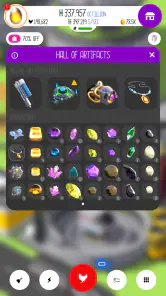
- Many egg types and upgrades create a satisfying sense of long-term progression.
- Charming visuals and humorous presentation make the idle gameplay enjoyable.
Cons
- Progress can feel slow without watching ads or spending premium currency.
- Some upgrades and boosts are heavily tied to repetitive farming tasks.
- Contracts may require frequent check-ins to reach the best rewards.
- The interface can become crowded with currencies
- menus
- and upgrade options.
- Late-game progress depends greatly on joining an active and coordinated co-op.

- Category
- Simulation
- Version
- 1.37.2