Dynasty Legends 2
- 4.28K
- 4.5
- Installs
- 5.00M
- Price
- Free

Screenshots
Analysis by Reviewed
I spent enough time with Dynasty Legends 2 to get past its loud opening moments and judge what remains when the first burst of excitement wears off. This is a free action game from HK TAIHE INTERACTIVE LIMITED, built around the fantasy of throwing a powerful warrior into crowded battles and clearing enemies at a rapid pace. It is immediately accessible, visually busy, and easy to pick up in short sessions, but its real value depends on how comfortable you are with repeated progression and the pressure to keep improving several parts of a growing roster.
The game has clearly found an audience: it carries a 4.5 average from around 214 thousand ratings and has passed 5 million installs. Those figures do not automatically make it a good fit for everyone, but they do suggest that its combination of historical-warrior presentation, fast action, and collection-driven progress has broad appeal. I can see why someone looking for a mobile game with dramatic battles would try it. I can also see why a player might eventually question whether each daily session still feels rewarding.
Why the first week feels so inviting
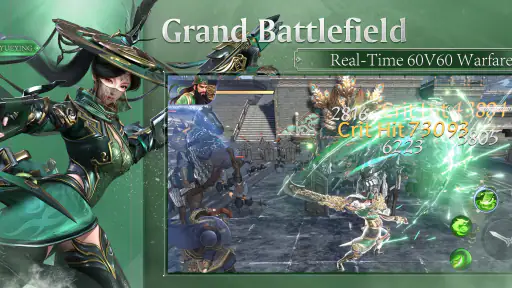
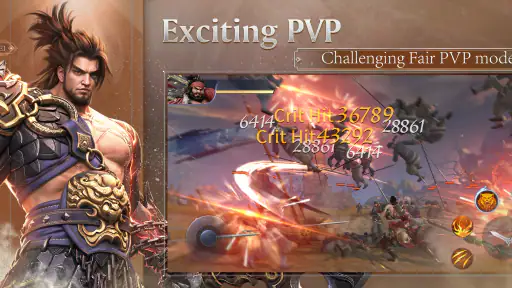
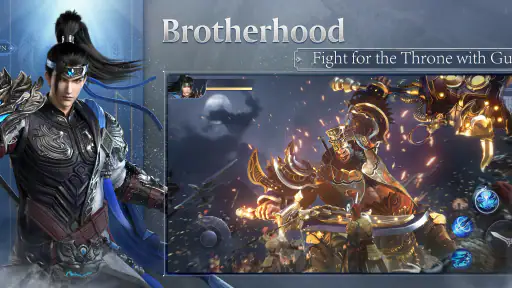
The opening stretch works because it gives me a strong sense of motion almost immediately. Instead of making me wait through a long explanation before the action begins, the game presents the battlefield as a place where my character can cut through groups of opponents and feel powerful. That “one against many” idea is more than a slogan here; it shapes the entire first impression. Enemies fill the screen, attacks arrive quickly, and progress is easy to understand even when several effects are happening at once.
That clarity matters on a phone. I do not need to study a complicated control scheme before trying a stage, and the action is structured in a way that suits short bursts. I can play while waiting for a bus, finish a small objective, and put the phone away without needing a long uninterrupted evening. For me, that was the strongest early use case: the game turns a few spare minutes into a compact action session rather than demanding the commitment of a traditional console role-playing game.
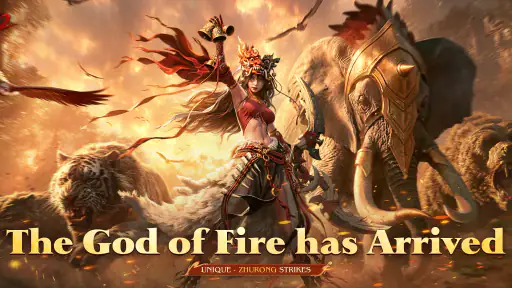
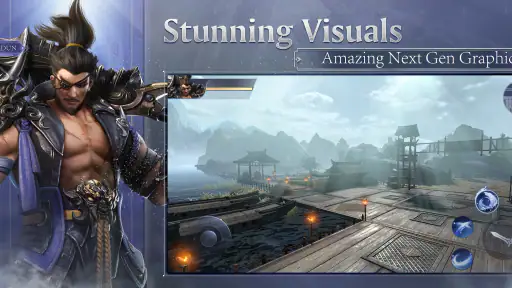
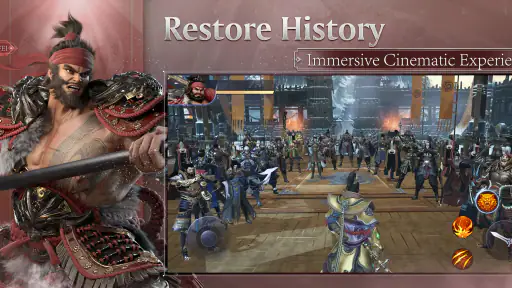
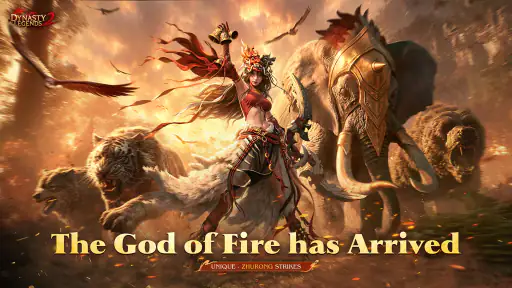
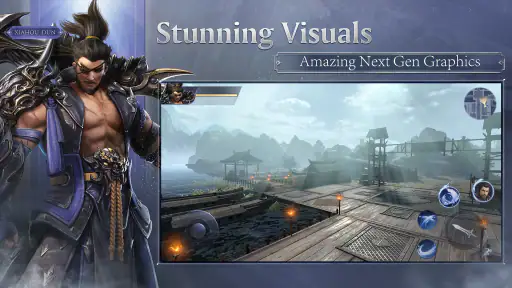
The presentation also does useful work. The warriors, battlefield encounters, and historical-fantasy atmosphere give the game a recognizable identity instead of making it feel like an abstract arena. The screen can become crowded, but that is part of the appeal during the first sessions. Watching a capable character move through a mass of enemies creates the kind of immediate spectacle that makes a free mobile action title easy to recommend to a friend who wants something energetic rather than thoughtful or slow.
Progression is another reason the first week has momentum. Each improvement gives me a reason to start another stage, and the game keeps pointing toward the next upgrade or challenge. That creates a comfortable loop: enter a battle, clear enemies, collect progress, strengthen the team or character, and return to a harder encounter. The loop is familiar, but it is presented with enough speed that I rarely felt lost during the beginning.
New players should resist the temptation to spend every reward as soon as it appears. I found it more useful to watch which character or improvement was actually carrying my battles before spreading resources too widely. Early generosity can make several options look equally important, but building a clear main path is usually less confusing than trying to raise everything at once. This is one of the first practical lessons the game does not explain very deeply: concentrated progress feels better than a scattered collection of half-developed upgrades.
The game is free to download and play, which makes experimenting easy. Its in-app purchases range from $0.99 to $99.99 per item, so the store is not something I would ignore completely. A player who likes collecting, accelerating progress, or chasing stronger results should decide on a personal spending limit before the upgrade loop becomes familiar. I did not need to treat payment as a requirement to understand the game, but the presence of purchases changes how I evaluate long-term comfort.
The Teen content rating is also worth taking seriously for families. The game’s focus is combat, and its tone is aimed more at players who enjoy stylized warrior conflict than at young children. I would not hand it to a child simply because the download is free. For an older player, the rating is less of a concern, but it still communicates the kind of action and atmosphere to expect.
What makes the combat satisfying at first
The most enjoyable part of the early experience is the contrast between crowd control and individual danger. Clearing ordinary enemies can feel effortless, while tougher encounters force me to pay more attention to positioning, timing, or the order in which I use available abilities. That contrast prevents every stage from becoming a completely mindless sweep. Even when the basic rhythm is straightforward, a stronger opponent can make the same attack pattern feel less safe.
I also like that the game’s spectacle is tied to measurable progress. Stronger attacks are not merely decorative; they help me move through stages that previously felt slow. This makes improvement easy to notice without requiring a spreadsheet. The downside is that the satisfaction can become dependent on numbers rising. When the next upgrade is expensive or the next wall arrives quickly, the same system that motivated me can start to feel like a task.
For someone choosing between this and a slower, story-heavy role-playing game, the distinction is simple. Dynasty Legends 2 is better when I want immediate combat and a visible sense of growth. A more traditional alternative is better when I want careful exploration, deeper dialogue, or a campaign that does not revolve so heavily around repeating battles. This game knows what it wants to be, and its first-week appeal comes from not pretending to be something else.
What remains after the novelty fades
The harder question is whether the game earns a stable place on my phone after the opening excitement. My answer is qualified. It has enough progression to support a regular habit, especially for players who enjoy checking in, improving a roster, and testing stronger builds against increasingly demanding encounters. It is less convincing for anyone who needs every session to feel fresh or who dislikes returning to familiar activities for incremental rewards.
Month-to-month value depends on how I define progress. If I enjoy the process of making small improvements, the game can remain useful as a dependable action break. A short session may be worthwhile because it advances a character, completes a task, or helps me prepare for a more difficult fight. If I only count a session as successful when it introduces a major new feature or dramatic change, the routine may feel thin much sooner.
This is where the game’s free structure becomes both an advantage and a limitation. I can return without paying an entry fee, but the design still asks for attention. The cost is not only financial; it is also time, focus, and patience. Players who are comfortable with a gradual mobile progression loop may see that as a fair exchange. Players who prefer a complete experience with a clear ending may find the ongoing structure less satisfying than a premium action game.
My most useful monthly routine would be to set a modest goal before opening the app. Rather than wandering through every available activity, I would choose one priority: strengthen the main fighter, clear a particular stage, or save resources for a meaningful improvement. This avoids the feeling of endless maintenance. It also makes the game easier to fit around real life, because I can stop once the chosen goal is complete instead of continuing simply because another reward is visible.
That approach reveals an important trade-off. The game provides plenty of reasons to continue, but not every reason deserves equal attention. Players who chase every reward may turn a relaxing action game into a checklist. Players who choose a narrow objective can preserve the fun of improvement while reducing the sense of obligation. In my experience, the second approach is much more sustainable.
How the progression loop affects regular play
Progression is strongest when I can connect an upgrade to a specific problem. If a stage takes too long, improving damage feels meaningful. If a tougher enemy punishes careless play, strengthening survival or learning the encounter matters more than blindly raising every available number. I found the game more interesting when I treated upgrades as answers to obstacles rather than as decorations on a constantly expanding menu.
That mindset also helps with the collection side of the experience. A broad roster can be tempting, but a new character is not automatically a better investment than improving one I already understand. Before committing resources, I would test whether a new option genuinely changes how I approach battles or simply creates another item to maintain. This is a non-obvious weakness of collection-focused mobile games: variety can look like depth while quietly increasing the amount of routine work.
For daily commuters, the game’s short-session structure is a genuine strength. I can imagine using it during a lunch break when I want action but do not have time to learn a new game. For someone who plays only once a week, however, the experience may feel less coherent. Returning after a long gap can mean remembering which upgrades matter, which goals were unfinished, and why a particular character was being developed. A game built around regular momentum naturally rewards consistent habits more than occasional visits.
The current version is 1.39.601, and the title has been available since June 12, 2022. That places it in the category of games that need to be judged as ongoing companions rather than one-time downloads. I would keep an eye on how comfortable the current routine feels instead of assuming that a large amount of content automatically means lasting value. Longevity is not just about having more stages; it is about whether the player still enjoys the way those stages are approached.
The maintenance burden behind the action
The main maintenance burden is not learning the basic combat. It is keeping track of the many small decisions surrounding progress. When several characters, upgrades, rewards, and goals compete for attention, the game can ask me to manage more than I expected from a fast action title. None of those tasks is overwhelming by itself, but together they can make a short session feel administrative.
I recommend checking the upgrade screen with a purpose rather than opening every notification automatically. If I claim everything, inspect every option, and jump between several characters, I spend more time organizing than fighting. A cleaner workflow is to finish a battle, review the strongest immediate improvement, apply it only if it supports the current goal, and then leave. This preserves the game’s action-first identity instead of allowing menus to dominate the experience.
Another practical issue is resource discipline. Free mobile games often make small purchases look harmless because the individual amounts begin low, while the complete range reaches $99.99 per item. I would treat the lower-priced options as optional conveniences, not as part of the normal cost of playing. If the game becomes enjoyable only after repeated spending, that is a sign to step back and ask whether the underlying loop is still working for me.
The minimum operating requirement is Android 8.0, which makes the game accessible to many Android users, but compatibility alone does not guarantee an equally comfortable experience on every phone. Large battles and numerous visual effects are the moments when I would pay closest attention to responsiveness and battery behavior. I would also leave enough free storage for the game and its updates rather than installing it on a device that is already struggling with space. These are ordinary precautions, but they matter more in an action game where delayed input can make a fight feel unfair.
Maintenance also includes deciding how much of the game’s notification rhythm I want in my day. A title designed around regular return visits can be useful when I want a dependable habit, but it can become noisy if I already have several similar games competing for attention. I would keep it only if its battles provide a distinct break from the rest of my app routine. Otherwise, it risks becoming another icon I open out of obligation.
Where fatigue begins
The first source of fatigue is repetition without a clear personal objective. Repeating a stage can be satisfying when I am testing a build or working toward a specific improvement. It becomes dull when I am doing it because the next step is simply more expensive. The combat remains active, but my attention becomes passive. That is the point where the game stops feeling like an action break and starts resembling routine maintenance.
The second source is visual overload. The crowded battlefield is exciting early on, yet constant effects and large enemy groups can make it harder to read what actually caused a defeat. When I lose, I want to understand whether I made a poor decision or simply met a numerical wall. If the screen communicates spectacle more clearly than cause and effect, improvement becomes less satisfying.
The third source is the tension between collection and commitment. I enjoy seeing new possibilities, but every additional option can weaken the sense that I am developing a focused team. This is why I would avoid switching direction too often. A player who loves experimenting may appreciate the variety; a player who wants a single finely tuned hero may feel that the game keeps pulling attention elsewhere.
There is also a social and competitive consideration, even for someone who mainly plays alone: long-term mobile games often create an implied pressure to keep up. I would not recommend treating every available challenge as a responsibility. The healthier way to use this title is to decide what kind of player I am going to be before the game decides for me. Casual progress is perfectly valid here, but it may not deliver the same satisfaction as constant optimization.
Who should keep it installed
I would recommend Dynasty Legends 2 to players who enjoy fast historical-fantasy combat, visible character growth, and short sessions that can be repeated throughout the week. It is especially suitable for someone who likes the feeling of becoming stronger against crowded battlefields without needing a complex control system. The free price makes it easy to sample, and the large existing audience suggests that the core idea has enough appeal to support regular play.
I would be more cautious with players who dislike in-app purchases, even if they never intend to buy anything. The purchase range can affect how the progression loop feels, particularly for people who compare their progress with players who spend. I would also steer away from it if you want a self-contained action game with a definite conclusion, minimal menu work, or a story that consistently takes priority over upgrading.
Compared with a premium action game, this one offers easier access and a more persistent progression habit, but it may feel less focused and less complete. Compared with a slower strategy game, it delivers more immediate spectacle and less deliberate planning. Compared with a purely casual arcade game, it asks for more long-term attention because progress is tied to returning and improving. Those differences matter more than the label “action”; the best alternative depends on whether you want a habit, a campaign, or a quick burst of skill-based play.
One realistic way to use it is as a controlled evening wind-down. I might play a few battles after work, spend rewards only on the character I am currently developing, and stop once that session’s goal is complete. Used this way, the game gives me action without taking over the night. If I instead open it whenever a notification appears and attempt to manage every available objective, the same design becomes tiring surprisingly quickly.
My long-term verdict
After the novelty fades, the game does not collapse, but its strengths become narrower. The battlefield remains enjoyable, the progression can still provide satisfying small wins, and the free entry point is genuinely useful for curious players. However, lasting value depends on accepting repetition, managing resources carefully, and refusing to confuse constant activity with meaningful progress.
My advice is to try it with a clear limit: give the early stages enough time to show whether the combat itself is fun, then judge the game by how you feel during ordinary upgrade sessions rather than during its most spectacular moments. If you still enjoy choosing a goal, improving a focused character, and returning for another short battle, it has earned a place in your routine. If the menus and repeated farming already feel like chores, more content is unlikely to solve the underlying problem.
HK TAIHE INTERACTIVE LIMITED has made an accessible action game with a strong first-week hook and enough progression to support committed players. I would not call it effortless long-term entertainment, because the maintenance and purchase pressure require self-control. Still, for the right player, it can become a reliable mobile companion rather than a download that disappears after a weekend. Its lasting value comes from disciplined, goal-driven play—not from trying to complete everything.
My final recommendation is therefore positive but selective. Install it if you want quick crowd battles, warrior-themed presentation, and a free game that rewards regular improvement. Skip it if you are looking for a quiet, finite, or completely frictionless experience. For me, it earns a place on the phone when I treat it as a focused action habit, not as a second job.
Pros
- Fast-paced battles with responsive controls and flashy skill animations.
- Large roster of legendary heroes offers varied team-building options.
- Auto-battle and offline progression make routine grinding more convenient.
- Frequent events provide extra rewards and new challenges to complete.
- Stylized visuals and dramatic effects suit fans of classic Chinese legends.
Cons
- Progression becomes increasingly dependent on repeated upgrades and grinding.
- Many rewards and features are locked behind daily tasks or limited events.
- Higher-level content can encourage spending on summons and upgrade materials.
- The interface may feel crowded for new players due to its many systems.
- Some battles become repetitive once the most effective team is established.

- Category
- Action
- Version
- 1.39.601