Draw Block Gladiator
- 67.00
- 4.5
- Installs
- 5.00M
- Price
- Free
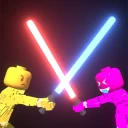
Screenshots
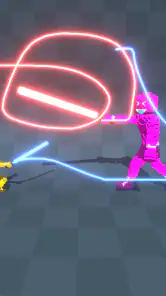
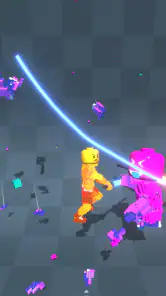
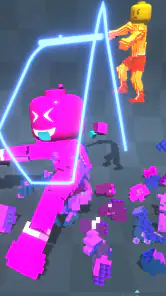
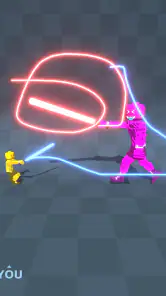
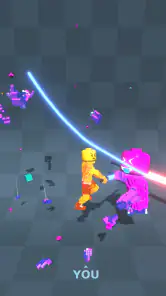
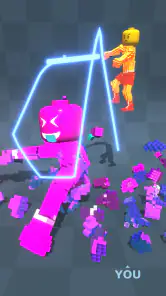
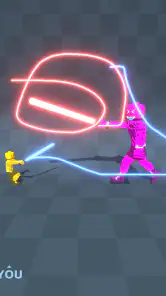
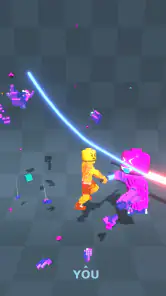
Analysis by Reviewed
I judge Draw Block Gladiator less by the promise of becoming a famous arena fighter and more by a simpler question: does drawing a weapon make each encounter feel like a small decision, rather than just another tap through a mobile action game? That is the hook that gives this game its identity. You sketch blocks to form weapons or defenses, then try to use them well in a fight. It is an inviting idea for a quick play session, though the appeal depends on whether you enjoy the act of drawing as part of the challenge.
That distinction matters if you are choosing between this and a more conventional action game. Draw Block Gladiator is not built around elaborate controls or a complicated combat vocabulary; its central interaction is deliberately easy to understand. I can imagine picking it up during a short break, making a quick attempt, and putting it down without needing to remember a long sequence of moves. The trade-off is that someone looking for deep, finely controlled fighting may find the drawing premise more appealing than the moment-to-moment combat itself.
What the first goals feel like
The early appeal is immediate: there is a clear reason to try another fight, and drawing gives the basic action a playful twist. I like that the concept asks for a little input from me instead of making every encounter feel entirely automatic. A weapon sketch feels like a small choice, while a defensive drawing encourages me to think about what I need in that moment. That is enough to make the first sessions approachable without asking a new player to learn a sprawling set of rules.
For a realistic everyday use, I would treat it as a short, focused game for the gap before a meeting or while waiting for a ride. I would play when I have enough attention to follow a fight, but not enough time to settle into a long story or a complex action campaign. The drawing mechanic gives those brief sessions a little personality. It is less suited to a moment when I need to keep switching my attention between the screen and something else, since the point is to react and make a deliberate sketch rather than leave the game running in the background.
A useful practical tip is to approach each drawing as a control choice, not a piece of artwork. The appeal is not in producing a perfect illustration; it is in making a purposeful shape quickly enough to serve the fight. I would keep my strokes simple and judge them by whether they help me attack or defend, rather than spending time trying to make them look elegant. That mindset makes the idea easier to enjoy and avoids turning a quick battle into a test of drawing neatness.
How progress signals keep a session moving
Winning gives the experience its basic sense of forward motion. The published description of progression centers on earning coins through victories and using them toward skill upgrades or new arenas. That gives a player a practical reason to return: a fight can be both a challenge in itself and a step toward something else. I find that structure more satisfying than a sequence of isolated matches, especially when I want a small goal to work toward during a short session.
Those rewards can also change how I choose to play. If I am close to an upgrade I care about, I may be more willing to retry a difficult fight; if the next reward feels distant, the same loss can feel like a stop sign. A sensible approach is to treat an upgrade as a checkpoint rather than the sole reason to play. The drawing and battle should still be enjoyable on their own, because progression works best as a nudge, not as a substitute for a fun central loop.
More From Our News Desk

Weather by Xiaomi Review: Clear at a Glance, Less Clear Up Close

X Under Pressure: Can It Recover When Posting Goes Wrong?

Clash of Clans Is Won Between the Battles

Android Auto Makes the Case for Quieter Car Software

MobiOffice: Transforming Mobile Productivity with Seamless Integration

EA SPORTS FC™ Mobile Soccer: Redefining Mobile Sports Gaming
New arenas offer another visible marker of advancement, but they are not automatically a reason for every player to keep going. If what you enjoy is the feel of drawing a weapon and adapting in a fight, reaching a new arena can refresh the setting. If you mainly want a long sequence of story scenes or a detailed character-building system, arena unlocks may not satisfy that preference. I would choose this game for the interaction first and treat its progression as a bonus.
Where the challenge and pacing may divide players
The central challenge is a mix of choosing what to draw and handling an opponent, rather than mastering a large collection of combat inputs. That makes the game easier to approach than many action titles, but it does not mean every encounter will suit every player. Someone who likes improvising and adjusting a simple idea may enjoy the tension. Someone who wants precise, repeatable control over a fighter may find drawing less predictable or less satisfying than direct button-based combat.
When a battle goes badly, I would first change the shape or purpose of my next drawing instead of repeating the same attempt without thought. That small reset gives the mechanic room to feel like a decision. It also helps separate a loss caused by a poor choice from one that simply reflects the game’s challenge. If I am no longer interested in experimenting, continuing only to reach the next unlock is unlikely to improve the session.
The pace is most comfortable for players who like a clear action loop and short-term goals. It is not the option I would pick when I want a calm puzzle with no pressure, since the fights ask me to respond rather than leisurely plan every move. Nor would I choose it as a replacement for a large action adventure: its appeal lies in the compact draw-and-battle idea, not in a broad campaign. That contrast is useful when deciding whether it belongs in your rotation.
Who should try it, and what to expect
Made by KAYAC Inc., this free action game has an average rating of 4.5 from around 8,600 ratings, with more than five million installs. It is rated Teen, so it is aimed at an older audience than a young-child game. The current version is 074, and it requires Android 7.0 or later. Those details make it easy to judge basic compatibility and audience fit, while the key personal question is whether a drawing-based fighting loop sounds fun to you.
I would recommend it to someone who enjoys quick action, playful controls, and the small satisfaction of improving a simple technique. It is also a reasonable choice for a player who wants to try something different from ordinary tap-to-attack combat without committing to a long game. I would steer away a friend who prefers a story-led adventure, carefully tuned fighting-game inputs, or a quiet experience that never asks for a fast response. The idea is distinctive, but it is not a universal substitute for those other styles.
One trade-off worth considering is the gap between a clever control concept and lasting variety. The draw mechanic can make a familiar fight feel hands-on, but it has to keep feeling worthwhile after the novelty wears off. I would decide by paying attention to whether I am still making different choices from one encounter to the next, rather than measuring enjoyment only by how many rewards I have collected. If the drawing remains satisfying, a modest progression loop can be enough; if it becomes routine, extra unlocks may not change how the core action feels.
My progression verdict
Have you ever dreamed of being a legendary gladiator in ancient times, battling your way through epic arenas? Well, now you can, thanks to the mobile game Draw Block Gladiator. This app has swooped in to capture the hearts of mobile gamers everywhere, and today I’m here to spill the beans about it.
Getting Started with Your Gladiatorial Journey
So, what’s the deal with Draw Block Gladiator? The premise is pretty straightforward yet exhilarating. You start as a novice gladiator, and your mission is to rise through the ranks by battling other gladiators in a variety of creative arenas. The twist? You use your finger to draw your weapons and defenses. It’s like being a kid again, armed with crayons but fighting for your life.
A Unique Gameplay Experience
Let’s talk about what makes this app stand out from the crowd. The gameplay revolves around drawing blocks that transform into weapons or shields. The more accurately you draw, the more effective your weapons will be. It’s a fun mechanic that keeps you on your toes and ensures that no two battles are ever the same. I’ve spent countless hours trying to perfect my sword drawing skills, and let me tell you, it’s harder than it sounds!
The visuals are vibrant and engaging, with each arena having its own unique design. The sound effects add an extra layer of immersion, making you feel every clash and block. Plus, the app runs smoothly even on older devices, which is a huge win for those of us who haven’t upgraded in a while.
Challenging Yet Rewarding
One of the things I love about this game is how it strikes the perfect balance between challenge and reward. As you progress, the battles get tougher, and you’ll need to think on your feet to outsmart your opponents. But the sense of accomplishment you get from winning a hard-fought battle is second to none. It’s the kind of game where you’ll find yourself saying, "Just one more match!" over and over again.
There’s also a neat little progression system in place. As you win battles, you earn coins that you can use to upgrade your gladiator’s skills or unlock new arenas. It keeps you motivated to keep playing and improving, which is a testament to the game’s addictive nature.
As for the practical questions, the basics are straightforward: it is free to play, and Android users need version 7.0 or later. The Teen rating is worth keeping in mind when choosing a game for a younger player. Its action label is fair, but the distinctive part is not a complicated combat system; it is the drawn input layered into the fights. I would not assume that a high rating alone means it will suit everyone, because the control idea is quite specific.
The game’s 074 version is a useful point of reference if you are checking compatibility, but I would focus my decision less on version numbers and more on the kind of session I want. For a quick bout with a hands-on twist, the premise makes sense. For a long evening of narrative exploration, a competitive fighter with precise controls, or a game built around patient planning, I would look elsewhere. Those alternatives offer different strengths rather than simply doing this one thing better.
One small habit that helps me get a fair read on the game is to separate experimentation from grinding. In one session, I can try a different drawing approach and see how it changes the fight; in another, I can aim to win and make progress. Mixing both goals can make each battle feel muddled, especially if I judge a new tactic only by whether it immediately earns a reward. Keeping the test simple makes the drawing mechanic easier to understand.
I would also set a natural stopping point before opening the game: a couple of fights, or until I reach a particular upgrade goal. That is not a rule the game imposes, but it is a useful way to keep a short-session action game from turning into aimless retries. If I lose repeatedly and stop enjoying the process, taking a break is better than treating the next unlock as something I must earn right now.
There is a modest but important distinction between progression and depth. Coins, skill upgrades, and arena access provide direction, yet they do not automatically mean that every player will find a deep long-term system. I would see them as markers that help structure play, not as a promise of a sprawling campaign. That expectation keeps the game in its best light: a compact action experience whose unusual input is the main attraction.
The audience fit is clearest for people who like tactile, slightly playful controls and can tolerate the fact that a drawn gesture may feel less exact than a button press. If a younger player is interested, the Teen age rating should guide the decision rather than the cartoonish drawing premise alone. For someone who enjoys action but dislikes improvising with touch input, a conventional arena fighter may be the more comfortable pick.
My overall advice is to try it for the mechanic, not simply for the gladiator theme or the promise of advancement. If drawing a weapon and deciding when to defend sounds enjoyable, the fights and their small rewards can make a satisfying pocket-sized routine. If that interaction does not click, collecting coins or reaching another arena is unlikely to change your mind. That is why I see its progression as a helpful nudge around a distinctive core idea, rather than the main reason to stay.
Final Thoughts
If you’re looking for a game that combines creativity, strategy, and a touch of nostalgia, Draw Block Gladiator is definitely worth checking out. It’s a refreshing take on the classic gladiator theme, offering a unique blend of drawing mechanics and intense battles. Whether you’re a casual gamer or a hardcore gladiator wannabe, this app has something to offer. So, go ahead, unleash your inner warrior, and see how far you can climb in the gladiatorial ranks!
Draw Block Gladiator Frequently Asked Questions
Who developed Draw Block Gladiator, and what kind of game is it?
Draw Block Gladiator is an action game developed by KAYAC Inc. Its central idea is captured by the invitation to defeat enemies with a brilliant draw, making drawing part of the action rather than simply a way to decorate the screen. If you enjoy games that pair quick, creative decisions with combat-themed challenges, its premise may appeal to you.
Is Draw Block Gladiator suitable for younger players?
Draw Block Gladiator carries a Teen age rating, so it may be better suited to teenagers and adults than to younger children. Parents and guardians should consider that rating alongside a child’s individual preferences and sensitivities before downloading. The game’s gladiator-and-enemy theme is part of its action focus, so it is worth checking whether that style is appropriate for the intended player.
What is Draw Block Gladiator and how does it work?
Draw Block Gladiator is an engaging puzzle game where players draw shapes to create defensive structures, protecting a gladiator from various threats. The game combines strategy and creativity, challenging players to think ahead and design effective blockades. With each level, the difficulty increases, requiring more inventive solutions to keep the gladiator safe.
Is Draw Block Gladiator free to play?
Draw Block Gladiator is free to download and play, offering a range of levels and challenges at no cost. However, it does include in-app purchases that players can opt for to enhance their gaming experience, such as buying extra hints or unlocking additional levels. These purchases are optional and not necessary to enjoy the game fully.
What are the system requirements for Draw Block Gladiator?
Draw Block Gladiator requires Android 7.0 or later. The game is designed for mobile play, and checking your device’s operating-system version before downloading is a practical way to avoid compatibility problems. If you use an iPhone or iPad, check the game’s App Store compatibility details for your device before installing.
Pros
- Intuitive user interface
- Engaging gameplay mechanics
- Wide variety of levels
- Stunning graphics
- Smooth performance
Cons
- Ads can be intrusive
- Occasional bugs
- Limited character customization
- In-app purchases required
- Requires constant internet connection
- Category
- Action
- Version
- 074