Door Kickers
- 2.23K
- 4.2
- Installs
- 500.00K
- Price
- $3.99

Screenshots
Analysis by Reviewed
I approached Door Kickers as a strategy game for players who enjoy pausing to think rather than reacting constantly. Its top-down view makes the situation easy to read, but the decisions are not effortless: a plan that looks tidy on screen can still go wrong once a mission unfolds. That tension is the appeal for me. It feels less like an arcade shooter and more like working through a tactical problem one choice at a time.
Why its price is a straightforward decision
This is a paid game, listed at $3.99, rather than a free download supported by optional spending. That makes the choice fairly direct: you decide whether its planning-focused missions are worth the upfront cost. I would not judge it by how quickly it delivers action; its value comes from taking time over a plan, trying it, and learning from what happened.
That purchase model suits players who would rather pay once for a focused game than start with a free download and weigh optional purchases along the way. The practical question is whether you want this particular kind of tactical thinking. If you are unsure, consider how often you enjoy replaying a difficult encounter to understand what went wrong; that habit is a better clue than simply liking strategy games in general.
Planning, execution, and the value of each mission
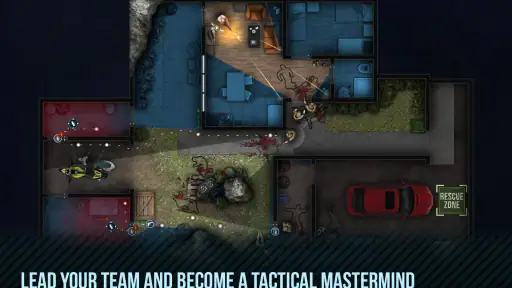
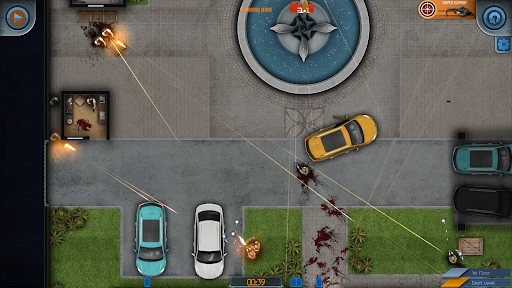
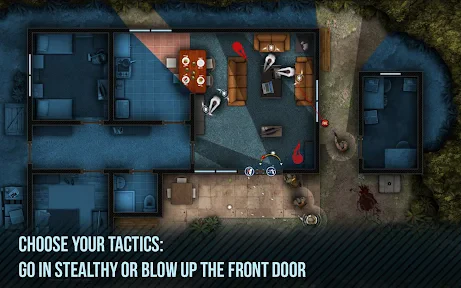
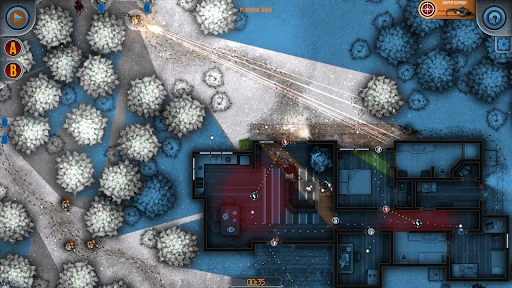
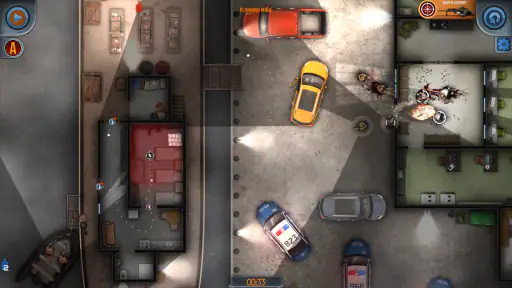
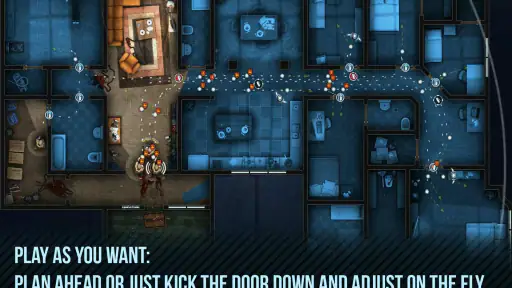
Let’s jump right into the heart of Door Kickers. The game's mechanics are simple yet deeply engaging. You’re given a bird’s eye view of the action, where you control a SWAT team tasked with neutralizing threats and saving hostages. Planning your moves is crucial, and this is where the game truly shines. You’ll find yourself pausing the game to strategize your next move, and trust me, it’s addictive. It’s like solving a complex puzzle, but with the adrenaline rush of a high-stakes operation.
The pleasure of thinking ahead
One of the biggest draws of Door Kickers is its emphasis on strategic planning. You’re not just running in guns blazing; you need to think three steps ahead. Each mission presents a new challenge, requiring you to adapt and refine your approach. The satisfaction of executing a well-laid plan is second to none, and the game does a fantastic job of making you feel like a tactical mastermind.
The key is to think of a plan as a hypothesis, not a guarantee. I find it more useful to identify the decision that matters most before starting, then pay attention to how that choice affects the outcome. When an attempt falls apart, changing one part of the approach at a time can make the next run more informative. It turns failure into feedback rather than a reason to repeat the same sequence without understanding it.
This also gives the game a distinct rhythm: observation, a considered decision, execution, and then a quick review of what happened. It is a satisfying loop when I am in the mood to focus. It is less appealing when I want to play on autopilot, because even an apparently simple mission asks me to stay engaged with the tactical situation instead of just moving forward.
More From Our News Desk

Weather by Xiaomi Review: Clear at a Glance, Less Clear Up Close

X Under Pressure: Can It Recover When Posting Goes Wrong?

Clash of Clans Is Won Between the Battles

Android Auto Makes the Case for Quieter Car Software

MobiOffice: Transforming Mobile Productivity with Seamless Integration

EA SPORTS FC™ Mobile Soccer: Redefining Mobile Sports Gaming
Clear presentation, without visual spectacle
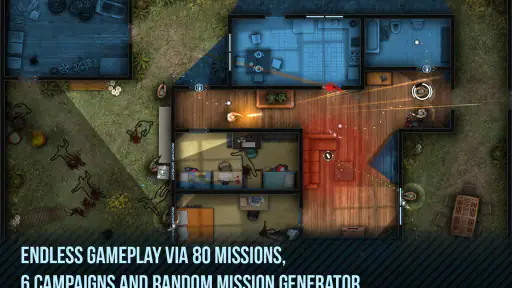
While the graphics aren’t cutting-edge, they are perfectly suited to the game’s style. The isometric view gives you a clear perspective on the action, and the environments are detailed enough to enhance the tactical feel without overwhelming you. The sound design is also on point, with realistic gunfire and satisfying sound effects that make every mission immersive.
For me, clarity matters more here than visual flash. A tactical view has to let me read a room and make decisions without turning the screen into a spectacle that distracts from the problem. That restrained presentation supports the planning-first design, though players shopping for a visually elaborate action game may find it modest. The appeal is in understanding the situation and seeing a plan play out, not in cutting-edge graphics.
The sound helps give the action weight, but I would not treat it as a substitute for careful observation. My attention is still on the layout and the choices I am making. If I am playing in a noisy room or with distractions, the deliberate pace can make it easier to pause and regroup than in a reflex-heavy shooter, but it does not remove the need to follow what is happening.
How to make retries count
Another aspect worth mentioning is the game’s replayability. With a variety of missions and the ability to try different strategies, you’ll find yourself replaying levels to perfect your approach. The game’s modding community also adds a wealth of user-generated content, ensuring that you’ll never run out of new challenges.
On a replay, resist the temptation to change every decision at once. If you alter the route, timing, and sequence together, it is difficult to tell which adjustment actually helped. I get more out of a mission by keeping most of my approach steady and testing one meaningful change. That small discipline makes the challenge easier to learn from and gives repeated attempts a purpose beyond chasing a perfect result.
There is a trade-off in that replay loop: variety in approaches can make a familiar mission feel fresh, but replaying is still replaying. If I do not enjoy refining a solution, the same feature that gives the game longevity can feel like a demand to redo work. The user-created content offers another reason to return, but the core fit remains the same: it rewards curiosity about how a tactical problem can be solved.
Making room for it in a short session
A useful way to approach a mission is to treat the first attempt as a scouting run, not a test of whether you are good at the game. Notice where your plan becomes fragile, then change one decision on the next try rather than rebuilding everything at once. That makes retries feel like useful experiments instead of punishment. It also suits a spare moment at home: you can focus on a single operation, pause to consider the layout, and stop when you have reached a natural break.
For example, if I had a short stretch before dinner, I would pick one mission and aim to improve one part of my approach, such as timing or the route I chose. I would not expect every session to end in a flawless run. The game rewards patience, but that same deliberate pace is a drawback if I want something that delivers immediate, uncomplicated action.
That makes it a reasonable choice for a player who wants a contained problem rather than an ongoing campaign to keep track of. I can settle in, concentrate on one operation, and leave with a specific lesson from the attempt. But a spare moment is only useful if I am in the right mood: if I am tired, distracted, or hoping to switch off completely, planning and retries may feel like effort rather than entertainment.
Where the challenge can become friction
The central trade-off is that planning is satisfying only if you enjoy revising a plan when it fails. A careful approach can still produce a messy outcome, and repeating a mission to get a cleaner result may feel rewarding to one player and tedious to another. I’d recommend changing one element at a time when retrying: it is easier to tell whether a different route or sequence helped than when you alter everything at once.
That deliberate problem-solving sets it apart from many familiar action games, where movement and quick reactions dominate. Among strategy games, it is a more hands-on, mission-by-mission choice than a broad management experience built around long-term economies or territory. If you want a relaxed strategy game that lets you make decisions without the pressure of tactical operations, another style will suit you better.
Compared with a conventional shooter, the main appeal is not a constant stream of movement; it is the chance to consider a situation before committing. Compared with a city-builder or a strategy game centered on developing an economy, it offers a much narrower focus on individual operations rather than a long arc of expansion. Those differences are not flaws, but they matter: someone wanting broad strategic systems may find the scope too focused, while someone who likes compact tactical puzzles may prefer that concentration.
One less obvious cost of this design is attention. Because the satisfaction comes from noticing why a plan succeeds or fails, playing while distracted can make the experience feel more random than it is. I would choose it when I have enough mental space to observe and reflect, rather than queueing it up as background entertainment. That expectation helps avoid confusing a deliberate challenge with an easygoing, low-attention game.
Who is likely to get the most from it
I’d point this toward players who like tactical puzzles, careful observation, and replaying a scenario to improve their execution. It is also a good fit if you want a strategy game that you can approach in focused bursts instead of committing to a long session. The Teen age rating is useful context for choosing it for a younger player, though I would still consider whether its armed SWAT setting is appropriate for that person.
KillHouse Games developed the game, which has an average rating of 4.2 from around 20,000 ratings and more than 2,000 written reviews. It has passed 500,000 installs. Those figures suggest a substantial audience, but they do not tell me whether its careful pace will match your taste; the best test is whether planning and retries sound enjoyable to you.
I would also consider it for someone who enjoys learning through trial and adjustment more than collecting upgrades or watching a long story unfold. Its mission-by-mission structure makes it easy to focus on a tactical problem, while the replay options give a player room to try a different solution. That is a specific kind of value, not a universal reason to buy: a player who mainly wants narrative momentum or a broad campaign should look for a different kind of game.
What to expect before deciding
If you are wondering whether it is suitable for casual play, I’d say yes in the sense that you can work through a mission at your own pace, but not if “casual” means little need to think or tolerate setbacks. If you are deciding between this and a faster shooter, choose this when you want to plan; choose the shooter when you want speed and continuous action. If a broad strategy campaign is what you have in mind, look for a game focused on building and managing over time instead.
The game was released on September 3, 2015, and its established approach still makes sense for players who enjoy this particular kind of tactical challenge. I would skip it if I were buying solely for elaborate modern visuals, effortless progress, or a purely reflex-based experience. The 4.2 average is a helpful snapshot of player response, not a promise that every mission or play style will click for you.
For a younger player, I would treat the Teen rating as a starting point for a parent or guardian’s decision, not as a complete description of whether the setting will feel appropriate. For anyone deciding between this and a fast shooter, the choice is less about which is generally better and more about what you want from a session: measured planning and tactical problem-solving here, or momentum and immediate reactions elsewhere.
Returning to missions and community content
Another aspect worth mentioning is the game’s replayability. With a variety of missions and the ability to try different strategies, you’ll find yourself replaying levels to perfect your approach. The game’s modding community also adds a wealth of user-generated content, ensuring that you’ll never run out of new challenges.
I would treat community-made content as an extra reason to keep exploring rather than the only reason to make the purchase. The game’s fundamental appeal is already present in its tactical missions and the freedom to rethink an approach. If experimenting with other players’ creations sounds appealing, that can broaden the experience; if you prefer a tightly self-contained game, the core mission loop is the more important consideration.
In conclusion, Door Kickers is more than just a game; it’s an experience that challenges your mind and reflexes. Whether you’re a fan of strategy games or just looking for something new to dive into, this game will not disappoint. It’s a tactical playground where each decision matters, and the feeling of pulling off a successful mission is incredibly rewarding. So, if you’re ready to test your strategic skills and have a blast doing it, give Door Kickers a try. You won’t regret it!
My buy-or-skip take
For me, the $3.99 price makes sense if you expect to spend time planning and replaying rather than treating each mission as a quick action level. I would buy it for the satisfaction of improving a tactical approach; I would skip it if I wanted constant movement, a gentle learning curve, or a strategy game centered on long-term empire building. Its strongest value is focused and specific, and knowing that before paying is more useful than expecting it to suit every strategy fan.
My bottom line is to buy it when the thought of revisiting a mission to make a smarter plan sounds enjoyable, not like a chore. If you need instant excitement or a low-effort way to fill a few minutes, there are better matches. But for a player who likes studying a tactical situation, making a decision, and learning from its consequences, this is a focused paid game with a clear reason to exist.
Door Kickers Frequently Asked Questions
Is Door Kickers suitable for short play sessions?
Door Kickers is a tactical strategy game built around planning and carrying out SWAT operations. Its mission-focused structure can work well when you want to concentrate on a single operation, but the deliberate pace means it is not simply a quick-action game. You will get the most from a session if you enjoy studying a situation, choosing a plan, and seeing how that plan unfolds.
Does Door Kickers require quick reflexes?
The game places a strong emphasis on tactical thinking rather than relying only on fast reactions. You command a SWAT team, plan movements, and coordinate actions, with the ability to pause and consider your approach. Situations can still call for adjustments as events unfold, but players who prefer to think through decisions before acting may find this style more appealing than a game centered on constant button-pressing.
Is Door Kickers a single-player game, and can I play it offline?
Door Kickers is built around commanding a SWAT team through tactical missions, making it a good fit for players who enjoy planning and carrying out operations at their own pace. You can focus on choosing routes, coordinating actions, and responding to changing situations. If you prefer games centered on direct competition or shared online play, its tactical, mission-focused style may feel different from what you are looking for.
What is Door Kickers and what platforms is it available on?
Door Kickers is a real-time strategy game that combines tactical planning with action-packed gameplay. You take control of a SWAT team, planning and executing missions to neutralize threats and save hostages. The game is praised for its realistic scenarios and depth. It is available on Windows, macOS, Linux, Android, and iOS, making it accessible on both desktop and mobile platforms.
How does the gameplay of Door Kickers work?
In Door Kickers, players command a SWAT team through various tactical missions. The game is played from a top-down perspective where you can pause and plan movements, set up breaching points, and coordinate your team's actions. The real-time nature allows for quick adjustments in strategy. The game tests your tactical thinking and decision-making skills, offering a unique blend of strategy, planning, and execution.
Pros
- Intuitive controls enhance gameplay.
- Variety of tactical scenarios.
- Highly replayable missions.
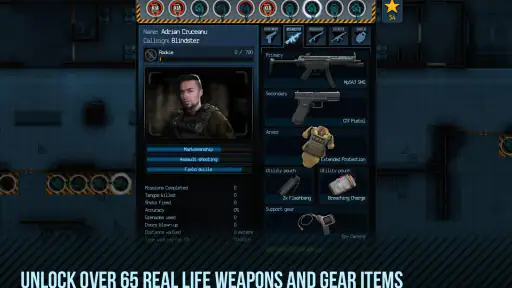
- Customizable squad loadouts.
- Realistic sound effects.
Cons
- Complex learning curve.
- Limited tutorial guidance.
- Occasional AI glitches.
- Some repetitive missions.
- No multiplayer mode.
- Category
- Strategy
- Version
- Varies with device