Destiny Hero: Black Myth RPG
- 24.00
- 4.9
- Installs
- 10.00K
- Price
- Free

Screenshots


Analysis by Reviewed
I spent time with Destiny Hero: Black Myth RPG as a mobile role-playing game from PlayDrive Games, and my first impression was that it aims for quick, low-friction sessions rather than a slow, traditional adventure. The central promise is an unusually generous starting point: the game presents a destiny-changing hero journey built around a large summon pool, with every hero included in its advertised experience. That immediately makes it more accessible than many collection RPGs that ask you to wait weeks before a roster feels complete.
That accessibility is also the main reason I would recommend it selectively. If you enjoy assembling a team, comparing heroes, and making progress in short bursts, this is an appealing free game to try. If you want a deeply explained world, a carefully paced single-player campaign, or a role-playing game where every character is earned through long-term exploration, its design may feel too focused on immediate collection and rapid decisions.
How Destiny Hero feels during ordinary play
The game is listed as a role-playing title, but I would approach it as a mobile-first RPG designed around convenience. The short sessions are the important part. I can imagine opening it while waiting for transport, checking the current team, using available summons, and making a few upgrades without needing to reserve a full evening. That rhythm suits a phone better than a sprawling adventure that expects constant attention.
The idea of rewriting destiny gives the presentation a clear hook, while the Black Myth theme supplies a recognizable fantasy atmosphere. What matters in practice is whether the game lets that theme support the decisions instead of burying them under menus. My experience with this kind of structure is that the most satisfying moments come from seeing a newly obtained hero immediately change how I approach a battle, not from simply watching another reward animation.
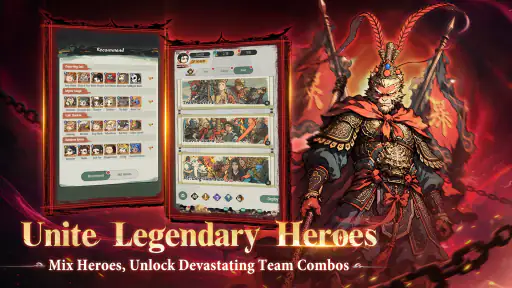
The large summon offer makes the opening feel less restrictive than the usual collection RPG. I do not have to treat the first few characters as permanent commitments, and that lowers the pressure to restart repeatedly in search of a preferred beginning. For a new player, that is a meaningful advantage: I can learn the basic flow with a useful roster instead of spending the first session worrying that I chose badly.
Speed expectations for short sessions
In everyday use, I would expect the game to feel fastest when I already know what I want to do. Checking a team, claiming available rewards, and choosing the next improvement should be straightforward. The slower moments are likely to come from the collection loop itself: browsing heroes, comparing options, and deciding where limited resources should go. That is not necessarily a flaw, but it means the game’s perceived speed depends on how much time I spend making choices.
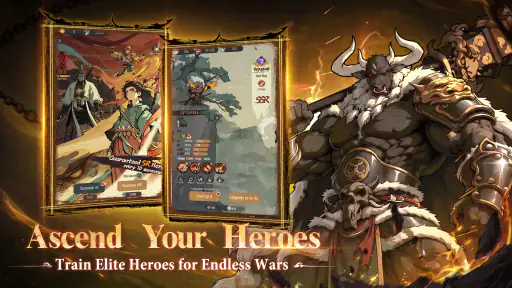
My practical tip is to avoid upgrading every character simply because the game makes new heroes easy to obtain. A broad roster is useful, but scattering materials across too many units can make progress feel slower. I would first choose a small working group, test how they perform together, and keep reserve heroes available for situations where a different combination is more suitable. This approach turns the generous summon system into a strategic advantage rather than a source of clutter.
The free entry point also helps with speed expectations. I can install the game without paying and decide whether its loop suits me before spending anything. The optional purchases range from $0.49 to $99.99 per item, so the store economy covers both small convenience purchases and much larger commitments. I would treat the low-cost options cautiously rather than assuming they are necessary, especially while I am still learning which heroes I actually enjoy using.
What happens during heavier play
The demanding moments are not limited to battles. A collection RPG can become busy when several systems are active at once: summoning, team building, progression, rewards, and repeated checks for new resources. Even if each individual screen is simple, moving through many screens in one sitting can make the experience feel heavier than a quick battle suggests. I found that the best way to keep the game manageable was to give each session a purpose instead of opening every available menu.
For example, a useful everyday session might be a ten-minute check during a lunch break. I would collect what is ready, improve the main team, use summons only after deciding what kind of hero I need, and stop once the next upgrade requires a longer commitment. That prevents the game from turning a short break into an unplanned shopping or inventory session.
Longer play can expose a trade-off in the generous roster. Having many heroes available creates more experimentation, but it also creates more comparisons. Players who enjoy testing combinations will see this as content; players who prefer a clear path may experience it as decision fatigue. I would recommend taking notes mentally—or keeping a simple personal shortlist—of the heroes that fit your preferred style. That makes later summons easier to evaluate and reduces the temptation to replace a functional team every time something new appears.
Another useful habit is separating excitement from usefulness. A rare-looking or newly unlocked hero may be interesting, but the right question is whether that character improves the group I am actually using. In this game, the value of a summon is not only the hero itself; it is also the time and resources needed to bring that hero into the team. That is the kind of trade-off a short store summary cannot explain, and it becomes important once the initial novelty wears off.
Reliability and recovery after interruptions
For a mobile RPG, reliability is closely tied to how forgiving it feels when I have to stop suddenly. A game that expects long uninterrupted sessions is inconvenient on a phone, while a game built around compact progress is easier to fit into real life. Destiny Hero is most attractive to me in the latter role. I can treat it as a game for recurring check-ins rather than something that demands my full attention every time I open it.
I would still avoid beginning a major progression decision when I am about to lose signal, enter a meeting, or put the phone away. Summoning and team changes are moments where I want enough time to review the result rather than tapping quickly through the interface. The game’s short-session appeal does not mean every action should be rushed. In fact, slowing down for irreversible or resource-heavy choices is one of the simplest ways to avoid regret.
Recovery also matters when a session is interrupted by a phone call or low battery. My preferred routine is to finish one clear task before closing the game: collect a reward, complete a team adjustment, or stop after a summon result has been reviewed. That creates a natural checkpoint in my own play pattern, even when I am not sure how much progress the game preserves automatically. It is a practical way to make the experience feel dependable without making claims about technical behavior that the game does not clearly establish.
The current version is 1.0.4, which suggests a relatively early stage for the product. I would keep expectations sensible here. Early versions can feel fresh and responsive, but they may also have rough edges in balancing, explanations, or menu flow. The important test for me is whether those imperfections prevent normal play. If a confusing screen merely takes a few minutes to understand, I can live with it; if it repeatedly interrupts the basic summon-and-upgrade loop, that would become a stronger reason to wait.
Device constraints and resource awareness
The game supports Android devices running version 5.0 or later, which gives it a broad compatibility range. That does not mean every compatible phone will deliver the same experience. Older hardware may handle short visits comfortably but become less pleasant during longer sessions, especially if the game displays several animated screens or keeps many collection elements active. I would begin on an older device with moderate expectations and close other demanding apps before playing.
On a newer phone, I would expect the main advantage to be consistency: quicker movement between screens, fewer pauses while changing teams, and a more comfortable experience during extended roster management. I would not judge the game solely by its first minute, because the heavier feeling may appear after repeated navigation rather than during the opening sequence. A short trial session followed by a longer one is a better real-world check.
Storage and battery are also practical considerations for this type of game. A title built around frequent rewards, heroes, and visual presentation can become something I return to often, so its impact is not only about one installation. I would leave enough free space for normal updates and avoid playing lengthy sessions at high brightness if battery life is a concern. Those are simple habits, but they make a noticeable difference when a game becomes part of a daily routine.
The Teen content rating is another reason I would consider the audience carefully. Parents should look at the game alongside the child’s comfort with fantasy combat, character collection, and optional purchases. The purchase range is especially relevant on a shared device. I would use the game’s free starting point to evaluate the experience first and set spending boundaries before experimenting with any paid item.
Where it stands beside familiar RPG alternatives
Compared with a classic story-driven RPG, Destiny Hero puts less emphasis on a single carefully controlled protagonist and more on the excitement of building a group. That makes it a better fit for someone who enjoys variety and repeated team adjustments. A traditional adventure is usually the stronger choice if I want exploration, a long narrative arc, and a world that unfolds at a deliberate pace.
Compared with a competitive collection game, this title’s appeal is the promise of broad hero access and a less restrictive beginning. I do not need to view the opening roster as a narrow sample of what the game might eventually become. The trade-off is that a wide selection can weaken the sense of scarcity that makes some collection games compelling. If the thrill for me comes from slowly earning one prized character, the generous approach may feel less dramatic.
It also differs from a simple idle RPG. Idle games are often most satisfying when I want progress to happen with minimal input. Here, the summon and team-building angle gives me more reasons to make decisions, but that also means I need to pay attention to where resources go. I would choose this game over a purely passive alternative when I want to participate in roster planning, not merely collect rewards.
One of the less obvious strengths is how well the game can serve as a testing ground for RPG preferences. Because the roster is not presented as an intimidating long-term barrier, I can try different hero types and learn whether I enjoy aggressive teams, defensive setups, or flexible combinations. That makes it suitable for newcomers who are curious about collection RPGs but do not yet know which style they prefer.
Who should play, and who should skip it
I would recommend Destiny Hero to players who like fantasy hero collections, frequent small decisions, and mobile sessions that can be fitted around a busy day. It is particularly suitable for someone who wants to experiment with a broad cast without waiting a long time to see different possibilities. The free price also makes it easy to test without treating the first download as a financial commitment.
I would be more cautious recommending it to players who dislike summon-based progression, menu-heavy management, or optional purchases. Even when spending is not required, the presence of items priced up to $99.99 can affect how the experience feels, especially for anyone who prefers a single upfront purchase with no store pressure. Players who want a fully linear RPG should also look elsewhere, because the collection structure naturally encourages comparison and optimization.
For younger players, I would not rely on the Teen label alone. I would check the game personally, discuss the fantasy content, and protect payment controls on the device. The free download is convenient, but convenience should not replace supervision when optional purchases are available.
My practical way to get started
My first recommendation is to spend the opening session learning the rhythm rather than chasing a perfect account. Use the available summons to understand the range of heroes, then select a manageable core group. The objective is not to own everything immediately; it is to discover which characters make the game enjoyable for you.
Next, I would keep a reserve of resources until I understand the game’s upgrade priorities. Early rewards can create the impression that every improvement is affordable, but that feeling may change once the roster expands. Saving a little gives me room to react when a hero fits my preferred team better than expected.
Finally, I would judge performance over several ordinary sessions instead of one enthusiastic first play. Check how quickly the game opens, how comfortable the menus feel, and whether longer visits remain stable on your phone. If the experience stays smooth enough for your routine, the broad hero approach is easy to appreciate. If it becomes tiring or demanding, no amount of summon variety will fix that basic mismatch.
My verdict after using it
Destiny Hero: Black Myth RPG is an approachable role-playing game with a clear focus on hero collection and quick mobile engagement. PlayDrive Games has positioned it as a free experience, and its average rating of 4.9 from around 5.7 thousand ratings shows that the early audience has responded very positively. It has also passed 10 thousand installs, giving it a growing player base without making it feel like an established giant that a newcomer must catch up with immediately.
I like the way the broad summon concept reduces the usual early frustration of collection RPGs. I can explore different heroes sooner, build a team around my own preferences, and fit progress into short breaks. The strongest practical insight is that the game rewards organization: choosing a core group, separating useful upgrades from impulsive ones, and treating summons as team decisions rather than isolated prizes.
Its limitations are just as clear. The large roster can create choice overload, optional purchases may not suit players who dislike free-to-play economies, and the early version means I would evaluate stability and menu comfort on my own device. The Android requirement of 5.0 or later is welcoming, but compatibility alone cannot guarantee the same speed or battery experience across every phone.
Overall, I would install it if I wanted a free fantasy collection RPG for recurring short sessions and enjoyed experimenting with heroes. I would skip it in favor of a premium story RPG if I wanted a focused narrative, a fixed cast, or a purchase-free experience. For the right player, the combination of accessible summoning, flexible team building, and a mobile-friendly rhythm makes it worth trying; the key is to play deliberately rather than letting the size of the roster or the purchase menu dictate the pace.
Pros
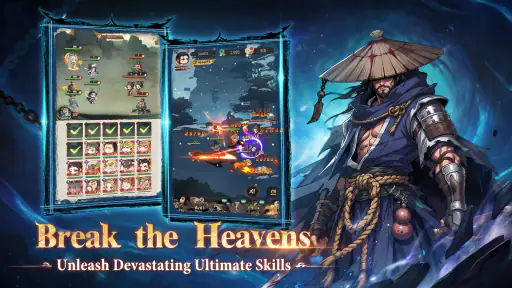
- Distinctive dark-fantasy art style inspired by Chinese mythology
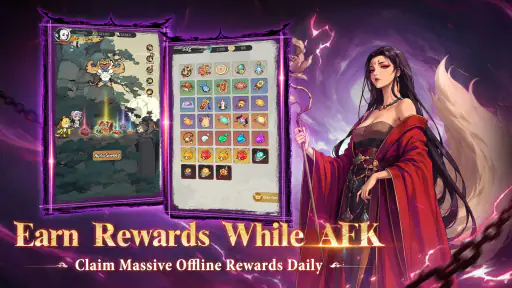
- Idle progression lets heroes earn rewards while you are offline
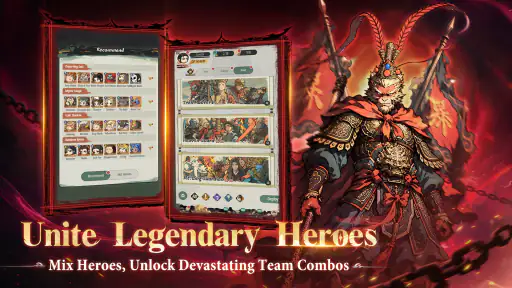
- Large roster allows varied team combinations and upgrade paths
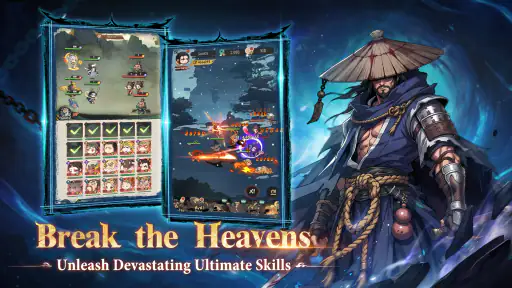
- Short battles make it convenient for quick mobile gaming sessions
- Frequent events can provide extra resources and limited-time rewards
Cons
- Progression may slow considerably without regular resource spending
- Combat can feel repetitive once effective team formations are found
- Many upgrade systems may overwhelm new players at first
- Online connection is generally required to access the game
- Limited-time events can create pressure to log in frequently

- Category
- Role Playing
- Version
- 1.0.4