Coromon
- 669.00
- 4.6
- Installs
- 1.00M
- Price
- Free

Screenshots
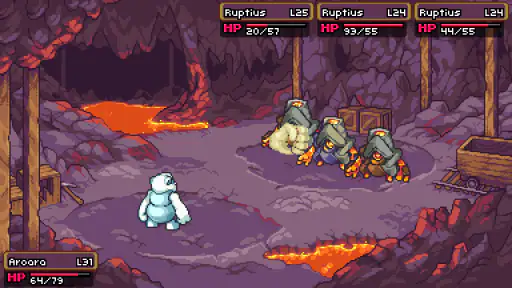

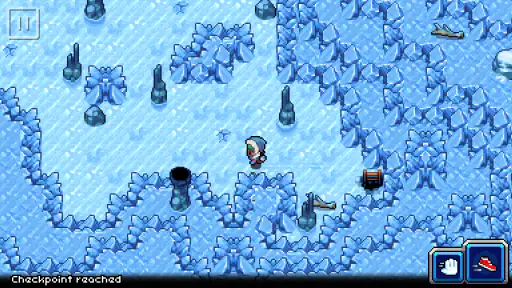

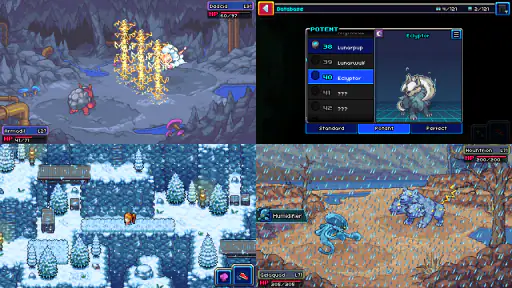


Analysis by Reviewed
I went into Coromon expecting a familiar creature-collecting adventure, but what kept me playing during the first week was the way it turns that familiar idea into a more deliberate routine. You explore, find creatures, train a team, and prepare for battles, yet the game asks you to pay attention rather than simply rush from one encounter to the next. That makes it easy to settle into, especially if you enjoy planning a party and gradually improving it.
This is a free adventure game from Freedom Games LLC, aimed at players aged Everyone 10+. It has reached over a million installs and holds a 4.6 average from around 24 thousand ratings, which matches my impression that it has found a strong audience among people who want a traditional monster-taming experience on a phone. The important question, though, is not whether the opening is enjoyable. It is whether collecting and training over 120 creatures gives you enough reason to keep returning after the initial excitement fades.
Why the first week feels so inviting
The opening hours work because they give each basic action a clear purpose. Exploring is not just movement between menus, and battles are not merely obstacles placed between story scenes. Every new area creates a small decision: should I continue with the team I already understand, or make room for something that might cover a weakness? That choice gives even ordinary encounters a little weight.
I also like that the game makes team-building feel personal. A creature is not valuable only because it is rare or powerful. Its usefulness depends on how it fits with the rest of your party, what kind of battles you expect, and how much training you are willing to invest. That encourages experimentation early on, when the cost of trying a different team is still manageable.
The first-week appeal is helped by the compact nature of a mobile session. I can play for a short stretch, finish a few battles, adjust my team, and stop without feeling that I have abandoned a complicated daily checklist. That matters on a phone. Many larger role-playing games demand long sessions or constant attention, while this one is easier to pick up when I have a spare moment.
There is a useful rhythm to the early game: explore, encounter creatures, test a team, notice a weakness, then return to training or try a different approach. I found that rhythm more satisfying than simply following the strongest available option. It rewards curiosity, but it also makes preparation feel worthwhile.
Players coming from classic creature-collecting games will understand the appeal immediately. The framework is approachable, and the adventure does not require a long explanation before it becomes enjoyable. At the same time, someone unfamiliar with the genre can learn the basics through ordinary play instead of having to understand a complicated competitive system from the beginning.
One practical tip is to avoid treating the first team you build as permanent. I had a better experience when I kept notes mentally about which creatures handled certain situations well instead of becoming attached to a single lineup too early. A creature that seems underwhelming in one role may become useful when paired with a different team, while a favorite can become a burden if I keep forcing it into battles it is poorly suited for.
The game also benefits from being free to start. That makes it easy to test the tone, pacing, and battle style without committing money first. In-app purchases range from $0.49 to $19.99 per item, so I would still advise checking the purchase flow before handing the game to a younger player. The free entry is a real advantage, but it does not mean every part of the experience should be approached without attention.
What makes the adventure more than a collection screen
The creature count is attractive, but collecting alone would not have held my attention. The stronger hook is the relationship between discovery and training. Finding a new creature gives me a reason to consider changing my party, while training gives that discovery a longer life. Instead of treating each encounter as a disposable entry in a catalogue, I can ask whether it deserves time and a place in my routine.
That creates a useful trade-off. Keeping a balanced team makes progress smoother, but rotating creatures keeps the game feeling fresh and teaches me more about how the battle system works. Players who only want the quickest route through the story may find that rotation inefficient. I think it is one of the better ways to get value from the game, even if it makes progress less direct.
The adventure presentation also helps the game feel more like a complete journey than an endless collection task. I am not only filling out a roster; I am moving through a world, making decisions about preparation, and watching a team develop. That distinction is important because it gives the early sessions a sense of direction.
For a realistic everyday use case, imagine playing during a commute or while waiting for an appointment. I would use that time for a short exploration trip, a few battles, or team adjustments rather than beginning a major story push. The game suits that habit because progress can come from small sessions. However, I would avoid playing carelessly when tired, since repetitive training can make me overlook team weaknesses and turn a manageable battle into a frustrating one.
What remains valuable after the novelty fades
After the first month, the question changes from “What creature will I find next?” to “What am I doing with the creatures I already have?” That is where Coromon becomes more dependent on the player’s preferred style. If I enjoy building different teams, testing combinations, and revisiting the adventure with a new plan, the game has more staying power. If I only want a single straightforward campaign, the collection appeal naturally becomes less powerful once the main discovery phase has passed.
The long-term value comes from replaying familiar decisions with better understanding. Early on, I may choose creatures because they look interesting or happen to be available. Later, I can make choices based on coverage, training time, and how much effort I want to spend preparing for difficult battles. That second layer is more rewarding than the initial collecting rush because it turns experience into judgment.
I found it useful to create small personal goals rather than relying on the game to provide endless novelty. One goal might be maintaining a team built around creatures I had previously ignored. Another might be improving a weak matchup without replacing the entire party. These goals make routine sessions feel purposeful and reduce the temptation to grind without a clear reason.
This is also where the game compares favorably with simpler creature-collecting alternatives. A lightweight copycat may offer the same basic loop but little reason to think about party construction. Coromon gives that loop enough structure to make preparation meaningful. On the other hand, players who prefer a highly social, competitive, or constantly updated experience may find a live-service alternative more compelling over many months.
I would not describe it as an ideal replacement for every major role-playing game. A large console-style adventure may offer deeper presentation, more elaborate exploration, or a broader sense of scale. Coromon’s strength is different: it gives me a focused creature-training adventure that is easier to fit into ordinary phone use. That focus is a benefit when I want clarity, but a limitation when I want a huge world that keeps changing around me.
The current version is 1.4.1, and the game supports devices running Android 5.0 or later. Those details make it accessible to a broad range of Android users, although actual comfort will still depend on the phone’s screen, controls, and performance. I would especially pay attention to how the interface feels on a smaller display, because creature management and battle choices are more enjoyable when menus do not feel cramped.
How to keep the routine from becoming a chore
My best long-term habit was separating progress sessions from maintenance sessions. In a progress session, I explored or pushed toward a new objective. In a maintenance session, I reorganized the team, trained a replacement, or prepared for a battle I had previously found difficult. Mixing both activities without a plan can make the game feel slower than it really is.
I also recommend setting a stopping point before training becomes automatic. Repeating battles can be useful when a team needs improvement, but it is easy to continue simply because the next upgrade is close. When I stopped after reaching a clear preparation goal, I returned with more interest. When I kept going without a reason, the game began to feel like work.
Another useful approach is to keep one familiar creature in the party while testing new ones around it. Replacing the whole team at once can make battles feel unnecessarily awkward and makes it harder to tell whether a new creature is genuinely weak or simply undertrained. A gradual rotation gives a clearer picture and protects the momentum of the adventure.
These habits are not required, but they reveal an important truth about the game: its lasting value depends partly on how the player manages repetition. Coromon provides the ingredients for a satisfying routine, but it does not remove the need to decide when collecting, training, and exploring have served their purpose for the day.
Where fatigue starts to appear
The same systems that make the opening enjoyable can become tiring. Searching for creatures is exciting when every encounter feels new. Later, repeating similar battles or revisiting areas can feel less meaningful if I am not pursuing a specific team goal. The game is at its best when I am making a decision, not when I am simply accumulating progress.
Training is the biggest potential source of friction for me. It is satisfying when a creature is close to becoming useful and I can see how the investment improves the party. It is less satisfying when I am repeating actions mainly to meet an expected power level. Players with low patience for grinding should be careful about building a team that requires too much correction later.
There is also a psychological fatigue that comes from collecting a large roster. More options sound ideal, but a broad selection can make team decisions slower rather than easier. I sometimes spent more time considering replacements than actually using them. That is not a flaw for players who enjoy optimization, but it can feel like unnecessary management for anyone who wants a quick, story-led adventure.
In-app purchases are another consideration. The game is free, which lowers the barrier to entry, but optional items priced from $0.49 to $19.99 can change how comfortable the experience feels for different players. I would recommend deciding in advance whether you intend to spend anything. That simple boundary keeps the focus on exploring and training instead of turning every moment of friction into a reason to open the purchase screen.
The Everyone 10+ rating makes it suitable for a broad audience, but younger players may still need guidance around purchases and playtime. The game’s collectible structure can encourage “just one more” sessions, particularly when a creature is close to a training goal. For families, agreeing on a session limit is more useful than assuming the gentle presentation will manage that automatically.
I would also skip this game if what I really want is a constantly refreshed online world. Its appeal is rooted in a contained adventure and the satisfaction of shaping a team. Someone looking for live competition, frequent social interaction, or an endless stream of new events may be happier elsewhere. Likewise, if I dislike turn-based preparation and prefer immediate action, the careful battle rhythm will probably feel slow rather than thoughtful.
Who should make room for it
I think Coromon is a strong fit for players who miss classic monster-taming adventures but want something suited to a phone. It is especially good for someone who enjoys experimenting with teams, learning through repeated battles, and setting personal collection goals. The free price makes trying it straightforward, while the accessible structure means I do not need to be an expert in the genre to understand what I am doing.
It is less suitable for a player who wants every session to deliver a major surprise. The game’s recurring value comes from refinement: improving choices, trying a different lineup, and becoming more efficient. That can be deeply satisfying, but it is a quieter kind of progression than the constant novelty offered by some mobile alternatives.
Compared with a casual creature-collecting game, this one asks for more attention and gives more back when I provide it. Compared with a large premium role-playing game, it is easier to pick up but may not provide the same sense of scale. Compared with a live-service title, it feels more focused and less dependent on an ongoing social routine. Those distinctions are more useful than simply calling it a good or bad adventure game.
The developer, Freedom Games LLC, has positioned the experience around collecting, training, and battling rather than a single disposable gimmick. In my experience, that foundation is strong enough to support regular play, but only if I approach it as a game of team decisions instead of a checklist. The creatures are the attraction; the planning is what gives them staying power.
One final practical question is whether it is worth installing if I only have short periods available. I would say yes, provided I use those periods intentionally. Short sessions work well for scouting, battles, and team adjustments. They work less well when I begin a demanding stretch without enough time to finish what I started. A little planning makes the mobile format feel like an advantage rather than a compromise.
Another question is whether I need to spend money to enjoy it. I was able to appreciate the central loop without treating purchases as the main reason to play. Still, I would review the available items before allowing purchases on a shared device, especially for a younger player. The free starting point is generous enough to judge the game on its own strengths.
For players wondering whether the large creature roster guarantees months of entertainment, my answer is more cautious. It creates possibilities, but quantity alone does not create lasting motivation. The roster matters when it leads me to new strategies, different party identities, or personal challenges. If I do not enjoy those choices, the number of creatures will not solve the problem.
In the end, Coromon earns lasting space on my phone when I treat it as a thoughtful adventure rather than an infinite content machine. Its first week is welcoming, its month-to-month appeal comes from team experimentation, and its main maintenance burden is the time needed to train without drifting into aimless repetition. The best reason to keep playing is not the size of the collection, but the feeling that each team choice is genuinely mine.
My recommendation is positive, with a clear condition: install it if you enjoy creature management, measured battles, and gradual improvement. Skip it if you need constant online activity, instant action, or a completely frictionless path through the story. For the right player, the free adventure offers a satisfying routine that can survive the novelty period, as long as you set your own goals and know when to put the training aside.
Pros
- Deep turn-based battles with meaningful team-building choices.
- Large world filled with optional quests
- secrets
- and collectibles.
- Monster designs are varied
- expressive
- and easy to distinguish.
- Multiple difficulty settings make the adventure accessible or challenging.
- Offline play lets you enjoy the campaign without an internet connection.
Cons
- Some areas involve considerable backtracking between objectives.
- The opening hours can feel slow before the adventure fully expands.
- Random encounters may become repetitive during extended exploration.
- The mobile interface can feel crowded on smaller screens.
- The full experience requires a purchase after the initial trial.

- Category
- Adventure
- Version
- 1.4.1