College Football Sim 2
- 65.00
- 3.4
- Installs
- 10.00K
- Price
- Free

Screenshots
Analysis by Reviewed
I went into College Football Sim 2 expecting a lightweight sports game, but it is better understood as a college-football management experience. The appeal is not simply controlling a match moment by moment. It is the longer process of trying to build a program that can compete, recover from poor decisions, and gradually become a dynasty. That makes it a very different proposition from arcade football games, where the main reward comes from quick actions and immediate scoring.
Developed by Alec Jaco, this free sports game is aimed at players who enjoy planning as much as playing. The store summary asks whether you can build a college football dynasty, and that question captures the central mood: you are being invited to think like the person responsible for a team’s direction rather than just the athlete on the field. I found that idea more interesting than the short description suggests, especially when I wanted something I could check in on during a spare moment instead of committing to a long real-time session.
The game has an Everyone content rating, so it is positioned as an accessible choice for a broad audience. It runs on Android devices using at least version 5.1, which also makes it approachable for people who do not own a recent phone. Its current version is 1.1.7, and that matters because this is the sort of simulation where small refinements can affect how comfortable it feels over repeated seasons. I would not judge it as a one-minute novelty; its value becomes clearer after several decisions have had time to shape a team.
How the current experience feels
A management game rather than an arcade football game
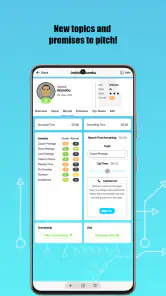
The first important distinction is the pace. If you are looking for a game built around direct control, dramatic animations, and constant on-screen action, this will probably feel restrained. The stronger reason to open it is the chance to make choices, observe consequences, and decide what to do next. I enjoyed that slower rhythm because it turned a short session into a planning exercise rather than another reflex test.
That also explains why the game can be surprisingly absorbing. A single result is not the whole experience. A disappointing outcome can become useful information about the direction of the team, while a good run creates pressure to protect what is working. I kept thinking beyond the immediate result, asking whether a decision would help the program later or merely solve the current problem. That long-view tension is the best part of the design.
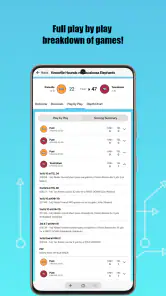
It is worth setting expectations correctly before downloading it. The game is not ideal for someone who wants a licensed-feeling presentation or a visual recreation of a Saturday broadcast. Its strength is the football-management idea, not spectacle. Players who already enjoy text-heavy sports simulations, roster planning, or season-based strategy will understand the attraction quickly. Players who need fast controls and visible action may find the experience too abstract.
Why the dynasty premise works in short sessions
A realistic everyday use case is a commute, lunch break, or quiet evening when I have ten minutes but do not want to start a full console match. A management simulator fits that situation well because I can make a few decisions, review the direction of the program, and stop without feeling that I abandoned a live game. The structure encourages returning to the same team, which gives small choices more weight than they would have in a disposable arcade round.
My most useful approach was to avoid treating every decision as an emergency. I would first look at the broader state of the program, then decide whether the current issue needed an immediate response or whether patience was the smarter move. That habit is especially important in a dynasty-focused game: chasing a quick improvement can be less valuable than maintaining a stable plan. The game rewards players who enjoy thinking in sequences rather than isolated clicks.
Another practical tip is to keep a simple mental record of what you are trying to improve. Without that discipline, it is easy to react to the latest result and lose sight of the larger rebuild. I found the experience more satisfying when I had a clear short-term priority and a separate long-term ambition. Even without turning the game into a spreadsheet, that separation made the season feel more deliberate.
What the version and release history suggest
The game was released on June 23, 2023, and its current version is 1.1.7. That places it in an established early phase rather than presenting it as a brand-new launch. For a returning player, the version number is a useful sign that the developer has continued to move the project forward instead of leaving the original release untouched. It does not, by itself, tell me that every rough edge has disappeared, but it does make the current build the sensible one to evaluate.
For new players, the practical takeaway is simple: start with the current version rather than forming an opinion from an older installation or an early impression. In a simulation, usability improvements can matter as much as headline features. A smoother flow between decisions can change whether a player sticks with a season, even when the underlying concept remains the same.
For existing users, the evolution is more important because long-term games depend on continuity. A player who has already invested time in a program wants the current experience to feel like a refinement of that commitment, not a reason to start over emotionally. I would approach the update as an opportunity to reassess familiar habits. If the interface or balance feels different from what you remember, give the new build a few sessions before deciding whether your old strategy still fits.
Who will get the most from it
I would recommend this game to someone who likes college football but does not need to control every snap. It is also a good match for players who enjoy management decisions with sports context: building a program, dealing with uneven results, and watching a longer project develop. The free entry point makes it easy to test the concept without paying upfront, although optional in-app purchases cost $2.99 per item, so I would keep that possibility in mind before spending.
The audience is not limited to experienced simulation players. A newcomer can enjoy the dynasty idea by treating the first run as a learning season rather than trying to optimize everything immediately. The most approachable mindset is curiosity: make a choice, see what it changes, and adjust. Trying to play perfectly from the beginning can make the game feel more complicated than it needs to be.
On the other hand, I would tell action-oriented football fans to look elsewhere if they want tactile controls, rapid matches, or a strong visual show. A conventional arcade football game is better when the goal is immediate excitement. A deeper console or PC management title may also be preferable for players who want a much larger presentation and more elaborate systems. This game sits in the middle: more thoughtful than a quick sports diversion, but lighter and more mobile-friendly than a heavyweight simulator.
Where the free model fits
Being free is a genuine advantage because it lowers the risk of trying a niche sports simulation. I could explore the core idea before deciding whether it deserved a regular place on my phone. That is particularly helpful here because the game’s appeal depends on whether you enjoy its management pace; no description can fully answer that for every player.
The trade-off is that optional purchases can change how a player thinks about progression. I prefer to begin without spending and learn which decisions actually matter to my enjoyment. If a purchase appears useful, I would consider it only after understanding the normal rhythm of the game. That approach prevents the store element from becoming the center of the experience and keeps the focus on building the program through your own choices.
Since the average rating is 3.4 from around 145 ratings, the public response looks mixed rather than universally enthusiastic. I read that as a reason to approach the game with specific expectations, not as an automatic warning. A niche simulation can satisfy the right audience while disappointing players who expected a traditional football game. The rating makes sense to me in that context: the concept has a clear audience, but it is not designed to please everyone.
Remaining friction and important limitations
The biggest limitation is the distance between the dynasty idea and the immediate sensation of play. If you need constant feedback, the slower management format may feel like work. There is also a learning curve in understanding which decisions deserve attention and which can be left alone. The game becomes more enjoyable once that judgment develops, but the opening experience may not explain the appeal to every newcomer.
Another issue is emotional pacing. A long-term simulation can make progress feel gradual, and not every session produces a satisfying payoff. That is normal for the genre, but it means the game is not the best choice when I want a quick reward. I have to be in the mood to accept setbacks and continue with the plan. Someone who dislikes losing progress or making decisions with uncertain outcomes may become frustrated.
The modest audience size also suggests that this is a specialized product rather than a giant mainstream sports platform. With over ten thousand installs, it has found players, but it does not carry the sense of a massive ecosystem. That can be a benefit for people who want a focused experience without noise; it can also matter to users who expect constant content, broad community discussion, or the polish associated with the biggest sports franchises.
How it compares with usual alternatives
Compared with arcade football games, this title gives up direct excitement in exchange for planning. You are less likely to remember one spectacular play and more likely to remember the chain of choices that changed the direction of the team. I prefer it when I want a strategic break, while I would choose an arcade alternative when I want to play with my hands and see immediate results.
Compared with large football-management games, it is easier to approach and better suited to a phone session. The compromise is depth and presentation. A bigger alternative may offer more elaborate databases, richer match detail, or a broader sense of realism. This game’s advantage is that it does not demand the same commitment. It gives the dynasty concept room to breathe without requiring every spare hour.
It also differs from fantasy sports. Fantasy play is usually about assembling a roster around real-world performance and competing through external results. Here, the satisfaction comes from managing the fictional direction of a college program inside the game’s own structure. If you want personal competition against other managers, a fantasy product may be a better fit. If you want a private rebuilding project, this is closer to what I would choose.
Questions I would answer before recommending it
Is it suitable for a short daily routine? Yes, provided you enjoy stopping between decisions rather than needing a complete match every time. I found that its season-oriented idea works well in small visits, but it is not a game I would recommend opening solely to fill thirty seconds. The payoff comes from remembering your plan and returning to it.
Does it require a new phone? No. The minimum operating system is Android 5.1, so the technical entry point is relatively broad. That does not guarantee identical performance on every device, but it does make the game more accessible than many modern sports releases that target only recent hardware.
Should a beginner make purchases immediately? I would not. Because items cost $2.99 each, I would first learn the basic rhythm and decide whether the dynasty loop holds my attention. Spending later may be reasonable for someone who already enjoys the game, but it should be a considered choice rather than a shortcut taken before understanding the experience.
Is it appropriate for younger players? Its Everyone rating makes it broadly suitable from a content standpoint. I would still explain the optional purchase model to a child or supervise spending, because an accessible age rating does not remove the need for sensible purchase controls.
Is this the right choice for a serious football strategist? It depends on what “serious” means. If you want a focused mobile dynasty and enjoy making decisions without a huge presentation, it can be a good companion. If you need the deepest possible simulation, extensive realism, or the feel of a full desktop management suite, I would choose a more substantial alternative.
What I would watch in future updates
With version 1.1.7 as the current build, I would pay attention to how the developer continues to balance accessibility with depth. The most valuable improvements would be the ones that help a new player understand the consequences of decisions without removing the uncertainty that makes a dynasty interesting. Clearer guidance can reduce frustration while preserving the need to think.
I would also watch for changes that improve the long-term reason to stay with one program. Dynasty games live or die by whether the middle of a run remains engaging, not just whether the opening is easy to understand. Anything that makes rebuilding, maintaining success, or recovering from a poor stretch feel more meaningful would strengthen the central promise.
Finally, I would keep an eye on how optional purchases fit into the overall balance. The free model is attractive, but the best version of the game should make the core management experience feel worthwhile before a player considers spending. That is the standard I would use when deciding whether to keep it installed over the long term.
My recommendation
After spending time with it, I see College Football Sim 2 as a focused mobile sports simulation with a clear personality. It is not trying to replace an action football game, and it should not be judged by that standard. Its best moments come from setting a direction, living with the consequences, and slowly turning an uncertain program into something you are proud to manage.
I would recommend it to patient football fans, strategy players, and anyone who enjoys a season-long project that can fit around everyday life. I would skip it if my priority were graphics, instant action, or a fully featured professional management package. The free price makes trying it straightforward, while the optional $2.99 purchases are a reason to play first and spend later, if at all.
My honest verdict: this is a worthwhile choice when the idea of building a college football dynasty sounds more exciting than controlling every play. It has a modest, specialized feel and some friction for newcomers, but that focus is also its strength. If you give it time to reveal its management loop, it can turn a few quiet minutes into a surprisingly absorbing long-term challenge.
Pros
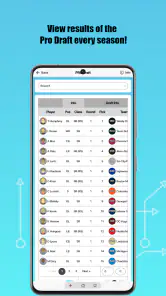
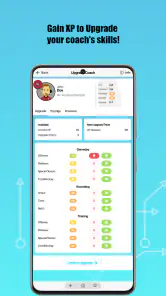
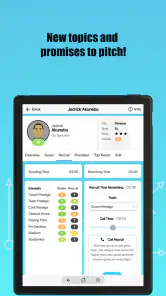
- Deep season management with recruiting
- schedules
- and team development.
- Quick simulations make it easy to play through multiple seasons.
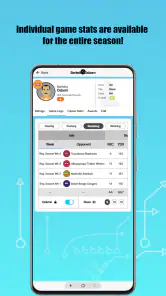
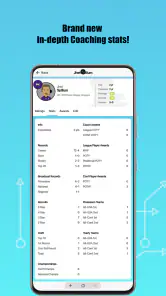
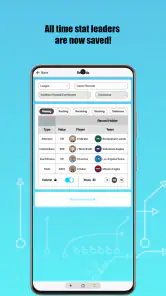
- Detailed statistics help track team and player performance.
- Offers strategic control without requiring real-time gameplay.
- Suitable for fans who enjoy long-term dynasty-style progression.
Cons
- The text-heavy interface may feel dated to some players.
- Learning the many management options can take time.
- Limited visual presentation compared with modern sports games.
- Results can feel unpredictable when strategy feedback is limited.
- Best features may appeal mainly to dedicated college football fans.

- Category
- Sports
- Version
- 1.1.7