Club Story: Baseball Manager
- 1.00
- 4.0
- Installs
- 10.00K
- Price
- Free

Screenshots





Analysis by Reviewed
I approached Club Story: Baseball Manager as a sports management game rather than a quick arcade baseball title. That distinction matters immediately. The appeal is not only in watching baseball happen; it is in making the decisions that shape a club, from signing players to drafting prospects and developing a roster with a long-term goal in mind. The central idea is simple, but it creates a surprisingly different rhythm from games that put me directly at bat or on the mound.
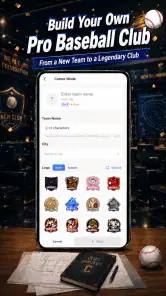
Developed by NBstudio, this free game puts me in charge of building a professional baseball organization. Its store summary points to four connected responsibilities: playing, signing, drafting, and developing players. In practice, that combination makes the experience feel closer to running a small sports project than completing isolated matches. I am constantly weighing what helps the team today against what might make it stronger later.
The game is listed in the Sports category, carries an Everyone age rating, and supports Android versions from 7.0 onward. It has reached over 10 thousand installs and holds a 4.0 average from around 400 ratings. Those figures suggest a modest but established audience, which fits the focused nature of the experience: this is not trying to be every type of baseball game at once.
Building a club is the real gameplay
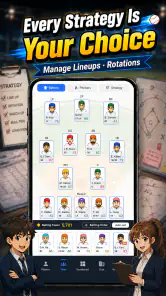
The most important capability here is the ability to create a baseball dynasty through several kinds of roster decisions instead of relying on one match mechanic. I found that this changes how I think about progress. A victory is useful, but the more interesting question is whether the decision behind that victory improves the club’s future.
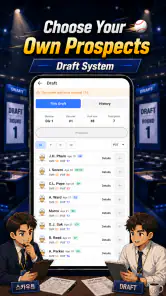
Signing a player can solve an immediate weakness, while drafting and developing players ask for patience. That tension is where the game earns its identity. A short-term signing may help the lineup look more competitive, but a developing prospect can become more valuable if I give the club enough time and attention. The game therefore rewards planning rather than simply choosing the most obvious option every time.
The strongest part of Club Story is the connection between recruitment and development. These are not separate ideas that sit beside the baseball theme. They form a loop. I look at the state of the team, decide which kind of player it needs, consider whether to pursue an immediate solution or a longer project, and then judge whether the resulting squad is moving in the right direction.
That loop also makes the game approachable for people who enjoy sports management but do not want a huge simulation filled with endless menus. I can focus on the club-building decisions without needing the reflexes required by a traditional baseball action game. On the other hand, anyone expecting a detailed, hands-on batting experience may find the management emphasis less exciting.
Why the development system changes decision-making
Player development is more than an attractive phrase in the summary. It gives each roster choice a time dimension. When I bring in a player who still needs development, I am accepting that the benefit may not be immediate. That creates a useful trade-off: the best move for the next game may not be the best move for the season ahead.
I found it helpful to treat the roster as a set of roles rather than a collection of names. A team needs dependable contributors, but it also needs room for players who can grow. This mindset prevents a common mistake in management games: spending every decision on the present and leaving no path for improvement. In Club Story, development encourages me to keep asking whether the club is becoming more balanced over time.
A practical tip is to avoid judging a player only by the problem that caused me to sign them. If I recruit someone to cover a weak area, I also consider how that player fits with the rest of the squad and whether the club has a sensible development plan around the position. This makes the roster feel less like a shopping list and more like a structure that needs to work together.
Another useful habit is to pause before making a signing simply because it appears to strengthen the team. A new player can be valuable, but the decision has an opportunity cost. I may be giving up the chance to develop another part of the roster or to build around a younger option. The game is at its most satisfying when I make that choice deliberately rather than automatically.
How the four-part loop feels in practice
When I play, I tend to move through a repeating cycle. I first inspect what the club needs, then consider available ways to improve it. After that, I make a choice involving a signing, a draft, or player development, and finally I watch how the team performs with the new direction. The “play” element gives those decisions a reason to matter, while the roster work gives the matches more context.
This structure is especially useful in short sessions. I can make one meaningful club decision, check the result, and stop without feeling that I abandoned a complicated campaign halfway through. It also works for longer sessions because each decision raises another question about the future of the team. The game does not need to rely on constant action to keep my attention; the changing state of the club does that job.
For newcomers, I recommend starting with a clear priority instead of trying to improve everything at once. If the roster has a noticeable weakness, address that first, then observe whether the change actually helps. This makes it easier to understand the consequences of a decision. Changing several parts of the club at the same time may feel productive, but it makes it harder to know which move mattered.
The same approach helps when developing players. I prefer to choose a direction and give it time before reacting. Constantly changing plans can make the club feel busy without making it better. A patient approach is not always the fastest route to a strong team, but it gives each decision a clearer purpose.
A realistic use case for a busy player
Imagine having a short break after work or school and wanting something more thoughtful than a quick arcade match. I can open the game, review the club’s current situation, decide whether the priority is a signing or development, and then let the next stretch of play show whether that choice was sensible. That makes it a good fit for a commute, a lunch break, or a few quiet minutes at home.
The same scenario works for someone who likes baseball but does not follow every real-world player or league detail. The game’s focus is on building a club, so I do not need to approach it as a statistics expert to enjoy the basic decision-making. I can learn through the consequences of my choices and gradually develop a personal style: cautious, ambitious, youth-focused, or oriented toward immediate results.
There is also a useful social angle, even when I am playing alone. I find myself explaining my decisions in my head: why I signed one player instead of another, why I kept developing a prospect, or why I accepted a weaker short-term result for a better long-term plan. That internal conversation is a sign that the management layer is doing its job. It gives the club a story that goes beyond the score of one game.
The cost of choosing long-term progress
The main trade-off is that development-focused play can feel slower than direct sports action. If I want immediate excitement, an arcade baseball game will probably deliver it faster. Club Story asks me to enjoy anticipation and adjustment. The satisfaction comes from seeing a decision fit into the wider direction of the club, not necessarily from controlling every moment of a match.
There is also a mental cost to balancing present needs with future potential. A player who looks promising may not solve today’s problem, while an immediate signing may limit how much room I have for growth elsewhere. That tension is valuable, but it can also be frustrating when I want a straightforward answer. The game is better for players who enjoy weighing imperfect choices than for players who want every upgrade to feel obviously correct.
The free entry point makes it easy to try, but in-app purchases range from $0.99 to $35.99 per item. I would approach those purchases carefully and first see whether the normal management loop holds my attention. Spending can be tempting when I want to accelerate progress, yet the point of the game is making the club-building decisions myself. Paying to move faster may reduce some of the patience that makes development interesting in the first place.
This is one reason I would not recommend treating purchases as the solution to every weak result. A disappointing stretch can come from a poor roster plan, an unbalanced squad, or a decision made without enough patience. Before spending, I would review what the club actually lacks. If the problem is strategic, a purchase may only postpone the same issue.
Where it differs from ordinary baseball alternatives
Compared with an arcade baseball game, Club Story gives me less of the immediate physical satisfaction of timing a hit or controlling a pitch. Its reward is more indirect. I feel responsible for the club’s direction, and the result of a match matters because it reflects the decisions made around the roster.
Compared with a large, highly detailed sports management simulation, it appears easier to approach. The store positioning is compact, and the core activities are clear: play, sign, draft, and develop. That focus is a strength when I want a manageable baseball project rather than a second job. The trade-off is that players who love deep financial modeling, exhaustive tactical controls, or enormous databases may prefer a more specialized simulator.
Compared with a collectible team-building game, the development angle gives me a reason to think beyond the next acquisition. I am not only looking for a stronger addition; I am considering how that addition fits into a club that should keep improving. Still, anyone who dislikes repeated roster evaluation may find the central loop too deliberate.
Who gets the most from this design
I think the best audience is someone who enjoys sports strategy in small, readable steps. You do not need to be an expert baseball manager. You do need to enjoy making choices where the outcome is not always immediate and where a developing player can be worth protecting or investing in.
It is also a good match for players who like setting their own goals. One person may want to build a balanced roster, another may prefer developing talent, and someone else may focus on making smart signings. The game’s appeal comes from giving those decisions weight rather than forcing every player into the same style.
I would be more cautious recommending it to someone who wants a realistic recreation of controlling every pitch, swing, and defensive play. I would also suggest looking elsewhere if you dislike in-app purchase options or feel uncomfortable with games that may encourage spending to speed progress. The free download is a useful way to test the experience, but the purchase range means it is worth deciding on a personal spending limit before getting deeply invested.
Device compatibility is reasonably broad because the game runs on Android 7.0 and later. The current version is 2.1.7, so I would install it on a compatible phone and give the core loop enough time to reveal itself before judging it from the first few decisions. The Everyone rating also makes it suitable for a broad audience, although the strategic focus may appeal more to older children and adults who enjoy planning.
My recommendation after building a club
Club Story: Baseball Manager works because it gives one capability real importance: I am not merely playing baseball, I am shaping the club that plays it. Signing, drafting, and development become meaningful because they point toward different kinds of progress. That makes each choice more interesting than a simple upgrade screen, especially when I accept that a good decision may take time to show its value.
My advice is to play it as a patient manager. Set one roster priority, make a considered move, and watch how the club responds before changing direction. Keep an eye on the difference between an immediate fix and a player who can grow. That workflow exposes the game’s strongest idea and prevents the experience from becoming a rush toward the next acquisition.
It is not the right baseball game for everyone. If you want fast action, a traditional arcade alternative will suit you better. If you want a dense professional simulation, a deeper management title may offer more control. But for a free sports game centered on the satisfying question of how to build a club over time, Club Story: Baseball Manager is worth trying before deciding whether its slower, strategic rhythm is for you.
Pros
- Easy-to-learn management system suited to casual baseball fans.
- Matches are quick
- making it convenient for short play sessions.
- Team-building choices give the season a satisfying sense of progress.
- The retro-style presentation has a charming
- distinctive atmosphere.
- Offline play is useful when you do not have a reliable connection.
Cons
- Some upgrades and progress can feel slow without frequent play.
- Strategic options may seem limited for experienced baseball managers.
- The interface can become repetitive during longer management sessions.
- Random results may occasionally outweigh carefully planned decisions.
- Ads or in-app purchases may interrupt the otherwise relaxed experience.

- Category
- Sports
- Version
- 2.1.7