Car Driving Traffic Race
- 13.00
- 4.7
- Installs
- 1.00M
- Price
- Free
Screenshots
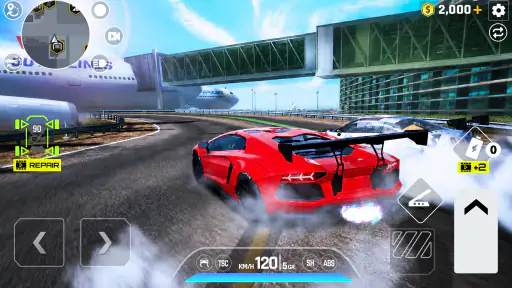
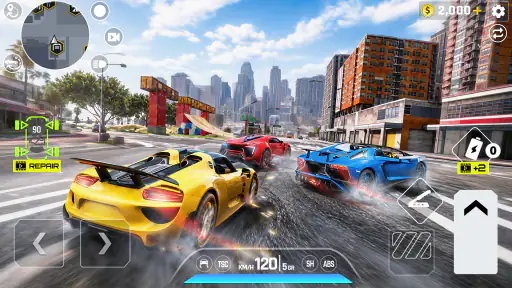
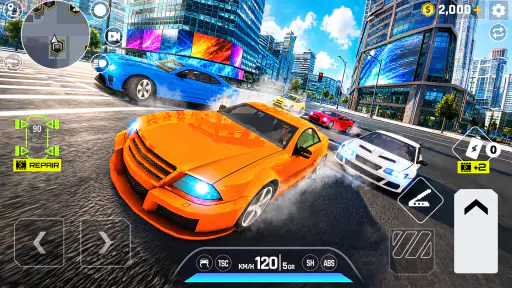
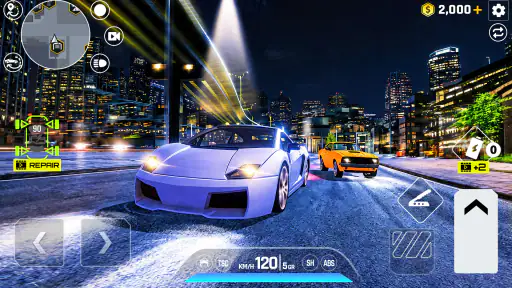
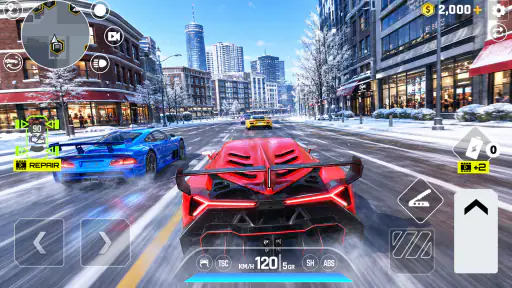
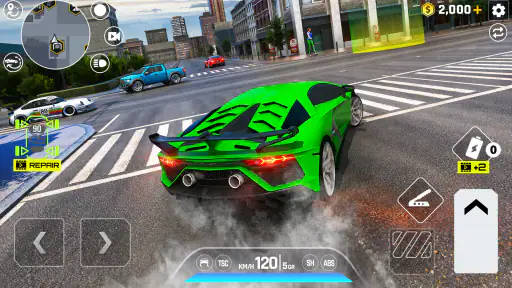
Analysis by Reviewed
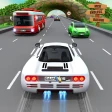
I approached Car Driving Traffic Race as a game for the small gaps in a day: the few minutes before heading out, a quiet break, or a short ride-game session when I don’t want to learn a complicated racing system. Its premise is easy to grasp—drive amid city traffic and try to make progress against the clock—but that simplicity also sets expectations. This is a traffic-driving game, not necessarily a deep motorsport simulator, so the appeal is in handling busy streets and building confidence behind the wheel.
My first impression is that it is best suited to players who enjoy the basic tension of finding a safe path through moving traffic. That makes it approachable if you are new to racing games, while still giving experienced players a familiar challenge to pick up and put down. The important question is whether you want quick, readable driving decisions or a long-term career built around detailed tuning and race strategy. I would choose this one for the former.
What the city-driving idea feels like
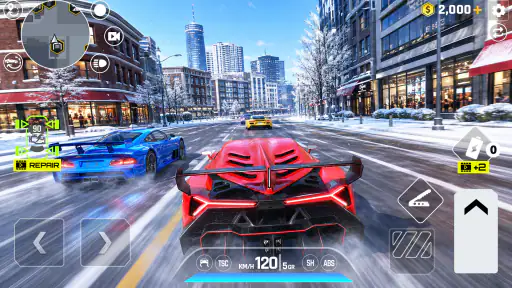
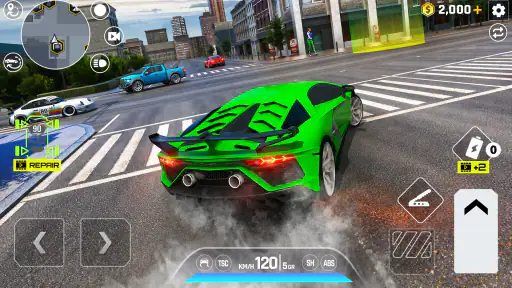
The game’s focus on traffic gives its racing a different rhythm from a track-based racer. On a circuit, I can learn a series of corners and repeat the same line. In a city setting, the task is more about reading the space ahead, judging when a gap is worth taking, and avoiding the temptation to treat every open lane as an invitation. That change of focus is what makes the concept appealing: the road itself becomes the challenge.
The city setting also makes the experience feel more immediately recognizable than a race built around unfamiliar tracks. I can imagine opening it for a quick session and getting straight into the driving fantasy of moving through urban streets. The store summary points to racing against time, so the pressure is not only about keeping the car moving; it is also about making decisions efficiently. A cautious approach may keep a run under control, while rushing can make traffic feel less forgiving.
At the same time, a realistic city theme should not be confused with a promise of full driving simulation. The game is described as a racing experience, and I would approach it with arcade expectations unless I already know that I prefer a more technical style. Players looking for realistic vehicle setup, extensive race weekends, or a carefully modeled motorsport ladder may be happier with a dedicated simulation or a track racer. This is more naturally aimed at someone who wants the recognizable challenge of traffic without turning every session into a study exercise.
Who is likely to enjoy it
I would recommend it first to casual racing fans, especially anyone who likes the pressure of judging gaps more than memorizing a circuit. It may also suit a player who has tried more demanding driving games and wants something easier to return to between longer sessions. Because the central idea is understandable at a glance, it does not ask a newcomer to arrive with knowledge of racing terminology or vehicle setup.
It is less likely to satisfy someone who needs a strong sense of progression, a large collection of modes, or fine control over every part of a car. Those are common reasons people choose larger racing games, but they are not what the short description promises here. I would also steer away from it if traffic weaving itself sounds stressful rather than fun. The same pressure that gives this style of game its energy can become tiring if you prefer wide-open tracks and predictable lines.
You May Like

Clash of Clans Is Won Between the Battles

Android Auto Makes the Case for Quieter Car Software

MobiOffice: Transforming Mobile Productivity with Seamless Integration

EA SPORTS FC™ Mobile Soccer: Redefining Mobile Sports Gaming

How Microsoft OneDrive Became a Mobile Productivity Giant

How Google Translate Breaks Language Barriers Effortlessly
A useful way to begin
On first launch, I would keep the goal modest: learn how the game responds before trying to chase a fast result. Start by paying attention to what each control does and how the car reacts to a small adjustment. If a run goes badly, change one thing at a time—such as when you move toward a gap—rather than trying to drive faster, steer more aggressively, and take more risks all at once. That makes it easier to tell whether a mistake came from timing or from overcorrecting.
I would also treat the opening session as a short familiarization drive, not a test of skill. A simple sequence works well: begin a run, choose a clear path, watch how traffic changes your options, and notice what happens when you commit to a move. Then repeat with a slightly earlier or later decision. This is a practical way to make the first meaningful success—completing a run with fewer panicked corrections—feel attainable without assuming there is a particular tutorial or unlock system.
For a first-time player, that approach matters more than trying to imitate the most aggressive traffic driving seen in racing clips. A clean decision is more useful than a daring one if you are still learning the controls. I would aim to finish a session feeling that I understand one part of the driving better, rather than expecting a personal best immediately.
Turning a first run into a better one
My most useful general tip for a traffic racer is to look beyond the nearest opening. A gap can appear inviting and still lead into a tighter situation a moment later. Thinking one move ahead helps avoid the common pattern of darting into a space, then making an abrupt second correction when the next lane is blocked. The city-road premise makes that kind of planning more valuable than simply reacting to the closest car.
Another helpful habit is to leave room for recovery. If two routes look equally promising, I would favor the one that leaves me more than one possible next move. That is a small but important trade-off: the shortest-looking path may be less useful if it leaves no room to adjust. For a new player, a slightly more conservative line can make the whole drive feel easier to read, even when the clock encourages haste.
Finally, keep sessions focused. If I notice myself making the same mistake repeatedly, I would pause and identify the pattern before starting again. Am I changing lanes too late? Am I focusing on the timer instead of the traffic? Am I trying to correct a move with a sharper input than needed? Asking one concrete question turns a quick retry into a useful practice loop, rather than a string of frustrating restarts.
How it fits among racing games
Compared with the usual choices in the racing category, Car Driving Traffic Race sits closer to a quick traffic challenge than a traditional circuit competition. A conventional track racer rewards learning braking points and repeating a route. A driving simulator often asks for patience with handling and setup. This game’s stated combination of city driving and racing against time points toward a more immediate test: make good decisions while the road is busy.
That distinction makes it a potentially good companion to a larger racing game rather than a replacement for one. If I have time for a long session, I might prefer a title with a broad campaign or deeper car customization. If I only want to concentrate on getting through traffic for a while, this premise is more direct. The trade-off is clear: an accessible central idea can be satisfying, but it may not offer the variety that keeps a player occupied over many weeks.
One everyday scenario where it makes sense is a short break between tasks. I can start a run, focus on reading traffic, and stop when the break ends without needing to remember a complex objective. It could also work for someone who wants a low-pressure entry point into mobile racing, provided they are comfortable with the possibility that timed driving may still feel tense. It is not my pick for a player who wants to relax by cruising without a clock or traffic decisions.
What to expect from the first setup
The game is free, rated for Everyone, and made by CORGY TECH COMPANY LIMITED. It has an average rating of 4.7 from around 6,600 ratings, with over a million installs. I take those figures as a sign that it has reached a broad audience, not as proof that its particular driving style will suit every player. Traffic-focused racing is a matter of taste, and the most useful test is whether the first few drives make you curious to improve rather than annoyed by the pressure.
For device compatibility, the listed minimum is Android 7.0, and the current version is 1.1.4. If you are setting it up on an older phone, checking that your operating system meets that baseline is a sensible first step. After installing, I would give the controls a brief test before settling into a longer session; it is easier to decide whether the game feels comfortable when I am not already focused on beating a timer.
The age rating is Everyone, which makes the game broadly approachable from a content-rating perspective. That does not tell me whether a particular person will enjoy its pace, so I would still consider the player’s preferences. Someone who likes straightforward driving challenges may find it welcoming, while a player who dislikes timed tasks or busy roads may prefer a calmer driving game.
Common points of confusion
The first possible confusion is the word “realistic” in the city-driving pitch. I would read it as a description of the setting and driving feel, not assume that the game is a full simulation with every real-world driving detail reproduced. If your main goal is to practice road rules or prepare for actual driving, a mobile racing game is not a substitute for proper instruction. Here, the useful skill is reading a game’s traffic and making quick choices, not learning to drive on public roads.
Another is the relationship between caution and speed. In a timed challenge, it is tempting to believe that the fastest-looking move is always the best one. In practice, a risky lane change can interrupt a run and cost more than taking a moment to assess the road. I would treat speed as a goal to pursue once I can judge openings consistently, rather than as the first thing to optimize.
Players may also wonder whether this is a game to keep installed for the long term or one for occasional play. The answer depends on what they enjoy repeating. If improving a familiar driving task is satisfying, short sessions can still have purpose. If you need frequent new objectives, a broad progression system, or extensive vehicle collection to stay interested, a larger racing title is a safer choice. The central appeal here is the drive itself.
When I would move on—or keep playing
I would give the game a fair first try by completing a few short runs with different levels of caution. If I start noticing traffic patterns and making smoother decisions, that is a good sign the core loop is working for me. If every attempt feels like a scramble and I am not interested in learning from it, there is no need to force it; a track racer with more predictable routes may be a better fit.
For someone who clicks with it, the next step is to focus on consistency before chasing speed. Try to make the same kind of clean decision several times, then add a little more urgency. This gradual approach is especially useful for newcomers because it separates learning the road from responding to the timer. It also gives experienced players a way to test whether their instinct for finding gaps transfers to a city setting.
My overall take is that Car Driving Traffic Race is worth trying if you want an approachable racing game built around urban traffic and time pressure. I like that its central idea is easy to understand and that a short session can have a clear purpose. I would not recommend it as a substitute for a detailed simulator or a content-heavy racing career, but as a focused way to practice reading the road and making quick choices, it has a distinct place in a mobile racing lineup.
Car Driving Traffic Race Frequently Asked Questions
What is Car Driving Traffic Race?
Car Driving Traffic Race is a driving game centered on weaving through traffic and covering distance without crashing. Players steer a car along busy roads, avoid other vehicles, and aim to improve their runs. The exact cars, modes, and progression options can vary by version, so check the app listing and in-game menus to see what is included in the edition available for your device.
How do you play Car Driving Traffic Race?
The basic goal is to control your car through traffic while avoiding collisions. Depending on the version, steering may use touch controls, on-screen buttons, or device tilt, and the game may offer options for adjusting controls or camera view. Since handling can feel different on each device, it is worth trying the available settings and completing a short run before committing to longer sessions.
Is Car Driving Traffic Race free to download, and does it include ads or in-app purchases?
The price and monetization details depend on the version and the store where you download the game. Some releases of mobile driving games are free to install but may display advertisements or offer optional purchases, while others may have different terms. Check the current Google Play or App Store listing for pricing, in-app purchase information, and age or privacy disclosures before installing.
Can I play Car Driving Traffic Race offline?
Whether the game works without an internet connection can depend on its particular release and which features you want to use. Core driving may be available offline in some versions, while ads, online leaderboards, updates, or other connected features may require a connection. To avoid surprises, launch the game once while online, then test it in airplane mode and consult its store listing for stated requirements.
Is Car Driving Traffic Race suitable for children, and what should I check before downloading?
The game focuses on virtual driving and avoiding traffic, but its suitability depends on its content, advertisements, purchase options, and the child’s age. Review the current store age rating and privacy information, and check whether the app contains ads or in-app purchases. Parents may also want to supervise the first session and use device-level purchase controls if children can access the device.
Pros
- Straightforward controls make it easy to start driving.
- Traffic dodging keeps each run active and engaging.
- Quick races work well for short play sessions.
- Multiple cars offer variety as you progress.
- Simple gameplay is approachable for casual players.
Cons
- Repeated traffic patterns can make races feel predictable.
- Progress may require considerable time or repeated play.
- Frequent collisions can quickly end a run.
- Car handling may feel basic compared with driving simulators.
- Ads or in-app purchases may interrupt the experience.
- Category
- Racing
- Version
- 1.1.4