Car Crash Simulator: Mountain
- 152.00
- 3.6
- Installs
- 1.00M
- Price
- Free
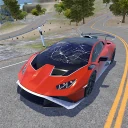
Screenshots
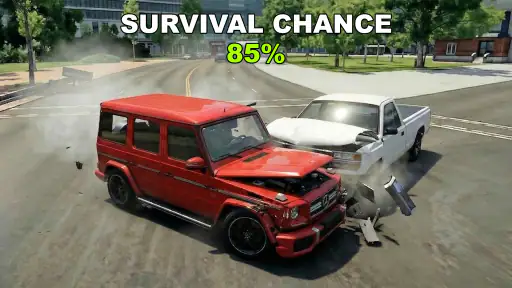
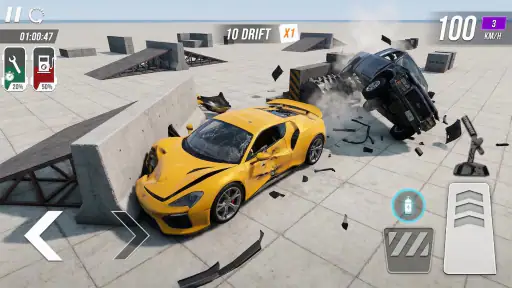
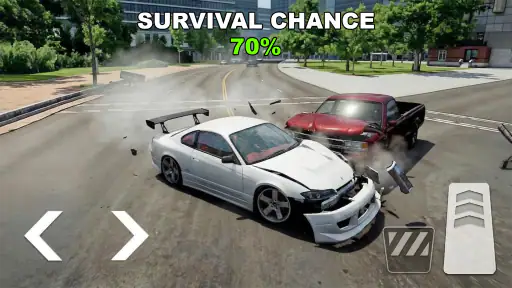
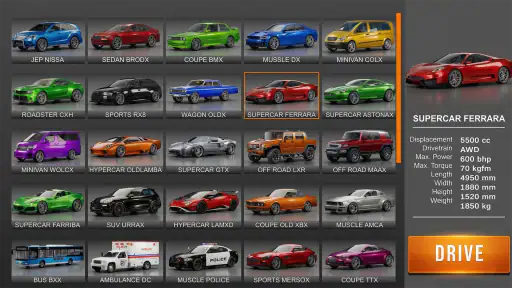
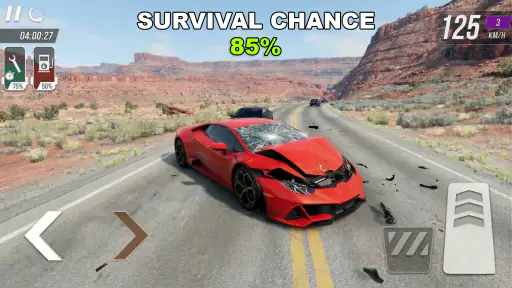
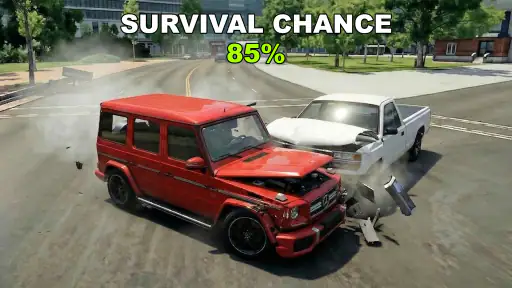
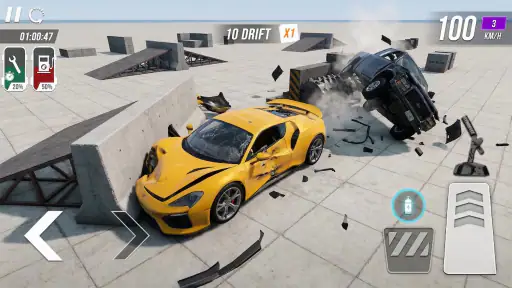
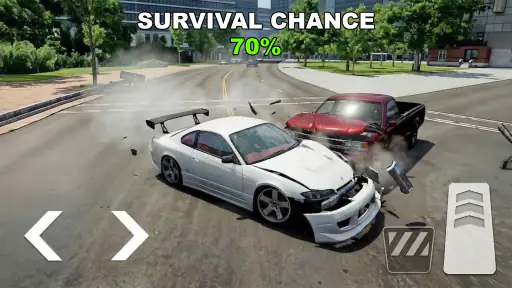
Analysis by Reviewed
I judge a driving game by what happens after the first spectacular crash. Is there enough to make me try another run, and does the driving feel satisfying before things go wrong? Car Crash Simulator: Mountain is aimed squarely at players who enjoy negotiating difficult terrain and watching vehicles take damage, rather than racing through a conventional circuit. That gives it a clear appeal, but it also makes it a particular kind of game: a better fit for short bursts of reckless experimentation than for someone looking for a deep motorsport career.
Why the mountain setting suits shared play
In a shared-device situation, this kind of game is easy to understand at a glance. One person can take a turn trying to keep a car under control on a steep road, then pass the device to someone else to see whether they can manage it better. The challenge and the crashes provide an immediate talking point, so it can work well during a short wait or a casual break when nobody wants to learn a complicated set of rules.
The mountain-road premise matters more than it might sound. On a broad, forgiving track, speed is usually the obvious goal; on steep, awkward terrain, I find myself thinking about how much momentum to carry and when to ease off. A run can be interesting even when I am not trying to beat another driver, because simply seeing how a vehicle responds to the road is part of the appeal. The damage gives failure a visual payoff instead of making every mistake feel like an ordinary missed turn.
That makes Car Crash Simulator: Mountain more of a driving playground than a standard race game. I would recommend it to someone who likes testing limits and comparing attempts, especially if they enjoy the spectacle of a bad landing as much as a clean drive. If your group wants balanced head-to-head competition, clear race standings, or a shared progression system, this is not the choice I would make on the basis of its central premise.
Taking turns without turning it into a contest
A practical way to share the game is to agree on a simple challenge before passing the device: try to get farther along the road, keep the vehicle under control for longer, or attempt a more cautious run than the previous player. These are house-made goals, not built-in modes, but they give each turn a purpose without assuming the game has multiplayer or a specific scoring feature. They also make the experience friendlier for a less confident player, who may enjoy a careful drive more than a competition over crashes.
For a quick session, I would keep turns short and let the next person start fresh rather than treating one person’s run as the “right” way to play. That is a useful distinction with a game built around unpredictable driving: a messy attempt can be funny, but a player who is still learning may not want every mistake judged. The best shared sessions are likely to come from treating the road as a common challenge rather than expecting everyone to perform equally well.
A realistic household moment might be a few minutes before dinner, when one person wants to play and another is curious but does not want to commit to a long session. I would set a small, observable goal—such as making a slower attempt or seeing whether the next player can stay in control longer—then pass the device along. There is no need to turn the result into a formal score. Keeping the challenge casual lets a younger or less experienced player join in without making the session depend on winning.
More From Our News Desk

Weather by Xiaomi Review: Clear at a Glance, Less Clear Up Close

X Under Pressure: Can It Recover When Posting Goes Wrong?

Clash of Clans Is Won Between the Battles

Android Auto Makes the Case for Quieter Car Software

MobiOffice: Transforming Mobile Productivity with Seamless Integration

EA SPORTS FC™ Mobile Soccer: Redefining Mobile Sports Gaming
Set expectations before handing over the device
Because it is a driving game centred on crashes, it helps to explain the premise to a child before they start. The activity is virtual vehicle damage, not realistic road-safety instruction, and I would not use it as a substitute for a conversation about careful driving outside the game. That framing is especially useful when a child sees the dramatic crashes and assumes that reckless driving is being presented as a real-world skill.
The game is free to download and has in-app purchases listed at $2.49 per item. On a device used by more than one person, I would check the device’s purchase settings and agree who is allowed to make purchases before passing it around. This is ordinary shared-device housekeeping, not a special feature of the game. It prevents an enjoyable turn-taking session from ending in an unexpected purchase dispute.
There is also a simple account-boundary question: who is using the device and whose store account is active? If adults and children share one phone or tablet, decide in advance whether the child may install games or make purchases through that account. I would not assume that the game itself supplies family profiles or household controls. The safer approach is to manage access at the device or account level and keep the rules clear between users.
Who is likely to enjoy the driving
Moon Star Games Yazilim’s racing game is a natural match for players who like vehicle handling under pressure and the cause-and-effect of a car meeting rough terrain. Its store summary points to soft-body crashes, and that promise sets the right expectation: the appeal is not just getting from one point to another, but seeing the vehicle react when a run goes badly. I would approach each attempt as a small experiment—change how aggressively you drive, notice what happens, and try again—rather than expecting a carefully staged championship.
That experimental approach is one of the more useful ways to get value from it. Instead of repeating the same full-speed run, try deliberately varying your pace and steering choices. The point is not to claim that the game models real vehicle physics in a professional way; it is to make each attempt feel different enough to explore. If the most entertaining part for you is discovering how a crash unfolds, that change in mindset can stretch a short session without needing extra modes or a long-term goal.
A small but useful tip is to change only one part of your approach between attempts. If you drive more slowly and steer differently at the same time, it is hard to tell which choice changed the outcome. Keeping one decision steady while adjusting another turns a string of crashes into a simple personal test. I find that more satisfying than treating every failure as random, and it gives a curious player a reason to retry without needing a progression system or a formal target.
It is less suitable for players who want precise racing lines, licensed cars, extensive tuning, or a structured career. Those are common reasons people choose other racing games, and they do not follow from this game’s crash-focused identity. Likewise, someone looking for a calm driving simulator may find the steep-road challenge and damage emphasis frustrating rather than relaxing. I would choose a conventional circuit racer for close competition, or a more peaceful driving game for leisurely exploration.
Age, trust, and the household decision
The content rating is Everyone, so the game is positioned for a broad audience. That can make it an easy option to consider for a family device, but the rating does not tell a parent how an individual child will react to crashes or frustration. I would watch the first session and judge whether the slapstick vehicle damage feels entertaining to that child or whether it encourages play that needs a little context.
Its average rating is 3.6 from around 3.7 thousand ratings, with 152 written reviews, and it has over 1 million installs. I take that as evidence that it has found an audience, not as a guarantee that every household will enjoy it. The mixed overall reception is a reason to keep expectations measured: the concept is easy to grasp, but a focused crash-driving game will naturally be less satisfying to people who want the breadth of a large racing package.
For a parent, I would make two separate decisions: whether the crash-focused play is appropriate for the child, and whether the device’s purchase and account settings are appropriate for shared use. Those are not the same question. The Everyone rating helps with the first, while the listed paid items make it sensible to settle the second before handing over the device. Clear expectations matter more than assuming the game will manage household boundaries on its own.
For a child who gets upset when a run ends badly, I would stay nearby for the first few turns and make it clear that the point is experimentation, not perfect driving. That is a practical way to gauge whether the game’s unpredictability feels funny or irritating to them. If the child is content to try again, it can be an easy short activity; if a crash quickly turns into frustration, switching to a less punishing driving game is the kinder choice. A broad age rating is useful context, but it cannot replace that individual judgment.
How it compares with familiar racing alternatives
Compared with a typical racing game, this one appears to put less emphasis on clean laps and more on handling a demanding road and seeing what happens when control is lost. That is a meaningful trade-off. A circuit racer gives me a clear target and lets me measure consistency; this game’s premise encourages improvisation and makes a crash part of the entertainment. If I have only a few minutes, that immediate, self-contained appeal is a strength. If I want a sense of progress across many sessions, the narrower focus may wear thin.
It also sits apart from open-world driving games. Those often invite players to roam, collect activities, or create their own long routes. Here, I would come for the steep-road driving and crash spectacle, not assume a broad world to explore. That narrower promise helps the game feel direct, but it means the experience depends heavily on whether the core driving loop is fun for you. I would not download it expecting a full substitute for every kind of racing game.
So the choice between this and a conventional racer depends on what you want from a spare ten minutes. Choose the mountain-focused approach if you enjoy judging momentum, trying a different line, and seeing how a mistake plays out. Choose a lap-based game if you would rather improve a repeatable time or race against clear opponents. For relaxed cruising, neither a demanding mountain challenge nor a competitive circuit is an ideal substitute for a game built around unhurried exploration.
Version, access, and a sensible trial
The game is free, developed by Moon Star Games Yazilim, and currently listed as version 3.0.44t, with a minimum operating-system requirement of 10. It was released on November 29, 2024. Those details make it easier to check whether the app fits a device and whether it is worth trying without an upfront purchase. The paid items are a separate consideration, so I would treat the free entry point and optional spending as two different parts of the decision.
For a first session, I would keep the goal modest: spend a little time learning how the vehicle responds, then decide whether the mountain driving itself is enjoyable before considering any paid item. This avoids spending to solve a problem that might simply be a mismatch with the game’s style. It also works well for shared devices, because different players can sample the same basic experience and decide whether they want another turn without needing to agree on a larger commitment.
If you are deciding whether it belongs on a device shared by several people, the first useful question is not whether everyone likes racing games in general. It is whether the group enjoys watching and discussing a single attempt, even when the driver does not make a clean run. If nobody is interested in that kind of trial-and-error play, the game may not earn space in a busy rotation. If one person loves experimenting but others only want to watch briefly, it can still work as an occasional turn-taking choice rather than the household’s main game.
One limitation of this kind of focused game is that novelty can depend on how much you enjoy repeating attempts. If you need a story, a long progression path, or a wide range of race formats to stay interested, I would look elsewhere. If you like small challenges and are happy to make your own goals—such as driving more cautiously on the next run—the focused design can be an advantage rather than a weakness.
My household verdict
I would try Car Crash Simulator: Mountain on a shared device when the household wants a quick, easy-to-understand driving game that people can take turns playing. Its steep-road focus and crash-centred appeal give it a more specific identity than a generic racing title, and the free download makes it straightforward to test whether that identity clicks. For a child, I would add a brief explanation that the crashes are game spectacle, then keep purchase access under the household’s usual rules.
I would skip it for a family looking for cooperative play, a polished competitive racing league, or a broad collection of activities. I would also choose something gentler for a player who dislikes losing control or seeing vehicles damaged. For everyone else, it is worth a cautious try: not because it promises to replace a full racing game, but because it offers a distinct little challenge that can be entertaining when the goal is simply to see how well you can handle the next mountain run.
Car Crash Simulator: Mountain Frequently Asked Questions
What is Car Crash Simulator: Mountain?
Car Crash Simulator: Mountain is a driving game focused on sending vehicles through mountainous courses and watching how they handle collisions, steep slopes, and obstacles. Rather than aiming for realistic racing or careful driving, it emphasizes crash-based experimentation and vehicle damage. The exact cars, tracks, and modes available can depend on the version, so check the store listing and in-game descriptions before downloading.
Is Car Crash Simulator: Mountain free to download and play?
The game may be offered as a free download, but that does not necessarily mean every feature is available without payment. Some editions of mobile games include advertising, optional in-app purchases, or other restrictions, and these can change over time. Review the current Google Play or App Store listing for pricing and purchase details, and check your device’s purchase controls if children will be playing.
Does Car Crash Simulator: Mountain work offline?
Whether you can play without an internet connection may depend on the game’s current edition and how it handles ads, updates, or online features. A basic driving or crash mode may be accessible offline in some versions, while other content could require a connection. To avoid surprises, open the game once while online, then test it in airplane mode before relying on it during travel.
What devices are compatible with Car Crash Simulator: Mountain?
Compatibility depends on the specific Android or iOS release, your operating-system version, and the hardware requirements shown by the store. A 3D driving game can also run differently across devices: older or lower-powered phones may experience longer loading, reduced visual quality, or less smooth performance. Before installing, check the listing for supported OS versions, required storage, and any device restrictions.
Is Car Crash Simulator: Mountain suitable for children?
The game’s crash-focused theme depicts vehicle collisions, but it is presented as simulated gameplay rather than real-world driving instruction. Parents should still review the store’s age rating, screenshots, and content notes, as ratings and features can vary by region or update. It is also sensible to check for advertisements and in-app purchases, then use device-level parental controls where appropriate.
Pros
- Mountain roads and varied terrain make crashes feel unpredictable.
- A range of vehicles gives players different crash scenarios to try.
- Realistic-looking damage adds impact to collisions.
- Simple controls make it easy to start playing.
- Free-roam driving lets you explore without following a strict mission path.
Cons
- Repeated crash experiments may feel samey after a while.
- Vehicle handling can feel awkward on steep or uneven roads.
- The game’s focus on destruction may not suit players seeking racing goals.
- Ads may interrupt play
- depending on the version.
- Performance and visual quality can vary across devices.
- Category
- Racing
- Version
- 3.0.44t