Bud Farm: Idle Tycoon
- 27.51K
- 4.7
- Installs
- 5.00M
- Price
- Free

Screenshots
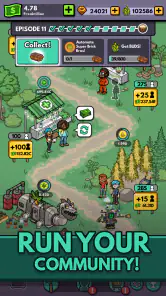




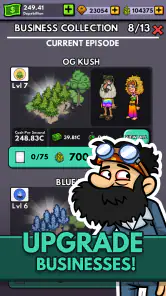
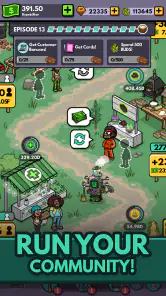

Analysis by Reviewed
I went into Bud Farm: Idle Tycoon expecting a simple tap-and-wait game, and that is exactly where its appeal begins. You start by tending a small cannabis-growing operation, then turn each round of collected earnings into another improvement. The actions are easy to understand, the visual feedback is immediate, and the next upgrade is usually close enough to keep the session moving. What makes it more than a passive timer is the feeling that every short visit has a clear purpose.
This is a simulation game from LDRLY Games, built for players who enjoy watching a modest operation become increasingly efficient. It is free to start, carries a Mature 17+ rating, and runs on Android devices using version 7.0 or later. The subject matter is deliberately adult, but the actual play is presented in a light, cartoon-like management style rather than as a serious guide to cultivation.
My overall impression is positive, with one important qualification: this is best enjoyed as a short-session idle game, not as a deep business simulator. If you like checking progress, making small upgrades, and returning later to collect the result, it has a satisfying rhythm. If you want detailed production planning, realistic economics, or a game that rewards long uninterrupted play, its simplicity may feel limiting.
From the first tap to the first useful decision
The opening interaction is deliberately uncomplicated. You tap to get the operation moving, watch the first output appear, and then use what you earn to improve the farm. That first action matters because the game quickly teaches its central rule: do something now, receive a visible response, and invest the response into a stronger next cycle.
I like this approach because it avoids burying the player under menus at the beginning. There is no need to understand a complicated production chart before making progress. The early minutes are about recognizing the relationship between activity and income. Once that connection is clear, the game starts asking a more interesting question: should I spend what I have immediately, or wait long enough to afford a more useful improvement?
That choice gives the opening a little more texture than constant tapping. A small upgrade can make the next collection arrive sooner, while saving may let you reach a more meaningful change. The game does not turn this into a demanding strategy puzzle, but it does make spending feel like a decision rather than a purely automatic button press.
The first action also establishes the intended pace. Bud Farm is not asking me to sit and tap continuously for an hour. It works better when I make a few decisions, leave the operation running, and return when there is something worthwhile to collect. That makes it a natural fit for a quick break, a commute, or the few minutes before going to bed.
Why the feedback feels personal even when the system is simple
The strongest part of the early loop is the feedback. I can see the farm become more productive after an upgrade, and that visible change gives the reward a purpose. Instead of collecting currency only to watch a number rise, I am building toward a farm that should make the next visit more productive than the last one.
This is where the idle design does its job. The game turns waiting into anticipation. When I close it after making an upgrade, I already have a reason to come back: I want to see how much the new setup produced. That is a small psychological trick, but it is effective because the return visit is connected to a decision I made rather than being completely random.
There is also a useful distinction between active and passive progress. Tapping gives the session an immediate action, while the idle side gives the game a reason to remain relevant after I leave. Players who prefer constant control may find the passive element too light, but players who enjoy incremental management will probably appreciate not having to supervise every moment.
One practical habit improved my experience: I stopped treating every available upgrade as equally valuable. When I returned with a modest amount of currency, I looked first for the improvement that would strengthen repeated production rather than spending simply because I could. That made the next return feel more rewarding and reduced the sense of clicking through purchases without a plan.
The reward is progress, not just a bigger balance
The main reward in Bud Farm is the expanding sense of momentum. Currency is useful because it unlocks better output, and better output makes the next collection more satisfying. The game keeps translating a small gain into a future advantage, which is the basic reason the loop works.
I found the reward structure most enjoyable when I played in short bursts. A quick visit might be enough to collect earnings and afford one improvement. That improvement then becomes the reason to return later. The session ends with a clear feeling of completion, even though the larger farm is still unfinished.
This design is especially friendly to people who like visible progress but do not want a demanding daily commitment. You do not need to memorize a complicated build order to understand what is happening. The useful question is usually practical: what purchase will make my next cycle better? That keeps the game approachable while leaving a little room for personal preference.
There is a trade-off, though. Because the decisions are intentionally accessible, experienced simulation players may eventually want more layers. The game’s satisfaction comes from steady improvement, not from balancing many interacting systems. I would choose it over a heavier tycoon game when I want something relaxed, but I would not use it as a replacement for a detailed management simulator.
The free entry point also makes it easy to test that rhythm without committing money first. However, the game includes in-app purchases ranging from $0.99 to $199.99 per item. That range is worth keeping in mind before getting deeply invested, especially if the temptation to speed up progress becomes stronger than the enjoyment of waiting for it.
How I handled the idle gaps
The waiting periods are not empty in the same way they would be in a purely passive app. I leave after making a choice, and the choice changes what I expect from the next return. That gives the gap a purpose. Still, the game is most comfortable for people who accept that progress will sometimes happen between sessions rather than entirely through direct play.
My preferred routine was simple: open the game, collect what had accumulated, check which improvement would strengthen the next stretch, make the purchase, and close it once the available decision had been made. This prevented me from turning the experience into repetitive tapping. It also made each visit feel like a small management appointment rather than an endless task.
For a busy player, that routine is a genuine strength. I can fit it around other activities without losing the thread of the farm. For someone who wants a game to occupy both hands continuously, it is a weakness. The idle structure is not a side feature; it defines the experience.
Another useful approach is to set a personal stopping point. Once I have collected and made the best available improvement, there is often little reason to keep staring at the screen. Closing the game at that moment makes the next session feel more meaningful. It also keeps the loop from becoming a chore built around waiting for tiny changes.
What changes when the farm gets established
As the operation grows, the satisfaction shifts from starting something to maintaining momentum. Early progress feels exciting because every improvement is obvious. Later, the pleasure is more about seeing the whole setup work together and deciding how to use the next batch of earnings.
This is where the tycoon framing becomes useful. The farm is not merely a collection of taps; it is a small economy that I gradually improve. The decisions remain light, but they give the accumulating resources a direction. I am not just asking how much I have earned. I am asking what kind of improvement will make the next cycle more efficient.
The downside is that repetition becomes more noticeable over time. Once the basic pattern is familiar, the novelty comes mainly from the next upgrade and the scale of the operation. Players who need frequent changes in rules or objectives may lose interest sooner than players who enjoy a dependable routine.
I also would not recommend approaching it as a realistic farming education tool. Its theme and vocabulary are built around a playful adult fantasy, while its mechanics are focused on accessible progression. That makes it easy to pick up, but it also means realism is not the point. If you are looking for accurate cultivation information, this is the wrong kind of app entirely.
When a session ends and another one begins
The reset between sessions is one of the game’s quiet strengths. I finish by collecting, upgrading, and leaving the farm to continue its work. Nothing about that transition feels like a hard stop; it feels like placing a small bet on the next visit. The new session begins with the result of the previous one already waiting.
That structure creates a reliable action-feedback-reward-reset cycle. I act by tapping or upgrading, receive feedback through increased production, earn a reward through accumulated currency, and reset by closing the game until the next useful collection. The reason to begin again is not simply habit. It is the chance to see whether the last decision improved the farm as expected.
This makes the game particularly suitable for people who enjoy asynchronous progress. I can play before work, return during lunch, and check again later without needing a long uninterrupted block. The farm keeps its place in the background of my day, while each visit remains short enough to avoid demanding full attention.
That same quality can be frustrating if I want immediate, substantial interaction. There are moments when the correct move is simply to wait. I consider that an honest limitation rather than a flaw hidden behind the presentation. Bud Farm is designed around patience and repeated returns, so anyone who dislikes timers or idle pacing should know that the waiting is central to the experience.
The Mature 17+ rating also affects who I would recommend it to. The theme is clearly aimed at adults, and I would not present it as a general family simulation game. For an adult who enjoys irreverent management games, the subject gives the farm its identity. For someone who prefers neutral business or agriculture themes, a conventional city builder, shop simulator, or farming game would probably be a better match.
Where it sits beside other simulation games
Compared with a traditional farming game, Bud Farm puts less emphasis on movement, exploration, manual harvesting, and detailed land management. I do not play it for the feeling of physically working a field. I play it for the compact loop of collecting income and improving a production operation.
Compared with a classic tycoon game, it is lighter and more forgiving. There is less pressure to manage a complicated network of expenses, staff, customers, or supply chains. That makes it easier to pick up during spare moments, but it also reduces the number of ways I can solve a problem. The game’s appeal is consistency rather than deep simulation.
Compared with other idle games, its cannabis-farm theme gives it a more distinctive personality. The setting is not merely decoration; it shapes the tone of the progression and separates it from generic factories or fantasy resource generators. If that theme does not appeal to you, the underlying loop may not be strong enough on its own to change your mind.
I would choose Bud Farm over a more complex alternative when I want low-pressure progress and a reason to check in later. I would choose a deeper management game when I want long-term planning, multiple competing systems, and decisions that remain challenging after the basic loop becomes familiar.
Who will enjoy it, and who should skip it
I think it suits adult players who like idle progression, compact management decisions, and a playful cannabis theme. It is also a good option for someone who wants a game that can be opened briefly without losing progress or requiring a long setup every time. The free price makes experimenting easy, although the purchase range means I would recommend deciding on a spending limit before playing regularly.
I would be more cautious recommending it to players who dislike waiting, repeated collection routines, or games where the most satisfying result may arrive after closing the app. It is also not ideal for players searching for a realistic agriculture simulation, a story-heavy game, or a demanding strategy challenge.
The current version is 1.29.1, and the game has been available since March 26, 2019. Its longevity is reflected in the broad player response: it holds a 4.7 average from around 199 thousand ratings, with over 5 million installs. Those figures suggest that the simple loop has found a substantial audience, though popularity does not remove the need to decide whether idle pacing suits your own habits.
My verdict on the complete loop
Bud Farm works because each part of its cycle supports the next. The first tap gives me immediate control, the farm’s response confirms that the action mattered, the reward funds an improvement, and the session reset creates a reason to return. None of those steps is especially complex alone, but together they form a comfortable routine that is easy to understand and surprisingly easy to revisit.
My advice is to play it as a series of intentional check-ins rather than trying to force constant activity. Collect, choose the upgrade that improves the next cycle, and leave when the useful work is done. That approach makes the idle design feel like a benefit instead of a delay. It also helps keep optional spending from becoming the focus of the experience.
After spending time with it, I see this as a friendly, theme-driven idle tycoon rather than a full farming simulation. Its strongest quality is the tangible sense that a small decision now changes the next visit. Its main weakness is that the same predictable rhythm can become repetitive for players who need more variety.
My recommendation is simple: try it if you want a relaxed adult-themed simulation that turns short actions into visible farm growth. Skip it if you need constant hands-on play or detailed management. For the right player, the loop is clear, satisfying, and easy to fit into an ordinary day.
Pros
- Simple idle mechanics make progress easy to understand.
- Offline earnings let you advance without staying in the game.
- Frequent upgrades create a satisfying sense of progression.
- Lighthearted visuals give the game a relaxed
- playful atmosphere.
- Short play sessions fit well into spare moments.
Cons
- Progress slows noticeably when upgrade costs begin to rise.
- Premium currency can make some upgrades feel unnecessarily expensive.
- Repeated production tasks may become monotonous over time.
- Ads may interrupt the experience or be needed for extra rewards.
- The game offers limited strategic depth for experienced players.

- Category
- Simulation
- Version
- 1.29.1