Bubble Shooter Relaxing
- 485.00
- 3.9
- Installs
- 50.00M
- Price
- Free

Screenshots
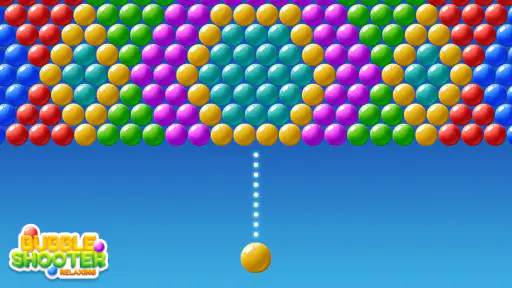
Analysis by Reviewed
Bubble Shooter Relaxing is the kind of casual game I open when I want a small break rather than a long gaming session. The basic idea is immediately understandable: aim, match bubbles, clear the board, and move on. That simplicity is its strongest quality, but it also sets a clear expectation. This is not a story-driven adventure or a competitive game built around deep strategy. It is a light bubble-blasting experience designed to be easy to start, easy to understand, and comfortable to play in short bursts.
I reviewed it as a free game from Mint Games, and my first impression was that it wants to remove as much friction as possible between opening the app and taking the next shot. The store places it in the casual category, and that feels accurate. It is suitable for Everyone, works on devices running Android 7.1 or later, and has reached over 50 million installs. Those figures suggest a very broad audience, but popularity alone does not make every casual game a good fit. What matters here is whether the pacing, goals, and challenge give you a reason to keep returning after the novelty of popping bubbles wears off.
How the first few sessions establish the game
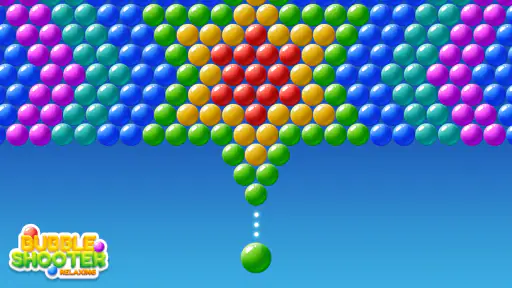
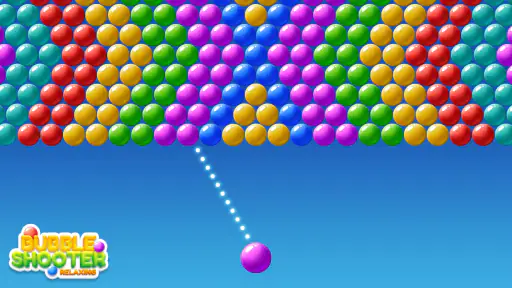
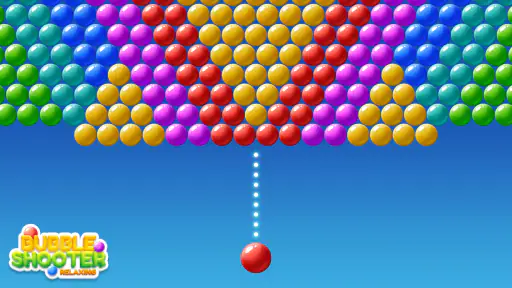
The early appeal comes from the familiar bubble-shooter loop. I do not need a tutorial that explains a complicated rule set before playing. The visual target is obvious, the action is direct, and each shot has a visible result. That makes the game accessible to someone who has never played this type of puzzle before, while still feeling recognizable to people who already know the format.
My first practical goal was simply to clear each arrangement efficiently. In a bubble shooter, the board itself creates the short-term objective: find a useful color match, avoid wasting a shot, and look for a way to bring down groups that are attached above it. Even without adding a story or elaborate mission structure, that creates a small decision before every move. I could fire immediately, or pause for a moment and consider whether a side angle would produce a better collapse.
That pause is important because it keeps the game from becoming completely automatic. The controls are simple, but a careless shot can make the next few moves less convenient. I found that the most satisfying openings were not always the fastest ones. Sometimes the better choice was to prepare a larger match rather than remove the first available group. This gives the early levels a gentle introduction to planning without making the game feel demanding.
The experience is particularly comfortable for short sessions. I can play while waiting for an appointment, during a quiet coffee break, or when I want something less mentally heavy than a strategy game. A round does not require the same commitment as a long campaign, and the straightforward format means I can stop without losing track of a complicated plot or a large collection of characters.
That same simplicity may disappoint players who need a strong narrative reason to continue. There is no obvious emotional storyline carrying the experience from one stage to the next. The motivation comes from clearing boards, handling the next arrangement, and seeing whether the following challenge feels more interesting. If you usually play casual games for characters, dialogue, or a rich world, this will feel intentionally modest.
More From Our News Desk

Clash of Clans Is Won Between the Battles

Android Auto Makes the Case for Quieter Car Software

MobiOffice: Transforming Mobile Productivity with Seamless Integration

EA SPORTS FC™ Mobile Soccer: Redefining Mobile Sports Gaming

How Microsoft OneDrive Became a Mobile Productivity Giant

How Google Translate Breaks Language Barriers Effortlessly
What counts as progress during play
The clearest progress signal is completing one board and reaching the next. That sounds basic, but it works because the action is readable. I know when a shot helped, when a group disappeared, and when the remaining bubbles became easier or harder to manage. Each successful clear gives a small feeling of completion, which is exactly what I want from a game I am playing in spare moments.
What I would not do is treat every completed stage as proof that the game is becoming dramatically deeper. The core action remains bubble matching. The sense of advancement is therefore more about changing arrangements and rising demands than about learning a large set of new systems. This is a useful distinction: the game offers forward movement, but it should not be approached as a progression-heavy role-playing experience.
For me, the most meaningful progress signal is improved judgment. At the beginning, it is tempting to shoot at the nearest matching color. After playing for a while, I start looking at the structure above the match. A group that seems small can matter if it supports several bubbles, while a larger match may be less useful if it leaves the board awkwardly arranged. This is one of the better reasons to keep playing: the game can reward more careful observation even when the rules stay simple.
A practical tip is to avoid treating the visible match as the only target. Before firing, I look for colors that can be reached through a wall or bounced toward a side. Angled shots can be more useful than direct ones when the central route is blocked. I also try not to spend a good opportunity on a tiny group if a nearby connection could remove much more of the board. These habits are not complicated, but they make the game feel less random and give each move a clearer purpose.
Another useful habit is to use the edge of the play area deliberately. A banked shot can reach a position that is not available from a straight line, and it can help set up a later match. I would not use this on every turn, because overthinking a simple board can slow down the relaxing rhythm. Instead, I save the technique for moments when a direct shot would leave an inconvenient color in the middle of the layout.
Challenge, pacing, and the point where patience matters
The challenge works best when it asks me to manage limited opportunities rather than react quickly. Bubble shooting is naturally slower than an arcade game, and that suits the relaxing identity. I have time to inspect the board, choose an angle, and decide whether immediate progress is worth sacrificing a better setup. The tension comes from making a poor choice, not from needing unusually fast fingers.
The difficulty curve is also easier to appreciate when I stop expecting every stage to introduce a new mechanic. Some boards are engaging because the arrangement makes the next move obvious; others are more interesting because the useful route is hidden behind less convenient matches. The challenge can therefore come from layout and timing of colors rather than from a dramatic change in controls.
There is a trade-off here. Players who enjoy gradual puzzle pressure may find the changing boards enough to maintain interest. Players who want a clearly signposted escalation, complex unlocks, or a constant stream of new abilities may find the pacing too gentle. I would describe the game as a steady test of attention, not a game that continually reinvents itself.
When I get stuck, the best response is usually to slow down rather than fire repeatedly. I check which bubbles are supporting others, identify the color that could create the largest collapse, and consider whether a bank shot can reach it. This approach is more reliable than chasing the closest match. It also preserves the relaxing quality because the solution comes from looking carefully, not from frantic repetition.
The game is a good fit for people who enjoy small decisions with visible rewards. It is less suitable for anyone looking for a demanding puzzle benchmark. There is a difference between a game that helps me unwind and one that pushes me to the limit, and this title is much closer to the first group. Its challenge is present, but it is packaged in a calm, approachable loop.
Unlocks, repetition, and reasons to return
The strongest retention tool is the simple desire to clear another board. That can be enough for a casual audience because the cost of starting a session is low. I can play for a few minutes, finish a small objective, and put the phone down. The game does not need to compete with a long-form console title when its purpose is to fill short gaps in the day.
At the same time, I would keep expectations measured around unlocks and long-term progression. The game’s appeal is centered on bubble blasting, so its forward momentum depends heavily on whether the next arrangement gives me a fresh problem to solve. If you need a visible collection system, character development, or a large set of strategic tools to stay engaged, the core loop may not provide enough variety on its own.
This is where the title’s pacing becomes a personal question. I can return to it because the controls are familiar and the boards invite another attempt. Someone else may feel that the same basic action becomes repetitive after a longer session. In my experience, it works better when treated as a snack-sized game. Playing continuously for a very long time makes the repeated structure more noticeable, while short visits preserve its relaxing quality.
There is also a potential retention pressure common to free mobile games: optional purchases. Bubble Shooter Relaxing is free to download and includes in-app purchases ranging from $0.99 to $99.99 per item. I would approach those options carefully. The free entry makes it easy to test the game without committing money, but the presence of purchases means I would check the screen before confirming anything, especially if a child is using the device. The Everyone age rating makes the game broadly accessible, but it does not remove the need for sensible purchase controls.
For a relaxed player, the best workflow is to decide in advance whether the session is simply for play. I would avoid treating a difficult board as a reason to spend immediately. First, I would retry with a different order of shots, use the sides of the board, and look for a larger collapse. That preserves the puzzle element and helps reveal whether I actually want assistance or merely need a more patient approach.
The game’s large audience and average rating of 3.9 show that it has broad reach, though they do not guarantee that every player will enjoy its rhythm. I see that rating as a useful reminder to approach it for what it is: an accessible casual bubble game, not a universal replacement for every puzzle title. The experience can be pleasant without being endlessly absorbing.
Where it fits among familiar bubble games
Compared with more elaborate match-three games, this one feels narrower and more focused. Match-three alternatives often build their identity around grids, special combinations, characters, or map progression. Bubble Shooter Relaxing instead keeps attention on aiming and clearing suspended groups. I prefer that focus when I want a clean, low-pressure activity, but I would choose a richer match-three game if I wanted more layers between levels.
Compared with competitive bubble shooters, it is better suited to private, unhurried play. There is no need for me to compare my speed with another person in the moment. That makes it less exciting for players who want pressure and more comfortable for players who dislike timers or direct competition. The trade-off is obvious: calm pacing can feel less motivating when I am in the mood for a high-energy challenge.
It also differs from physics-heavy puzzle games. Here, the appeal comes from choosing a color and an angle within a familiar structure, not from experimenting with elaborate objects or unpredictable simulations. That makes the rules easier to learn and the results easier to understand. If you enjoy discovering surprising chains of physical interactions, another puzzle style may offer more variety.
One of its practical advantages is how little mental preparation it requires. I do not need to remember a complicated build, learn a large inventory, or understand a deep economy before making progress. The downside is that the game has fewer reasons to occupy the center of my gaming time. I see it as a companion app for waiting rooms, commutes, and quiet breaks rather than a primary game for an entire evening.
Who should install it and who should skip it
I would recommend it to someone who wants a familiar bubble-shooting format with a relaxed pace and a low barrier to entry. It is especially suitable for casual players, people who prefer short sessions, and anyone who likes puzzles where careful aiming matters more than quick reactions. The Everyone rating also makes it approachable for a wide range of players, although adults should still keep the purchase options in mind when sharing a device.
I would be more cautious about recommending it to players who need a strong storyline, competitive rankings, deep customization, or a steady flow of major new mechanics. Those expectations point toward a different kind of game. This title’s value is in its clean loop, not in the size of its world or the complexity of its progression.
Device compatibility is reasonably broad for an older Android phone because the minimum requirement is Android 7.1. The current version is 1.79, so I would still keep the app updated when possible for the intended experience. Since it is free, my advice is simple: try a few short sessions before considering any purchase. That is enough time to discover whether the board layouts and pacing hold your attention.
One everyday scenario captures its strengths well. If I have ten minutes before leaving home, I can open the game, play a few boards, and stop without feeling that I abandoned an important mission. If I am already tired, I can focus on aiming and matching rather than learning rules. But if I have a full evening and want a game that keeps revealing new systems, I would probably choose something with a larger progression structure instead.
My verdict on the progression and overall value
My final view is positive but deliberately limited. Bubble Shooter Relaxing is strongest when used as a short, low-pressure puzzle break. Its early goals are clear, its progress is easy to read, and its challenge comes from choosing shots thoughtfully rather than reacting at speed. The loop gives me enough satisfaction to return, especially when I play in brief sessions and focus on improving my board-reading habits.
The progression verdict is less enthusiastic for long-term players. The game can sustain interest through new arrangements and the simple urge to complete another stage, but it does not appear designed to replace a deeper puzzle campaign. Repetition becomes more noticeable during extended play, and the optional purchases are worth treating cautiously rather than as a necessary part of the experience.
Mint Games has made a free casual game that understands the appeal of immediate play. With over 18 thousand ratings and an average of 3.9, it has found a substantial audience, but those numbers should be read alongside your own preferences. I would install it if I wanted a straightforward bubble shooter that I could pick up without preparation. I would skip it if I needed a rich narrative, intense competition, or progression that constantly changes the rules.
For the right player, the simplicity is not a weakness; it is the reason to keep it available. I can open it, make a few careful shots, enjoy the small satisfaction of clearing a difficult cluster, and leave whenever I am ready. That makes it an easy recommendation as a casual time-filler, provided you are comfortable with a focused loop and keep the in-app purchase options under control.
Bubble Shooter Relaxing Frequently Asked Questions
Does Bubble Shooter Relaxing contain ads?
Ads are common in free-to-play mobile games and may appear during play or between levels. They can help support a game that costs nothing to download, but their frequency can affect how uninterrupted a session feels. If you prefer an ad-free experience, check the in-game options before committing to longer play sessions.
Is Bubble Shooter Relaxing easy to learn for someone new to bubble shooter games?
Yes. The main idea is familiar and simple: aim a bubble at a matching color group and shoot to clear bubbles from the board. The controls are based on touch, so there is little to learn before starting. Beginners can take time to understand aiming and plan shots, while later layouts may call for more careful decisions.
What kind of game is Bubble Shooter Relaxing, and is it designed for short sessions?
Bubble Shooter Relaxing is a casual game centered on bubble blasting, making it a natural fit for players looking for a straightforward puzzle experience. Its simple shooting mechanic is easy to return to for a quick session, while clearing levels gives play a sense of progress. The unhurried style may also appeal to players who want a lighter alternative to more demanding games.
Does Bubble Shooter Relaxing need a powerful phone to run?
Bubble Shooter Relaxing is a casual game with straightforward bubble-shooting gameplay, so it is designed to feel accessible rather than demanding. The minimum operating system is Android 7.1, which is useful to check before downloading. As with any mobile game, performance can vary depending on the device and its available resources, so keeping the operating system up to date can help avoid compatibility issues.
Who developed Bubble Shooter Relaxing, and what do players think of it?
Bubble Shooter Relaxing is developed by Mint Games and has attracted a large audience of casual puzzle fans. It has an average rating of 3.9 from around 18,000 ratings, giving prospective players a general sense of how the game has been received. Individual reactions can still differ: some players may enjoy its simple, relaxing format, while others may prefer more variety or challenge.
Pros
- Simple controls make it easy for anyone to start playing.
- Relaxing sound effects create a calm and pleasant atmosphere.
- Short levels fit well into quick breaks or casual sessions.
- Offline play is useful when you have no internet connection.
- Colorful visuals are clear and comfortable to follow.
Cons
- Gameplay can feel repetitive after extended play sessions.
- Some levels depend heavily on lucky bubble arrangements.
- Ads may interrupt the experience between rounds.
- Limited challenge may disappoint players seeking competitive action.
- Extra moves or boosters may require in-app purchases.

- Category
- Casual
- Version
- 1.79