Block Blast TNT
- 38.00
- 3.4
- Installs
- 5.00M
- Price
- Free

Screenshots
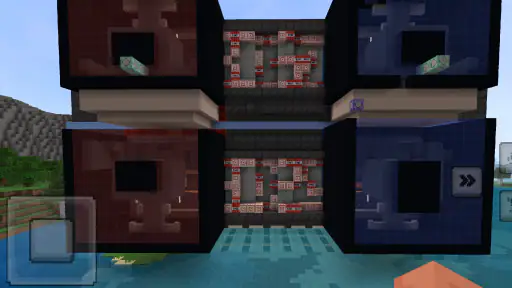
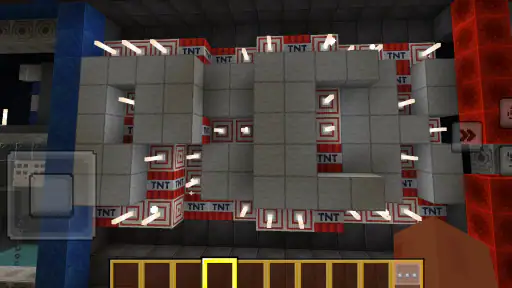
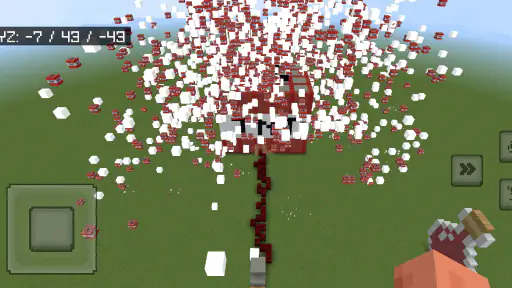
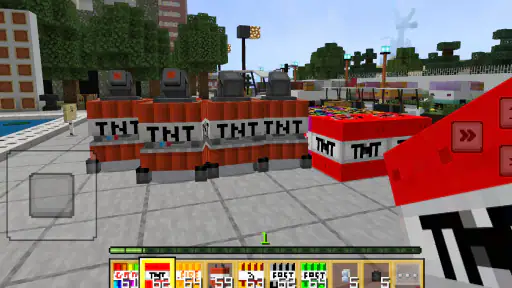
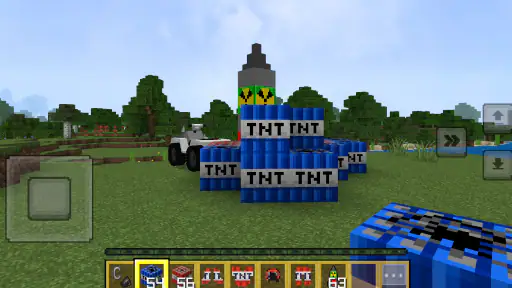
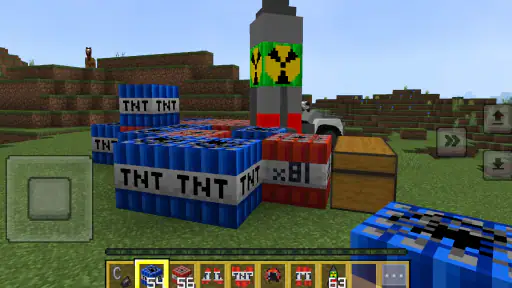
Analysis by Reviewed
I tried Block Blast TNT as the kind of game that can sit on a shared phone and be opened whenever someone has a few spare minutes. Its basic idea is easy to understand: place and clear blocks while explosive chaos changes the rhythm of each round. That makes it approachable, but the appeal is not only in the first few minutes. The interesting part is learning when to build carefully and when to accept a messy board in order to survive the next threat.
GreenPixel Games presents it as a free simulation game for Everyone, and that description fits its accessible presentation. It does not ask me to learn a complicated story or a large collection of controls before playing. I can hand the phone to another person and explain the central action quickly. At the same time, the TNT theme gives the familiar block format more pressure than a completely calm puzzle game, so it feels less like arranging tiles at leisure and more like managing a small problem before it gets out of hand.
How it works when a household shares one device
The strongest shared-device use case is a short turn between ordinary tasks. One person can play while waiting for food to finish, another can take over during a commute break, and someone else can try to beat the previous attempt later. Because the premise is immediately readable, it is suitable for mixed gaming experience. A regular puzzle player can think about efficient placements, while a casual player can simply experiment with the blocks and understand the consequences through play.
I would not treat it as a cooperative game, though. The household experience is more about taking turns, comparing decisions, and discussing what should have been placed differently. That distinction matters. If you are looking for a game where two people actively control the same challenge, this is not the right expectation. It works better as a pass-and-play conversation starter than as a shared multiplayer activity.
A realistic evening example is a family sitting in the same room with one phone available. One person begins a run, then pauses the discussion to point out an awkward block. The next player tries a different approach and discovers that clearing space immediately is not always the best choice. That kind of informal coaching is where the game gains extra value. The board becomes a small, visible puzzle that people can debate without needing a long explanation.
There is also a useful trade-off in shared use. A compact puzzle session is easier to fit around household routines than a long adventure, but it can invite repeated “one more try” moments. If the device belongs to several people, agree on when turns end before starting. Otherwise, the player who is most persistent may quietly occupy the phone for much longer than intended.
What I would decide before handing over the phone
Since the game is free, the financial boundary is simple: there is no purchase price to pay to start playing. That does not automatically answer every household concern, so I would still establish a few practical rules. Decide whether the game is for quick breaks only, whether younger players may use the device without supervision, and whether a run should be stopped immediately when another person needs the phone.
I also recommend keeping expectations clear about progress. A shared device can make it difficult to know which attempt belongs to whom if the game presents one continuous play space rather than separate household profiles. I would not assume that every player has an independent account area or personal history. Instead, use a simple spoken rule: remember whose turn it is, or keep a small note outside the game if several people care about their best results.
That may sound old-fashioned, but it prevents a common source of friction. A child might believe a high score is personal, while an older sibling may see the same board as communal. The game itself is not responsible for settling that argument. A quick agreement before playing is more reliable than trying to reconstruct who made each move afterward.
For a personal phone, the setup is even easier. I would install it, open a first round, and spend a few minutes learning how the block placement and explosive obstacles interact. The current version is 1.43.2008, and it supports devices running Android 7.0 or later. That makes it relevant to people using older Android hardware, although actual comfort will still depend on the particular phone and how smoothly it handles the game.
One detail I appreciate is that the game’s central loop does not require a long onboarding session in my experience. I can understand the objective through the board itself. That helps when several people share one device because nobody has to sit through an extended explanation before their turn. The downside is that a simple entry point may not satisfy players who want a deep tutorial, a detailed campaign, or a carefully structured learning curve.
Coordinating turns without turning play into an argument
The best household rule is to separate advice from control. The person holding the phone chooses the move, while everyone else may suggest options. This keeps the game social without allowing the loudest player to take over. It also reveals an important difference between watching and playing: a placement that looks obvious from outside can feel much riskier when the board is changing in front of you.
I found that discussing space is more useful than shouting instructions. Instead of saying “put it there,” talk about which gaps should remain open and whether a tempting clear could leave an awkward shape behind. This encourages better decisions and makes the game suitable for a parent and child, two friends, or siblings with different skill levels. The conversation becomes about planning rather than simply celebrating a lucky result.
For repeated turns, I would use a fixed rotation. Each player gets one attempt or one agreed stopping point, then passes the phone. This prevents the common problem where a player keeps extending a run because the board is finally going well. If the household wants competition, compare results only after everyone has had the same number of turns. Otherwise, the person who plays most often has an obvious advantage.
Another practical tip is to avoid coaching during the final moment of a difficult placement. Fast advice can create confusion, especially when several people are speaking. Let the player make the decision, then review it afterward. That makes the game less stressful for younger users and gives experienced players room to develop their own instincts.
Age suitability, trust, and the limits of a shared screen
The Everyone content rating makes the game broadly approachable from an age perspective. I would still distinguish between suitable content and suitable responsibility. A young player may be able to understand the block puzzle, yet still need an adult to explain device rules, turn-taking, and what information should never be shared on a family phone.
For that reason, I would introduce it as a game rather than as a private account space. Do not assume that a child’s progress, choices, or activity are separated from another person’s simply because the game is easy to play. If the phone is shared, keep the device’s normal household boundaries in place and let an adult handle any installation or account decisions that apply to the device.
The age rating is helpful because it removes much of the worry associated with darker themes or mature subject matter. Still, the TNT presentation adds a playful explosive flavor, and some children may focus more on the destruction than on the puzzle. That is not a problem for most players, but it is worth watching the first session if you are choosing games carefully for a younger household member.
Trust also matters between adults. A person may install a free game expecting a harmless time filler, while another may dislike games that encourage repeated attempts. I would be open about why it is installed and how much time it is meant to occupy. The free price makes trying it low-risk financially, but attention is still a household resource.
Where the block-and-blast design succeeds
The combination of block placement and TNT gives the game a clear identity. Traditional block puzzles often reward calm optimization, while this one adds the possibility that a safe-looking board can become urgent. I like that tension because it changes the question from “What is the prettiest arrangement?” to “Which problem should I solve before the next one arrives?”
That pressure also creates a useful decision-making lesson. Clearing a line immediately can feel satisfying, but preserving a flexible area may be more valuable if the next piece is difficult to fit. I recommend new players look for open shapes rather than chasing every available clear. A board with several modest options is usually easier to recover than one that has been emptied in a way that leaves only narrow pockets.
My second tip is to treat explosive moments as a reason to simplify, not panic. When the board becomes crowded, stop trying to create a perfect chain and focus on restoring usable space. This is one of the non-obvious strengths of the design: the game rewards recovery skills, not only ideal planning. In a shared session, it also gives less experienced players a realistic way to improve because they can learn from saving a bad position.
A third useful habit is to watch the shape of the remaining gaps before committing a large piece. A placement may clear something now but create a pocket that accepts almost nothing later. I would rather leave a broad, imperfect area than seal the middle of the board for a small immediate reward. That approach is especially valuable when playing on a phone that several people use, because it makes the board easier for the next player to read.
Where it falls short compared with other simulation puzzles
Compared with a quiet block puzzle, this game is more dramatic and less meditative. If you enjoy slowly arranging pieces with no sense of danger, the TNT angle may feel like unnecessary pressure. A calmer alternative is better for relaxation, concentration exercises, or players who dislike losing a good arrangement because the situation suddenly becomes chaotic.
Compared with larger simulation games, it is much more focused. You are not managing a city, running a business, caring for a character, or building a long-term world. That narrow scope is a benefit when you want an immediate activity, but it is a weakness if your idea of simulation includes progression systems, customization, or a persistent project to return to.
It also does not replace a deep strategy game. The decisions are meaningful within the board, yet the loop remains compact and centered on placement and survival. Players who want elaborate planning across many systems should look elsewhere. I would recommend this to someone who wants a quick tactical puzzle, not to someone seeking a long campaign with a large sense of ownership.
The 3.4 average from around 4.4 thousand ratings suggests a mixed public reception rather than universal agreement. I read that as a reason to try it personally instead of treating the game as an automatic recommendation. Its appeal depends heavily on how much you enjoy block puzzles under pressure. The experience can be satisfying when you like improvisation, but irritating if you prefer complete control over every outcome.
Who should install it, and who should skip it
I would recommend it to casual players who want a free game that can be explained in a minute, families that enjoy taking turns on one screen, and puzzle fans who like having their plans disrupted. It is also a reasonable choice for an older Android phone that meets the minimum system requirement, provided the device feels comfortable for touch play.
I would skip it if your main goal is a private, profile-based household experience with clearly separated progress. I would also skip it for children who need a game to be completely self-managing on a shared phone, because the important boundaries around turns, time, and ownership still need to come from the people using the device.
Players who dislike explosive themes, repeated attempts, or boards that can become chaotic should choose a more relaxed block alternative. Likewise, anyone expecting an expansive simulation should not mistake the category label for a promise of a large management game. This is a focused puzzle with a simulation-style pressure loop, and it is best judged on that narrower goal.
My household verdict after living with the loop
Block Blast TNT works best when I treat it as a small shared activity rather than a major game to organize my day around. Its free entry, Everyone rating, and simple central interaction make it easy to introduce at home. GreenPixel Games has built the experience around quick understanding, but the explosive obstacles give experienced players enough tension to keep testing different ways to preserve space.
The game is not perfect. Shared progress can require household rules, the pressure will not suit every puzzle fan, and its focused design cannot offer the depth of a full simulation or strategy title. Those are meaningful limitations, not deal-breakers. They simply define the audience more clearly.
With over five million installs, it has clearly reached a large audience, but popularity alone would not be my reason to choose it. I would install it because it fits a specific situation: a free, approachable block game that several people can understand, discuss, and pass around without a long lesson. If that is what you need, I think it is worth trying. If you want calm solo arranging, deep simulation systems, or strong separation between household players, a different kind of game will serve you better.
My final advice is to set the shared-device rules first, then let each player discover the board in their own way. The most enjoyable sessions are not necessarily the ones with the highest result. They are the ones where everyone understands the choices, gets a fair turn, and learns why saving room for the next awkward block can matter more than making the most impressive move right now.
Pros
- Quick rounds make it ideal for short breaks.
- Bright visuals and explosive effects make clears satisfying.
- Simple controls are easy for players of all ages.
- Offline play is convenient when no connection is available.
- Increasing difficulty keeps experienced players engaged.
Cons
- Frequent ads may interrupt the flow between rounds.
- Some levels can feel repetitive after extended play.
- Large effects may drain battery on older devices.
- Progress may feel slow without optional purchases.
- No multiplayer mode limits social competition.
- Category
- Simulation
- Version
- 1.43.2008