Blade of Shadows
- 104.00
- 4.5
- Installs
- 100.00K
- Price
- Free

Screenshots
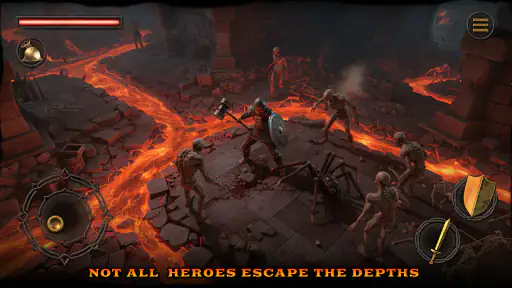
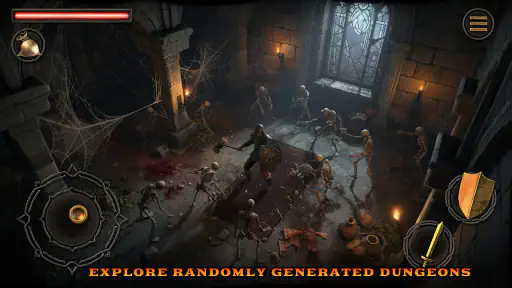
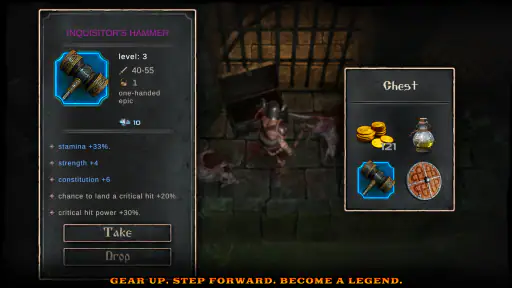
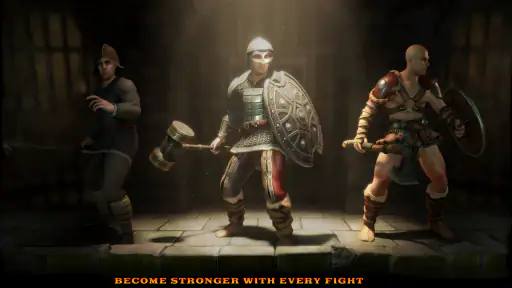
Analysis by Reviewed
Blade of Shadows is the kind of mobile adventure game I open when I want a focused dungeon-crawling session rather than a huge open-world commitment. I played it as a compact RPG built around entering dangerous spaces, fighting monsters, improving equipment, and trying to survive long enough to make the next run worthwhile. That basic loop is familiar, but the appeal comes from how clearly the game points me toward one decision at a time: push farther, strengthen my character, or stop before a promising attempt turns into a costly mistake.
Created by PlayStormRed, this free adventure game has already attracted over one hundred thousand installs and holds a 4.5 average from around two thousand ratings. Those figures suggest that it has found an audience, but they do not automatically make it a good fit for everyone. My experience is that it works best for players who enjoy gradual improvement, repeated combat, and the tension of exploring a threatening place without expecting every session to feel dramatically different.
The game is rated Teen, and that is a useful expectation setter. It presents itself as a darker fantasy adventure rather than a cheerful casual game. I would recommend it to someone who likes the idea of a mobile dungeon crawler that can be played in manageable bursts, especially if upgrading gear feels as rewarding as discovering a new area. I would be more cautious with players looking for a story-heavy role-playing game, a relaxed puzzle experience, or a highly social adventure.
How the current version feels to play
A clear loop built around risk and improvement
The strongest part of Blade of Shadows is its central rhythm. I enter a dungeon, deal with monsters, look for opportunities to improve my equipment, and decide how much further I can safely go. That structure is easy to understand within minutes, which matters on a phone. I do not need to remember a complicated set of systems before enjoying the first few encounters.
At the same time, the loop is not completely mindless. The best moments come when I have enough confidence to continue but not enough certainty to feel safe. A weak piece of gear can turn a manageable fight into a problem, while a better upgrade can change how aggressively I approach the next section. The important choice is often knowing when to stop, not simply trying to move faster.
That makes the game more interesting than a straightforward sequence of battles. If I treat every room as an invitation to rush, I lose the careful feeling that makes dungeon crawling work. I get more from it when I pause after a difficult encounter, consider whether my current gear is still suitable, and treat survival as part of the reward rather than an inconvenience between upgrades.
Combat that rewards attention without becoming a chore
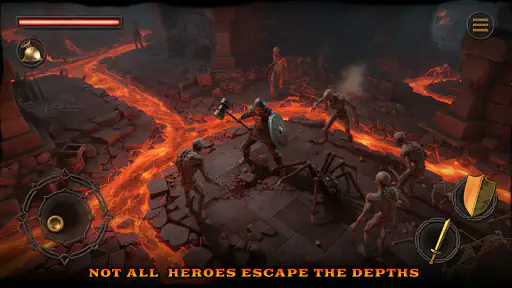
Combat is the main test of whether this type of game will hold your attention. Blade of Shadows keeps the emphasis on fighting monsters and maintaining a character that can handle increasingly dangerous situations. I found the battles most enjoyable when I approached them as small resource checks: can my current equipment support another encounter, and is the possible gain worth the danger?
That approach also reveals one of the game's limitations. Players who need elaborate tactical battles may find the combat framework too narrow. The pleasure is less about mastering a large collection of complicated abilities and more about making sensible decisions within the dungeon loop. In other words, this is better suited to someone who enjoys steady pressure and incremental advantage than to someone expecting a deep strategy game on the scale of a desktop RPG.
For everyday play, that simplicity is useful. I can pick it up during a short break and understand what I am doing without spending the first few minutes reconstructing a complicated plan. However, short sessions are not always completely frictionless. If I am already tired of repeating similar encounters, the familiar structure can start to feel like work. The game depends heavily on whether gear progression continues to feel meaningful to me.
Gear upgrades are more than a reward screen
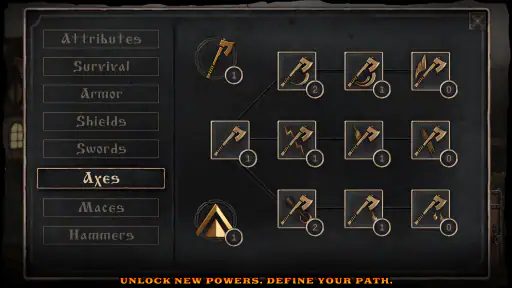
The equipment system gives the adventure its long-term direction. Finding or improving gear is not just a number going up; it changes how confident I feel about the next part of a dungeon. I recommend checking upgrades before beginning another serious push instead of automatically selecting the newest item. A piece that looks stronger in one respect may not fit the way I prefer to approach fights.
This is one of the more useful habits I developed while playing: I treated equipment as preparation rather than decoration. Before a difficult attempt, I reviewed what had helped me survive the previous run and made changes with a specific purpose. That simple workflow made progression feel more deliberate and reduced the temptation to spend resources just because an upgrade button was available.
It also exposes a trade-off. If you enjoy comparing equipment and planning a build, this part can keep the game engaging between dungeon runs. If you prefer a story or exploration reward to be the main reason for continuing, the focus on gear may feel repetitive. Blade of Shadows asks me to care about the strength of my character, and it does not hide that priority.
Exploration has a practical rather than cinematic purpose
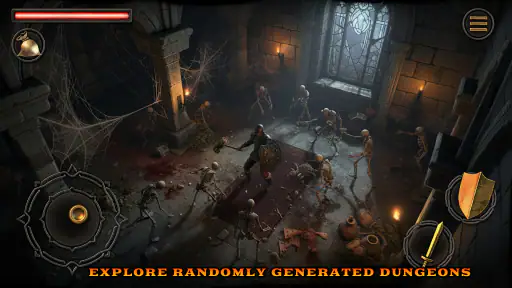
The dungeons are there to create uncertainty, pressure, and opportunities for progress. I do not approach them expecting the broad freedom of a console adventure. Their value is in the compact decisions they create: whether to continue, whether my current equipment is adequate, and whether a dangerous encounter is worth the possible improvement afterward.
That makes the game a good match for players who enjoy the traditional dungeon-crawler mindset. The setting supports the action instead of overwhelming it with lengthy diversions. I appreciated that focus when I wanted to play rather than watch extended scenes, but it also means that anyone seeking a rich narrative journey should look elsewhere in the adventure category.
A practical tip is to avoid judging a run only by how far I travel. A failed attempt can still be useful if it shows me which kind of encounter exposes a weakness in my equipment. I began treating those failures as information: they told me whether I needed stronger gear, more patience, or a different willingness to retreat. That mindset makes the repeated structure less frustrating.
What the release and version tell us
A new release with a focused identity
Blade of Shadows was released on May 21, 2026, and the current version is 1.0.2. That places the game in an early stage of its life, so I view it as a focused foundation rather than a finished answer to every possible dungeon-crawler preference. The version number is worth keeping in mind when deciding how much variety or depth to expect immediately.
What I can judge now is the identity that PlayStormRed has established: a free mobile RPG centered on dungeon exploration, monster battles, equipment improvement, and survival. The game does not need a dozen unrelated systems to communicate that identity. Its advantage is clarity, while its risk is that players may reach the limits of the current loop sooner than they would in a long-established role-playing game.
I would not interpret the early version as a promise of future content. Instead, I would assess the game on what is playable today. That is a healthier way to approach any new mobile release. If the existing combat-and-upgrade cycle already sounds appealing, the game has a reason to be installed now. If you need extensive variety before committing your time, waiting for the product to mature may be the more sensible choice.
What changes mean for someone starting now
For a new player, version 1.0.2 gives a straightforward entry point. I can begin without having to understand years of accumulated systems, and the main progression path is easy to recognize. The early experience is therefore approachable for someone who has played mobile RPGs but does not want to learn an enormous interface.
Existing users are in a different position. A version update can matter most when it improves the feel of the current loop, but the practical effect depends on what a player already values. Someone who enjoys the core dungeon routine may welcome a more polished experience, while someone already feeling repetition will still judge the game by how much meaningful variety each run provides.
My advice is to revisit the game with a concrete goal rather than simply opening it out of habit. Try rebuilding your equipment around survival, testing whether a different approach makes familiar encounters more interesting, or setting a limit on how long you play before reviewing your progress. Those habits help reveal whether the current version still offers decisions or has become automatic.
Free to start, with a purchase decision to consider
The game is free to download, but it includes in-app purchases ranging from $0.49 to $9.99 per item. I consider that an important part of the experience even if I never spend money. The presence of purchases can change how I evaluate progression, because I want to know whether I am enjoying the dungeon loop itself or merely being encouraged toward a shortcut.
My practical recommendation is to play long enough to understand the normal rhythm before buying anything. Do not spend simply because a difficult run was disappointing. First identify the actual problem: weak equipment, poor timing, impatience, or a lack of interest in repeating the same activity. A purchase cannot fix the last issue, and it may not fix the others either.
For younger players, the Teen rating and the purchase options also make device-level spending controls worth considering. That is not a criticism unique to this game; it is simply sensible whenever a free-to-start RPG combines progression with optional items. I would especially avoid letting a frustrated moment decide whether money is spent.
Where it fits among mobile adventure games
Compared with story-first RPGs
Blade of Shadows is a better choice than a story-first RPG when I want action and progression to begin quickly. Its dungeon focus keeps my attention on immediate decisions instead of long conversations or a large map filled with side activities. That makes it more convenient for short play periods and easier to return to after a few days away.
The reverse is also true. If the reason I play role-playing games is to follow memorable characters, make dialogue choices, or explore a broad narrative world, this is not the strongest match. Its identity is built around surviving encounters and improving gear, so I should not expect the emotional range of a campaign-driven adventure.
Compared with casual dungeon games
Against very casual dungeon games, Blade of Shadows offers a stronger sense of character development. Equipment gives my runs a purpose beyond simply reaching the next room, and the survival angle makes failure more informative. I feel as though I am preparing for a challenge rather than only clearing a sequence of disposable levels.
That added purpose comes with more responsibility. Casual alternatives may be better when I want an effortless few minutes with no concern about preparation or progression. Here, ignoring gear and pushing forward carelessly can make the experience less satisfying. The game rewards involvement, even though it remains accessible enough for mobile play.
Compared with large, established RPGs
Large RPGs usually provide more content breadth, more elaborate systems, and a longer-term sense of discovery. Blade of Shadows cannot be evaluated on exactly the same terms. Its strength is concentration: it puts dungeon crawling at the center and avoids asking me to manage an entire world.
That concentration is valuable when I want a game with a clear purpose, but it can become a weakness if I need constant novelty. I would choose this game over a massive alternative when I want a lighter commitment and a direct progression loop. I would choose the larger game when variety, narrative scale, or social features are more important than quick access to combat and upgrades.
Small habits that make the experience better
Use each failed run as a diagnosis
The most useful improvement is to stop treating failure as a simple loss. After an unsuccessful attempt, I ask what actually caused it. If the problem was equipment, I focus my next effort on upgrading. If I pushed too far after a difficult fight, I change my stopping point. If I was playing carelessly, no purchase or new item will replace better attention.
This turns the repeated dungeon structure into a learning process. It also prevents one of the common frustrations of mobile RPGs: repeating content without understanding what the repetition is supposed to accomplish. Every run should answer a question about readiness, equipment, or risk.
Separate progression goals from session goals
I get better results when I decide what kind of session I am having before I start. A progression session is about improving gear or preparing for a tougher push. A short session is simply about completing a manageable stretch without making a reckless decision. Mixing those goals can make a normal short play period feel disappointing.
This is especially useful in an everyday scenario. If I have ten minutes before leaving home, I do not begin with the expectation of a major breakthrough. I use the time to make a careful attempt, review equipment, or learn from an encounter. When I have more time and attention, I can make a deeper push. The game becomes less stressful when I match my ambition to the time available.
Judge upgrades by survival value
It is tempting to chase the most impressive-looking improvement, but I found it more useful to ask whether an item helps me survive the situations that are actually ending my runs. A modest upgrade that addresses a recurring weakness can be more valuable than a flashy improvement that does not change the outcome of my next attempt.
This is a small distinction, but it separates active progression from passive collection. The game gives me a reason to improve equipment; my job is to connect each improvement to a problem I want to solve. That approach also helps me decide whether a paid item would genuinely add value or merely create a temporary feeling of progress.
Who should play it and who should skip it
I would recommend Blade of Shadows to mobile players who enjoy dark fantasy atmosphere, repeated dungeon runs, monster battles, and the satisfaction of turning a fragile character into a more capable one. It is particularly suitable for people who want an adventure game with a recognizable loop and enough decision-making to make survival matter.
I would also suggest it to players who prefer focused games over enormous RPGs. You do not need to commit to a sprawling world every time you want role-playing progression. The compact structure makes it easier to fit into a routine, provided you are comfortable with repetition and do not demand a new type of activity in every session.
I would skip it if your priority is a deep story, extensive character interaction, or a broad social experience. I would also be cautious if repeated combat quickly loses its appeal. The game can make equipment progression feel meaningful, but it cannot change the fact that dungeon encounters form the center of almost everything you do.
Players who dislike optional purchases should approach the free model thoughtfully rather than assuming that free means frictionless. The sensible route is to test whether the basic loop is enjoyable without spending. If it is not, buying an item is unlikely to turn Blade of Shadows into a different kind of game.
My final view after playing the current build
Blade of Shadows is a focused adventure RPG with a clear reason to exist on mobile. It gives me dungeons to explore, monsters to fight, equipment to improve, and a steady survival question that keeps each attempt from feeling completely automatic. PlayStormRed has chosen a direct structure, and that directness is both the game's strongest quality and its main limitation.
The current version, 1.0.2, feels most appropriate for players who are happy to evaluate a new release on its present foundation. I see a promising core rather than a reason to assume that future additions will solve every gap. The best evidence is the game I can play now: approachable, progression-driven, and more enjoyable when I make deliberate choices about gear and risk.
My honest recommendation is to try it if you want a free dungeon crawler RPG that fits comfortably into shorter mobile sessions. Give yourself time to learn what causes a run to fail, and avoid rushing into purchases before you know whether the basic loop has staying power. If the thought of improving one piece of equipment so you can survive one more dangerous stretch sounds satisfying, this could become a dependable side game. If you need a large story or constant novelty, a different adventure will serve you better.
For me, the deciding factor is the balance between preparation and pressure. The game is at its best when I feel that a careful choice can turn a difficult attempt into a successful one. That is enough to make it worth trying, especially because it costs nothing to begin. Just keep your expectations aligned with its focused design, and remember that the most valuable upgrade is the one that solves a real problem in your next run.
Pros
- Fast
- responsive combat feels satisfying once mastered.
- Dark fantasy visuals create a distinctive and atmospheric world.
- Weapon variety encourages experimentation with different play styles.
- Short sessions make it easy to play on mobile devices.
- Challenging encounters provide a rewarding sense of progression.
Cons
- Difficulty spikes may frustrate players who prefer a relaxed experience.
- Touch controls can feel imprecise during fast combat sequences.
- Some areas may appear repetitive after extended play.
- Progression can feel slow without investing considerable playtime.
- Battery usage may be high during longer gaming sessions.

- Category
- Adventure
- Version
- 1.0.2