BitLife - Life Simulator
- 244.47K
- 4.4
- Installs
- 10.00M
- Price
- Free

Screenshots




Analysis by Reviewed
I went into BitLife - Life Simulator expecting a quick novelty, but its strongest hook is how easily a small choice can send a character’s life in a very different direction. It is a mobile simulation game from Candywriter, LLC, built around following a character from birth onward and choosing how they respond to life’s events. I found it easy to pick up in short bursts, though the appeal depends on enjoying text-led decisions more than detailed visuals or hands-on control.
The first-week appeal: easy to start, fun to experiment with
The basic loop makes sense almost immediately: move through life stages, make decisions, and see what follows. There is no need to master complicated controls before playing, so I could start a new life during a spare moment and quickly get drawn into the consequences. One run might focus on work and stability; another can lean into riskier choices simply to see how the story changes.
That makes it a good fit for curious players who like “what if?” scenarios, and for anyone wanting a casual game that does not demand a long session every time. A useful way to get more from a run is to give it a theme before making choices—such as prioritizing education, chasing an unusual career, or making deliberately chaotic decisions. It gives the life a thread, rather than turning each tap into an unrelated experiment.
Making a run feel like a story
I get more out of a character when I decide what I want to learn from that life before I begin. A theme does not have to mean forcing every choice into a rigid plan. I might try to see whether a cautious character can still end up with an unpredictable life, or whether a bold start eventually gives way to a settled routine. The contrast between intention and outcome is often more entertaining than simply choosing the most dramatic option each time.
For a realistic everyday session, I might open the game while waiting for an appointment, pick up a character’s story, and make decisions only until I reach a moment that feels important. I can then stop without needing to remember a complex sequence of controls. That makes it a practical fit for small gaps in the day, but less suited to someone looking for a single, carefully paced evening-length story.
One small habit helps me avoid turning play into button-mashing: I pause before choices that seem likely to affect the character’s direction and ask what the character would do, rather than what would be funniest. On a later run, I can reverse that rule and make deliberately impulsive decisions. Changing the decision-making style gives familiar prompts a different context without pretending that every event will feel new.
Living the Digital Life
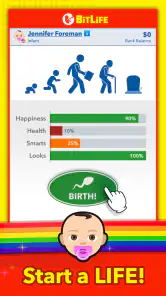
Imagine being able to make every decision from birth to death in a simulated environment. That’s exactly what BitLife - Life Simulator offers. You start as a baby and make choices that will affect your character’s life path. The interface is super intuitive, and I found myself easily navigating through different life stages. It’s like playing God, but with fewer responsibilities.
More From Our News Desk

Weather by Xiaomi Review: Clear at a Glance, Less Clear Up Close

X Under Pressure: Can It Recover When Posting Goes Wrong?

Clash of Clans Is Won Between the Battles

Android Auto Makes the Case for Quieter Car Software

MobiOffice: Transforming Mobile Productivity with Seamless Integration

EA SPORTS FC™ Mobile Soccer: Redefining Mobile Sports Gaming
Choices, Choices, and More Choices
One of the coolest things about this app is the sheer number of choices you can make. From choosing your career path to deciding whether to rob a bank, the game is filled with endless scenarios. I particularly enjoyed experimenting with different lifestyles—from a wealthy entrepreneur to a struggling artist. The outcomes can be surprising, and sometimes, downright hilarious. It’s a reminder that life is unpredictable, even in a digital world.
There is a trade-off to that freedom: a surprising outcome is entertaining, but it can also make a life feel less like a carefully planned story. I get better results when I choose a broad direction and let unexpected events complicate it instead of trying to control every detail. That approach also makes it easier to decide whether to continue a character’s path or start fresh when the run has reached a satisfying ending.
Design and Usability
Now, let’s talk about design. The app has a clean and straightforward layout, which makes it easy to focus on the gameplay. The graphics aren’t flashy, but they don’t need to be. The simplicity is part of its charm. I must say, the notifications can get a bit overwhelming at times, but hey, life’s busy, right?
Its text-focused presentation is both a strength and a limit. It keeps the game quick to scan, especially when I only have a few minutes, but it will not satisfy someone who wants animated scenes, tactile building, or a richly visual world. Compared with more elaborate life or management simulations, this one spends less time on watching a world unfold and more on choosing from prompts. I would pick it for branching possibilities, not for visual immersion.
That difference also affects how I use it alongside other games. A building-focused simulation is usually the better choice when I want to arrange a space, manage objects directly, or watch a detailed environment change. Here, I am mostly reading a situation and deciding how the character responds. If that sounds less active, it is; if I want to imagine several possible lives without managing every detail, it is a useful alternative.
It is worth going in with the right expectation about control, too. The choices give me influence over a character’s direction, but not the feeling that I am scripting every moment. I would not treat an unexpected outcome as a failed run. Sometimes it is more interesting to follow the consequences for a while, and sometimes starting over is the cleaner way to explore a different premise.
Month-to-month value and maintenance
BitLife has a 4.4 average from around 1.2 million ratings and over 10 million installs, so it has clearly found a large audience. It is free to download, with optional in-app purchases ranging from $0.99 to $19.99 per item. I would treat the free version as the place to find out whether the central decision loop suits me before spending anything; purchases are not a reason to assume the game will become more engaging if its basic format already feels repetitive.
For everyday play, it works best as a low-maintenance game: open it when you want a short distraction, make a few decisions, and put it away. If I had a coffee break or a commute, I could start a themed life and see how it develops without having to schedule a long session. I would also turn off notifications if they interrupt more than they help; the game is easy to return to on my own terms.
The maintenance burden is light in another sense: I do not need to build a routine around it to enjoy a run. I can play occasionally and still understand the central loop when I return. That makes it easier to keep installed as a spare-time option than a simulation that expects regular attention to maintain a complicated project. On the other hand, if I leave it untouched for a while, I should not expect a richly evolving world to give me a compelling reason to come back; the draw is choosing a new direction when I do reopen it.
For anyone weighing a purchase, I would first spend time with the basic experience and notice whether I am enjoying the decisions themselves. The important question is not whether extra content sounds tempting in the abstract, but whether I already want another life after finishing one. If the answer is no, buying more is unlikely to fix the mismatch. If I keep inventing new character premises, optional spending becomes a personal choice rather than a requirement for testing the core appeal.
Where fatigue can set in
The same choice-driven format that makes a first run accessible can become familiar over time. Once I understand the rhythm, some decisions may feel like variations on a pattern rather than fresh discoveries. Players who want a persistent world to build, precise control over every outcome, or a strong visual story may be happier with a different kind of simulation game.
The Mature 17+ rating is worth considering before handing the phone to a younger player, and the subject matter can include adult choices. I would also skip it if I find menus and reading less appealing than direct interaction. The latest version is 3.16.2, and it requires Android 7.0 or later, which makes that platform requirement a practical check before installing on an older device.
There is also a particular kind of fatigue that comes from trying to optimize every outcome. If I treat each choice as a puzzle with one correct answer, an unexpected consequence can feel irritating instead of amusing, and the repeated decision rhythm becomes more obvious. I find it better to accept that a life can veer off course. If I want a precise management challenge, a game built around careful resource planning is a better match than this loose, story-like approach.
The content rating matters for more than the age of the person holding the phone. I would consider whether the game’s adult subject matter is something I want in a casual setting, especially if I tend to hand my device to family members. For younger players, I would choose an age-appropriate alternative rather than assume that the simple interface means the themes are equally suitable.
Another reason to skip it is if I want social play or a shared creative project to be the center of the experience. Its appeal, as I experience it, is in my own sequence of choices and the story I make from them. Someone who wants to cooperate with friends, decorate a common space, or compete through direct skill should look elsewhere. Those are not flaws in this format; they are different reasons to play.
Why You Should Try It
If you’re into simulation games, then this is a must-try. It’s like a digital sandbox where you can test out life’s possibilities without the real-world consequences. Plus, it’s a great way to kill time while waiting for your coffee to brew or while you’re on a long commute.
For a more satisfying session, I would avoid tapping through every year as fast as possible. Pause when a decision could shape the character’s direction, and treat the resulting consequences as part of the story. That small change turns a string of menus into a personal experiment, which is where the game has more lasting value for me.
I would especially recommend it to people who enjoy making up scenarios, reading short prompts, and seeing how a chain of decisions plays out. It is also a reasonable choice for someone who wants a game that can be interrupted easily. The best use case is not necessarily finishing a whole life in one sitting; I can return for a few decisions at a time and let the character’s story take shape at my pace.
For a first run, I would choose a simple premise and avoid trying to explore every possibility at once. That makes it easier to notice how one direction changes the experience, and it gives me a natural stopping point when the character’s story feels complete. On the next run, I can switch the premise rather than repeat the same choices. This is a more useful way to judge replay value than expecting every new life to provide a completely different kind of game.
The game is free to start, which makes that first test straightforward, but I would still pay attention to my own tolerance for repetition. If I find myself enjoying the outcomes and inventing another character, there is a clear reason to keep it installed. If I am only tapping through because I expect a bigger payoff later, I would move on instead of trying to make the format fit.
Overall, BitLife - Life Simulator is a fun, quirky game that offers something for everyone. Whether you want to live a life of crime or pursue a career in medicine, the game lets you explore it all. So, go ahead, give it a whirl, and see where your choices take you. Who knows, you might just discover a new side of yourself!
My long-term verdict is more specific: I would keep it around if I enjoy inventing a fresh premise for each life and dipping in for brief sessions, but I would not rely on it as my only simulation game. Its lasting value comes from replaying choices with a different attitude, not from a constant stream of visual change. If that kind of lightweight, text-driven experimentation sounds appealing, the free entry point makes it easy to judge for yourself; if you need deep control or a vivid world, your attention is probably better spent elsewhere.
BitLife - Life Simulator Frequently Asked Questions
What should I know about BitLife - Life Simulator before downloading it?
BitLife - Life Simulator is a choice-driven simulation game from Candywriter, LLC. You shape a character’s life by deciding how they respond to situations and what paths they pursue. It is free to download, with in-app purchases available, and its mature themes make the age rating worth checking before you install. The game’s appeal is seeing how different choices can lead to different life stories.
Does BitLife - Life Simulator have a current version I should check before installing?
The current version is 3.16.2. Checking that your device can run the version offered for your platform is a sensible step before downloading, especially if you are comparing an existing installation with a fresh one. BitLife is a game built around making choices and exploring outcomes, so keeping the app current can help you access the version currently available through your device’s app store.
Is BitLife - Life Simulator available in a version that works on older devices?
BitLife - Life Simulator supports devices running Android 7.0 or later, so people with older Android phones or tablets can check that requirement before downloading. The operating system requirement is only one part of device compatibility; you should also make sure you have enough available storage and that the app is offered for your particular device. On iOS, check the app store compatibility details for your device before installing.
What kind of choices can I make in BitLife - Life Simulator?
You guide a character through life by choosing how they respond to different situations and what direction they take. The game’s choices cover areas such as education, work, and relationships, so each life can unfold differently depending on the decisions you make. If you enjoy exploring different outcomes rather than following one fixed storyline, that choice-driven format is a key part of the experience.
Is BitLife - Life Simulator suitable for younger players?
BitLife - Life Simulator is intended for mature audiences and has a 17+ age rating. Its life-simulation format includes adult themes, so parents and younger players should consider the rating before downloading. The game is not simply a child-focused role-playing experience; its situations and humor are aimed at an older audience, making age suitability an important point to check first.
Pros
- Realistic life simulation experience.
- Wide range of career options.
- Multiple life paths to explore.
- Engaging random events.
- Regular updates with new features.
Cons
- In-app purchases can be expensive.
- Ads can interrupt gameplay.
- Some events feel repetitive.
- Limited customization options.
- Requires internet connection.
- Category
- Simulation
- Version
- 3.16.2







