Bermuda Adventures Farm Island
- 13.04K
- 4.5
- Installs
- 10.00M
- Price
- Free

Screenshots
Analysis by Reviewed
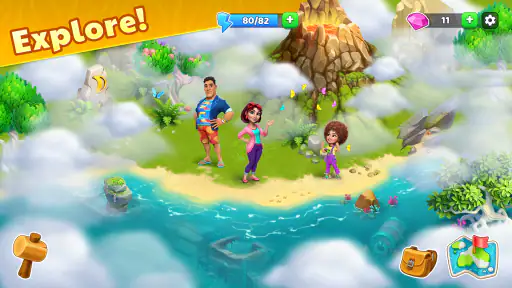
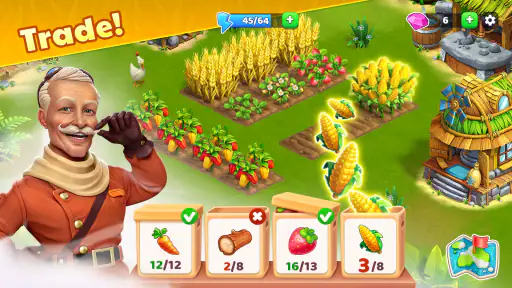
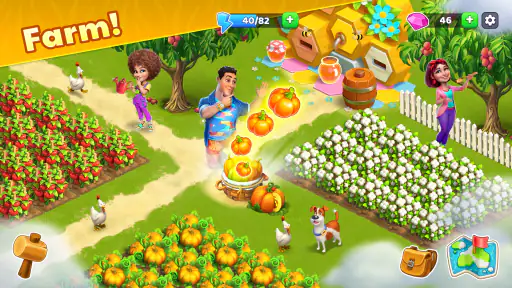
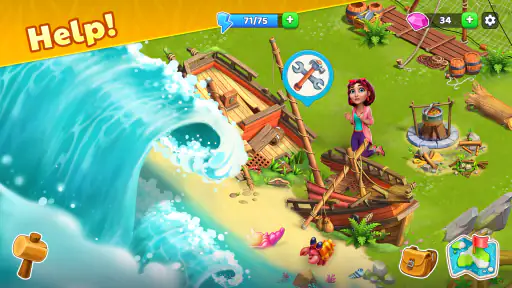
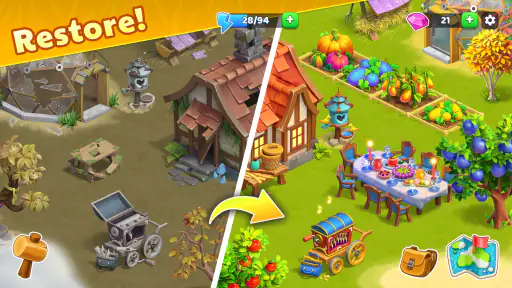
I first approached Bermuda Adventures Farm Island expecting a light farming game with a tropical backdrop, but its real appeal is the way it turns a small island into a steady series of practical decisions. I clear space, gather resources, expand the farm family’s home, and decide which task deserves attention before moving on to the next request. That loop is easy to understand, yet it has enough movement and variety to make the first sessions feel busier than a simple crop timer.
This is an adventure game from BELKA GAMES, available free of charge for Android users. It is aimed at Everyone, so the presentation is approachable and colorful rather than intense or complicated. The game has reached over 10 million installs and holds a 4.5 average from around 325 thousand ratings, which matches my impression that it is designed for a broad audience: people who enjoy decorating, collecting, unlocking areas, and checking in for short periods rather than players looking for a demanding action game.
What Bermuda Adventures feels like after the first week
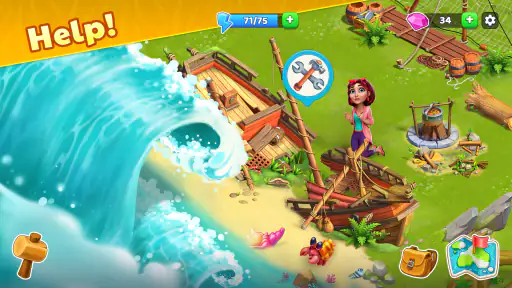
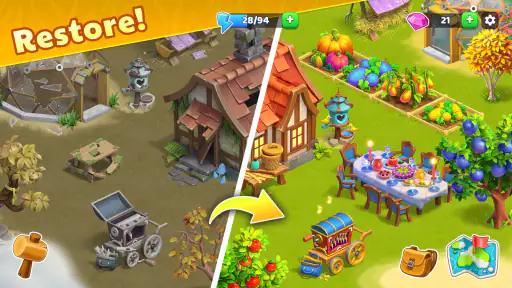
The opening hours do a good job of making progress visible. The island begins as a place that needs attention, and almost every action gives me a clear sense of improvement. A patch of land becomes useful, a building becomes available, or a new request points me toward the next goal. That constant change is the reason I kept returning during the first week. Even when a task was small, it usually connected to a larger objective.
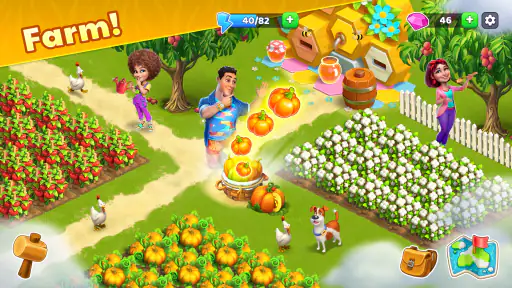
The farming itself is only one part of the experience. I am also managing a growing home, moving between areas, collecting materials, and following the needs of the farm family. This combination gives the game a more adventurous rhythm than a purely agricultural simulator. If I want a quiet activity, I can focus on crops and production. If I want a stronger sense of direction, I can follow the next exploration or construction task.
That flexibility makes it particularly comfortable on a phone. I can play for a few minutes while waiting for an appointment, then return later without needing to remember a complicated control scheme. The visual goals are easy to read, and the island layout gives me enough context to understand where I should go next. I rarely felt lost, which matters in a game built around several simultaneous objectives.
One useful habit is to avoid spending every available resource immediately. Early progress encourages quick construction, but keeping a small reserve makes later requests less awkward. I found it more efficient to finish a group of related tasks before rushing to improve every building. That approach reduces unnecessary trips and helps preserve the materials needed when the game suddenly asks for a particular item.
The first-week appeal also comes from the gentle sense of ownership. The island is not just a menu of levels; it gradually feels like a place I am organizing. I can see why someone who enjoys casual decorating and collection games may become attached to it. The tropical setting gives the routine a warmer personality than a standard farm field, while the family-home theme adds a reason to care about expansion beyond simply producing more goods.
Still, the opening can create expectations that the later experience has to work hard to maintain. Unlocking new content feels exciting when every session introduces something fresh. Once the island becomes more familiar, the value depends less on discovery and more on whether the regular chores remain satisfying. That is where my opinion became more mixed.
Who will enjoy the island most?
I would recommend it first to players who like gradual improvement, visible building projects, and a relaxed adventure framework. It suits someone who enjoys opening a game several times throughout the day, completing a few objectives, and leaving again. It also works well for families or younger players who prefer friendly visuals and straightforward goals, although adults who dislike waiting or repeated collection may lose patience sooner.
It is less suitable for anyone seeking a traditional farming simulation with deep economic planning. The emphasis is on guided progression and a broad mix of activities, not on building a highly specialized agricultural business. It is also not the best choice for a player who wants a self-contained adventure that can be played continuously without pauses. The design is much more comfortable when treated as a recurring mobile routine.
How it compares with familiar farming games
Compared with a focused farm simulator, this game gives me more reasons to leave the fields. Exploration, home improvement, and family-centered objectives keep the island from feeling like a single production spreadsheet. The trade-off is that farming does not always feel as deep or contemplative as it does in games built almost entirely around crops, livestock, and land management.
Compared with a decoration-first casual game, Bermuda Adventures offers more direction. I am not only arranging a pretty environment; I am usually working toward a request, an upgrade, or an area that needs attention. That structure is helpful when I want momentum, though players who prefer unrestricted decorating may find the guided objectives limiting.
It also differs from a traditional adventure game because the stakes are deliberately gentle. There is no need to master fast reactions or memorize complex systems. The challenge comes from choosing what to gather, what to build, and when to return. In my view, that makes it a good companion game rather than a replacement for a larger story-driven adventure.
Where the long-term routine succeeds and starts to wear thin
After the novelty fades, the strongest reason to continue is the satisfaction of keeping several small projects moving. I like opening the game and seeing that yesterday’s work has created a new option today. The island gives me a sense of continuity, and that can be surprisingly effective when I want something less demanding than a competitive game.
The month-to-month value depends on whether that continuity feels rewarding or merely obligatory. For me, it remained enjoyable when I set a modest goal for each visit: finish one construction step, gather enough material for a specific request, or improve one area instead of trying to solve the entire island at once. Small targets make the routine feel intentional. Without them, the game can become a sequence of taps performed simply because something is available.
This is the first important long-term trade-off: the game rewards consistency more than intensity. A player who checks in regularly can maintain a comfortable flow, while someone who expects to make unlimited progress in one long sitting may encounter more friction. I prefer the former approach, but it means the game asks for a place in my daily habits rather than offering a complete experience in a single weekend.
The maintenance burden is not only about time. It is also about attention. Several objectives can be active at once, and I need to remember which resources are useful for the next important step. My practical solution was to prioritize tasks that unlock space or improve the home, then collect secondary materials only when they were on the route. This prevented the island from turning into a checklist with no clear order.
Another helpful workflow is to group activities by location. Instead of traveling back and forth for every individual request, I first look at what can be completed in one area and handle those jobs together. That sounds simple, but it makes the game feel much less repetitive. It also turns casual play into a small planning exercise, which is one of the less obvious strengths of the design.
There is a cost to this structure. If I miss a few sessions, returning can feel like opening several unfinished errands at once. The game remains understandable, but the backlog can reduce the relaxing quality. Players who prefer games that remember a single clear objective may find the broader island routine slightly cluttered.
Where fatigue comes from
The main source of fatigue is repetition. Gathering, producing, returning, and handing over items is satisfying when it leads to a visible improvement. It becomes less interesting when the same pattern continues without a meaningful change in the surroundings. The tropical presentation helps, but scenery alone cannot remove the feeling of doing familiar errands.
Progress can also feel uneven. A new building or area gives a strong burst of motivation, while the steps leading there may feel like preparation rather than adventure. I learned to judge those slower stretches by the reward at the end instead of expecting every action to be exciting. That mindset works for me, but it will not help players who need constant novelty.
The free-to-play structure deserves careful attention. The game can be downloaded and played without an upfront price, but in-app purchases range from $0.99 to $199.99 per item. I would not treat those options as a reason to avoid the game automatically, yet I would recommend deciding on a personal spending limit before playing. The temptation in a progression game is not always a single large purchase; it can be the repeated urge to speed up a task or remove a small inconvenience.
My preferred way to enjoy it is to accept the intended pace. I use the available resources thoughtfully, return when there is a clear reason, and avoid treating every delay as a problem that needs money to solve. That approach preserves the relaxing side of the game. Someone who dislikes any form of waiting or optional spending pressure may be happier with a paid farming title or a game designed around one-time progression.
The current version is 1.19.0, and the game requires Android 7.0 or later. Those details matter if you are installing it on an older phone or deciding whether an existing device is suitable. On a compatible device, the most important practical question is not whether the game can be started, but whether its recurring structure fits the way you normally play mobile games.
Everyday use: a realistic short session
Imagine that I have ten minutes during a commute or lunch break. I open the island, check which building or family request is closest to completion, and collect only the materials connected to that goal. I then complete one construction step or prepare the next batch of resources, leaving the rest for later. That session feels productive without requiring full concentration, and I can stop at a natural point.
On a quieter evening, I might use a longer session to reorganize my priorities, visit several areas, and prepare for the next return. The important distinction is that I do not expect the game to provide a dramatic conclusion each time. Its satisfaction comes from leaving the island in better shape than I found it and knowing exactly what I want to do next.
This also explains why it may not suit someone who plays only once a week. The game’s charm is tied to continuity, and a long gap can make the routine feel more like maintenance than discovery. If your preferred mobile experience is a complete puzzle, a story chapter, or a match that ends cleanly, this island may feel too open-ended.
Does it deserve a lasting place on your phone?
My answer is yes, with conditions. Bermuda Adventures earns lasting space when I treat it as a calm, ongoing hobby rather than a game I must finish quickly. The combination of farming, home building, and exploration gives it more staying power than a basic crop timer, and the family-home focus makes the progression feel personal enough to support a regular habit.
It does not completely escape the weaknesses common to free farming adventures. Repeated collection can become tiring, progress may feel slower after the early excitement, and the purchase options require self-control. The game is also less compelling for players who want deep simulation, unrestricted creativity, or a strong action-based challenge.
For me, the deciding factor is the balance between routine and reward. When I set a small objective, plan nearby tasks, and accept the game’s pace, the island remains pleasant. When I chase every available upgrade or try to force progress, the same systems feel more demanding. That is a meaningful distinction: the game is at its best when it supports my schedule instead of taking over it.
My recommendation is to try it if you want a friendly adventure-farming game that grows through regular short visits. I would skip it if the idea of recurring chores, gradual unlocking, or optional purchases already sounds frustrating. For the right player, the lasting value is not a constant stream of surprises; it is the comfortable feeling of returning to a familiar island and finding one more useful improvement waiting to be made.
Pros
- Colorful graphics and cheerful animations make the island pleasant to explore.
- Many buildings and decorations let you personalize your farm and settlement.
- Regular tasks and events provide clear short-term goals for casual players.
- The game offers a variety of resources
- crops
- animals
- and crafting activities.
- Playable in short sessions
- making it convenient for mobile gaming.
Cons
- Energy limits can interrupt progress and require waiting or spending resources.
- Later upgrades often demand large amounts of materials and currency.
- The game may feel repetitive when completing similar harvesting tasks.
- Some areas and features take considerable time to unlock.
- Frequent offers and optional purchases may feel intrusive to some players.

- Category
- Adventure
- Version
- 1.19.0