Bendy and the Ink Machine
- 3.14K
- 4.5
- Installs
- 100.00K
- Price
- $4.99

Screenshots
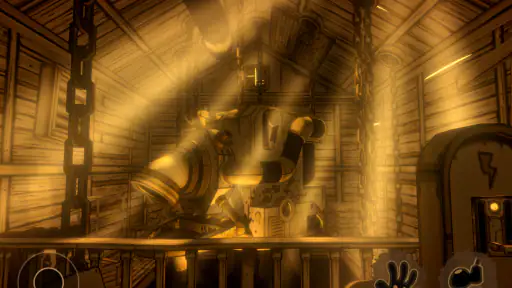
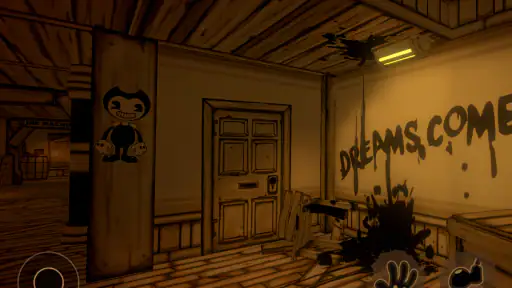
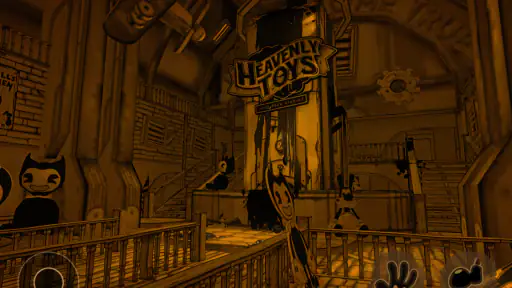
Analysis by Reviewed
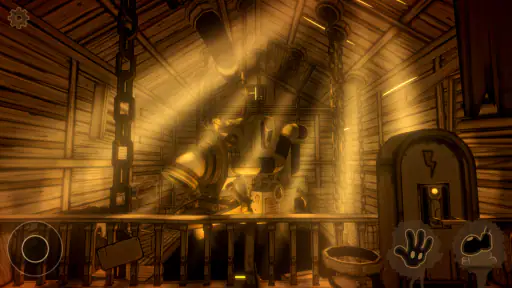
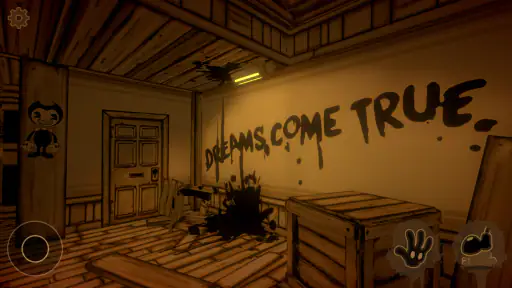
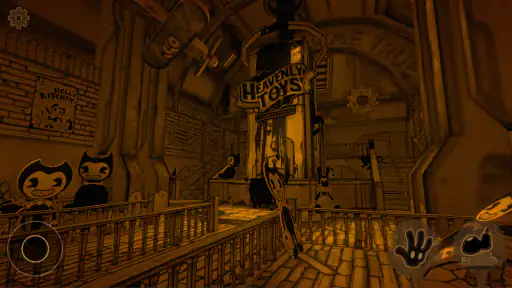
I went into Bendy and the Ink Machine expecting a short horror game built mainly around its cartoon style, but I found something more deliberate. It is an adventure game that mixes exploration, environmental puzzles, action, and unsettling atmosphere inside an old animation studio. The ink-soaked setting is not just decoration: it controls how I read rooms, where I expect danger, and how carefully I move through apparently harmless spaces.
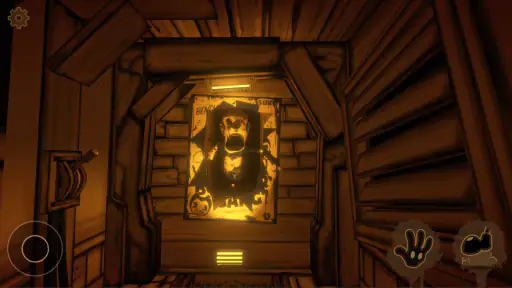
That combination makes it a good fit for players who enjoy horror with a strong visual identity rather than constant combat. I would not describe it as a relaxing game, even though its vintage cartoon presentation can look playful at first. The tension comes from the contrast between cheerful drawings and the studio’s decayed, hostile condition. I regularly found myself studying walls, props, and corridors before deciding whether it was safe to continue.
How the studio feels to play through
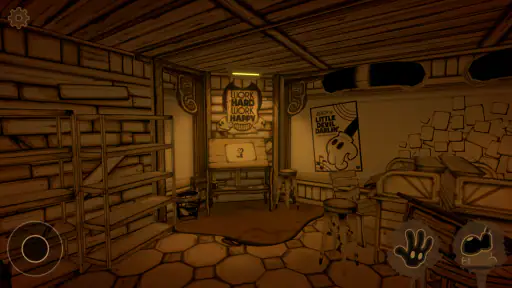
The basic workflow is easy to understand: explore a section of the studio, inspect the environment, work out what the area is asking you to do, and deal with threats when the game turns from investigation to survival. The appeal is in the transition between those activities. A room may first seem like a puzzle space, then become a place I need to remember because danger has changed the way I can move through it.
The setting gives the adventure a clear identity. Ink appears everywhere, from the visual design to the mood and the threats, so the world feels more coherent than a collection of unrelated horror levels. The studio’s corridors also encourage a cautious rhythm. I learned to pay attention to doors, pathways, landmarks, and objects that might matter later instead of rushing toward the most obvious destination.
That habit is especially useful when returning through familiar areas. The game often makes recognition part of the challenge: I may know I have seen a hallway before, but that does not automatically mean I remember the quickest route or the safest way through it. I found it helpful to mentally divide the studio into recognizable zones and use distinctive props as navigation points. This reduced aimless wandering without removing the satisfaction of figuring things out.
The puzzles are strongest when I treated them as environmental problems rather than as isolated riddles. Instead of searching for a single clever answer, I looked at the room’s arrangement, nearby objects, and anything that seemed unusually emphasized. When I got stuck, I stopped interacting randomly and retraced my route. That simple reset often revealed that I had overlooked a visual clue or failed to connect an earlier task with the current area.
Combat changes the pace, but it is not the reason I would recommend the game. The action works best as pressure on top of exploration. When I tried to play aggressively, I sometimes lost the atmosphere and made avoidable mistakes. A more reliable approach was to keep track of nearby space, avoid cornering myself, and treat an encounter as a positioning problem before treating it as a damage problem.
This is one of the game’s more useful lessons for new players: moving forward is not always the same as making progress. If a room feels confusing, forcing the next interaction can be less productive than checking the surrounding paths again. I also found that taking a moment to observe before acting helped me conserve attention for the moments when the game actually demanded a quick response.
What I would do during a normal play session
In an everyday scenario, I would play this in a quiet room with headphones, but I would keep sessions reasonably focused. A short evening session works well because the game’s tension benefits from concentration. If I played while multitasking or repeatedly checking my phone, I missed environmental details and weakened the effect of the sound design.
My usual routine was to enter a new area slowly, identify its main exits, notice unusual objects, and then move toward the clearest objective. I tried not to interact with everything immediately. Instead, I remembered objects that looked deliberate and returned to them when the surrounding context made more sense. This approach made the puzzles feel less like trial and error.
When I reached a tense section, I stopped treating the game like a sightseeing tour. I checked the space around me, noted possible escape directions, and avoided standing in a dead end while experimenting. That preparation does not remove the fear, but it turns panic into a manageable decision. For players who dislike sudden pressure, this is a much better habit than relying on reflexes alone.
Settings and control checks worth making
Before settling into the game, I would check the available control and presentation options on the device rather than assuming the default arrangement will suit everyone. Mobile play can feel very different depending on screen size, touch sensitivity, and how comfortable the player is with virtual controls. A larger display may make environmental details easier to read, while a smaller phone can make movement and camera control feel more crowded.
I also recommend testing the controls in a low-pressure area before becoming invested in the story. The important question is not whether the layout looks tidy, but whether I can move, look around, interact, and respond to danger without hesitating. If a control feels awkward, adjusting it early is preferable to adapting badly during a tense encounter.
Sound deserves particular attention. The studio’s mood depends heavily on audio cues, and playing with the volume too low can make exploration feel flatter while also removing useful warning signals. Headphones are not essential for understanding the game, but they make the contrast between distant ambience, mechanical noise, and immediate danger much clearer.
At the same time, I would not play in complete darkness if horror affects me strongly. The game is already committed to dim spaces and unsettling imagery, so a little room lighting can make a longer session more comfortable without ruining the atmosphere. This is a practical choice, especially for players who want to enjoy the puzzles without feeling overwhelmed by the presentation.
The game is rated Teen, which matches its dark themes, threatening scenes, and horror tone. I would be careful about recommending it to younger players or to anyone who dislikes disturbing imagery, even if the cartoon art initially makes it seem harmless. The visual style softens some details, but it does not turn the experience into a children’s adventure.
Habits that make exploration faster
Experienced play is less about memorizing every solution and more about reducing wasted movement. I found three habits particularly useful. First, I kept a mental route between major landmarks instead of relying on a vague sense of direction. Second, I checked an area completely before moving on when the game gave me time to do so. Third, I treated repeated backtracking as information: if I was returning somewhere often, I asked what that location was teaching me.
The second habit has a trade-off. Thorough searching can improve puzzle solving, but it can also slow the pace and make the studio feel more oppressive. I therefore used a two-pass method. On the first pass, I looked for the objective and obvious interactions. On the second, I checked side spaces and suspicious details only when the main route did not explain what to do next.
I also learned not to spend too long testing the same idea. If an interaction produced no useful result, I moved on and inspected another part of the environment. This prevented frustration and made the eventual solution feel earned. The game rewards attention, but it does not become better when the player repeatedly clicks every object without thinking about context.
During action sequences, the faster pattern is controlled movement rather than frantic movement. I tried to preserve open space, avoid backing into unfamiliar corners, and use the environment as a guide for where I could retreat. Even without perfect execution, this made encounters less chaotic. The key is to enter a dangerous area with a plan for where I will go if the first attack does not work.
Another useful pattern is separating curiosity from commitment. I might notice a dark passage or an unusual sound and want to investigate immediately, but I first checked whether I had finished the current objective and understood the nearby layout. This small pause helped me avoid entering optional-looking spaces while mentally unprepared for a change in pace.
For players who want to finish more efficiently, I would recommend keeping personal notes outside the game for confusing objectives. A few words about a landmark or an unfinished task can be more useful than wandering in circles later. This is not a substitute for solving puzzles; it simply prevents the mobile format and interrupted sessions from erasing useful observations.
Where the game asks for patience
The biggest limitation is that the experience can feel less comfortable on a phone than on a larger screen or with more precise controls. Touch input is convenient, but horror games often ask me to look, move, interact, and react under pressure. If those actions feel cramped on a particular device, the tension may come from the interface instead of the intended design.
The pacing may also divide players. Some sections emphasize atmosphere and searching more than immediate action. I enjoyed that slower rhythm because it gave the studio time to feel like a real place, but players looking for continuous combat may find the exploration too restrained. In that case, a more action-focused horror game would probably be a better choice.
It is also not the right recommendation for someone who wants a bright, casual puzzle game. The puzzles are wrapped in an oppressive setting, and the game expects the player to tolerate uncertainty, ominous sound, and sudden threats. The cartoon presentation is distinctive, but it should not be mistaken for a gentle tone.
Compared with more conventional mobile adventure games, this one puts atmosphere and environmental storytelling ahead of comfort and convenience. Compared with pure horror games, it gives me more reasons to observe and solve rather than simply survive. That middle ground is its strength, although it means neither the puzzle design nor the action will satisfy players who want a completely specialized experience.
Device compatibility is worth checking before buying. The game supports Android devices running version 6.0 or later, and its current version is 2.1.0. I would still consider the specific phone or tablet important because operating-system compatibility does not guarantee that touch controls, visual clarity, and performance will feel equally good on every screen.
The game costs $4.99, so I see it as a focused purchase rather than something to install casually and forget. That price makes sense for someone who already enjoys narrative horror and expects to spend time paying attention to the environment. It is less compelling for a player who wants an endlessly replayable action game or a large collection of short puzzles.
Who should play it and who should pass
I would recommend it to players who like stylized horror, abandoned workplaces, environmental puzzles, and stories that make them inspect the world instead of following a brightly marked path. It is particularly appealing if the idea of exploring a decaying animation studio sounds more interesting than fighting through a generic haunted house.
I would also recommend it to people who enjoy discussing theories after playing. The visual details and unusual setting invite interpretation, and the game’s atmosphere gives ordinary objects more weight than they would have in a typical adventure. I found myself remembering rooms and images after stopping, which is a good sign for a horror game built around mood.
I would suggest skipping it if you dislike backtracking, tense exploration, or controls that may require adjustment on a smaller screen. Players who want a fast, competitive experience should look elsewhere, as should anyone seeking a purely cheerful cartoon game. The Teen rating is a useful warning that the presentation’s playful surface does not define the whole experience.
Joey Drew Studios gives the game a clear visual voice, and that consistency carries much of the experience. The ink theme connects the locations, threats, and mood without making every moment feel identical. Even when I was not actively solving a puzzle, I usually had a reason to keep looking because the surroundings felt designed to be noticed.
My verdict after learning its rhythm
After adjusting my controls, slowing down in unfamiliar rooms, and using landmarks to manage the studio, I found the game much more enjoyable than I would have if I had rushed through it. Its best moments come from the combination of curiosity and unease: I want to understand the place, but I am never entirely comfortable moving deeper into it.
The audience response is strong, with a 4.5 average from around 18 thousand ratings and more than 100 thousand installs. Those figures do not replace personal taste, but they fit my impression that the game has a distinct appeal rather than relying only on a familiar horror formula.
My final recommendation is simple: buy it if you want a self-contained adventure where atmosphere, observation, and puzzle solving matter as much as survival. Go in expecting to adjust to mobile controls, accept some deliberate pacing, and pay attention to the environment. If you do, the studio becomes more than a backdrop; it becomes the main reason to keep playing.
For me, this is at its best when played patiently, with sound on and curiosity under control. It is not flawless, and it is not the universal choice for every horror fan, but its ink-covered animation world gives it a personality that many mobile adventures lack. That makes it an easy recommendation to a friend who wants horror with puzzles, atmosphere, and a setting worth remembering.
Pros
- Atmospheric cartoon-horror visuals create a memorable world.
- Story unfolds through exploration
- recordings
- and environmental clues.
- Distinctive ink-based enemies and encounters keep exploration tense.
- Detailed environments reward players who inspect rooms carefully.
- Works well for fans of classic animation and horror adventures.
Cons
- Some objectives can feel unclear without consulting the environment closely.
- Backtracking becomes repetitive during several sections.
- Enemy encounters may feel frustrating rather than genuinely frightening.
- Loading times and performance can vary across older mobile devices.
- The complete experience may require a purchase or separate chapter access.

- Category
- Adventure
- Version
- 2.1.0