Baseball Franchise Manager
- 22.00
- 3.4
- Installs
- 10.00K
- Price
- Free

Screenshots

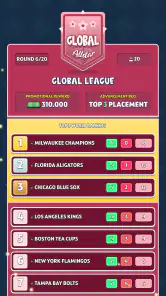
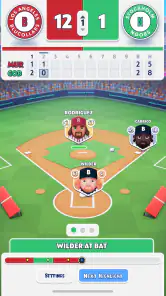
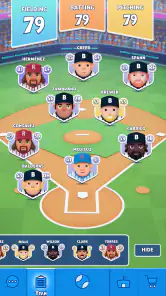
Analysis by Reviewed
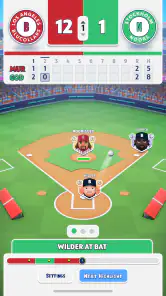
Baseball Franchise Manager puts me in the general manager’s chair rather than on the field. That distinction matters from the first tap: this is a sports management game about building a baseball organization through scouting, drafting, trading, training, and competition. I am not controlling every pitch or swinging the bat myself. I am making the decisions that shape the roster and then watching those decisions become results.
That makes it a good fit for someone who enjoys planning more than quick reflexes. I can open it for a short decision-making session, review what my team needs, and leave with a clear next move. The game is free to download and play, while optional purchases range from $1.99 to $104.99 per item. I would approach it as a free experience first, because the management loop is the main reason to try it, not the spending system.
Getting Comfortable With the General Manager Role
The game comes from Grand Pike AB and sits in the sports category, although its appeal is closer to a baseball front-office simulator than to a conventional action sports title. Its Everyone age rating makes it approachable for a broad audience, including younger baseball fans who like assembling teams. The current release is version 1.0.56, and it runs on Android 7.1 or later, so it is accessible on many older compatible devices as well as newer phones.
The first thing I would tell a new player is not to expect an instant arcade match. The satisfying part comes from connecting several decisions: identifying a weakness, finding a possible solution, deciding whether to invest resources in it, and then checking whether the team improves. A strong roster is not created by one dramatic button press. It develops through choices that can help now but also affect what I can do later.
That slower rhythm is both the game’s strength and its main limitation. If I want direct control, rapid innings, or a realistic batting challenge, this is probably the wrong baseball game for me. If I enjoy comparing options and wondering whether a promising player is worth the commitment, the format has much more to offer.
The public response is mixed rather than overwhelming: the game holds a 3.4 average from around a hundred ratings, with a little over twenty written reviews. I read that as a reason to keep expectations measured. There is enough interest to show that the concept has found an audience, but I would not install it assuming it will replace a deep, established baseball simulation immediately.
What I See When I Start
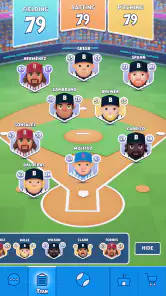
My first useful goal is simple: learn how the team is organized before trying to fix everything. The store summary points toward four central activities—scouting, drafting, trading, and training—and those activities should be treated as different tools rather than interchangeable ways to improve the roster.
Scouting is about gathering information before committing. Drafting is about adding new talent through a longer-term decision. Trading is the quickest way to reshape an existing roster, but it also asks me to give something up. Training is where patience matters, because development is more useful when it supports a clear plan instead of becoming a reflexive upgrade on every available player.
I recommend reading the screens slowly during the opening session. Management games often make a new player feel productive simply because there are many buttons to press. Here, pressing everything at once can make it harder to understand which choice actually helped. I prefer to identify one roster problem, choose one response, and then observe the outcome.
Setting Up a Sensible First Team
Once I am inside the club, I would resist the temptation to chase the most attractive name or the most obvious improvement. A new manager benefits more from a balanced first plan. I look for the area that is most likely to affect the team repeatedly, then consider whether scouting, training, a draft selection, or a trade is the appropriate answer.
This is one of the game’s useful trade-offs. A trade can feel immediately satisfying because it changes the roster quickly, but a quick fix may not be the best use of what I have available. Training is more controlled, yet it may require patience. Scouting can prevent a poor decision, though it does not provide the instant excitement of signing or exchanging a player. Drafting is appealing for long-term building, but it asks me to think beyond the next result.
For a first-time user, I would create a small decision rule: do not make a major roster move until I can explain what problem it solves. That sounds obvious, but it prevents the common mistake of collecting players without a coherent team direction. If my team is weak in one area, adding another player in an already comfortable area may look like progress while leaving the real issue untouched.
I also find it helpful to separate “needs now” from “interesting later.” A player who looks useful immediately may be worth considering even if the long-term plan is different. At the same time, a promising prospect should not automatically displace a reliable contributor unless I understand the cost of that change. This way of thinking gives the game more depth than simply choosing the highest-looking option.
Finding the First Meaningful Success
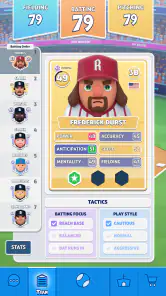
The first meaningful success is not necessarily winning a major competition. For me, it is making one deliberate improvement and being able to connect it to the team’s performance. I might scout before deciding on an addition, train a player who fits a clear need, or make a trade that solves a weakness without creating a larger one elsewhere.
That approach makes the early game feel reassuring rather than confusing. I do not need to master every system before taking the first step. I only need to understand the current problem, choose the most suitable tool, and check what changed afterward. The game becomes easier to read when I treat each action as a small experiment.
A realistic everyday session could happen during a commute or a short break. I open the game, review the roster, notice that one part of the team is underperforming, and spend a few minutes deciding whether a training action or a personnel move makes more sense. I then close the app after completing one useful decision instead of trying to rebuild the entire organization in one sitting. That makes the management format fit naturally into short sessions.
My practical advice is to keep a mental note of why I made the move. If the team improves, I know which decision deserves credit. If it does not, I have learned something about the roster or the system rather than simply tapping through menus. This is a less obvious way to enjoy the game: I treat it as a series of small front-office tests, not as a race to fill every available slot.
Where New Managers Can Get Confused
The biggest source of confusion is the difference between activity and progress. Scouting, drafting, trading, and training all feel like productive actions, but they serve different purposes. A player who spends freely or makes constant changes may end up with a busier roster without a stronger team.
Another point worth watching is the relationship between immediate results and long-term construction. A short-term improvement can be correct when the team needs stability, but a long-term plan can be more valuable when the roster has room to develop. I would not judge every move by the next result alone. A decision can be sensible even if it does not produce an instant turnaround, especially when it is meant to build future options.
New players may also wonder whether they should pay early. My recommendation is to learn the free loop first. Since the game is free to play and offers optional items from $1.99 to $104.99, the sensible approach is to understand what I enjoy and what I actually need before spending. I would never treat a purchase as a substitute for learning how the roster decisions work.
The wide purchase range is worth taking seriously. Someone who is comfortable with optional spending may appreciate having choices, while another player may find the presence of expensive items distracting. If I prefer a completely fixed-price experience with no purchase decisions, a traditional paid sports management game may be a better match. For everyone else, setting a personal spending limit before starting is a simple way to keep the focus on management.
The age rating is also useful context. Because the game is rated Everyone, it is an easy recommendation for a family member who likes baseball strategy but does not want an intense or mature game. Still, the rating does not change the management style: a child who wants immediate on-field action may find the general-manager perspective less exciting than a direct sports game.
How It Compares With Familiar Baseball Alternatives
Compared with an arcade baseball game, Baseball Franchise Manager gives me less direct control and more responsibility for the surrounding organization. I am not relying on timing or controller skill to win each moment. The reward comes from recognizing what the team needs and making a reasonable plan.
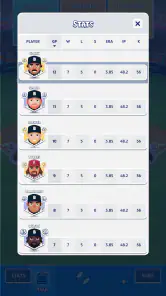
Compared with a very detailed desktop-style franchise simulator, it feels better suited to a phone and shorter sessions. I would choose it when I want the central management decisions without committing to a long, highly technical session. The trade-off is that players looking for exhaustive statistics, complex league administration, or a deeply granular simulation may find a specialist alternative more satisfying.
It also differs from a collectible team-building game in emphasis. The important question for me is not simply whether I can obtain an appealing player. It is whether that player fits the roster, solves a weakness, and supports the direction I am taking. That makes the game more interesting for thoughtful planners, although less immediately flashy for people who mainly enjoy collecting.
The best alternative depends on what I want from baseball. I would pick a direct-action title for quick excitement, a deeper computer simulation for maximum detail, and this game for a middle ground focused on roster-building decisions. Its identity is clearest when I accept that I am running the team rather than playing every inning.
Who Will Get the Most From It
I think it suits baseball fans who enjoy imagining themselves behind the scenes. It is especially appealing if I like weighing risk, improving a weak area, and seeing whether a plan works over time. It can also work for someone new to sports management because the basic loop is easy to describe: inspect the team, identify a need, choose a management action, and evaluate the result.
I would be more cautious recommending it to players who dislike waiting for development or who want every decision to produce an obvious reward. Management games can be frustrating when the result is not immediate, and the free-to-play structure may not appeal to someone who wants a completely purchase-free environment. Likewise, people seeking a full baseball match experience should look elsewhere.
For a first session, I suggest three habits. First, explore the roster before making changes. Second, use scouting or another information-gathering step when I am uncertain instead of guessing. Third, make one meaningful move and observe it before stacking several decisions together. These habits reduce confusion and make it easier to understand whether the game’s style suits me.
I would also keep the version in mind when troubleshooting expectations: the current version is 1.0.56, so I would make sure the installed copy is up to date before judging the experience. On compatible Android devices, the minimum operating-system requirement is Android 7.1. That makes the game relatively approachable for users who are not carrying the newest phone.
My Recommendation After Playing
Baseball Franchise Manager works best when I approach it as a compact front-office game, not as a replacement for an on-field baseball title. Its strongest idea is the connection between scouting, drafting, trading, and training: each action gives me a different way to shape the club, and the fun comes from choosing the right one for the situation.
The smartest way to begin is to make one understandable improvement before trying to build a perfect team. That keeps the opening manageable, protects me from random roster changes, and gives every early result some meaning. It also helps answer the most important question quickly: do I enjoy making baseball decisions more than controlling baseball action?
The mixed 3.4 average from roughly a hundred ratings suggests that it will not satisfy everyone, and I can understand why. The management perspective is narrower than a full sports game, the free-to-play purchase range may make some players cautious, and anyone expecting an enormous simulation may want more depth. Those are real limitations, not reasons to dismiss the concept entirely.
For me, the game is worth trying if I want a free baseball management experience that fits into short sessions and gives me responsibility for the roster. I would install it, learn the team structure, make a careful first move, and wait before considering optional purchases. If that process feels rewarding, the game has a clear place on my phone. If I need constant action or highly detailed simulation, I would choose a different baseball experience instead.
In the end, I recommend it to patient baseball fans who like the question behind every move: what does this team need next? That question is where the game feels most distinctive, and it is also the best test of whether this particular sports title belongs in my regular rotation.
Pros
- Detailed roster and contract management for baseball fans.
- Long-term franchise progression makes each season feel meaningful.
- Strategic decisions matter both on and off the field.
- Offers plenty of replay value with different team-building approaches.
- Suitable for players who enjoy statistics and management simulations.
Cons
- The interface may feel overwhelming for newcomers.
- Matches can require significant time and patience to manage.
- Limited visual presentation compared with action-focused baseball games.
- Success often depends on understanding complex player statistics.
- Some advanced features may be locked behind in-app purchases.

- Category
- Sports
- Version
- 1.0.56