Backflip Madness
- 1.96K
- 4.6
- Installs
- 500.00K
- Price
- $0.99

Screenshots
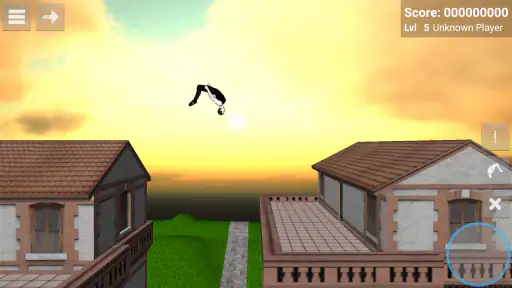
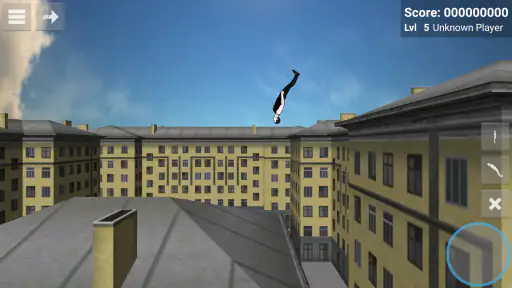
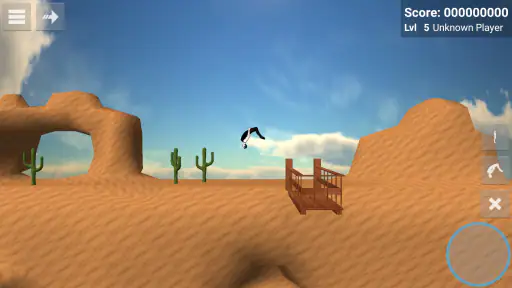
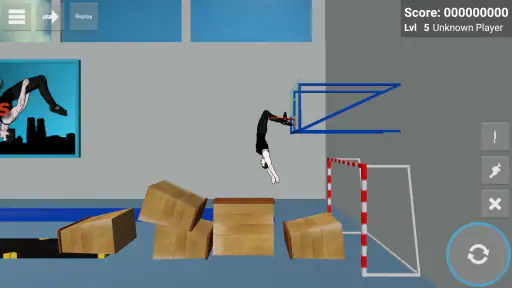
Analysis by Reviewed
My first impression of Backflip Madness is that it knows exactly what kind of small, high-energy diversion it wants to be. This is a sports game built around one satisfying idea: make a daring jump, rotate cleanly, and stick the landing. I like that focus. It gets me into the action quickly, but the brief learning curve gives each attempt a purpose beyond tapping at random. The appeal is not a big sporting world to explore; it is the nerve-racking moment between takeoff and touchdown.
A compact game for short breaks
That focused loop suits the little gaps in an ordinary day. I can imagine opening it while waiting for a friend or taking a short break, making a few attempts, then putting my phone away without needing to remember a complicated story or a long chain of objectives. A failed landing is irritating, but it also gives me an immediate reason to try again. If I have only a few minutes, that clear goal is more useful than a sprawling sports game that expects me to settle in for a full match.
It is also the sort of game I would choose when I want something active-feeling without needing a real court, equipment, or another player. That does not mean it recreates physical training: the satisfaction here is about timing and virtual control, not exercise. If you want a realistic sports simulation, a competitive league, or a reason to practise a sport away from the screen, this is the wrong fit. Its pleasures are much narrower and more immediate.
What the setting communicates
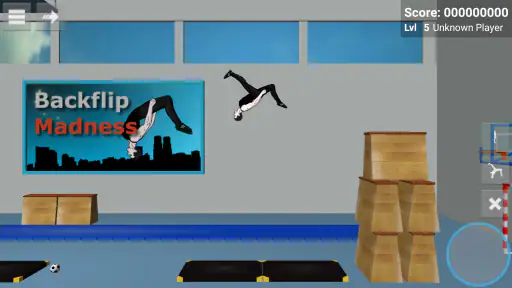
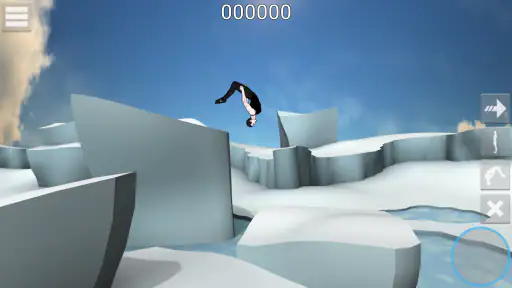
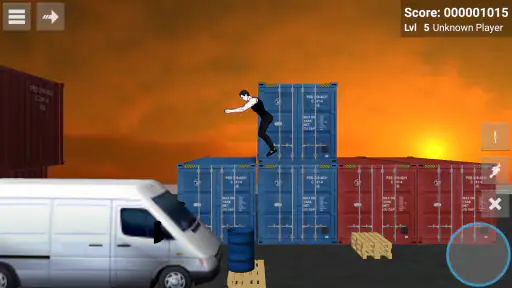
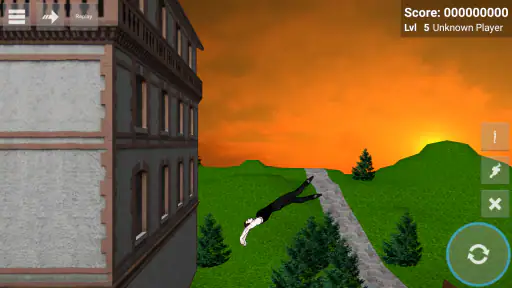
The game’s visual simplicity helps keep the action readable. I am not looking to admire elaborate scenery while trying to judge a rotation; I want to see the character, the jump, and the landing space. The modest presentation gives the flips room to carry the scene, and its playful, over-the-top premise keeps a missed attempt from feeling too solemn. It is a compact stunt playground rather than a detailed sporting venue, which feels right for a game that puts the trick itself first.
That simplicity is a trade-off, not an automatic virtue. Players who enjoy expressive characters, richly changing arenas, or a strong sense of place may find the presentation plain. I would not pick it for visual variety alone. What makes the setting work for me is how little competes with the central task: read the jump, commit to the rotation, and hope the landing holds.
Getting Started with the Madness
Jumping into Backflip Madness is as easy as pie. The game kicks off with you controlling a daring character whose sole purpose is to perform the craziest backflips. What’s the catch? Well, you better land those flips perfectly, or it’s game over. The controls are simple to grasp, with just a tap for jumping and another for flipping, yet mastering them is a whole different story.
The Flip-tastic Levels
The game serves up a variety of levels, each with its unique challenges. From flipping off cliffs to bouncing on trampolines, every level is a new adventure. The graphics might not be jaw-dropping, but there’s a certain charm in its simplicity that keeps you hooked. Each level demands precise timing and skillful execution to conquer, and trust me, it’s as satisfying as nailing a perfect landing in real life.
More From Our News Desk

Weather by Xiaomi Review: Clear at a Glance, Less Clear Up Close

X Under Pressure: Can It Recover When Posting Goes Wrong?

Clash of Clans Is Won Between the Battles

Android Auto Makes the Case for Quieter Car Software

MobiOffice: Transforming Mobile Productivity with Seamless Integration

EA SPORTS FC™ Mobile Soccer: Redefining Mobile Sports Gaming
What I find particularly engaging is how each level seems like a puzzle waiting to be solved. You’ll often find yourself trying different strategies to perfect your flips. It’s addictive, to say the least, and it gives you that ‘just one more try’ feeling every time you fail (and you will fail, a lot!).
Learning the rhythm of a landing
The useful adjustment is to treat the jump and rotation as separate decisions rather than one frantic gesture. I try to notice whether a miss came from leaving the ground at the wrong moment or from asking for too much rotation before landing. That little mental split makes retries feel like experiments, not simply repetitions. On a level that looks like a puzzle, change one thing at a time: keep the approach familiar, alter the timing, and see whether the landing improves.
This also explains why the controls can feel both welcoming and demanding. A small input vocabulary means I do not spend my first session memorising a complicated scheme, but it does not guarantee a clean result. The challenge is reading how a short action affects the whole jump. If you prefer a game that corrects mistakes generously or lets you win by holding a button, expect a steeper, less forgiving kind of fun here.
Sound, timing, and the feel of a retry
The mood is shaped more by the quick cycle of attempt, landing, and restart than by a long narrative build-up. I find that pace useful when I want an immediate test of timing, but it can also make a run of failures feel repetitive. Rather than treating every miss as a reason to mash the controls faster, I get more from pausing for a moment and deciding what I will change on the next try. That keeps the game’s brisk rhythm from turning into pointless frustration.
Sound is part of how a stunt game signals its rhythm, but I would not choose this one expecting a soundtrack to carry the experience. The main draw remains the physical-looking arc of a flip and the tension of the landing. If I am somewhere quiet or already listening to something else, the basic appeal still comes from watching the attempt unfold. Players who want music, commentary, or a richly layered audio atmosphere as the main event may find the presentation too restrained.
Where it sits among sports games
Compared with the usual sports alternatives, this is not about building a team, managing a season, or competing through a full match. It narrows the action to a stunt, so I can get to the central skill quickly. That makes it a better fit than a team sports game for a spare-minute session, but a weaker choice if I want long-term progression built around fixtures, player choices, or multiplayer rivalry. Its identity comes from concentrating on one risky movement, not from trying to cover every part of sports.
I would recommend it most to players who enjoy timing challenges, trial and error, and the satisfaction of gradually understanding a movement. It is less suited to someone who dislikes repeating a level after a mistake, or who expects every attempt to feel different. The best way to approach it is with a small goal—improve one landing, then stop—rather than demanding a perfect run from the start. That makes the difficulty feel more like a skill to learn than a wall to push against.
Who should take the leap
For a realistic everyday scenario, I would use it during a short commute only when I can comfortably pay attention to the screen; quick reactions and a glance away at the wrong moment do not mix well. At home, it works as a brief palate cleanser between longer games. It is a poor choice when I need a quiet, hands-free distraction or when I am trying to play while doing something that needs my eyes. The simple premise makes it easy to pick up, but the timing still asks for focus.
There are a few practical questions I would weigh before choosing it. Is it approachable for a new player? The basic controls are, though reliable landings take practice. Does it suit short sessions? Yes, because the stunt-and-retry loop gives each attempt a clear endpoint. Is it a substitute for a full sports game? No: it offers a narrow, arcade-like challenge rather than the breadth of a match or season. And if I want a forgiving game, I would look elsewhere, since repeated misses are part of learning its timing.
Challenge Accepted!
One of the coolest aspects of the game is the challenge mode. It’s where your flipping skills are truly put to the test. The challenges get progressively harder, pushing you to your limits. But hey, no pain, no gain, right? Completing challenges unlocks new levels and even more outrageous flip opportunities.
What makes Backflip Madness stand out is its ability to make you feel like a daredevil. The stakes are high with every flip, and the joy of finally landing that seemingly impossible jump is unparalleled. It’s a perfect blend of frustration and exhilaration.
Choosing a sensible pace
That rising difficulty gives the game a reason to hold my attention beyond the first novelty, but it is also where patience matters most. I would not judge my progress by how many challenges I clear in one sitting. A more useful measure is whether I can identify why a particular attempt failed and make a deliberate adjustment. When I start repeating the same mistake without thinking, I take a break; returning fresh is more productive than turning the session into a contest of stubbornness.
The game is rated Teen, which is worth keeping in mind when choosing it for a younger player. Its sports framing and comic daredevil premise do not make it a serious training tool, and I would not encourage anyone to imitate stunts away from the screen. The virtual risk is part of the fun precisely because it stays virtual. That distinction is simple, but important for a game whose central fantasy is making dangerous-looking jumps.
A Few Final Flips
So, what’s the final verdict on this flipping adventure? Backflip Madness is the kind of game that doesn’t take itself too seriously, and that’s its charm. It’s a fun, casual game that offers a surprising amount of depth. Whether you’re looking for a quick gaming session or something to really sink your teeth into, this game delivers.
It’s not without its quirks, but that’s what makes it unique. The simple graphics, the challenging gameplay, and the sheer joy of mastering those flips make it a must-try. So, if you’re up for a challenge and some heart-pounding fun, give Backflip Madness a spin. Just remember to keep practicing, and soon you’ll be flipping like a pro!
Cost, compatibility, and the long view
There is a small purchase decision attached: the game costs $0.99. I would treat that as paying for a focused arcade diversion, not buying a broad sports package. Gamesoul Studio developed it, and the current version is 1.3.1. It first appeared on Aug 25, 2012, so its straightforward presentation makes more sense as an older, compact mobile game than as a modern showcase of elaborate production. If you mainly want a polished, content-heavy sports experience, I would compare options before spending; if a tight stunt challenge is exactly what you want, the modest scope is part of the point.
It has an average rating of 4.6 from around 27,000 ratings, with roughly 2,000 written reviews and over 500,000 installs. Those numbers suggest it has found an audience, but they do not change the personal test I would use: do I enjoy learning a landing through repeated attempts? The minimum operating system is version 5.0, which is useful to check against an older device before buying. I would also remember that a game centred on precise timing can feel less comfortable on a small or unresponsive screen than it does on a device where taps register consistently.
The atmosphere verdict
What stays with me is not a detailed world or a soundtrack, but the playful tension of setting up a flip and committing to it. The restrained presentation, stunt-focused levels, and quick rhythm all point in the same direction: keep attention on the jump. That coherence is a genuine strength, though it also defines the limit. If I want spectacle, realistic sports systems, or a calm game that asks little of me, I would choose something else.
For the right player, though, the narrow focus is refreshing. I would recommend it to someone who likes short sessions, visible improvement, and the small rush of finally landing a move that had been going wrong. I would skip it if repetition quickly drains the fun or if a full sports simulation is the goal. My honest advice is to approach it as a compact timing challenge, take retries one adjustment at a time, and let the satisfaction come from learning the jump rather than expecting every flip to succeed.
Backflip Madness Frequently Asked Questions
Is Backflip Madness a good choice if I want a quick game to play in short sessions?
Backflip Madness is built around fast-paced backflip challenges, so its central activity is easy to understand and well suited to picking up when you have a little time. The skill comes from controlling each stunt and trying to land it successfully. If you enjoy focused attempts and improving through practice, the compact, action-led idea may appeal more than a game built around long sessions or varied sports modes.
What age rating does Backflip Madness have, and should parents consider it before downloading?
Backflip Madness has a Teen content rating. Its cartoonish presentation may look lighthearted, but the game still centers on extreme-sports stunts and requires timing and practice. Parents deciding whether it is appropriate for a younger player should take the rating into account and consider the child’s age and preferences. The challenge may also be frustrating for children who prefer games that are easy to master right away.
How much does Backflip Madness cost, and what device support does it offer?
Backflip Madness is a paid game priced at $0.99, so you can check the purchase price before downloading. It requires Android 5.0 or later. The game is a sports arcade title built around quick, skill-based play, making it worth considering whether its backflip-focused challenge suits what you want from a mobile game.
What is Backflip Madness?
Backflip Madness is an exhilarating sports arcade game that challenges players to perform incredible backflips in various locations. The goal is to successfully land flips in diverse scenarios, from gyms to rooftops, testing your timing and precision. It's designed for fans of parkour and extreme sports, offering a fun and addictive gameplay experience.
Is Backflip Madness suitable for all ages?
While Backflip Madness is designed with a fun and cartoonish style, its gameplay requires a degree of skill and timing, which might be challenging for younger children. The controls are easy to learn, but mastering the flips could be tricky, making it more suitable for older kids and adults who enjoy a challenge. Its content rating is Teen, so parents should take that into account when deciding whether it is appropriate for a younger player.
Pros
- Challenging levels enhance skill development.
- Smooth controls for an immersive experience.
- Engaging graphics keep players captivated.
- Variety of backflips adds excitement.
- Perfect for quick gaming sessions.
Cons
- Limited levels can lead to quick completion.
- Repetitive gameplay may bore some users.
- No multiplayer mode available.
- Graphics might feel outdated to some.
- In-app purchases for advanced content.
- Category
- Sports
- Version
- 1.3.1