Archery Showdown-Aim Arena
- 10.00
- 3.4
- Installs
- 500.00K
- Price
- Free

Screenshots
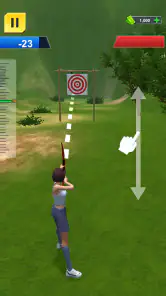
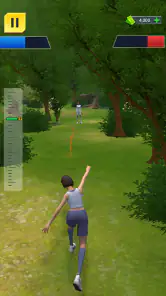

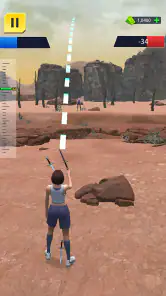

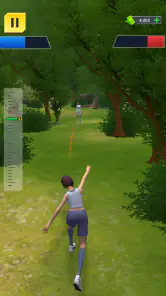
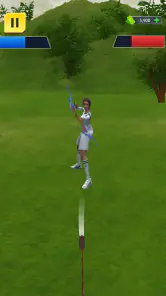
Analysis by Reviewed
I tend to judge a casual archery game by how quickly it lets me settle into a shot, rather than by how many menus it offers. Archery Showdown-Aim Arena puts aiming at the center of the experience: draw, line up, release, and see whether your decision pays off. It is an easy idea to understand, but the appeal depends on whether you enjoy repeating a focused action and gradually getting more consistent. I found that this kind of short, precision-based play suits little breaks better than sessions when I want a story or a complicated progression system.
What a quick session feels like
The basic interaction is direct, which makes it approachable if you have not played an archery game before. A short tutorial helps introduce the controls, and the swipe-to-draw-and-release approach gives each attempt a clear physical rhythm. The challenge is that a shot can look simple while still requiring attention; a rushed swipe is not the same as a deliberate aim. I would treat the first few attempts as practice rather than expect immediate accuracy.
That rhythm also shapes the game’s speed. It is built around individual shots, not frantic movement, so the pace feels deliberate even when a challenge adds pressure. If I have a couple of minutes between errands, I can focus on a few attempts without needing to remember a long sequence of actions. For someone seeking rapid action or constant visual noise, that measured tempo may feel slow. The satisfaction is in making a steadier choice on the next shot, not in racing through a level.
Where precision matters most
The game’s archery setup asks you to pay attention to distance and wind direction, so aiming is not just a matter of placing a finger over the target. That gives each shot a small decision-making step: pause, judge the conditions, and adjust rather than swiping on instinct. A useful habit is to change one part of your approach at a time. If you alter your aim and your release together, it becomes harder to tell which adjustment helped.
That is also why the experience may suit a quick reset after a busy day: the focus narrows to one target and one action. It is not a substitute for a deeper competitive game, though. Players who want extensive strategy, a long campaign, or a broad collection of systems should look elsewhere; this is best approached as a compact skill challenge. Its strongest use case is someone who likes testing their own consistency, with occasional head-to-head play as an extra reason to return.
Gameplay Experience
The moment you launch Archery Showdown-Aim Arena, you're greeted with a sleek interface that's easy to navigate. The game starts by taking you through a short tutorial, which is super helpful, especially if you're new to archery games. Once you're past that, it's all about honing your skills and aiming for the high score.
What's cool about this app is its intuitive controls. You simply swipe your finger on the screen to draw the bow and release it to shoot the arrow. It sounds simple, but trust me, hitting the bullseye is harder than it seems! The game physics are quite realistic, so you'll need to account for distance and wind direction, making each shot a fun challenge.
More From Our News Desk

Weather by Xiaomi Review: Clear at a Glance, Less Clear Up Close

X Under Pressure: Can It Recover When Posting Goes Wrong?

Clash of Clans Is Won Between the Battles

Android Auto Makes the Case for Quieter Car Software

MobiOffice: Transforming Mobile Productivity with Seamless Integration

EA SPORTS FC™ Mobile Soccer: Redefining Mobile Sports Gaming
Graphics and Sound
The graphics in Archery Showdown are top-notch. The arenas are beautifully designed, and the attention to detail is impressive. Whether you're shooting in a forest clearing or an ancient coliseum, the visuals are immersive and enhance the overall gameplay experience. The sound effects, from the twang of the bowstring to the satisfying thud of an arrow hitting the target, are spot-on and add to the excitement.
Challenge Modes and Multiplayer
Once you've mastered the basics, there are various challenge modes to test your skills further. From timed challenges to hitting moving targets, the game keeps you on your toes. And if you're feeling competitive, the multiplayer mode lets you go head-to-head with other players. There's nothing like the thrill of outscoring your opponent in a close match!
The game also features a leaderboard, so you can see how you stack up against players worldwide. It's a great incentive to keep playing and improving your skills.
Playing in short bursts—and knowing when to stop
In a realistic everyday scenario, I would open it while waiting for a friend or winding down before dinner, play a few rounds, then put it away. The shot-by-shot format makes that feel more natural than starting a long campaign. Timed challenges are the less forgiving option: they can be useful when I want pressure, but they are not the best place to learn a new aiming habit. I would practise at a calmer pace first, then use a timed round to see whether I can keep that control when the clock matters.
Against other casual games, its appeal is narrower but clearer. A match-three game often rewards quick pattern recognition, while an endless runner asks for continuous reactions; here, the central test is deliberate aim. That makes it a better fit for someone who enjoys precision and small improvements than for someone who wants varied mechanics every few minutes. Moving-target challenges can add a different kind of concentration, while multiplayer offers a social comparison rather than a replacement for practice. If competition is the main draw, bear in mind that a leaderboard can motivate without necessarily making every session feel meaningful.
Reliability, device fit, and expectations
I would not assume that a focused archery game needs a powerful device, but I also would not promise identical performance on every phone. The game is listed for Android 6.0 and later, and the current version is 1.0.3. If a session feels awkward, first check whether your screen is clean and whether your swipe has enough room; finger placement can matter in a game built around drawing and releasing. That is a practical first adjustment before blaming the game or changing devices.
For longer play, the main friction is more likely to be personal than technical: repeated shots can become familiar, and chasing a better score may stop being satisfying once you have had enough. I would use challenge variety to break up practice rather than replay the same kind of round until it feels like work. If you are deciding whether to install it, it is free, rated Teen, and has drawn over 500,000 installs. Philip Fowler Labs is the developer; its average rating is 3.4 from 183 ratings, a mixed signal that makes it sensible to approach with measured expectations rather than assume it will click for everyone.
If I had to pick one word to describe Archery Showdown-Aim Arena, it would be "addictive." The combination of simple controls, challenging gameplay, and stunning graphics makes it a game that's hard to put down. Whether you're a casual gamer or a competitive player, there's something here for everyone. So, grab your virtual bow and arrow, and get ready to hit those targets!
My performance verdict
For me, its best quality is how quickly it turns a small gap in the day into a focused aiming session. I would recommend it to casual players who like testing precision, and to friends who enjoy comparing results without needing a large commitment. I would skip it if I wanted a substantial single-player journey, consistently fast action, or a game where every session introduces a new system. Its measured pace, repeated shot-based play, and competitive touches make it a specific kind of pick, not an all-purpose game.
In conclusion, if you're looking for a fun and engaging game that tests your precision and skill, give Archery Showdown-Aim Arena a shot. It's a great way to pass the time, and who knows, you might just become the next archery champion!
Making practice more useful
One small adjustment makes practice easier to evaluate: decide what you are testing before you begin. I might spend a few attempts focusing only on a controlled release, then pay closer attention to distance and wind on another round. That way a miss gives me something practical to learn from instead of becoming a reason to swipe harder or faster. It is a simple routine, but it suits a game where tiny changes in aim and timing are the point.
I would also separate solo improvement from multiplayer comparison. A head-to-head result can be exciting, but it is a poor measure of whether my technique is becoming steadier if I keep changing how I aim between attempts. I would use practice to build a repeatable approach, then treat a match as a test of keeping that approach under pressure. This makes the competitive option more enjoyable without expecting every opponent to provide a perfectly even benchmark.
Who will enjoy the trade-off
This is a good fit for someone who likes a clear objective and can enjoy repetition when each attempt asks for a little care. It may work particularly well as a brief, hands-on break: there is no need to remember a complex plot, and the basic action is easy to return to after putting the phone down. The tutorial also gives a newcomer a starting point, while the different challenge styles can help someone who already understands the swipe-based aiming avoid doing exactly the same thing every time.
I would be more cautious about recommending it to a player who mainly wants a broad casual-game sampler. A puzzle title changes the task from round to round, and an action game may keep the screen busy; this one commits to archery and asks the player to find interest in refining a shot. Nor would I choose it as my main option for a long, story-led evening. Its strength is focus, and that same focus is the reason it may feel limited once the aiming loop has lost its appeal.
The usual question about a game like this is whether it is welcoming to beginners or only rewarding after practice. I found the controls approachable, but approachability is not the same as instant accuracy. The tutorial helps establish what to do; patience is still needed to understand how a particular swipe and adjustment affect the result. Someone new to archery games can start with unhurried attempts and build confidence rather than treating early misses as proof that the controls are confusing.
Another practical consideration is whether it suits a quick visit or demands a long commitment. Its shot-focused structure lends itself to short sessions, and that is how I would use it most often. If I have time for more, I would switch between calmer practice and timed or moving-target challenges instead of grinding one format. The variety adds useful changes of emphasis, but it does not turn the game into a sprawling collection of unrelated modes.
Performance and recovery in context
When judging stability, I would keep the expectations modest and pay attention to the actual play session rather than assume that every phone will feel the same. The game’s essential interaction depends on a responsive-feeling swipe, so a cramped grip, a dirty screen, or trying to play while moving around can make the experience feel less precise. I would first settle the phone in my hands and give the swipe clear space. That is especially worthwhile before a close match, when an awkward gesture can be mistaken for poor aim.
For resource demands, the practical point is that the game is designed around aiming and target challenges rather than a constant stream of complex action. That does not let me promise a particular battery impact or guarantee smoothness on every device, so I would avoid assuming it is effortless on older hardware just because the controls are simple. Its Android requirement starts at 6.0, which gives a clear compatibility boundary; if your device meets it, the most useful test is whether the aiming gesture feels comfortable in your hands.
If an interruption breaks a round, I would treat returning to play as a fresh shot rather than trying to reconstruct a whole sequence of tactics. The game’s central action is easy to pick up again, although a timed challenge is naturally less forgiving if attention has shifted elsewhere. For that reason, I would choose a calmer challenge when playing somewhere interruptions are likely, and save the more pressured option for when I can focus. That small choice makes the same game better suited to different parts of an ordinary day.
A measured recommendation
The game has a clear identity: a casual archery challenge where measured aim, distance, wind, and the feel of a swipe matter more than a long list of systems. I like that it can make a short break feel purposeful, and that its challenge types give me more than one way to test concentration. I would install it for compact practice or friendly competition, not because I expect a deep campaign or endless novelty.
Its mixed reception is worth keeping in perspective. Philip Fowler Labs’ game has a 3.4 average, and that does not tell me whether its particular aiming rhythm will suit you; it does make a cautious approach reasonable. Since it is free, trying the opening tutorial and a few different challenges is a sensible way to judge the controls and pace for yourself. If you find yourself adjusting shots with interest, there is a good chance the central loop will hold your attention. If the repetition already feels like a chore, a more varied casual game is probably a better use of your time.
My recommendation is therefore specific rather than universal: try it if you enjoy focused, repeatable skill tests and can appreciate gradual improvement. Skip it if you need constant novelty, a substantial narrative, or rapid action in every session. As a small archery game for short, attentive bursts, it knows what it wants to be, and the best experience comes from playing at a pace that lets each shot teach you something.
Archery Showdown-Aim Arena Frequently Asked Questions
Is Archery Showdown-Aim Arena suitable for younger players?
Archery Showdown-Aim Arena is rated Teen, so it may be better suited to teenagers and adults than to young children. Parents can use that age guidance when deciding whether the game fits their family. Its focus is competitive archery, and the casual format may appeal to players looking for short, skill-based gameplay.
What is Archery Showdown-Aim Arena?
Archery Showdown-Aim Arena is a dynamic and competitive archery game designed for mobile devices. In this game, players can experience realistic archery simulations, compete in various arenas, and challenge other players in multiplayer mode. The game offers a range of bows, arrows, and customization options to enhance gameplay. It is known for its intuitive controls and engaging graphics, making it a popular choice among archery enthusiasts and casual gamers alike.
Is Archery Showdown-Aim Arena free to play?
Yes, Archery Showdown-Aim Arena is free to download and play. However, like many mobile games, it offers in-app purchases. Players can buy additional features, such as exclusive bows, arrows, and customization items, or to unlock certain levels faster. These purchases are optional, and players can enjoy the core game experience without spending money, although spending may enhance the gaming experience.
What devices are compatible with Archery Showdown-Aim Arena?
Archery Showdown-Aim Arena is available on both Android and iOS platforms. The Android version requires a device running Android 6.0 or later. It is optimized for both smartphones and tablets, ensuring a smooth gameplay experience. Players should ensure they have enough storage space and a stable internet connection for the best performance, especially when engaging in multiplayer modes.
Can I play Archery Showdown-Aim Arena offline?
While Archery Showdown-Aim Arena offers some offline play options, such as practice modes and certain single-player challenges, the full experience requires an internet connection. Multiplayer battles, leaderboards, and certain events are only accessible online. Thus, to fully enjoy all features and compete with other players globally, a stable internet connection is recommended.
Pros
- Intuitive controls with smooth gameplay.
- Realistic graphics enhance user experience.
- Wide variety of challenging levels.
- Multiplayer mode for competitive fun.
- Regular updates with new content.
Cons
- In-app purchases can be expensive.
- Requires internet for multiplayer mode.
- Ads can be intrusive at times.
- High battery consumption during play.
- Limited offline features available.
- Category
- Casual
- Version
- 1.0.3