American Farming 2
- 131.00
- 3.9
- Installs
- 10.00K
- Price
- Free

Screenshots
Analysis by Reviewed
My first impression of American Farming 2 was that it wants farming to feel like work you gradually learn, not a quick tap-and-wait exercise. It is a free simulation game from SquadBuilt Inc, built around fields, machinery, and the satisfaction of turning a neglected patch of land into something productive. The focus on large equipment and American brands gives it a more grounded identity than many lightweight farming games, although that also means the opening moments can feel less immediately obvious than a simple casual title.
I approached it as a first-time player rather than someone already familiar with farming simulators. That matters because the game asks you to understand the relationship between land, equipment, and timing. You are not just collecting coins from a button. You are learning which action belongs to which stage of the farm’s routine, and the most rewarding moments come when a complete job finally comes together.
The game sits in the simulation category and is suitable for Everyone, so it is easy to recommend for families or younger players who enjoy vehicles and building up a working environment. It has an average rating of 3.9 from around 600 ratings, with over 100 written reviews, which suggests a reasonably positive but mixed response rather than universal approval. I think that balance is fair: the idea is appealing and the equipment gives it character, but the experience rewards patience more than instant excitement.
Getting from the first screen to a working farm
What the opening experience is really like
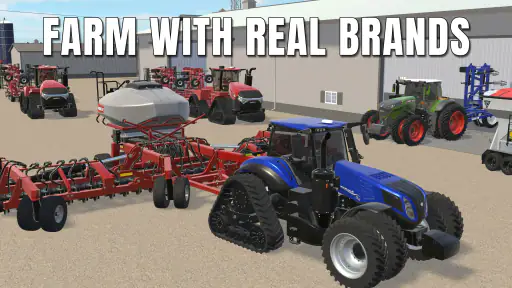
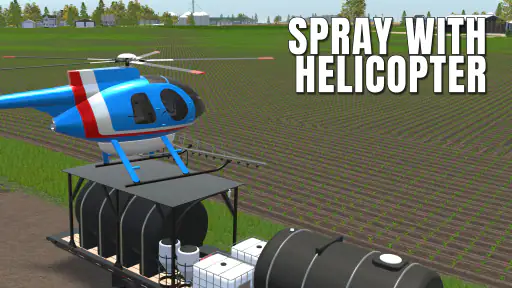
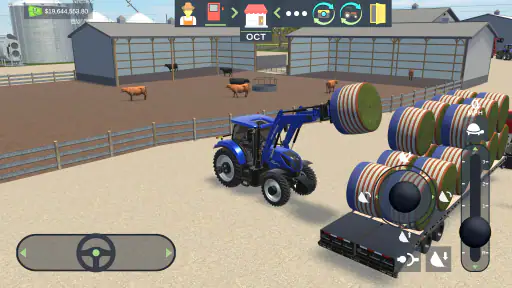
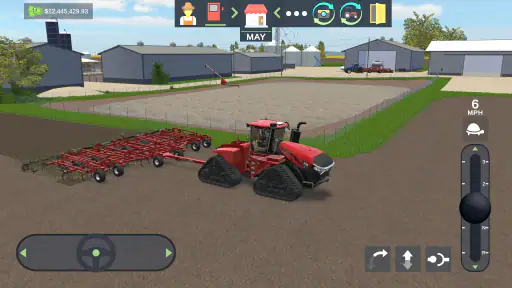
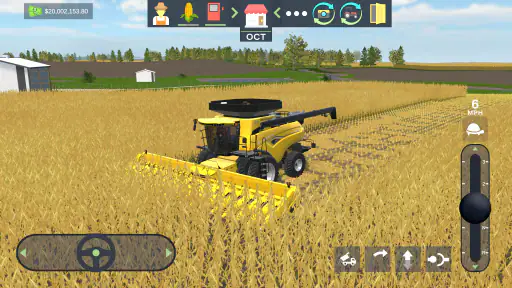
The store summary talks about growing a farm with big equipment, big fields, and real American brands, and that is a useful description of the game’s personality. The scale is part of the appeal. Driving a substantial machine across an open field feels more deliberate than moving a tiny cartoon tractor between fixed buttons. I enjoyed that sense of space, especially when I stopped treating the game as a race and started viewing each job as a small project.
At the same time, the large-farm presentation can create a little uncertainty during the first session. A new player may expect the game to point clearly toward one perfect action, while the simulation style leaves more room for observation. My advice is to resist buying or changing things too quickly. First learn what the current task is asking you to do, identify the appropriate piece of equipment, and notice how the machine behaves before worrying about expansion.
This is not the best choice if you want a farming game that gives constant rewards every few seconds. A more arcade-oriented alternative will feel faster and more forgiving. I would choose this one instead when I want a slower activity that lets me concentrate on operating equipment and completing a sequence without the screen becoming a wall of effects and notifications.
What to do after installing it
The game is free to download, but it includes optional purchases priced from $0.99 to $19.99 per item. I would begin with a no-spend session and treat the early game as a tutorial I create for myself. That approach makes it easier to tell whether the driving and farm-management rhythm suits me before I consider spending anything.
On a first launch, I recommend setting aside enough uninterrupted time to understand the basic loop. A short five-minute visit may show the presentation, but it is not long enough to judge the simulation properly. I found the experience easier to read when I focused on one field-related objective at a time instead of trying to inspect every available possibility immediately.
The current version is 2.0.68, and the game supports devices running Android 7.1 or later. Those details are useful when deciding whether an older phone or tablet is suitable. On a smaller screen, I would pay particular attention to how comfortable the controls feel during longer driving sections. A game built around large machinery benefits from enough display space to see where the vehicle is going and what it is interacting with.
How I reached the first meaningful success
My first useful milestone was not expanding the farm. It was completing one basic piece of work cleanly, without constantly switching equipment or second-guessing the next step. That is the right target for a beginner because it teaches the game’s rhythm: prepare, operate, inspect the result, and only then move on.
I suggest choosing a manageable field and following the task in a deliberate order. Before moving, check which machine is already available and think about the direction of travel. Straight, planned passes are easier to evaluate than wandering around and correcting mistakes. If the equipment starts in an awkward position, take a moment to line it up rather than immediately pressing ahead. That small habit saves time and makes the controls feel much less confusing.
A useful tip is to treat the edge of the field as a turning zone. Leave yourself enough room to turn the vehicle without repeatedly crossing worked ground or bumping into obstacles. This is a simple adjustment, but it changes the experience noticeably. Instead of fighting the machine at every end of a pass, you begin to feel that you are managing the job.
When I finished that first task, I did not immediately chase the biggest possible project. I checked what had changed and used the result to understand the next requirement. This is one of the game’s better lessons: progress feels more reliable when I confirm each stage rather than assuming that one completed action has finished the entire farming process.
Small details that make the controls easier
The controls deserve more attention than they might receive in a casual farming game. Large machinery has momentum and takes space, so quick corrections can create more trouble than they solve. I found it better to make gentle adjustments and keep my route predictable. If a vehicle is not aligned correctly, stopping and repositioning is usually less frustrating than trying to force it through a poor angle.
Another practical habit is to keep the camera and vehicle orientation in mind before beginning a long pass. The most efficient route is not always the one that looks shortest from the starting point. A clean line that leaves a sensible turn at the end can be better than a direct approach that traps the machine against a boundary.
These are not flashy advanced techniques, but they are the kind of knowledge that the store description cannot provide. The game becomes more pleasant when I treat each machine as a tool with its own handling demands, rather than expecting every vehicle to respond like a small, weightless arcade object.
Where first-time players may get confused
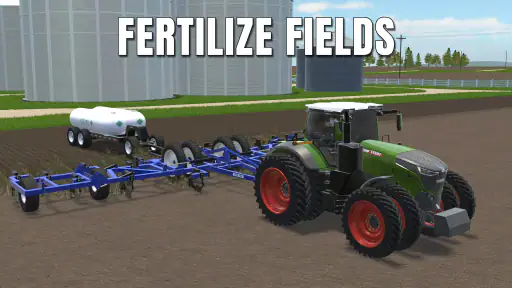
The biggest source of confusion is understanding what counts as progress. In a simple farming game, planting, harvesting, and earning money may be represented by separate buttons. Here, the physical relationship between the machine and the field matters more. If a job does not seem to be advancing, I first check whether I am using the right equipment, whether the machine is positioned correctly, and whether the action is being performed across the intended area.
It is also easy to mistake movement for productivity. Driving around the farm can be enjoyable, but travel alone does not necessarily complete a task. I recommend watching the field and the current objective rather than assuming that covering distance means the work is done. This distinction helps prevent the common beginner mistake of spending a long time operating a vehicle without actually progressing.
Another point of friction is the temptation to expand before mastering the current routine. Bigger fields and more equipment sound attractive, but additional scale also means more planning. If I am still struggling to complete a basic job in a controlled way, adding complexity will not solve the problem. It usually makes the farm feel busier without making it more productive.
Players who prefer clear quest markers and constant instructions may need a little patience. I would not call the learning curve harsh, but it is less hand-holding than a purely casual title. The reward is that successful work feels earned. The trade-off is that a player looking for immediate direction may need to experiment before the structure becomes comfortable.
A realistic everyday session
For an ordinary evening, I would use the game as a focused twenty-minute activity rather than trying to complete everything in one sitting. I might begin by checking the current farm situation, choose one field job, prepare the equipment, and finish a few controlled passes. After that, I would inspect the outcome and decide whether to continue or stop at a natural point.
This routine works well because it gives the session a beginning, middle, and end. I am not opening the game simply to collect a reward and leave, but I am also not committing to an enormous management session. The physical work provides a calm focus, especially when I plan my route in advance. On a busy day, that is more appealing to me than a game that demands constant attention to several unrelated systems.
For a child, the same session can become a gentle introduction to cause and effect: choose a machine, use it in the correct place, and observe the result. For an adult simulation fan, it can be a compact way to enjoy American-style farm equipment without committing to a longer desktop experience. The right expectations are important. This is a game about gradual familiarity, not instant mastery.
How it compares with familiar farming alternatives
Compared with casual farming games built around timers and decorative upgrades, this title puts more emphasis on operating equipment and working through a field. That makes it more satisfying for someone who wants the machinery itself to matter. It is less suitable for a player who mainly enjoys decorating a farm, collecting characters, or completing rapid checklist tasks.
Compared with deeper farming simulators, it feels like a more approachable mobile option. A dedicated simulator on another platform may offer broader management, more detailed economic decisions, or a larger set of interconnected activities. The advantage here is convenience: I can pick up the game on a compatible Android device and focus on a farm session without needing the commitment associated with a more elaborate simulation setup.
The real trade-off is depth versus accessibility. The large equipment and open-field idea give the game a stronger sense of place than a basic tap-to-grow app, but players expecting the complexity of a full simulation should keep their expectations measured. I see it as a middle ground: more hands-on than a casual farming app, but easier to approach than the most demanding farming simulators.
Spending, progression, and when to stop
Because the download is free and purchases are optional items, I would avoid making spending part of the first decision. Play long enough to discover whether the basic work loop is enjoyable on its own. If I already find the driving, field preparation, and equipment handling satisfying, optional purchases can be considered as a convenience rather than a requirement for deciding whether the game is worthwhile.
I also recommend keeping a personal rule for purchases. For example, I would only consider one after I had completed several normal sessions and knew exactly what problem it would solve. That prevents the common mistake of buying something simply because the farm looks large or because a new machine seems exciting. In a simulation, understanding the workflow is usually more valuable than immediately adding more options.
Players who dislike in-app purchases altogether should approach the game carefully, even though the entry price is free. The presence of optional items may not bother everyone, but it is still part of the overall experience. For me, the sensible test is whether I can enjoy the basic progression without feeling pushed to spend. If that balance feels uncomfortable, a paid farming game with a clearer one-time purchase model may be a better fit.
Who should play it and who should skip it
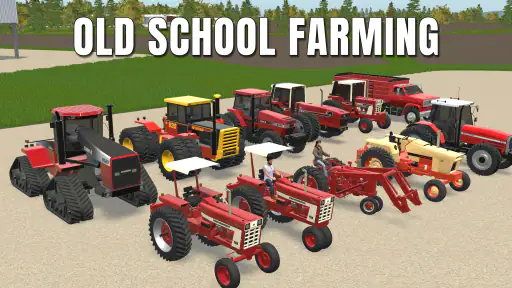
I would recommend this game to someone who likes vehicles, open fields, and the quiet satisfaction of doing a job properly. It is especially appealing if you enjoy learning controls through practice and prefer a farm that feels operated rather than merely decorated. The real American brands also add a recognizable equipment-focused flavor that helps it stand apart from generic cartoon farming games.
I would be more cautious about recommending it to someone who wants instant rewards, constant action, or a very explicit sequence of instructions. It may also disappoint players who expect a highly detailed professional simulator with every aspect of agriculture represented at maximum depth. In those cases, a more arcade-like game or a deeper platform-based simulator would better match the player’s priorities.
The Everyone age rating makes it broadly accessible, but accessibility does not mean every player will enjoy the same pace. Younger players may need help understanding why one machine is appropriate for one job and not another. Adults who are new to simulations may appreciate beginning with a single repeatable routine instead of trying to explore the whole farm at once.
My recommended path after the first success
Once the first field task is complete, I would not immediately chase the largest available goal. My next step would be to repeat the routine with a little more efficiency: better positioning, fewer unnecessary turns, and a clearer plan before starting the machine. Repetition is useful here because it turns the controls from something I am thinking about into something I can use naturally.
After that, I would introduce one new element at a time. If the game presents another piece of equipment or a larger job, I would learn that addition on its own rather than changing several parts of the farm simultaneously. This makes it easier to identify what is helping and what is causing friction. It also keeps the experience from becoming a confusing pile of unfinished tasks.
My strongest practical recommendation is to measure progress by completed work, not by how much equipment is visible on the farm. A smaller operation that runs smoothly is more enjoyable than a larger one that I do not understand. That mindset makes the game calmer and gives every upgrade or expansion a clear purpose.
My closing view
American Farming 2 is a free mobile simulation with a clear personality: it wants the player to feel the size and presence of farm machinery while gradually learning how a field job fits together. I like that it asks for a little attention instead of reducing every action to a single tap. The first meaningful success comes from careful positioning and patience, and that gives the game a satisfying sense of ownership.
It is not perfect for everyone. The opening can be less direct than a casual farming app, the larger scale may feel demanding on a small screen, and the optional purchases mean I would test the core experience before spending. Still, for players who want a hands-on farming game rather than a decorative timer, it offers a worthwhile middle ground.
SquadBuilt Inc has made something I would recommend to a friend who enjoys machinery and relaxed simulation sessions. Start small, finish one job cleanly, and let the farm grow from what you understand rather than from what looks impressive. The best way to enjoy this game is to treat every completed field task as progress worth learning from.
Pros
- Relaxing gameplay suited to casual and simulation fans.
- Large selection of crops
- animals
- and farming activities.
- Vehicle controls are simple to learn on mobile devices.
- Progression gives you clear goals and reasons to keep playing.
- Works well for short play sessions or longer farming sessions.
Cons
- Some tasks can feel repetitive after extended play.
- Progress may require patience when upgrading equipment and land.
- The interface can feel crowded on smaller phone screens.
- Visual quality may vary between newer and older devices.
- Limited challenge may disappoint players seeking deep strategy.

- Category
- Simulation
- Version
- 2.0.68