82-0.com
- 234.00
- 4.8
- Installs
- 100.00K
- Price
- Free

Screenshots

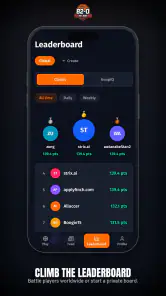
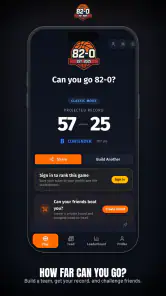
Analysis by Reviewed
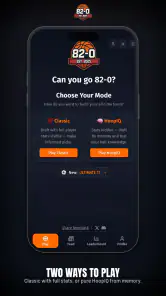
I approached 82-0.com as a quick sports strategy game rather than a traditional basketball simulator. Its central idea is simple: build a lineup and test whether your choices can survive an entire unbeaten season. That makes it easy to understand within moments, but the real appeal comes from the decisions between games, when a seemingly strong selection can expose a weakness you did not notice at first.
Developed by Vaulty Studios Inc., this free game sits in the sports category and is suitable for Everyone. It has attracted a 4.8 average from around 2.4 thousand ratings, with more than 100 thousand installs, so there is already a meaningful group of players trying the same challenge. I found it most appealing when I wanted something more thoughtful than a one-minute arcade distraction, but less demanding than a full basketball management game.
How the game feels to read and navigate
The strongest part of the concept is its immediate focus. You are not asked to learn a large fictional universe or decode a complicated set of menus before making a decision. The goal is visible from the start: assemble the best possible lineup and chase a perfect season. That narrow purpose gives each screen a practical role, and it helps the game feel approachable even if you do not normally play sports strategy titles.
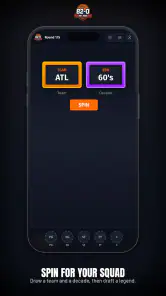
In my experience, the most useful way to read the game is to slow down before committing to a lineup. A quick choice based on the most attractive individual options can be tempting, but a complete group needs to make sense together. I treated every selection as part of a chain: who covers a weakness, who gives the lineup balance, and which choice might create a problem later. That habit made the game feel less like guessing and more like evaluating a small puzzle.
The uncluttered premise also benefits players who prefer predictable navigation. There is less pressure to remember a long sequence of systems, currencies, or side activities. If you are returning after a break, the objective remains easy to recall. This matters for people who play in short sessions, because the game does not require the same mental warm-up as a deeper franchise-management title.
At the same time, simplicity can become a limitation. Players who expect detailed play-by-play control, extensive team customization, or a large collection of modes may find the experience narrower than expected. This is a lineup challenge first. It is not the right substitute for a full basketball simulation, and I would not choose it if my main goal were to control every possession or recreate a complete league.
Making decisions without rushing
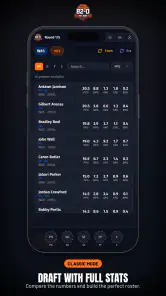
One useful approach is to separate the selection process into two passes. On the first pass, I looked for obvious strengths and weaknesses without trying to finalize anything. On the second, I checked whether the proposed lineup still made sense as a unit. This prevented the common mistake of locking onto one exciting option too early and then forcing every other decision around it.
That workflow is especially helpful on a smaller screen or when visual information feels dense. Rather than scanning repeatedly while trying to remember everything, I made a short mental checklist: balance, coverage, consistency, and the risk of relying too heavily on one type of contributor. The game does not need to be played at high speed, so giving yourself permission to pause is one of the easiest ways to make it more comfortable.
I also recommend playing with the device held in the position that gives you the clearest view, instead of automatically using the position you normally choose for other games. A lineup screen is easier to judge when the important labels and choices are not competing with glare, cramped hand placement, or an awkward viewing angle. That is a small adjustment, but it can make the difference between a considered decision and a rushed tap.
Motor, visual, and sensory considerations
From a motor perspective, the game is better suited to players who prefer deliberate interaction over rapid reflexes. The core activity is selecting and assessing a lineup, so the experience does not depend on constant swiping, precise timing, or repeated fast taps. I found that useful during relaxed play, especially when I wanted a sports game that rewarded thought rather than hand speed.
That does not mean every player will find it equally comfortable. Any selection-based interface can become tiring if choices are close together, text is small, or the player must repeatedly move between details and confirmation controls. I would test the first few screens slowly rather than assuming the game will suit every motor ability. If a person has difficulty with accurate taps, using a larger device may be more comfortable than a compact phone, provided the screen is easier for them to see and reach.
For players with visual differences, readability depends heavily on the device and viewing conditions. I paid attention to whether I could distinguish the important information without relying only on quick visual scanning. A bright room, reflections, or a small display can make a strategy game more tiring even when the underlying design is straightforward. Increasing the device’s text size or display scaling may help in some cases, although system-level changes can also alter how much information fits on screen.
I would not treat the game as an ideal choice for someone who needs every important distinction communicated through multiple channels. A lineup-focused experience naturally asks the player to inspect names, labels, or visual states, and that can create friction for people who cannot comfortably read the screen or distinguish visual differences. The game is easier to recommend to someone who can use ordinary touch navigation and read the main interface without assistance.
Sensory comfort is another practical consideration. Sports games often encourage a quick, competitive rhythm, but I preferred approaching this one as a quiet decision-making activity. Playing with the device volume lowered or muted can make it more suitable for public spaces, shared rooms, or players who are sensitive to unexpected sound. That is also useful when you want to make a few choices during a commute or a short break without drawing attention.
Short sessions and changing environments
The game fits naturally into small pockets of time. I could imagine using it while waiting for an appointment, taking a break from work, or relaxing before bed. The best routine is to begin a session when you have enough attention to compare options, not merely when you have a spare minute. A rushed lineup can feel unsatisfying because the interesting part is the reasoning, not the act of tapping through screens.
For someone playing in a noisy environment, the main challenge is not necessarily sound but concentration. A conversation, announcement, or interruption can break the thread of a lineup decision. I found it helpful to finish one stage of thinking before putting the phone down, then reassess the whole group after returning. This reduces the chance of forgetting why a particular choice seemed important.
On a shared device, the game may also be enjoyable as a conversation starter. One person can propose a lineup while another points out a possible weakness. That makes it more accessible to players who enjoy discussing sports decisions but do not want to manage a complicated simulation alone. It also gives a less experienced player a way to learn the logic of lineup construction without needing to understand every basketball statistic in advance.
However, that social use can expose a trade-off. If you want a game built around direct competition with another person, this is not the obvious choice. Its appeal comes from the challenge of building and judging a lineup, not from replacing a live multiplayer match or a head-to-head arcade game. I would recommend it for shared debate and strategy talk, rather than for players seeking constant competitive interaction.
What makes the challenge worthwhile
The perfect-season target gives ordinary selections more weight. A lineup that looks good for one difficult matchup may not be the best choice for maintaining consistency across a long run. That is where I found the most interesting tension: the strongest-looking option is not automatically the safest option, and a balanced decision can be more valuable than a flashy one.
My preferred method was to think in terms of failure points. Instead of asking only, “Who is the best?” I asked, “What could cause this lineup to break down?” That change in wording made the game more strategic. It encouraged me to look for overdependence, missing coverage, and choices that seemed attractive in isolation but awkward when combined with the rest of the group.
A second useful insight is to treat an unbeaten run as a test of consistency rather than a single victory. If you are aiming for a flawless record, you should be suspicious of decisions that solve one problem while creating another. This mindset makes each attempt informative. Even when a run does not go as hoped, you can review the lineup and identify whether the issue was poor balance, an overlooked weakness, or simply an overly aggressive choice.
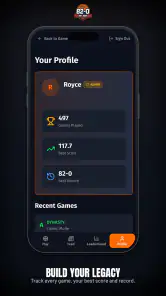
The game is also a good fit for people who enjoy lightweight analysis. You do not need to spend an evening building spreadsheets to get something from it. A few notes in your phone can be enough: which type of lineup felt stable, which selection created trouble, and what you would change next time. That simple record turns repeated attempts into a personal experiment instead of a series of disconnected guesses.
Players who prefer immediate action may not appreciate this pace. There is no reason to choose it over a fast basketball arcade game if your priority is movement, timing, or spectacle. Likewise, fans of detailed management may want deeper statistics, longer-term roster planning, and more control than this focused format provides. The game succeeds when its limited scope matches your mood; it feels less satisfying when you expect it to be a complete basketball universe.
Remaining barriers and practical trade-offs
The biggest barrier is not the price: the game is free, which makes trying it low-risk. The more important question is whether its style of challenge matches your expectations. The store summary points toward an ambitious unbeaten-season goal, but a player looking for a conventional match may interpret that promise too broadly. I would think of it as a strategy exercise built around basketball lineups, not as a replacement for playing a full game.
There is also a learning barrier for people who do not follow basketball closely. The central idea is understandable, but confidence in a decision may depend on recognizing why one lineup is more balanced than another. A newcomer can still enjoy experimenting, yet the experience is likely to feel more rewarding if they are willing to learn from each attempt rather than expecting every choice to be obvious.
Version 1.7.0 is the current version, and the game supports devices running Android 7.0 or later. That makes it relevant to people using older Android hardware, although practical comfort will still depend on screen size, performance, and how easily the player can read and tap the interface. Compatibility with an older operating system should not be confused with guaranteed comfort for every device or user.
The Everyone age rating makes the game easy to consider for a broad household audience. I would still separate age suitability from ability suitability. A child, older adult, or player with limited gaming experience may understand the goal, but their comfort will depend on reading the choices, navigating the controls, and enjoying a decision-focused pace. The rating is reassuring for general content, while the actual interface experience remains personal.
Another trade-off is attention. Because the game is built around choices, interruptions can affect the quality of play more than they would in a purely casual tapping game. If you are frequently distracted, use shorter decision cycles and avoid committing until you have reviewed the complete lineup. That small discipline makes the experience less frustrating and helps preserve the strategic part of the game.
Who should try it and who should skip it
I would recommend this game to basketball fans who enjoy debating lineups, players who like compact strategy puzzles, and anyone who wants a sports title that does not demand constant reflexes. It is also a sensible choice for a quick break when you want a clear objective and enough depth to make your choices matter.
It can work well for families or friends who enjoy discussing sports decisions together. One person can build a proposed lineup while another challenges the assumptions behind it. That shared process is a stronger use case than simply handing the phone around for rapid turns, because the game’s value comes from explaining why a choice should work.
I would skip it if you want realistic on-court controls, a large management campaign, or guaranteed excitement in every minute. I would also be cautious if reading small interface elements is difficult and the game cannot be made comfortable through your device settings. Players who need extensive customization for motor, visual, or sensory access should test the opening experience carefully before investing time in a long unbeaten attempt.
Compared with a typical basketball arcade game, this is calmer and more analytical. Compared with a full sports manager, it is lighter and easier to pick up, but less comprehensive. That middle position is its identity. It does not try to win through spectacle or complexity; it asks whether you can construct a lineup that holds together under pressure.
My inclusive verdict
After spending time with it, I see 82-0.com as a focused sports strategy game with a clear audience. Its strongest qualities are the direct objective, the low motor demand of lineup selection, and the way a simple goal encourages careful thinking. The free price and Everyone rating make it easy to try, while the broad Android support helps people using older devices get a chance to see whether the format suits them.
Its accessibility is practical rather than universal. Players who can comfortably read and select options, prefer measured decisions, and enjoy learning through repeated attempts are likely to feel at home. People who need strong alternative ways to interpret visual information, who struggle with small touch targets, or who want action-based basketball may encounter more barriers than the store summary suggests.
My best advice is to approach it with the right expectation: do not play it like a match simulator. Build slowly, examine what could undermine the lineup, and treat each attempt as feedback. If that sounds enjoyable, this is a compact way to turn basketball knowledge into a strategic challenge. If you need detailed management, direct gameplay, or extensive accessibility controls, another sports game will probably serve you better.
For me, the deciding strength is that the game gives a short session a meaningful question: can this group remain effective, not merely look impressive? That question is enough to keep the experience engaging without making it overwhelming. The best reason to try it is its balance between easy entry and thoughtful lineup decisions.
Pros
- Simple interface that is easy to navigate on mobile devices.
- Pages load quickly on a stable internet connection.
- Useful for users seeking a focused
- no-frills online experience.
- Works across common Android and iOS mobile browsers.
- Content is presented in a straightforward
- accessible layout.
Cons
- The site may be unavailable or restricted in some regions.
- Limited information is available about its ownership and operators.
- Some pages may contain aggressive ads or unexpected redirects.
- A stable internet connection is required; there is no offline mode.
- Users should review privacy and security details before submitting data.

- Category
- Sports
- Version
- 1.7.0