YoYa Star: On Air
- 25.00
- 4.5
- Installs
- 50.00K
- Price
- Free

Screenshots




Analysis by Reviewed
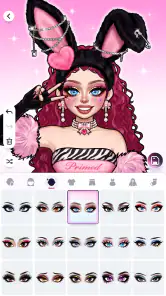
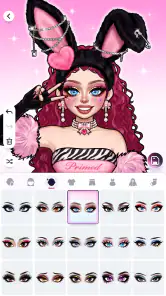
I approached YoYa Star: On Air as a light, creative stage game rather than a serious competition title. Its central appeal is easy to understand: you prepare a character, step into a performance-focused setting, and try to make that moment feel like your own. The experience sits comfortably in the casual category, so I never felt pressured to master complicated controls before enjoying it.
That simplicity makes it approachable for a first-time player, especially someone who likes dress-up games, playful role-play, and short sessions. At the same time, the “go live” and stage-battle ideas give it a little more direction than a basic wardrobe app. You are not only choosing an outfit; you are building a small performance identity around your character.
It is a free game from YoYa World, rated for Everyone, and the current version is 1.2. The game requires Android 7.0 or later. Its average rating is 4.5 from around 392 ratings, while the store shows over 50 thousand installs. Those figures suggest a modest but interested audience, rather than the scale of a huge mainstream game.
Getting comfortable with the stage
What the first few minutes feel like
My advice is to treat the opening session as a creative test, not as something you can play incorrectly. The most useful early goal is simply to create one look that feels intentional and take it into the performance setting. That gives you a clear sense of how the dress-up side connects with the stage theme.
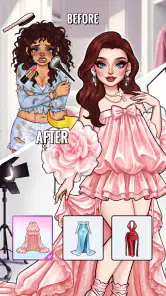
The game’s strongest first impression comes from the contrast between preparation and presentation. In a typical dress-up title, the outfit may be the final reward. Here, the outfit feels more like a starting point for a public appearance. That small change matters because it encourages me to think about the character as a performer instead of a mannequin.
I found it helpful to make one obvious choice before experimenting: decide whether the character should look bright, dramatic, playful, or polished. Even without overthinking every item, that decision makes the final result feel more coherent. New players who tap through every option randomly may miss the satisfaction of seeing a theme come together.
The casual format also suits short breaks. I can imagine opening it while waiting for an appointment, creating a new stage look, and stopping after one performance idea without needing to remember a complicated story. It is less suitable for someone looking for a long campaign, detailed simulation, or demanding action mechanics.
Setting up a first look without getting lost
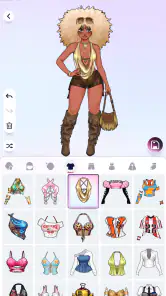
During setup, I would begin with the character’s overall impression rather than individual accessories. Pick the main clothing direction first, then adjust the smaller details around it. This avoids a common problem in dress-up games: collecting attractive pieces that do not work together once viewed as a complete outfit.
For a first attempt, I recommend using a three-part check. Ask whether the main outfit matches the imagined performance, whether the details support rather than distract from it, and whether the finished look still feels recognizable at a glance. This is more useful than trying to use every available option immediately.
The stage concept changes how I judge a look. A detail that seems excessive in a quiet everyday scene may work perfectly for a performance. Conversely, a carefully coordinated outfit can lose its impact if too many competing elements are added. I learned to make one feature the focus and let the rest provide support.
This is also where the game may appeal to younger players and families. The Everyone age rating makes the tone broadly accessible, and the basic activity is easy to explain: dress a character and prepare for a stage moment. Adults who enjoy avatar customization can still find a relaxing creative loop, although players seeking deep fashion analysis will likely find the choices lighter than those in specialist styling games.
Reaching the first meaningful success
My definition of a first success here is not winning a difficult match. It is producing a look that has a clear idea behind it and seeing that idea carry into the stage experience. That success arrives faster when I stop chasing perfection and focus on one readable theme.
A practical routine is to create a “starting version,” enter the stage, and then make only one change afterward. Maybe the outfit needs a stronger focal point, or perhaps a smaller detail is competing with the main idea. Limiting the revision to one change teaches you what actually improved the result instead of turning the process into endless tapping.
This approach reveals one of the game’s less obvious strengths: it can function as a small visual decision-making exercise. You are constantly balancing attention, color, and personality, even if the game presents those choices in a playful way. I enjoyed that more than simply unlocking or selecting items without a reason.
For a child, the same workflow can become a storytelling activity. Ask who the character is performing for, what kind of mood the stage has, or why a certain outfit was chosen. For an adult, it works as a quick creative reset. Neither use requires a long session, which is one reason the casual structure fits the concept well.
Understanding the stage-battle idea
The word “battle” can make the game sound more competitive than it feels during an initial session. I would not approach it expecting the reflexes, strategy layers, or detailed combat systems found in action games. The stage framing is better understood as a way to give your styling choices a sense of presentation and comparison.
That distinction is important when deciding whether to install it. If you want a traditional fighting game, this will probably feel too gentle. If you like the idea of presenting a character and seeing how a chosen style works in a performance setting, the concept is much more appealing.
I also recommend not judging the game solely by the first outfit. The creative loop becomes clearer after trying contrasting directions. Make one look deliberately energetic and another more restrained. Comparing those two attempts helps show whether you enjoy the performance-oriented styling itself or only the initial novelty of changing clothes.
Where new players may hesitate
The biggest source of confusion is likely the relationship between dressing up, going live, and battling on stage. These phrases suggest several separate systems, but the player’s practical task remains straightforward: prepare a character for a public-facing performance. Thinking of the game as a sequence of presentation choices makes the structure easier to follow.
Another possible point of friction is deciding what counts as a good result. There is no need to assume that the most elaborate appearance is automatically the best one. I got better results by matching the styling effort to a clear idea. A simple look with a strong identity can feel more successful than a crowded one.
Players should also remember that free does not necessarily mean every optional element is included without cost. The game contains in-app purchases ranging from $1.99 to $19.99 per item. I would begin by exploring the free experience and only consider spending after deciding whether the creative loop is something I will return to regularly.
That spending range makes the game easier to recommend when approached with a personal limit. For a child, a parent may want to discuss purchases before handing over the device. For an adult, the sensible test is whether an optional item improves a specific creative plan rather than encouraging impulse buying. The game is most enjoyable when the player is choosing with intention.
How it compares with familiar alternatives
Compared with a plain avatar dress-up app, this game has a clearer sense of occasion. The stage and live-performance framing give each look a reason to exist. That makes it better for players who enjoy imagining an audience or a performer’s persona, rather than simply browsing clothes.
Compared with a fashion competition game, it feels more relaxed. I would choose it when I want creative control without the pressure of a highly structured ranking system. The trade-off is that players who love detailed scoring, extensive progression, or constant challenge may prefer a more competitive alternative.
Compared with a traditional casual action game, its reward is visual and imaginative instead of fast-paced. There is no reason to install it for twitch gameplay or complex tactical decisions. Its best audience is someone who enjoys making a character look right, trying a concept, and seeing that concept placed in a stage-oriented context.
This comparison also explains why the game may work well as a shared activity. One person can suggest a theme while another assembles the look, then both can discuss whether the final presentation communicates the idea. That kind of conversation is more central here than chasing a high score or finishing a difficult level.
Building a repeatable routine
After the first successful action, I would create a small rotation of themes instead of repeating the same style. For example, use one session for a cheerful performance, another for a dramatic stage identity, and a third for a deliberately unusual combination. The goal is not to produce a huge collection immediately; it is to learn which creative choices keep the game interesting.
A useful habit is to change only one category at a time when refining a look. If you replace the outfit, keep the supporting details stable. If you change the accessories, leave the main clothing alone. This makes the result easier to judge and prevents the familiar dress-up-game problem where everything changes at once and you cannot tell what helped.
I also found that stopping at a satisfying result is better than continuing until the screen feels overloaded. The live-stage concept rewards clarity. A character with one memorable visual idea is easier to appreciate than one assembled from every attention-grabbing choice available.
For families, this routine can be turned into a short creative challenge: choose a mood, design the performer, and explain the reasoning. For solo players, it offers a quiet way to practice visual composition. These uses give the game more staying power than simply opening it whenever there is nothing else to do.
Who should choose it, and who should skip it
I would recommend YoYa Star: On Air to players who enjoy casual customization, character styling, and imaginative stage scenarios. It is especially approachable for first-time users because the main idea is easy to understand and the early goal can be reached without learning a complicated control system.
I would be more cautious about recommending it to someone who wants deep competitive mechanics, a substantial narrative, or a large action-focused challenge. The stage-battle theme may sound intense, but the appeal is primarily creative presentation. Players who dislike avatar dressing or making repeated visual choices will probably run out of interest quickly.
The game is also not the best fit for anyone who wants a completely cost-free experience with no temptation to buy optional content. Since individual in-app purchases range from $1.99 to $19.99, setting a boundary before playing is sensible. The free entry point is useful, but it should be treated as a chance to evaluate the game, not as a promise that every possible addition is included.
Device compatibility is reasonably broad for Android users because Android 7.0 is the minimum operating system requirement. I would still check the device before installing, particularly on an older phone, since a compatible operating system does not automatically guarantee the same comfort or responsiveness on every handset.
My recommendation after trying the full loop
The best way to enjoy this game is to play it as a tiny performance-design studio. Start with a character idea, shape the look around that idea, place it in the stage context, and revise carefully. That mindset makes the experience feel purposeful instead of like an endless catalog of outfit taps.
YoYa World has kept the concept accessible: dress-up is the entry point, live presentation supplies the personality, and the stage-battle framing adds a reason to compare different looks. I appreciate that the game can fit into a short session while still giving creative players room to make choices that feel personal.
My reservations are mainly about expectations and spending. It is not a substitute for a fighting game, a deep fashion simulator, or a story-driven role-playing experience. The optional purchase range also means families and careful spenders should decide their limits early. Those are manageable concerns when the game is approached for what it does best.
For a first-time user, I would install it, create one deliberately themed outfit, take it into the performance setting, and then make a single revision. If that small loop feels rewarding, there is a good chance the game will become a pleasant casual creative outlet. If the styling process already feels like work, the stage theme is unlikely to change your mind.
Overall, YoYa Star: On Air is a friendly choice for players who want to turn character customization into a simple stage moment. Its 4.5 average and growing install base reflect a positive early reception, while its modest scope is also clear. I recommend it to creative casual players who value expression over intensity, provided they keep the optional purchases in perspective.
Pros
- Bright
- colorful visuals appeal to younger players.
- Character customization offers plenty of outfit combinations.
- Simple controls make it easy for children to explore.
- Creative scenes encourage imaginative role-playing.
- Regular events can add fresh activities and rewards.
Cons
- Some items and features may require in-app purchases.
- The game can feel repetitive after extended play sessions.
- Ads may interrupt gameplay for free users.
- A stable internet connection may be needed for some content.
- Parents should review privacy and chat-related settings.

- Category
- Casual
- Version
- 1.2