Wheelie Master: Moto Ride 3D
- 256.00
- 4.5
- Installs
- 10.00M
- Price
- Free
Screenshots
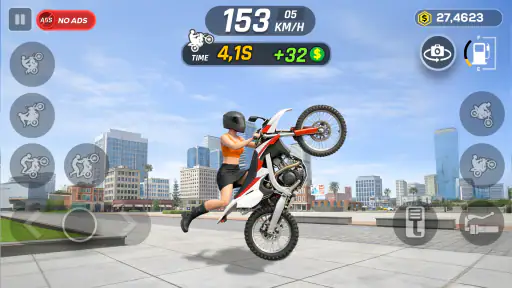
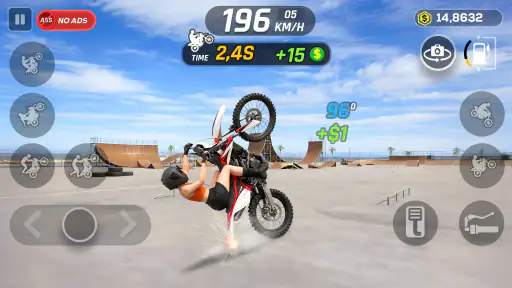
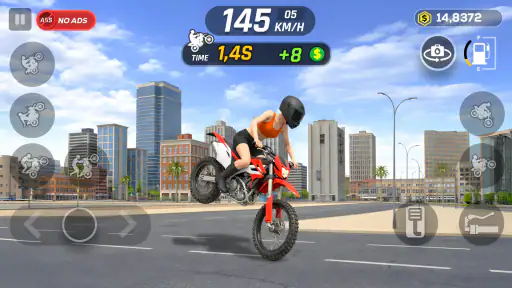
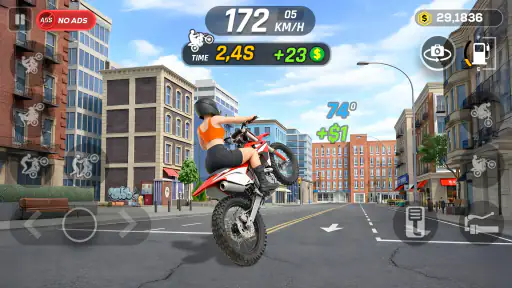
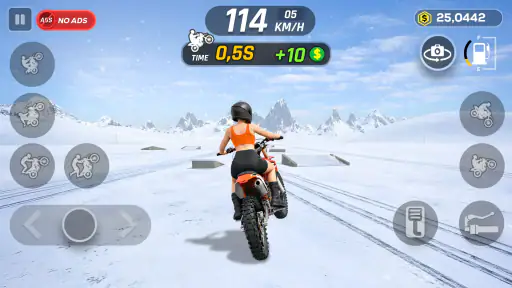
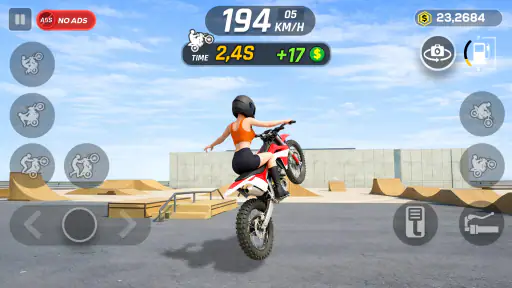
Analysis by Reviewed
What stands out to me about Wheelie Master: Moto Ride 3D is how narrowly it commits to one satisfying idea: keeping a motorcycle balanced on its back wheel while moving through traffic. That focus gives the game a clear identity. It is a casual racing game, but its appeal is less about beating a conventional circuit and more about judging how long you can hold a risky stunt without losing control.
I’d recommend it to someone who enjoys short, skill-based mobile games and wants a challenge that is easy to understand at a glance. It is less suitable if you want a deep motorcycle simulator, a story-driven ride, or a broad collection of race formats. The difference matters: this is a game about a particular riding trick, not a general-purpose racing package.
City traffic gives the stunt its own visual language
A simple setting that keeps attention on balance
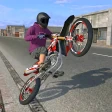
The city-road premise gives the wheelie a useful context. Traffic makes the ride feel less like practicing in an empty space and more like threading a stunt through a moving environment. That setting helps create tension without needing a complicated racing setup: the bike, the road, and the surrounding vehicles are enough to make each attempt feel exposed.
The visual direction is best understood as functional rather than elaborate. For this kind of game, I want the motorcycle’s angle and the space ahead to read quickly. If I have to spend a run admiring scenery or deciphering a crowded screen, the central challenge loses its snap. Here, the strongest mood comes from the contrast between a controlled stunt and the hazards of city traffic.
That restraint also points to a trade-off. Players looking for detailed environments, a wide-ranging sense of place, or a realistic road simulation may find the setting too focused. I see that as a deliberate fit for quick stunt attempts, though it does mean the atmosphere depends heavily on the riding challenge rather than on exploration.
When I approach a traffic section, I would treat it as a rhythm problem rather than simply holding a stunt for as long as possible. The practical tip is to watch the road ahead and make small, deliberate corrections instead of reacting late to every visual change. That approach suits the game’s premise: a wheelie is only impressive if the rider can keep it under control.
Audio and pacing work best in short bursts
The game’s overall mood is built for compact sessions. A wheelie challenge naturally creates a clear beginning, a tense middle, and a quick outcome, so the pacing does not need a long setup before play feels engaging. I can imagine it fitting into a spare moment when I want a focused task rather than a lengthy race that demands uninterrupted attention.
Sound matters in a stunt game because it can reinforce momentum and make a ride feel alive. I would judge it by whether it supports concentration rather than competes with the road. The most useful listening habit is to keep the audio at a level that adds atmosphere while leaving the visual cues in charge; in a traffic-based challenge, looking ahead is more valuable than relying on sound to warn of what is coming.
This kind of pacing has a downside for players who want a more dramatic progression across long sessions. Repeating a tightly defined challenge can feel satisfying when I am trying to improve, but it can also become samey if I am not in the mood to refine a specific skill. If I want changing objectives or a broader campaign structure, a conventional racing game is probably a better choice.
Control, learning, and who will enjoy the ride
A focused skill test, not a full motorcycle sim
The central mechanical appeal is the balance between committing to the wheelie and keeping the bike under control. That makes the game approachable in concept: I do not need to learn a full set of racing rules to understand what I am trying to do. The challenge is in execution, and the traffic setting gives that execution a reason to stay attentive.
For a new player, I would start by making conservative adjustments and learning how the motorcycle responds before chasing longer or riskier rides. A common mistake in stunt games is to treat every attempt as a high-score run from the first second. It is more useful to notice what causes a wobble or loss of control, then change one part of the approach on the next try. That turns failure into feedback instead of frustration.
There is also a useful distinction between playing for a quick distraction and playing to improve. If I have only a minute, I can treat a run as a small challenge and stop after a few attempts. If I want to get better, I would give myself a short practice session and focus on consistency: maintaining control through traffic is a more meaningful goal than taking unnecessary risks just to make one attempt look spectacular.
Compared with typical mobile racers built around laps, overtaking, and finishing positions, Wheelie Master puts the stunt itself at the center. That makes it a better fit for players who like timing and fine control than for those who mainly want speed, a long track, or head-to-head competition. Compared with motorcycle simulators, it is a lighter, more immediately legible proposition; anyone seeking realistic riding depth should look elsewhere.
It is worth keeping expectations equally focused around progression. The game’s identity comes from repeating and refining its core action, so the question to ask before installing is whether that loop sounds enjoyable to you. If you like trying again after a near miss and improving through small adjustments, the structure makes sense. If repetition quickly feels like a chore, a racer with more varied modes will likely hold your interest longer.
Practical fit, access, and spending
Developed by Wayfu Game Studio, the game is free to download and rated Everyone. It has a 4.5 average from around 35,000 ratings and has passed 10 million installs, which suggests that its straightforward stunt premise has found a broad audience. Those figures are useful context, but I would still choose it based on whether a focused wheelie challenge is what I want to play.
The game is listed at version 1.47 and supports devices running Android 7.1 or later. That makes the OS requirement worth checking before installing on an older phone or tablet. I would also consider the practical feel of the device: a game centered on balancing a bike benefits from responsive input and a screen where the road is easy to read. If my phone is awkward to hold or I tend to play while distracted, I would expect the control challenge to feel less forgiving.
Optional in-app purchases range from $1.99 to $9.99 per item. Since the game is free to start, I would first spend time with the core riding loop and decide whether it holds my attention before buying anything. That is especially sensible here because the appeal is concentrated in one main kind of challenge; paying makes most sense only if I already know I enjoy that style of play.
A realistic use case is a short break between errands: I can open the game, make a few attempts at maintaining a wheelie through traffic, and put it away without needing to remember a story or manage a long race. On the other hand, I would skip it for a commute or situation where I cannot watch the screen carefully. Traffic and balance demand visual attention, so it is not a good fit for distracted play.
My verdict on the atmosphere
Wheelie Master: Moto Ride 3D succeeds when its art direction, road setting, sound, and pacing all support the same mood: a quick, slightly tense stunt session where control matters more than spectacle. Its city traffic gives the riding a clear point of friction, and the compact format suits players who like repeating a challenge until their timing improves.
I would recommend it to casual racing fans who specifically enjoy stunt control and short attempts. I would not recommend it as a substitute for a full racing game or motorcycle simulator, because its focus is also its main limitation. If the idea of practicing a wheelie through traffic sounds fun, the free entry point makes it easy to try; if you need varied race types or deeper simulation, choose a broader alternative instead.
Wheelie Master: Moto Ride 3D Frequently Asked Questions
What is Wheelie Master: Moto Ride 3D?
Wheelie Master: Moto Ride 3D is a motorcycle game focused on performing wheelies while riding through 3D environments. Players steer a bike, balance it on its rear wheel, and try to travel as far as possible without falling. Its straightforward premise makes it easy to understand, though mastering balance and timing takes practice. Check the store listing for the current description, features, and screenshots, since game content can vary by version.
How do you play Wheelie Master: Moto Ride 3D?
The main challenge is controlling your motorcycle’s speed and tilt so you can keep the front wheel raised without losing balance. Inputs and control layouts may differ between devices or game versions, so it is worth checking the in-game tutorial or settings when you start. Short, careful adjustments are generally easier to manage than holding a control continuously, particularly while learning how the bike responds.
Is Wheelie Master: Moto Ride 3D free to download?
The price and monetization options depend on the version and the app store in your region. Before installing, check the Google Play or Apple App Store listing to see whether the game is free, includes advertising, or offers optional in-app purchases. Store details can change over time, and a free download does not necessarily mean every item or feature is available without payment.
Can I play Wheelie Master: Moto Ride 3D offline?
Whether the game works without an internet connection can depend on its current version and how its features are implemented. Some basic gameplay may be available offline, while advertisements, online services, or other connected features may require internet access. If offline play matters to you, check the store listing and test the game after installation with your connection disabled rather than assuming every mode will work.
Which devices support Wheelie Master: Moto Ride 3D, and is it suitable for children?
Compatibility depends on your device’s operating-system version and the requirements shown on the relevant app-store page. Review those details before downloading, as availability and performance can differ across phones and tablets. The game centers on motorcycle stunts, but its age rating, advertising, and any in-app purchases should be checked in the store listing, especially if you are choosing it for a child.
Pros
- Responsive controls make steering and balancing easy to pick up.
- Short courses suit quick play sessions.
- Trick-focused riding adds variety to basic racing.
- 3D environments make obstacles and ramps easy to spot.
- Simple gameplay is accessible to casual players.
Cons
- Physics can feel unpredictable during landings.
- Repeated courses may become monotonous over time.
- Ads may interrupt play
- depending on the version.
- Progression can feel slow without frequent rewards.
- Touch controls may be less precise on smaller screens.
- Category
- Racing
- Version
- 1.47