WellDiver
- 65.00
- 4.7
- Installs
- 10.00K
- Price
- Free

Screenshots



Analysis by Reviewed
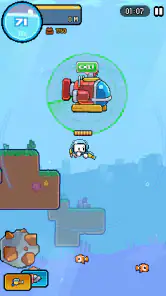
I approached WellDiver as the kind of adventure game that might sit on a shared phone or tablet, ready for a short escape from a busy day. Its central idea is easy to understand: survive an ocean environment, make progress under pressure, and find a way out. That gives it a more urgent feel than a relaxed exploration game, while still keeping the premise approachable for a broad audience.
LoadComplete has positioned this as a free game for Android users, with an Everyone age rating and a minimum requirement of Android 8.0. The current release is version 0.12.2, so I would think of it as a game that deserves a little patience while its systems and balance continue to develop. Its average rating is 4.7 from around 300 ratings, and it has passed 10,000 installs, which suggests that it has already attracted a small but interested audience.
The most important thing to understand before installing it is that the ocean is not just scenery. It is the source of the game’s tension. The promise is not simply to wander through attractive surroundings; it is to manage danger and keep moving toward escape. That makes the game a better fit for players who enjoy making quick decisions than for someone looking for a purely calm, decorative experience.
How WellDiver fits a shared household device
A practical game for short personal sessions
On a shared device, the strongest use case is a short individual session. One person can pick up the phone, play for a while, and hand it back without turning the game into a household project. That matters when a device is used for several purposes, because an adventure game that demands a long uninterrupted block of time can quickly become inconvenient.
I would place WellDiver between a quick casual distraction and a more committed survival adventure. The ocean setting gives each session a clear identity, while the escape objective provides a reason to continue. If I had only a few minutes while waiting for dinner or taking a break, I would be more likely to choose it than a large role-playing game with extensive menus and long conversations.
There is also a useful social angle, even though I would not treat it as a multiplayer title based on the information available. A parent, sibling, or friend can watch someone play and discuss what choice might be safer. That makes the game easy to share as an experience without assuming that several people need to control the same run.
The trade-off is that shared use can make progress feel personal. If several people use the same device, it is important to agree on whose turn it is and whether another player may continue an unfinished attempt. Without that simple household rule, a survival game can become frustrating because one person’s decisions affect the next person’s starting point.
What to decide before the first session
Because the game is free to download, the initial decision is low-risk. I could install it, try the basic experience, and decide whether the ocean survival loop suits me before spending anything. That is a better starting point than assuming every free adventure game will feel generous or comfortable over time.
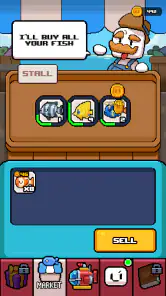
In-app purchases range from $1.99 to $49.99 per item. I would therefore establish a household rule before handing the device to a younger player: free access is fine, but purchases require permission. This is especially useful on a shared tablet, where the person playing may not be the person who manages the device or payment settings.
One practical habit is to treat the first session as a test of both gameplay and household fit. I would check whether the controls feel understandable, whether the pace works for the intended player, and whether the game creates enough pressure to be enjoyable rather than tiring. If the experience feels too demanding for the person sharing the device, another adventure game with a slower rhythm may be a better choice.
Keeping progress and expectations separate
Account boundaries deserve attention even when a game is used casually. I would not assume that two people can maintain completely separate progress simply because they use different turns. Before a child or another family member invests time, I would look at how the game presents its progress and make sure everyone understands what is being continued.
This is not a criticism of the game itself; it is a normal issue with shared devices. A survival adventure often makes each attempt feel connected to the previous one, so accidental changes can matter more than they would in a simple puzzle game. The safest approach is to decide whether the device belongs to one main player or whether everyone is comfortable sharing the same ongoing experience.
I would also avoid promising a younger player that every session will end in a clear victory. The appeal here comes from surviving difficulty and working toward escape, so setbacks are part of the attraction. Framing the game as practice and experimentation makes it easier for a child to enjoy the challenge without treating every failed attempt as a problem.
Coordinating play, age, and trust
Why the ocean setting changes the way the game feels
Ocean survival creates a particular kind of pressure. The environment feels open, but the objective gives that openness direction. Instead of simply asking me to explore, the game encourages me to think about how to stay safe long enough to get away. That combination can make even a compact session feel purposeful.
Compared with a conventional adventure game built around a fixed path, WellDiver appears more focused on immediate survival decisions. Compared with a peaceful exploration title, it asks for more attention and accepts less passive play. I would choose it when I want a sense of risk, but I would choose a gentler alternative for a child who is easily discouraged by repeated setbacks or for a player who mainly wants to admire scenery.
The best way to coordinate play is to talk about decisions rather than results. If someone is watching, asking “What would you try next?” is more useful than taking over the controls. That keeps the player in charge and turns the game into a small problem-solving exercise instead of a contest between the person holding the device and the person giving instructions.
Age rating is helpful, but not a complete household decision
The Everyone rating makes WellDiver broadly accessible from an age-classification perspective. I would still preview the tone with the intended player, because an Everyone label does not tell me whether the survival pressure will feel exciting, tense, or simply frustrating to a particular child.
For an older child or teenager who enjoys action and exploration, the escape premise should be easy to understand. For a younger child, I would sit nearby during the first session and see how they respond to the game’s demands. That is not about adding restrictions that are not present; it is about matching the game’s pace to the player’s confidence.
Trust also matters with purchases. The free entry point is convenient, but the presence of paid items means I would explain clearly that downloading the game and buying something inside it are separate decisions. A shared-device rule such as “ask first” is simple, memorable, and more useful than assuming the player will understand the payment boundary automatically.
Three ways to get more from each attempt
My first practical tip is to use early sessions to learn the game’s rhythm rather than rushing toward the escape objective. In a survival game, players often waste opportunities by reacting to every danger immediately. Taking a moment to understand what the environment is asking for can make later decisions less frantic.
Second, I would use a handover routine on a shared device. Before stopping, the current player can briefly explain what they were trying to do and what they plan to attempt next. That prevents the next person from continuing without context and reduces the chance that a shared session turns into random experimentation.
Third, I would separate “learning attempts” from “serious attempts.” A player can use one session to understand the ocean and another to focus on escape. This is a useful trade-off because survival games become less stressful when failure produces information. It also gives younger players a healthier way to view mistakes: a failed run can still improve the next one.
Where the free model helps and where it may bother you
The free price makes experimentation easy, particularly for households that do not want to buy an unfamiliar game for every person using a device. It also lowers the barrier for a player who enjoys adventure games but is unsure whether survival mechanics will appeal to them.
At the same time, the in-app purchase range means I would keep an eye on how the game fits the household budget. A player who prefers a single upfront purchase may find a premium adventure more comfortable because the spending boundary is clearer. Someone who likes trying games without paying first may consider WellDiver the better arrangement, provided they are happy to ignore or manage optional purchases.
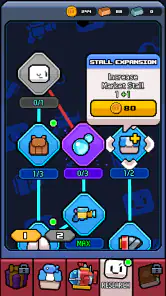
This is also where the game’s current version matters to my expectations. Version 0.12.2 suggests that I should not judge it as though it were a long-established, fully settled adventure. I would expect the experience to be defined more by its core survival idea than by a huge amount of content or elaborate presentation. Players who enjoy seeing a game develop may be comfortable with that; players seeking a finished, expansive journey may want something more mature.
Who should install it, and who should skip it?
I would recommend WellDiver to someone who wants an accessible ocean-themed adventure with survival pressure and a clear escape goal. It is especially suitable for a shared household device when each person is happy to take separate turns and respect the same progress. The Everyone rating and Android 8.0 requirement also make it practical for a wide range of compatible Android devices.
I would be more cautious about recommending it to someone who dislikes tension, repeated attempts, or decisions made under pressure. It is not the first game I would choose for a player seeking a purely relaxing ocean tour. I would also point a player toward a traditional premium adventure if they strongly prefer a predictable one-time cost over a free download with optional purchases.
Another reason to skip it is if the household needs clearly separated player spaces and does not want to negotiate shared progress. Unless the device and game arrangement already make that comfortable, a title designed around individual profiles may be a better fit. The issue is not the ocean gameplay; it is the practical reality of several people using one screen.
My household verdict
After looking at WellDiver as both an adventure game and a shared-device choice, I see its strength in a focused premise. It gives players a reason to act, and the ocean setting makes that reason feel distinct from a standard land-based quest. I like that the free entry point lets a household test the experience without committing to a purchase immediately.
My main reservation is not about the concept but about expectations. This is a game I would approach as a developing survival adventure, not as a massive replacement for every other game in the category. The rating of 4.7 from nearly 300 ratings is encouraging, but the smaller install audience means I would still make my own judgement after playing it on the intended device.
For a family or group sharing one phone, I would install it with a simple plan: one main player at a time, no purchases without permission, and a quick explanation before handing over unfinished progress. Those boundaries make the experience easier to enjoy and prevent the most common shared-device arguments.
My final recommendation is positive for players who like ocean settings, survival challenges, and short sessions with a clear objective. The best reason to try WellDiver is its combination of accessible entry and meaningful pressure. Just keep the spending rule clear, give each player room to learn, and choose another adventure if what you really want is a calm, linear journey with no setbacks.
Pros
- Simple interface makes daily wellness tracking easy.
- Offers guided activities suitable for beginners.
- Progress insights can help build healthier routines.
- Personalized content keeps recommendations more relevant.
- Works well for short sessions during busy days.
Cons
- Some features may require a paid subscription.
- The wellness advice may feel too general for advanced users.
- Limited content could reduce long-term variety.
- Requires consistent input to provide useful progress insights.
- Certain features may depend on an internet connection.

- Category
- Adventure
- Version
- 0.12.2