Twisted Story
- 34.00
- 4.5
- Installs
- 100.00K
- Price
- Free

Screenshots
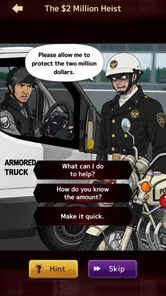
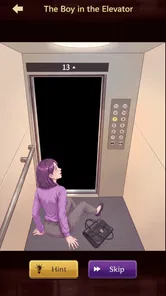
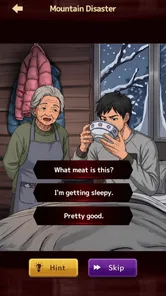
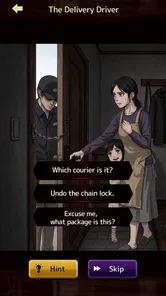
Analysis by Reviewed
I’m drawn to adventure games that make me curious enough to keep going, rather than asking me to learn a pile of systems before anything interesting happens. Twisted Story presents itself as a dark, story-led game, and that framing is its clearest appeal: it promises a narrative with an unsettling edge, not a cheerful quest or a conventional action showcase. The key question for a prospective player is whether that mood and the desire to find out what is wrong can carry the experience from one stretch of play to the next.
My overall view is that this is best approached as a focused adventure for players who enjoy tension and unanswered questions. Its short description, “Twisted Story,” gives a useful hint about the intended tone without explaining the plot, so I would go in expecting a strange narrative rather than a broad, easily summarized premise. That restraint can be appealing if you like discovering a story for yourself; it may frustrate you if you need a clear objective and an immediate explanation of the stakes.
What keeps the story moving
I look at the opening mystery as the game’s first real goal: it gives me a reason to notice details before I know what they mean. In the next section, I’ll focus on how to tell whether that curiosity is turning into meaningful progress, rather than simply keeping the answers out of reach.
Early curiosity is the first goal
The opening promise is a simple one: something is wrong, and the player is invited to stay with the story long enough to understand what that means. That kind of starting point can be more effective than a long checklist of objectives. It gives me a reason to pay attention to details, follow the unfolding situation, and form my own theories instead of treating each moment as a task to clear.
That approach also sets expectations. I would not choose this game on the assumption that its main pleasure is collecting gear, mastering a deep combat system, or roaming a huge map. Nothing in its presentation makes those the selling points. The stronger fit is for a player who likes narrative unease and is happy for the story itself to supply the motivation to continue.
A practical tip for playing a mystery-minded adventure is to give it a little uninterrupted attention. If you begin while switching constantly between messages and other apps, subtle story cues are easier to lose, and a deliberately puzzling scene can feel confusing rather than intriguing. I would start when I have time to settle in and remember the context, even if the session is not especially long.
Progress needs to feel meaningful
In a story-first game, progress is not only about reaching a new location or completing a visible objective. It also comes from understanding more than you did before. A new piece of context, a shift in how I interpret a character, or a clearer sense of what the central problem might be can make a session feel worthwhile even when the action is restrained.
More From Our News Desk

 Gmail
Gmail in a Busy Inbox: Who Benefits Most?
From first account to crowded workday, Gmail earns its place through dependable search and flexible sorting—but its best fit depends on how much inbox maintenance you can tolerate.

 Prime Video
Switching to Prime Video: What Changes in Your Viewing Routine
Prime Video can make a compelling second home for streaming, but switching means learning a different catalog, rental layer, and route from browsing to playback.

 Universal TV Remote Control
 Works Best as a Reliable Backup
A phone remote earns its place through quick setup and reliable habits. Here is how to get more from Universal TV Remote Control—and where its limits show.

 Weather - By Xiaomi
Weather by Xiaomi Review: Clear at a Glance, Less Clear Up Close
Xiaomi’s weather app makes everyday forecasts quick to scan, but its calm surface can leave useful details and recovery paths harder to find than they should be.

 X
X Under Pressure: Can It Recover When Posting Goes Wrong?
A resilience-focused review of X, examining setup, mistaken posts, interruptions, weak connections, and the gaps that matter when recovery needs to be dependable.

 Clash of Clans
 Is Won Between the Battles
Its raids are quick; its community is a long-term project of coordination, teaching, rivalry, and shared responsibility—with all the friction that entails.
Latest News



That is the standard I would use to judge the game’s pacing: does each stretch give me a reason to revise my assumptions or want the next answer? The title and premise encourage that kind of attention, but they also create a risk. If the story keeps withholding clarity without offering satisfying developments along the way, curiosity can turn into impatience. Players who prefer a steady stream of concrete milestones may find that distinction especially important.
For a useful everyday scenario, imagine having a quiet break after work and wanting something more involving than a quick reflex game, but not wanting to commit to a sprawling role-playing campaign. A narrative adventure can fit that mood well: you can focus on one developing situation, pause when needed, and return because you want to know what the story means. I would avoid starting at a moment when I need a clean, self-contained activity, since a cliff-hanging or unresolved scene can make a short session feel incomplete.
Challenge and pacing are matters of fit
Adventure games can challenge players in different ways. Some test timing and coordination; others ask for patience, observation, or careful interpretation. The title’s ominous framing suggests that atmosphere and narrative uncertainty are central to the experience, so I would not judge its challenge only by how hard it is to make progress. A game can be demanding because it keeps you thinking about what you have seen, even when the controls are straightforward.
That also means it may not suit everyone looking for an intense mechanical test. If your ideal adventure is built around demanding fights, finely tuned movement, or a clear skill curve, this is not the first choice I would recommend based on its story-led identity. On the other hand, if you enjoy suspense and are comfortable not having every answer at once, a slower rhythm can be a strength rather than a flaw.
When I play a mystery-oriented story, I try not to rush through dialogue or narrative beats just to reach the next apparent objective. A small detail can matter more than a dramatic moment, and moving too quickly can make later developments seem arbitrary. That is a useful trade-off: taking time to absorb the story can improve its impact, but it also asks for more attention than a game designed for casual tapping between interruptions.
Who should play, and who should pass
I would recommend this to players who actively seek dark adventure stories, enjoy forming theories, and do not mind a premise that begins with uncertainty. It is also a reasonable pick for someone who wants a narrative alternative to the familiar loop of fighting enemies, gathering resources, and upgrading equipment. The free price makes it easier to consider as a low-commitment try, though optional in-app purchases range from $1.99 to $9.99 per item, so I would check any purchase prompt carefully rather than assume every part of the experience is included at no cost.
I would suggest skipping it if you want a bright, relaxing story, a clearly explained premise from the first minute, or a game whose appeal depends on competitive play and repeatable score-chasing. The Mature 17+ rating is also a reason to consider the intended audience before installing it, particularly if you are choosing a game for a younger player. Its unsettling direction is part of the appeal, but it is not a neutral backdrop that everyone will enjoy.
Compared with lighter mobile adventures, this one sounds like a more ominous choice; compared with large console-style adventures, its appeal is more concentrated around the central story than around a promise of a vast world. That distinction helps narrow the decision. If I want a sprawling setting to explore for hours, I would look elsewhere. If I want a compact-feeling narrative premise that can hold my attention through questions and atmosphere, this is closer to what I would try.
Ratings, access, and practical expectations
CHICKEN SKIN LLC is the developer, and the game has a 4.5 average from around 5,300 ratings, with 34 written reviews and over 100,000 installs. Those figures suggest that it has found an audience, but they cannot tell me whether its particular tone or pacing will work for me. For a story-driven game, personal tolerance for ambiguity matters more than popularity alone; I would use the rating as a broad signal, not as a guarantee that the narrative will match my taste.
It is free to download, with optional purchases priced from $1.99 to $9.99 per item. That makes the first decision straightforward, but it is still worth treating purchase prompts as a separate choice from trying the game. I would not spend simply to hurry through a story unless I already knew that the game’s style had clicked for me. For narrative adventures, slowing down and letting the plot unfold is often part of the experience, not a problem to solve with extra spending.
The current version is 1.0.7, and the game requires iOS 10 or later. I would check that requirement against the device I intend to use before downloading, especially if I am setting it up on an older phone or tablet. The game is listed as released on September 10, 2026, so its release timing is recent; that makes it sensible to keep expectations focused on what the current version offers rather than assuming a long history of updates or established community guides.
How I would approach the first sessions
I would begin with a small, deliberate session and pay attention to whether the central mystery makes me curious. That is a better test than asking whether the game immediately explains everything. If I find myself wondering what a scene means or wanting to see how the situation develops, the story is doing its job for me. If I feel that uncertainty is being used in place of meaningful progress, I would stop rather than force myself through it just because the premise sounds intriguing.
I would also keep an eye on how each session ends. A satisfying stopping point does not need to resolve the whole plot; it should at least leave me with a clearer question or a fresh reason to return. This is a useful way to judge retention without mistaking a cliffhanger for genuine momentum. If the only reason I continue is that I have been denied an answer, the pacing may be leaning too heavily on withholding. If I continue because new context changes what I thought I knew, the progression is more rewarding.
For players who share a device or choose games for a household, the Mature 17+ rating should be treated as a meaningful suitability signal, not a decorative label. I would make that call before installation rather than relying on the word “adventure” to imply something gentle. The game’s dark framing is central enough that someone seeking an all-ages option should choose a different title.
My progression verdict
Twisted Story is most promising when its unusual premise keeps turning curiosity into meaningful story progress. I see its strongest audience as players who value mood, mystery, and the slow adjustment of their expectations more than a constant stream of unlocks or action. Its main trade-off is equally clear: a narrative built around uncertainty can feel compelling to one person and evasive to another, especially if they prefer firm goals and quick answers.
I would give it a try if I wanted a darker adventure and had the patience to let the story establish its terms. I would pass if I needed a mechanically rich challenge, a light tone, or a clearly mapped progression path. That is the most honest way to think about its staying power: not as a game that must suit every kind of player, but as one whose appeal depends on whether the mystery gives you enough to think about between the questions it leaves open.
A useful way to decide whether to continue
After a session, I would ask myself a more specific question than “Was that exciting?”: can I name one thing I understand differently now? That might be a changed interpretation of an event or a better sense of what the story is asking me to notice. This small check helps separate deliberate suspense from a stretch that simply feels vague. If I can point to a new thought, even without a neat answer, I have a reason to return; if I cannot, I would give the next session a fair chance but avoid treating persistence as an obligation.
This approach is especially useful when playing in short bursts. Before putting the phone away, I would mentally note the question I most want answered, rather than trying to remember every detail. When I come back, that single thread can help me re-enter the story without turning play into homework. It is a low-effort habit, but it suits an adventure whose appeal depends on carrying curiosity across pauses.
Where it fits in a mobile routine
For me, the best everyday slot would be a quiet evening when I can give the story a little focus, not a commute or a waiting room where interruptions are likely. A reflex-based game is usually easier to pick up and drop in fragments; a sprawling role-playing adventure is better when I want a longer commitment and lots of systems to manage. This sits in a different lane: I would choose it when I want narrative tension without making a large campaign the center of my free time.
That distinction also answers whether it is a good choice for every short break. I would not count on a brief session feeling complete if I stop in the middle of a tense passage. Instead, I would begin when I have room to reach a natural pause, then decide whether the story has earned another visit. Players who need each play session to provide a tidy beginning and ending may be happier with puzzle stages or self-contained arcade runs.
What to keep in mind before installing
The game is listed for devices running iOS 10 or later, so I would check the operating system on the particular iPhone or iPad I plan to use. That is a simple but practical step if I am installing it on an older device. The current version is 1.0.7, and I would approach the experience as it stands rather than basing a decision on assumptions about future additions or changes.
Cost is also easy to misread when a game is free to download. I would treat the optional purchases as separate decisions and pause at any prompt to consider whether the item genuinely improves my own experience. In a story-focused game, paying to move faster may work against the reason I opened it in the first place. If I am enjoying the atmosphere and want to continue, that is a better point to decide whether any purchase feels worthwhile than making the choice before I know whether the tone suits me.
In the end, I would start this one for the mystery, judge it by whether each session changes what I think I know, and stop if uncertainty becomes a substitute for satisfying movement. That gives the game a fair chance without asking it to be a different kind of adventure. For the right player, the unresolved questions are the hook; for someone who wants clear objectives and constant mechanical rewards, they are a good reason to choose another game.
Twisted Story Frequently Asked Questions
What is Twisted Story?
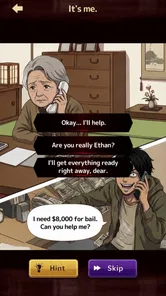
Twisted Story is a narrative-focused game built around unexpected turns and choices that shape how events unfold. Rather than relying only on quick action, it asks you to follow the story, make decisions, and discover what lies behind its mysteries. The exact premise and available chapters may vary by version, so check the app’s current store listing for a reliable description before downloading.
How does gameplay work in Twisted Story?
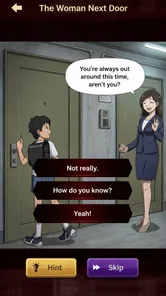
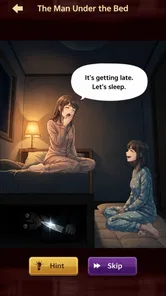
Gameplay centers on experiencing the narrative and responding to situations as they arise. Depending on the scene, you may need to choose between different actions or dialogue options, with decisions influencing what happens next. The experience is generally suited to players who enjoy reading and exploring branching stories. Review the screenshots and store details to confirm the controls and content offered in the version available for your device.
Is Twisted Story free to download, and does it include in-app purchases?
The download price and payment options can differ between the Android and iOS versions, as well as by country or over time. Some story games are free to install but offer optional purchases, advertisements, or paid content. Before downloading Twisted Story, check its listing in Google Play or the App Store for the current price, in-app purchase information, and any other costs so you know what to expect.
Can I play Twisted Story offline?
Offline availability depends on how Twisted Story delivers its story content and whether it needs an internet connection for features such as downloads, account services, ads, or progress syncing. The store listing may clarify connection requirements, but these can change between releases. If you plan to play while travelling or away from Wi-Fi, open the game once while connected and check whether its chapters remain accessible without an internet connection.
Is Twisted Story suitable for children, and what should I check before installing it?
Suitability depends on the themes, language, and imagery included in the game, which may not be appropriate for every age group. Check the age rating and content descriptors on the relevant app store, and consider previewing the description and screenshots before installing it for a child. Also confirm that your device meets the listed requirements and review permissions, privacy details, and purchase settings.
Pros
- Branching choices let you shape the story and influence how events unfold.
- Short chapters make it easy to play in quick sessions.
- The dramatic premise and cliffhangers help keep the story engaging.
- A focus on romance and suspense may appeal to fans of interactive fiction.
- Replay different choices to explore alternate scenes and outcomes.
Cons
- Some story paths may require premium currency or purchases.
- Waiting timers can interrupt reading at important moments.
- Choices may not always lead to noticeably different outcomes.
- The experience is primarily text-based
- with limited gameplay variety.
- Progress and available features may depend on an internet connection.