Trucks Off Road
- 6.60K
- 4.4
- Installs
- 10.00M
- Price
- Free

Screenshots
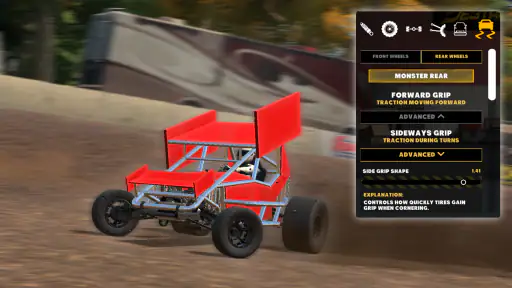
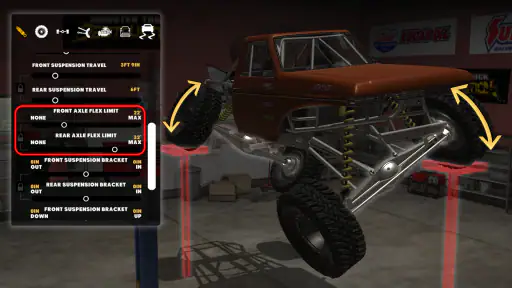
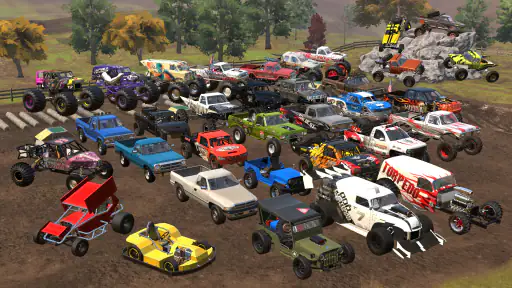
Analysis by Reviewed
I approached Trucks Off Road as a mobile racing game for people who want oversized vehicles, muddy courses, and a more physical driving feel than a simple lane-based racer. Developed by ODD Games, it is free to download and aimed at Everyone, but its appeal is not really about quick taps alone. The fun comes from learning how the truck reacts, recovering when a run goes wrong, and deciding whether a risky line is worth taking.
That distinction matters because the first few sessions can feel less immediately comfortable than a typical arcade racer. A large truck does not seem as nimble as a small sports car, and a mistake can make a short race feel longer than expected. Once I stopped trying to drive it like a lightweight racing game, the experience became much easier to appreciate. It rewards patience, observation, and small corrections rather than constant aggressive steering.
Where the driving experience can become frustrating
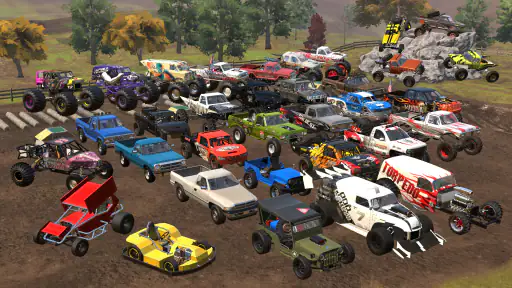
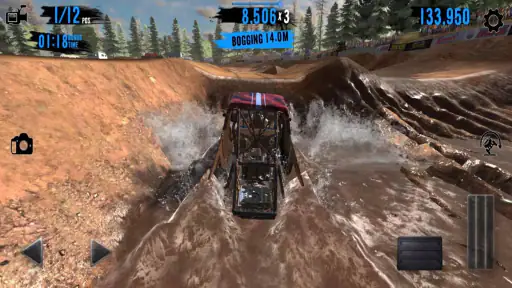
The most common sticking point is the gap between expectation and handling. The store description presents a race involving monster trucks, mega trucks, and pickups, but that does not mean every vehicle behaves alike or that speed alone solves every course. I found that entering a rough section too quickly often created more trouble than taking a slightly slower, controlled approach. The truck can feel powerful without feeling perfectly precise, which is part of the challenge.
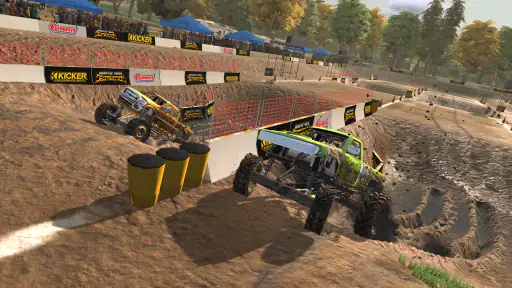
Another source of friction is learning what the course is asking from me. A jump may look like an invitation to accelerate, while the landing requires a straighter approach and better timing. A turn that seems harmless can become awkward if I arrive with too much momentum. These moments are not necessarily failures in the game’s design, but they do make the opening sessions less relaxing than a conventional casual racer.
For that reason, I recommend treating the first races as practice rather than as a serious test of skill. I paid more attention to how the vehicle responded after landing, during a turn, and when I corrected a slide. That approach helped me build a repeatable rhythm. Instead of restarting mentally after every mistake, I began using each run to identify one specific problem: braking too late, steering too sharply, or choosing a poor line.
The game also asks for a particular kind of attention from the player. It is a better fit for someone who enjoys improving through repeated attempts than for someone who wants a perfectly predictable race every time. If your ideal mobile racing session is a polished sprint where every car responds instantly, this may feel rough around the edges. If you enjoy wrestling with a big vehicle and gradually becoming more consistent, the heavier handling has real character.
There is also a practical issue with playing in short bursts. A quick session is possible, but I found that the game makes more sense when I have enough time to complete a few attempts and compare what changed. One isolated run can feel disappointing; several runs reveal whether I am actually improving. That makes it less suitable for someone who only has a few seconds between tasks and more appealing during a commute break or an evening session.
What to check before blaming the game
Before judging the driving, I would first make sure the device is running a compatible system. The listed minimum is Android 7.0, so older phones should not be treated as a reliable baseline for the current experience. Even when installation works, an older device may make the game feel less responsive than it should. Closing other demanding apps before playing is a sensible first step, especially if the phone has limited free memory.
I also suggest checking the basic controls in a quiet first session rather than changing several things at once. If steering feels wrong, change one option or habit, then play enough to notice the effect. Switching repeatedly between control approaches makes it difficult to tell whether the issue is the layout, the vehicle, or my own timing. A short learning routine is more useful: drive a familiar section, make one adjustment, and compare the next attempt.
Screen condition matters more here than in a game that relies on occasional taps. A damp screen, a thick case edge, or a finger resting too close to the display can make steering corrections feel inconsistent. I found it useful to hold the phone securely without covering the area needed for input, then keep my movements deliberate instead of dragging rapidly from one side to the other.
Performance checks should be equally simple. If the game stutters, I would first lower the phone’s workload by closing background apps and allowing the device to cool. Playing while the phone is already warm can make any demanding game feel worse. I would also avoid deciding that the handling is broken during a moment of slowdown; a delayed input can look like poor steering even when the real problem is performance.
Installation and update friction deserves attention too. The current version is 1.94.11543, and the game has been available since November 23, 2019. That history means a player may encounter an experience shaped by several rounds of updates, while a device that has not been maintained for a long time may behave differently from a newer phone. If something suddenly changes after an update, restarting the app and the device is a reasonable first check before attempting more disruptive steps.
I would be cautious about clearing storage or reinstalling without first understanding what progress may be stored locally or connected to an account. A reinstall can solve damaged local files, but it can also create avoidable anxiety if a player has not considered how their progress is retained. The safe order is simple: restart, check available space, confirm the app is current, and only then consider a reinstall.
A recovery routine for difficult races
When a run starts badly, my first instinct used to be restarting immediately. That is not always the best choice. A poor opening does not automatically ruin the entire attempt, especially when the course includes sections where a careful recovery can save time. I now try to stabilize the truck first, straighten the approach, and regain control before deciding whether the run is genuinely lost.
This recovery mindset is one of the more useful skills in the game. A dramatic correction may look exciting, but it often creates a second mistake. Small steering inputs are easier to evaluate, particularly after a jump or a rough landing. If the truck is moving unpredictably, reducing the number of simultaneous changes gives me a better chance of understanding what happened.
I also recommend separating vehicle learning from route learning. When I change both at once, a failed race tells me very little. Keeping the same vehicle for several attempts makes it easier to recognize whether I am improving. Once the course begins to feel familiar, changing vehicles becomes more informative because I can notice what the new truck does differently rather than simply reacting to an unfamiliar situation.
That workflow is especially helpful for players who feel that progress has stalled. Instead of repeating the entire race without a plan, I focus on one troublesome segment. I watch where the truck begins to lose control, then adjust the entry speed or steering angle on the next attempt. This is less glamorous than chasing a perfect run, but it turns frustration into a practical experiment.
There is a useful trade-off between aggressive play and consistent play. Taking every jump at maximum speed may produce a memorable moment, but a controlled landing is usually more valuable when the goal is to finish reliably. I prefer building a stable baseline first, then adding speed where the truck remains predictable. That approach also makes it easier to tell whether a faster attempt is genuinely better or merely luckier.
Players should also decide how they feel about optional spending before investing much time. The game is free, but its in-app purchases range from $1.99 to $79.99 per item. I would treat purchases as a personal limit-setting decision rather than a requirement for enjoying the driving. Anyone uncomfortable with that range should decide in advance whether to avoid purchases entirely or use device-level spending protections. The important point is not to make a rushed decision after a frustrating race.
When the phone, connection, or expectations are the real problem
Not every rough session points to a defect in the game. If controls respond normally in one session and poorly in another, heat, background activity, or a crowded device may be involved. If the entire phone feels slow, the game is probably only exposing a wider performance issue. Testing after a restart and with fewer apps open can provide a clearer comparison than relying on one bad attempt.
Expectations can cause similar confusion. This is a racing game centered on trucks, not a small-car simulator designed around delicate cornering. The vehicle’s size and weight are part of the identity. Someone looking for a clean circuit racer with highly exact steering may be happier with a traditional asphalt-focused alternative. Someone who finds ordinary racers too light or repetitive may prefer the physical challenge here, even with occasional awkward moments.
The game is also not the right choice for every type of racing fan. I would skip it if you mainly want licensed real-world competition, a story-driven career, or a quiet game that can be mastered in a single sitting. I would also hesitate to recommend it to a player who dislikes retries. Its appeal depends on accepting that improvement may come from several imperfect attempts rather than one immediate success.
On the other hand, it suits a player who wants a free way to explore off-road truck racing without committing to a paid download. The Everyone rating makes it broadly accessible from an age-label perspective, although younger players may still benefit from guidance around optional purchases. The game’s audience is wider than dedicated simulation fans, but its handling has enough resistance to reward players who enjoy learning rather than simply collecting quick wins.
Compared with the usual alternatives in mobile racing, its strongest difference is the focus on truck scale and off-road movement. A standard arcade racer generally makes speed and cornering instantly readable. Here, the vehicle itself becomes part of the puzzle. Compared with a strict simulator, it is easier to approach, but it still asks me to respect momentum and recovery. That middle ground is the reason I kept returning to it instead of treating it as a disposable racing game.
Who gets the most from the free version
The free entry point is valuable for testing whether the handling suits you. I would not decide based only on the first few minutes, because the initial awkwardness may be the result of unfamiliar controls rather than a lasting flaw. A better test is to play enough races to see whether you begin correcting mistakes earlier and choosing safer lines. If that learning curve feels satisfying, the game has probably found its audience.
It works well in an everyday scenario such as a longer break after work. I can play a few attempts, notice one recurring error, and stop without needing to finish a large campaign. The same structure is less convenient when I am trying to fill a tiny gap of time, because a single failed run may leave me feeling that I have not reached the enjoyable part. Planning for a short series of attempts makes the session feel more rewarding.
For families, the Everyone label is reassuring as a broad content guide, but I would still keep an eye on purchase settings. For adults, the main question is whether the free experience offers enough driving interest before optional spending becomes tempting. My advice is to enjoy the core racing first and only consider purchases after deciding what problem, if any, they would solve for you. Spending should not be used to compensate for controls that have not yet been learned.
The large player reach is also a useful sign that the concept has broad appeal: the game has passed 10 million installs, while its 4.4 average comes from around 49 thousand ratings. I read that as evidence that many players find the truck-focused racing worthwhile, not as a guarantee that every device or driving preference will match it. The more important test remains personal: do you enjoy adjusting your approach after a failed landing, or does that feel like unnecessary friction?
My practical verdict after working through the rough edges
The best way to enjoy Trucks Off Road is to treat it as a learning-focused truck racer, not as an instant arcade shortcut. Once I accepted that, the unusual handling became its main attraction. The game gives me a reason to pay attention to approach speed, landing control, and recovery instead of simply holding the accelerator and hoping for the best.
ODD Games has made something that is easy to try because it is free, but not so simple that every race feels interchangeable. The current version is 1.94.11543, and the long-running release history gives the game a more established feel than a brand-new experiment. At the same time, players should be realistic about the rougher moments, the need for device checks, and the possibility that optional purchases will not suit everyone.
I would recommend it to someone who likes off-road trucks, repeated attempts, and the satisfaction of turning a messy run into a controlled one. I would point a precision-racing fan toward a more conventional alternative, and I would tell anyone with an older or overheated phone to solve that setup issue before judging the game. For the right player, the heavy vehicles and recovery-focused driving create a distinctive mobile racing experience.
My final advice is to begin slowly, keep one vehicle while learning, change only one control habit at a time, and avoid making purchase decisions during frustration. If the game still feels rewarding after that fair trial, it is worth keeping installed. If the physical handling continues to feel like work rather than play, there is no need to force the fit. In my experience, its value comes from the moment a course that once felt chaotic starts to feel readable.
Pros
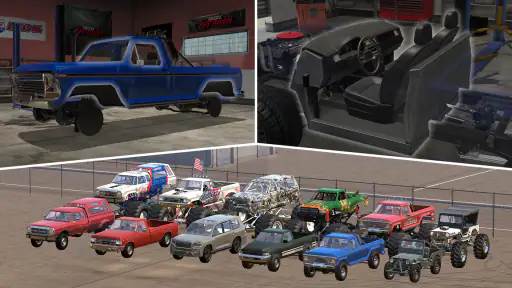
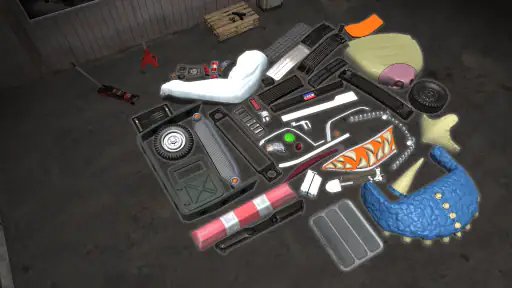
- Detailed truck customization
- from performance parts to visual upgrades.
- Mud
- water
- and terrain physics make every off-road challenge feel engaging.
- Multiple trucks and environments provide variety beyond the opening events.
- Short events suit quick mobile gaming sessions when you have limited time.
- Controller support can make steering and throttle control more comfortable.
Cons
- Progression can feel slow without spending currency on upgrades.
- Heavy vehicles require patience
- especially on steep or muddy sections.
- Some courses may look repetitive after extended play sessions.
- Large downloads and detailed graphics can use considerable storage and battery.
- Touch controls may feel imprecise during tight turns and difficult climbs.

- Category
- Racing
- Version
- 1.94.11543