Truck Simulator: Frontline
- 33.00
- 3.8
- Installs
- 500.00K
- Price
- Free

Screenshots
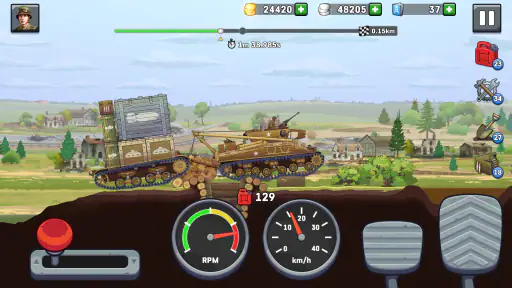
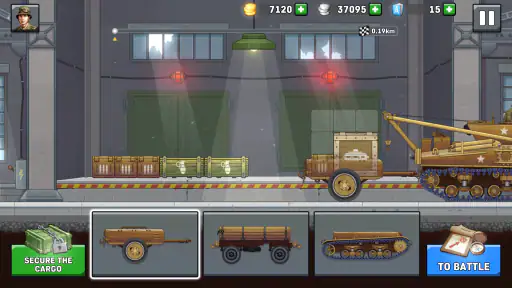
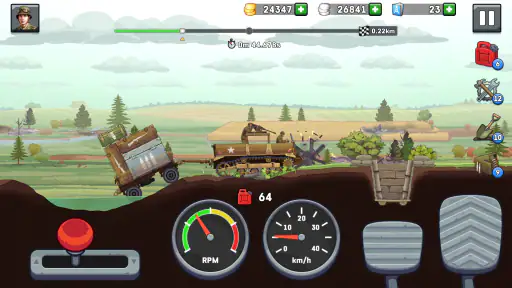
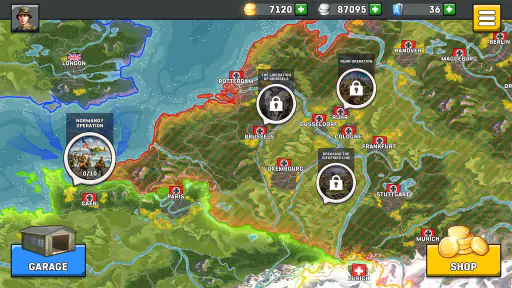
Analysis by Reviewed
My first useful impression of Truck Simulator: Frontline is that it gives you a clear job straight away: take control of a heavy vehicle and make a delivery. That simple goal is the appeal. Rather than asking me to learn a complicated management system before I can drive, it puts the focus on the road and the small decisions that make a run feel controlled—or messy. I would describe it as a mobile truck-driving simulation for people who enjoy practical tasks more than constant action.
A good fit for short, attentive sessions
I would reach for this game when I want something more involving than an idle time-killer but do not want to commit to a long story. A single delivery gives a session a beginning and an end, which makes it easier to fit around a commute break, a quiet evening, or a wait at home. The catch is that “short” does not mean something I can safely ignore: the driving works best when I can focus on the route and respond to what is happening.
That distinction helps set expectations. If I have a few uninterrupted minutes, I can settle into a job and enjoy the steady attention it asks for. If I am likely to put the phone down mid-route, I would choose a game built around pausing or brief, self-contained rounds instead. Frontline’s appeal depends on staying engaged with the truck rather than tapping through a menu and collecting a reward.
What the truck-driving focus means
The game’s place in the simulation category is clear, but it is a narrower kind of simulation than a full business or transport-management game. The main attraction is operating trucks and carrying out jobs, not building a company or following a character-driven story. That focus makes the premise easy to understand: you know why you are driving, and the vehicle is the center of the experience.
For someone comparing it with racing games, the difference is not simply that one is slower. A race usually asks me to chase position and speed; here, I get more out of keeping control and completing the task. Compared with open-ended simulators, this is a more direct starting point, but players who want a large management layer or lots of unrelated activities may find the scope too focused. I would choose it for the act of driving a truck, not as a replacement for every kind of simulator.
Getting Started with the Game
So, you’ve downloaded Truck Simulator: Frontline, and you’re ready to hit the road. The first thing you'll notice is how easy it is to get started. The game has a pretty intuitive interface, making it super user-friendly, even for those who might not be seasoned gamers. After a quick tutorial, you're thrown into the thick of it, tasked with your first delivery.
The feel of a delivery, not just a drive
The key is to treat each run as a sequence of choices: get moving, read the road, respond to what happens, then bring the truck safely to its destination. That makes a short session feel purposeful even when the route itself is not the whole story. I find the appeal is less about speed and more about keeping a large vehicle under control while completing a defined task.
More From Our News Desk

Weather by Xiaomi Review: Clear at a Glance, Less Clear Up Close

X Under Pressure: Can It Recover When Posting Goes Wrong?

Clash of Clans Is Won Between the Battles

Android Auto Makes the Case for Quieter Car Software

MobiOffice: Transforming Mobile Productivity with Seamless Integration

EA SPORTS FC™ Mobile Soccer: Redefining Mobile Sports Gaming
For a realistic everyday use case, this works well as a brief after-work game. I can imagine starting one delivery while waiting for dinner, concentrating on careful driving rather than needing to follow a long plot. If I have only a few minutes, I would still want to begin when I can give the route my attention; a truck simulator is less satisfying when I’m distracted and treating every turn as background noise.
Graphics and Gameplay
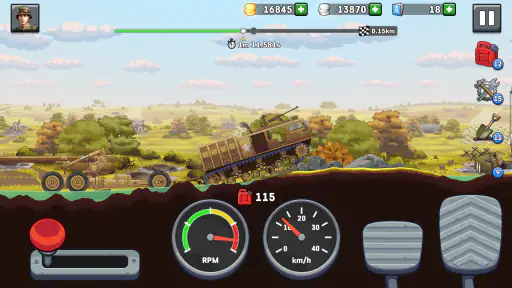
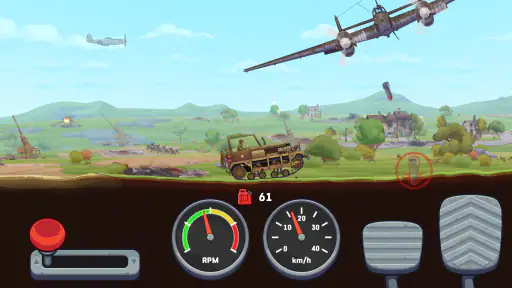
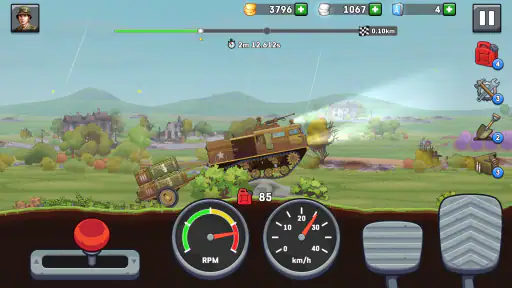
One of the most standout features of this game is its graphics. They’re pretty stunning for a mobile game, with detailed truck models and realistic environments. Whether you're driving through bustling cities or serene countryside, the attention to detail is impressive. The weather effects, like rain and fog, add an extra layer of realism that really immerses you in the game.
The gameplay itself is quite engaging. You have to manage everything from fuel to truck maintenance, and even deal with traffic laws. It's not just about getting from point A to B; it’s about doing so efficiently and safely. The game does a good job of simulating the challenges that real truck drivers face, which makes it all the more rewarding when you successfully complete a delivery.
That rhythm—act, notice the result, correct, and finish—is what gives a delivery its shape. A useful habit is to resist rushing just because the route looks familiar: keeping the vehicle steady and leaving room to react can matter more than shaving time off a run. In poor visibility, I would put extra attention on control instead of trying to drive as if the conditions were clear. The trade-off is that this measured pace can feel slow if you want constant surprises or rapid combat-style action.
Reading a run and learning from it
A practical way to get more from the driving is to pay attention to the point where a run starts to feel difficult, rather than judging the whole delivery only by its outcome. If I reach a turn too quickly or find a stretch more demanding than expected, I can use that moment to adjust my pace on the next attempt. This makes repetition useful: I am not just doing the same job again, but testing whether a calmer approach keeps the truck under better control.
Weather offers another reason to adapt instead of driving every route with one fixed rhythm. Rain or fog changes the feel of the road, so I would leave myself more room to react and avoid treating clear conditions as the default. The trade-off is that cautious driving can make progress feel less dramatic. For me, that is part of the appeal; for someone who wants speed to be the main reward, it could feel like unnecessary restraint.
Customization and Features
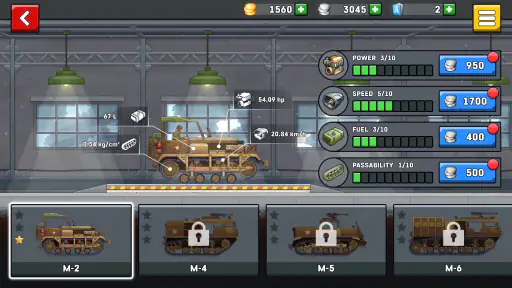
What’s a simulator without customization? Truck Simulator: Frontline doesn’t disappoint in this department. You can customize your truck with a variety of paint jobs, decals, and even upgrade parts to improve performance. The game also offers a range of trucks to choose from, each with its own unique handling and characteristics. This adds a nice layer of depth to the game, allowing you to tailor your experience to your preferences.
My practical advice is to think of truck choice and upgrades as a handling preference, not just a visual decision. If I’m still learning how a vehicle responds, I’d stick with a familiar setup instead of changing several things at once; that makes it easier to tell whether a delivery went better because of my driving or because the truck feels different. Cosmetic choices are a low-pressure way to make a vehicle feel like mine, while performance changes are more useful when I know what kind of driving I want to improve.
There is also a spending consideration. The game is free to play, with optional in-app purchases ranging from $0.99 to $54.99 per item. I’d start without buying anything and see whether the driving loop holds my interest first. That is the sensible approach for a casual player, especially since the core question is whether you enjoy the deliveries, not whether you can customize immediately.
When to change trucks or keep a familiar setup
Because different trucks have different handling, there is a useful trade-off between variety and consistency. Trying another vehicle can keep the driving fresh, but changing vehicles while also learning a difficult job makes it harder to tell what caused a rough delivery. I would change one thing at a time: first get comfortable with a truck, then experiment when I have a clear sense of what I want to improve.
Customization is also a better long-term motivator for some players than for others. If personalizing a vehicle makes me more invested in taking it out, the visual options can add a small sense of ownership between jobs. If I care only about the driving task, I can treat customization as optional and focus on choosing a setup that feels manageable. Either way, I would not assume that spending is necessary to find out whether the core activity suits me.
Challenges and Missions
The game is packed with missions and challenges that keep things interesting. From time-sensitive deliveries to tricky parking situations, there's always something to keep you on your toes. As you progress, the missions get tougher, requiring you to really hone your skills. But don’t worry, the sense of accomplishment you get from completing a tough mission is totally worth it!
Difficulty is part of the loop’s reward: finishing a demanding job gives the next attempt a reason to exist, whether I want to improve my control or take on a more awkward task. If a run goes poorly, I would treat it as feedback rather than a cue to spend. Repeating a careful approach can be more satisfying than chasing a perfect result in a hurry, though players who dislike retries may find the challenge less inviting.
What progress feels like between deliveries
The appeal of a completed job is not only the moment of arrival. It can also give me a reason to choose another run: I have learned something about handling, dealt with a different kind of pressure, or simply finished a task cleanly and want to keep that rhythm going. That is a modest but effective reward loop for a game centered on work rather than spectacle.
There is a reset built into the structure, too. Once one delivery is over, I can approach the next as a fresh problem instead of needing to remember a complicated plot. That makes it easy to return after a break, but it also means the game’s pull depends heavily on whether I enjoy repeating the basic activity with new demands. Players who need a constantly changing premise may prefer a story-led game; those who like improving at a familiar skill may appreciate the return to the road.
Who will enjoy the next run?
Truck Simulator is published by Azur Interactive Games Limited and sits in the simulation category. It is free, rated for Everyone, and has a 3.8 average from around 637 ratings, with over 500K installs. Version 1.7.85 supports Android 7.0 and later. Those details make it easy to judge the basic fit: it is accessible to a broad age range, while the measured driving style is the stronger deciding factor for adults and younger players alike.
It has received 33 written reviews, so I would treat the average as a broad snapshot rather than a complete account of how every device or player will feel. The important personal test is whether the driving itself is enjoyable: if you like paying attention to a large vehicle, adjusting your approach, and seeing a delivery through, the game has a clear reason to bring you back. If you mainly want quick bursts with no patience required, that same deliberate pace may be a poor match.
Who should look elsewhere
I would skip it if my idea of a driving game is overtaking rivals, performing stunts, or getting immediate action from every turn. Frontline’s truck-and-delivery focus asks for a different kind of attention, and its slower pace is not a flaw that can be fixed by expecting it to behave like a racer. It may also be a poor choice for someone who wants deep transport-company planning, a substantial narrative, or a broad sandbox of activities rather than a focused driving routine.
For a younger player, the Everyone rating makes the age fit straightforward, but I would still think about whether the child enjoys careful driving and completing tasks. A fast arcade game may be a better pick for someone who gets frustrated by taking their time. For a casual adult player, on the other hand, the straightforward delivery premise can be a welcome break from games that demand constant competition or a lengthy commitment.
How to decide whether it belongs on your phone
The game is free to start, so I would use the first few deliveries as a test of the activity rather than judging it by customization options or the promise of future progression. Ask yourself whether you enjoy keeping a heavy vehicle under control, whether adjusting your pace feels satisfying, and whether a completed task makes you want to take on another. If those answers are yes, the central loop is doing its job.
If the driving feels like waiting for something more exciting to happen, I would not try to solve that by buying an optional item. The better choice would be a different type of game that gives you the tempo you want. With this one, patience and attention are part of the reward, and the best reason to return is wanting another chance to handle a delivery well.
Overall, Truck Simulator: Frontline is a fantastic game for anyone looking to experience the life of a truck driver. With its combination of realistic graphics, engaging gameplay, and extensive customization options, it’s sure to keep you entertained for hours. So, if you're ready to start your trucking adventure, download the game and hit the road. Happy trucking!
Truck Simulator: Frontline Frequently Asked Questions
Is Truck Simulator: Frontline free to download, and does it include optional purchases?
Truck Simulator: Frontline is free to download, so you can try its military truck simulation without an upfront purchase. It also offers optional in-app purchases, with items priced from $0.99 to $54.99. These purchases are not required to install the game, but they may appeal to players who want to access available extras or progress in a different way.
What age rating does Truck Simulator: Frontline have, and what kind of game is it?
Truck Simulator: Frontline is a simulation game with an Everyone age rating, making it suitable for a broad audience. Its focus is on driving military trucks and exploring WW2 logistics, as reflected in its description, “Explore WW2 logistics in a unique simulator! Drive universal military trucks!” Players looking for a truck-driving experience with a military setting may find that theme especially appealing.
What is Truck Simulator: Frontline and what makes it unique?
Truck Simulator: Frontline is a realistic truck driving simulation game that offers players the chance to experience the challenges and excitement of operating various trucks across diverse terrains and environments. What sets it apart is its advanced physics engine, detailed truck models, and immersive gameplay that demands strategic planning and careful driving to succeed.
What platforms is Truck Simulator: Frontline available on?
Truck Simulator: Frontline is available for both Android and iOS devices, ensuring a wide accessibility for mobile gamers. It can be downloaded from the Google Play Store for Android users and the Apple App Store for iOS users, providing a seamless experience across different devices. Android users need version 7.0 or later to install it.
Does Truck Simulator: Frontline offer multiplayer modes?
Yes, Truck Simulator: Frontline includes multiplayer modes that allow players to join friends or compete against others online. This feature enhances the gaming experience by offering a more dynamic and interactive environment, fostering teamwork and competition as players navigate routes and complete missions together.
Pros
- Realistic truck driving experience
- Diverse range of trucks available
- High-quality graphics and sound
- Challenging missions and routes
- Customizable controls
Cons
- Requires large storage space
- Can be challenging for beginners
- Occasional in-game ads
- Requires a stable internet connection
- Limited free content access
- Category
- Simulation
- Version
- 1.7.85