Trial Xtreme 4 Bike Racing
- 13.30K
- 4.2
- Installs
- 50.00M
- Price
- Free

Screenshots




Analysis by Reviewed
I tried Trial Xtreme 4 Bike Racing on a shared device, and its short bursts of riding make it easy to pass around: one person can take a run, then hand the phone over without needing a long session. That works especially well when everyone enjoys learning a tricky course, though I would keep progress and purchases in mind before making it a communal game.
A quick turn, with clear boundaries
The game is easiest to share when everyone treats a turn as a small, self-contained session rather than assuming each person has a separate rider or save. I would agree on a simple handover point before starting: finish a level, or take a set number of attempts, then pass the device on. That keeps the exchange friendly and makes it less likely that someone will accidentally continue another player’s run.
It also helps to decide who is responsible for upgrades and spending before anyone starts tapping through progression screens. On a family phone, a child may see an attractive upgrade as part of the game without recognizing that a purchase involves real money. I would keep purchase decisions with the adult who manages the device, and make it clear that a turn at riding does not automatically mean permission to spend.
Taking turns without turning it into a long session
The appeal here is the physical, trial-style challenge rather than simply steering around a circuit. Keeping a bike steady over uneven ground calls for small corrections, so a quick attempt can become a friendly contest over who gets furthest or finishes cleanly. In an everyday setting, it suits a brief wait or a few minutes on the sofa better than a game that asks the household to arrange a lengthy multiplayer session.
It is worth agreeing on a simple turn-taking routine if several people use one device. A rider can finish a level or make a set number of attempts before passing it on. That avoids confusion over who is playing and helps prevent someone else’s progress being mistaken for your own. I would also let each person try the controls before comparing results: balance-sensitive riding can feel unfamiliar at first, and early crashes are not a fair measure of skill.
The Thrill of the Race
The first thing that hits you when you start playing Trial Xtreme 4 Bike Racing is the sheer intensity of the races. You’re not just racing against other players or the clock; you’re battling against gravity and the rugged terrain. The game offers over 200 levels, each with its own set of challenges and obstacles. From ramps to explosive barrels, every level is a new adventure.
Learning to read the course
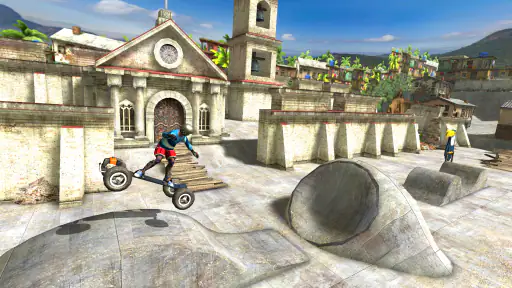
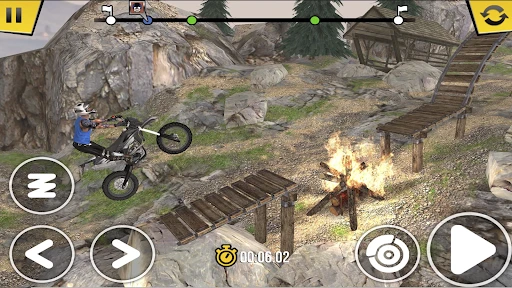
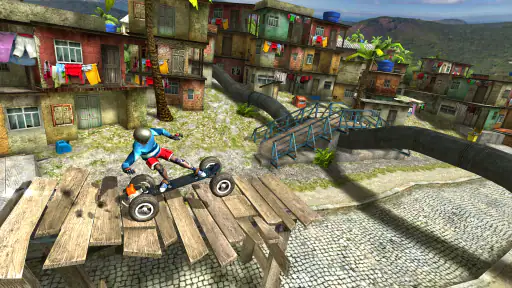
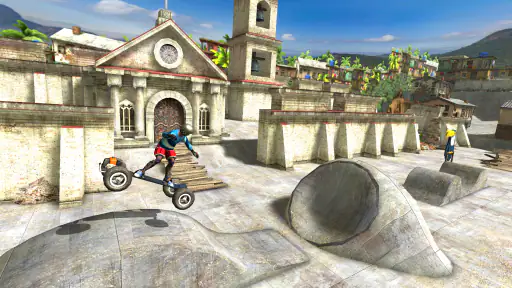
Visually, the game is a treat. The graphics are detailed enough to make you feel like you’re right there on the track, dodging obstacles and pulling off insane stunts. The controls are smooth, which is crucial for a game that relies on precision. You tilt your device to keep your balance, and believe me, it’s harder than it looks! But that’s what makes it so addictive. Each level requires a mix of skill and strategy to master.
More From Our News Desk

Clash of Clans Is Won Between the Battles

Android Auto Makes the Case for Quieter Car Software

MobiOffice: Transforming Mobile Productivity with Seamless Integration

EA SPORTS FC™ Mobile Soccer: Redefining Mobile Sports Gaming

How Microsoft OneDrive Became a Mobile Productivity Giant

How Google Translate Breaks Language Barriers Effortlessly
When I get stuck, I find it more useful to change one thing at a time than to rush straight into another attempt. Try adjusting your balance through a difficult section, then pay attention to whether the landing or the approach caused the crash. This turns retries into practice instead of guesswork. It also makes it easier to explain what went wrong when another person takes a turn: “the landing was too sharp” is more helpful than simply calling the course unfair.
That approach suits this particular kind of bike racing, where making it through the terrain matters as much as speed. It is a different pleasure from the usual arcade racer, which tends to emphasize quick steering and flowing laps. I would choose a conventional racing game instead if I wanted relaxed cornering, simple acceleration, or a race that felt forgiving from the first attempt. Here, patience is part of the skill, and repeated failure can be the price of learning a section.
Customization and competition
What I love about this game is the level of customization available. You can upgrade your bike’s engine, wheels, and suspension to improve performance, which is essential as you advance to tougher levels. Plus, the online multiplayer mode lets you compete against other players worldwide. The competitive aspect adds a whole new layer of excitement as you strive to climb the global leaderboards.
For a shared phone or tablet, I would decide whose bike upgrades and competitive progress the device is being used for before spending coins or making a purchase. A single shared game can blur the line between one person’s advancement and another’s, so taking turns does not necessarily mean everyone is building a separate profile. The game is free to start, while optional in-app purchases range from $0.10 to $199.99 per item; I would treat purchases as a deliberate choice rather than part of casual turn-taking. Deemedya INC developed the game, and its real-time competition and global leagues give it a more head-to-head feel than a solo time-trial racer.
That shared-progress trade-off is worth considering before installing it on a device used by several people. If one rider is focused on improving a bike for harder tracks while another just wants to jump in for a quick race, they may not value the same upgrades. I would talk through that difference rather than letting every player make decisions for the shared game. A dedicated personal device is a better fit for someone who wants to manage their own progression without coordinating with anyone else.
Competition also changes the mood of a session. Playing against other people can make a familiar course feel more purposeful, but it is not the same as quietly practicing alone. If someone in the household is easily frustrated by comparison or would rather learn at their own pace, I would keep the focus on completing tricky sections instead of treating every result as a contest. The strongest reason to choose this game over a solo stunt racer is precisely that added competitive layer; the same feature is a reason to skip it if online rivalry is unwelcome.
Rewards that fit—or interrupt—a routine
Every level you complete earns you coins, which you can use to upgrade your bike or buy new gear. The game does a great job of keeping you hooked with its reward system. There are daily challenges and tournaments that offer extra rewards, pushing you to come back every day. The sense of progression keeps the game feeling fresh and exciting.
Daily events are most useful for players who enjoy having a reason to return, but they may feel like an obligation if you only want an occasional race. On a household device, it helps to agree who will handle a challenge rather than letting several players make competing claims on the same run. If one person wants steady solo progress and another mainly wants quick competition, this game can serve both moods, but they should be comfortable sharing the same device and coordinating their play.
A realistic way to use it is during a short wait when everyone has a few minutes but no one wants to organize a full group activity. One person can attempt a section, pass the device to a sibling or friend, and compare how each handles the same obstacle. I would keep the session casual and avoid promising that everyone will earn equal rewards: outcomes depend on how each person rides, and the shared-device arrangement does not make the game feel like a set of separate personal games.
For occasional players, I would treat daily challenges as optional rather than a checklist. They can add a clear goal when you already feel like playing, but a game that asks for frequent returns is less appealing if you only want to open it now and then. That is a useful distinction for households: the person who enjoys routine goals may keep coming back, while someone who wants a game with no sense of ongoing commitment may prefer a self-contained racer.
Age, trust, and device suitability
The game is rated Everyone and runs on Android 5.1 or later. That broad age rating makes it easier to consider for a mixed-age household, but it does not replace an adult’s judgment about online competition, shared-device use, or spending. I would explain that the racing is competitive and that purchases cost real money, then set household expectations before handing over the device. The age rating is a starting point for deciding suitability, not a substitute for supervision or a conversation about purchases.
For a younger player, I would first watch a few turns and see how they respond to the balance controls and repeated crashes. Some children enjoy figuring out why a bike tips; others may find the same trial-and-error loop irritating. The Everyone rating is useful context, but a parent’s decision should also reflect the child’s patience, comfort with online competition, and understanding of purchase boundaries. That is a more practical test of fit than assuming a broad age label guarantees that every part of the experience suits every child.
If you are deciding whether it will run on an older Android device, the minimum requirement is Android 5.1. The game is free to download, so there is no purchase price to consider before trying it, though optional in-app purchases mean it is still sensible to discuss spending. I would also make sure the person handing over a shared device knows which game account or progress is in use, rather than assuming that different riders automatically have separate records.
With an average rating of 4.2 from around 766,000 ratings, 13,000 reviews, and over 50 million installs, it has clearly found a large audience. Its current version is 2.17.2, and it is free to download. Those figures help explain its reach, but the better question for a new player is whether they enjoy the central challenge: controlling a bike over obstacles through careful balance. If they do, the progression and competition can keep them engaged; if they want calm, uncomplicated riding, another kind of racing game will suit them better.
Who will get the most out of it
I would recommend it most readily to players who like mastering a demanding course in small steps, enjoy bike stunts, and see competition as motivation rather than pressure. It also works for friends or siblings who are happy to take turns and compare attempts on one device. The game’s particular mix of balance, obstacles, upgrades, and competitive goals gives those players several reasons to return without requiring every session to be a long event.
I would steer a different player toward another option if they mainly want to cruise, race around smooth circuits, or make quick progress without learning precise control. Likewise, a household that needs clearly separate progress for each person should not assume that passing the phone around creates that separation. If independent saves, quiet solo play, or uncomplicated controls are the priority, a more conventional racing game—or a game designed around individual profiles—would be a safer match.
Final thoughts
All in all, Trial Xtreme 4 Bike Racing is a fantastic game for anyone who loves a good challenge. The combination of thrilling races, detailed visuals, and competitive gameplay makes it a strong one to try for racing enthusiasts who enjoy learning through practice. Whether you play alone or share a device, the key question is whether precise, balance-focused riding sounds fun rather than fussy.
My household verdict is that it works best when players enjoy taking turns, accept a little trial and error, and agree on how shared progress and purchases will be handled. For a solo player who wants stunt-focused bike riding plus competitive goals, it is an easy recommendation to try. For a family looking for separate, clearly divided progress or a quiet game with no online rivalry, I would choose something else. The key is matching the game’s demanding balance-based riding to the people sharing the screen.
Trial Xtreme 4 Bike Racing Frequently Asked Questions
Does Trial Xtreme 4 Bike Racing work on both Android and iOS?
Trial Xtreme 4 Bike Racing is available for Android and iOS, so players can look for it on the store for their device. For Android, the game requires version 5.1 or later. Before downloading, check that your device meets this requirement and has enough available storage for the installation and any future updates.
How much does Trial Xtreme 4 cost, and does it include purchases?
The game is free to download, but it includes optional in-app purchases. These range from small purchases to items priced as high as $199.99, so it is worth checking purchase settings if you share your device or want to avoid accidental spending. You can start playing without paying, while purchases are available for players who choose to buy items.
What should I know about the game’s racing and multiplayer features before downloading?
Trial Xtreme 4 Bike Racing is a racing game built around extreme bike riding, stunts, and competition. Its store summary highlights real-time player-versus-player races and global leagues, so it offers more than solo track challenges. If competing against other players is a major reason you are interested, keep in mind that these online features require an internet connection.
Is Trial Xtreme 4 suitable for younger players?
The game has an Everyone content rating, making it suitable for a broad audience. Its focus is on bike racing, stunts, and navigating challenging courses rather than mature themes. Parents may also want to consider that the game offers in-app purchases, so it is sensible to review purchase settings on a device before a child plays.
What is Trial Xtreme 4 Bike Racing?
Trial Xtreme 4 Bike Racing is an exhilarating motocross game available on both Android and iOS platforms. It challenges players with over 200 levels of extreme racing tracks filled with obstacles, ramps, and jumps. The game combines physics-based elements with high-speed racing to deliver an intense gaming experience. Players can compete in various environments, customize their bikes, and participate in global tournaments.
Pros
- Engaging and challenging levels.
- Smooth and responsive controls.
- Excellent bike customization options.
- Regular updates with new content.
- Competitive multiplayer mode.
Cons
- In-app purchases can be expensive.
- Occasional ads interrupt gameplay.
- High difficulty may frustrate beginners.
- Requires constant internet connection.
- Battery drain on longer sessions.
- Category
- Racing
- Version
- 2.17.2