Torque Burnout
- 7.44K
- 4.1
- Installs
- 10.00M
- Price
- Free

Screenshots
Analysis by Reviewed
I went into Torque Burnout expecting a quick mobile racing game, but its appeal is more focused than that. This is a game about making a car look and feel difficult to control, then turning that struggle into the main event. Instead of treating every race as a simple contest from one starting line to one finish line, it puts attention on throttle control, smoke, steering corrections, and the satisfaction of keeping a dramatic slide alive. That gives it a personality many straightforward racing games lack.
My overall view is simple: this is a strong choice if you enjoy short, hands-on driving sessions and want to practice car control rather than merely select a fast vehicle and follow an ideal racing line. It is less convincing if you want a broad open world, realistic simulation, or a calm game that can be played almost entirely with one thumb. The fun comes from active input, and that also creates the biggest learning curve.
Why the driving feels different
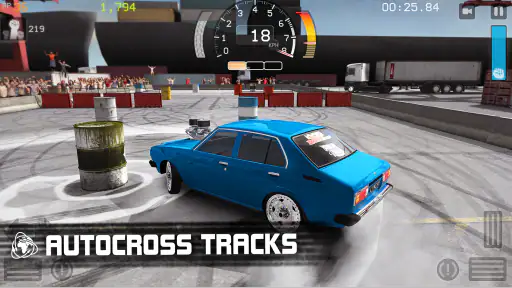
Hooned Games has built the experience around the drama of pushing a car beyond ordinary road manners. The store summary talks about taking a ride to its limits, and in practice that idea is more important than the label “racing.” I spend much of a session trying to balance steering and acceleration so the car stays in a controlled slide instead of snapping into an ugly mistake. A successful run feels less like checking a lap off a list and more like performing a small driving routine.
That focus makes each attempt easy to understand. I can immediately tell whether I entered a turn too quickly, held the throttle too long, or corrected the steering too aggressively. The game therefore rewards attention rather than passive progression. Even when a run goes badly, I usually know what caused it, which makes restarting feel worthwhile instead of arbitrary.
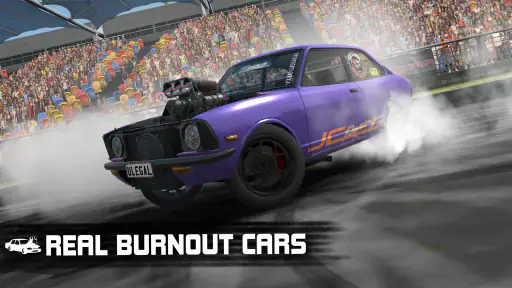
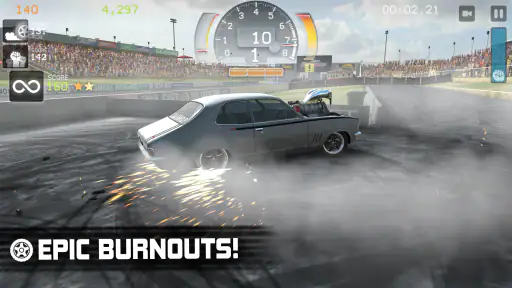
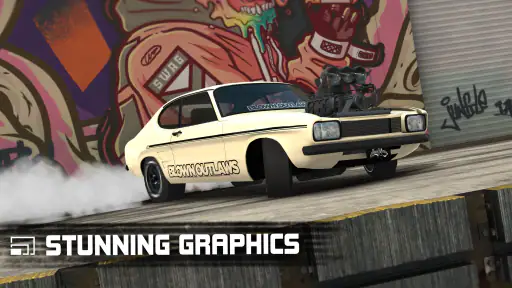
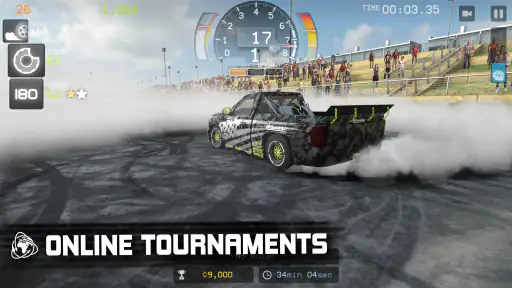
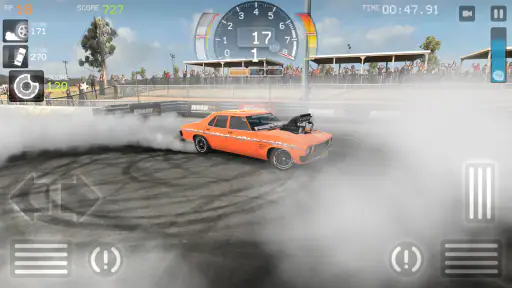
The presentation also supports that central idea. Smoke, engine noise, tire movement, and the visual rhythm of a car rotating through a corner all make small improvements feel meaningful. I do not need a long race to feel that I have achieved something. A cleaner transition between turns or a longer controlled slide can be enough to make a short session satisfying.
That is the strongest evidence in its favor: Torque Burnout makes the act of controlling a car more interesting than simply reaching the finish first. Many mobile racers are built around unlocking a faster machine and repeating familiar events. Here, the driver’s input remains important even when the car becomes more capable, because extra power can make mistakes more severe rather than automatically solving them.
Learning the controls without fighting the game
The first few sessions can feel awkward, especially if I approach it with habits learned from arcade racers that forgive rough steering. I get better results when I make smaller movements and treat the accelerator as something to manage, not something to hold down constantly. The most useful adjustment is to stop chasing a spectacular slide immediately. I first aim for a stable, modest angle, then gradually add more steering or power once the car is settled.
This is also where device handling matters. On a larger screen, I find it easier to keep my fingers away from the central view and make deliberate corrections. On a smaller phone, the same controls can feel crowded during a fast transition. That does not make the game unsuitable for phones, but it does mean that comfort and grip affect the experience more than they would in a simple tap-to-steer racer.
I recommend beginning with a short practice routine rather than spending every attempt chasing the biggest possible score. Try one run focused on smooth steering, another focused on throttle timing, and a third focused on linking the two. That approach reveals which part of the control scheme is causing trouble. It also prevents the common mistake of blaming the car when the real problem is an overly sudden input.
A useful everyday scenario is a ten-minute break between errands or study sessions. I can start a run quickly, make a few attempts, and stop without needing to remember a complicated story or a large map. The game works particularly well in that space because its core challenge is immediate. I do not have to wait for a long race to become interesting; the first corner already asks for a decision.
What keeps the driving engaging
The game’s replay value comes from refinement. I return because I know a run can be cleaner, more controlled, or more stylish than the previous one. That is a different motivation from collecting every item in a large racing game. Players who enjoy repeating a move until it feels natural will probably understand the appeal quickly.
There is also a useful tension between power and control. A more forceful car can make the action look impressive, but it can also expose poor timing. I have to adjust my approach instead of assuming that progression removes the challenge. For me, that trade-off gives the driving more character than a system where every upgrade simply makes the next event easier.
The game is free to download, which makes it easy to test without committing money at the start. It is rated for Everyone, so it is accessible as a family-friendly racing option in terms of age classification. Optional purchases range from $0.99 to $119.99 per item, and that wide spread is worth remembering before spending. I would treat the free version as the right starting point and decide only later whether any purchase genuinely improves my own play.
The audience response suggests that this focus has found a substantial mobile audience: it has passed 10 million installs, with an average rating of 4.1 from roughly 284 thousand ratings. Those figures do not replace personal testing, but they fit my impression that the game has a clear identity and has remained relevant beyond a small niche of racing enthusiasts.
The friction that can change your opinion
The same hands-on control that makes the game distinctive can become tiring. If I want a relaxed racing session, the constant need to manage steering and acceleration may feel like work. A traditional arcade racer is often better when I want to concentrate on speed, shortcuts, or spectacle without repeatedly correcting a slide.
It also takes patience to accept that visual drama is not the same as good control. A large cloud of smoke can look rewarding, but an unstable car is still unstable. New players may initially chase the most exaggerated movement and become frustrated when the car spins or loses its line. The better path is less glamorous at first: learn how much input produces a predictable response, then build style on top of consistency.
Another limitation is its narrow fantasy. If I want varied circuits, traffic, exploration, or a long-form career that constantly changes the type of challenge, this is not where I would begin. Its identity depends on repeating the central driving skill in different attempts. That can be deeply satisfying for the right player, but it can also make the game feel repetitive to someone who needs frequent changes of scenery or objective.
The purchase range deserves practical caution as well. A free entry point is helpful, but the presence of high-priced individual items means I would keep purchase controls protected on a shared device. I would not recommend spending simply because a difficult run feels frustrating. In this game, improvement often comes from learning the controls, so buying something should be a considered choice rather than a substitute for practice.
Performance expectations should also be realistic. The current version is 3.3.3 and requires Android 8.0 or later. That makes the compatibility requirement clear for Android users, although the way any game feels can still depend on the phone, screen size, and control comfort. I would install it on the device I actually plan to use, then judge responsiveness during several short runs rather than relying only on the first impression.
Who should install it
I would recommend it first to players who enjoy car control as a skill. If you like watching a replay and noticing that one steering correction was better than the last, you are likely to find a satisfying loop here. It also suits people who prefer compact sessions, because a short attempt can still contain a complete challenge and a clear lesson for the next try.
It is a good fit for someone moving beyond simple mobile racers. Instead of only asking which car is fastest, it asks whether I can use the available power without losing control. That makes it a useful change of pace for arcade fans who want more involvement but are not ready for a demanding full simulation.
I would be more cautious about recommending it to children or casual players who become frustrated quickly, even though the content rating is Everyone. The age classification describes suitability, not difficulty. The controls may require patience, and the game’s pleasure is delayed until the player accepts that early failures are part of learning.
I would also point simulation fans toward a different kind of racing game if they want detailed real-world driving behavior, long races, or a broad selection of conventional motorsport events. This is not trying to be a complete driving laboratory. Its strength lies in exaggerating the feeling of pushing a car into a dramatic maneuver, so realism in every area is not the right standard by which to judge it.
Small habits that improve the experience
My first practical tip is to separate practice goals. During one session, I focus on keeping the car stable; during another, I work on making the transition into a turn smoother. This prevents me from changing several inputs at once and gives me a better sense of what actually helped. It is a simple method, but it turns random retries into deliberate practice.
My second tip is to use the beginning of a run to settle the car rather than immediately forcing the biggest possible maneuver. A controlled entry gives me more room to respond, while an overly ambitious opening often leaves no time to recover. This matters especially when I am playing during a short break and want a satisfying attempt instead of several rushed restarts.
My third tip is to judge cars by how predictable they feel, not only by how powerful they appear. A vehicle that responds consistently can teach better habits than one that produces spectacular results only when everything is perfect. Once I understand the control rhythm, I can decide whether extra performance is actually helping my style.
Finally, I would avoid treating the game as background entertainment. It is playable in short bursts, but it rewards looking at the car’s movement and listening to the pace of the run. If I am distracted by messages or trying to play one-handed while walking, the experience loses much of its appeal. It is casual in session length, not necessarily casual in attention.
My final recommendation
After spending time with it, I see Torque Burnout as a focused racing game with a clear thesis: the most entertaining part of driving can be the moment when control is almost lost, provided I learn how to recover it. That idea gives the game a stronger identity than many free mobile racers, and it explains why short sessions can remain engaging.
Its weaknesses are equally clear. The learning curve can discourage impatient players, the repeated focus on controlled slides will not satisfy everyone, and the optional purchase range calls for restraint. I would not choose it for exploration, realistic motorsport, or effortless one-touch play.
For me, the recommendation is strongest for Android players who want a free, skill-based arcade racer and do not mind practicing the same core movement until it feels natural. Hooned Games has made something more specific than a generic car game, and that specificity is its advantage. If you want your driving decisions—not just your upgrades—to determine whether a run looks impressive, this is worth trying.
Pros
- Realistic drifting and tire-smoke effects make races feel exciting.
- A wide range of cars offers different handling styles to master.
- Upgrade options let you improve performance and customize each vehicle.
- Short events are convenient for quick gaming sessions.
- Offline play is useful when you have no internet connection.
Cons
- Frequent crashes can make progress feel repetitive over time.
- Some upgrades and vehicles require considerable grinding to unlock.
- Touch controls may feel imprecise during tight corners.
- The game can consume significant battery during longer sessions.
- Ads and in-app purchases may interrupt the overall experience.

- Category
- Racing
- Version
- 3.3.3