Tales RPG: AI Text Adventure
- 82.00
- 4.3
- Installs
- 10.00K
- Price
- Free

Screenshots

Analysis by Reviewed
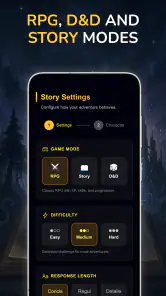
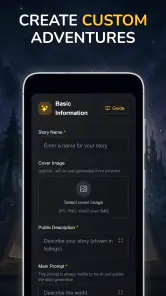
I went into Tales RPG: AI Text Adventure expecting a quick experiment with generated storytelling, but its real appeal is more personal than that. This free adventure game from DWStudio puts the emphasis on choosing a direction and seeing how the tale responds, rather than following a fixed route designed by a writer. That makes the first sessions feel unusually open: I am not simply selecting the next chapter from a menu, but helping decide what kind of hero and story I want to pursue.
That freedom is also the reason I would not recommend it blindly to everyone. A traditional role-playing game gives me a clear world, dependable rules and a visible sense of progress. Here, the pleasure comes from conversation with the adventure itself. When the responses fit my choices, the experience feels imaginative and surprisingly intimate. When they do not, the illusion can weaken quickly. After spending time with it, I see Tales RPG as a game with strong short-session appeal and a more complicated question behind it: will the novelty of AI-driven storytelling turn into a habit?
From the first experiment to a lasting routine
Why the opening sessions are so easy to enjoy
The strongest part of the first week is the low barrier to role-playing. I do not need to learn a large control scheme or understand a complicated combat interface before making meaningful decisions. The central idea is straightforward: choose a path, shape a hero and respond to the developing situation. That simplicity makes it suitable for a spare moment when I want to play something creative without committing to a long campaign.
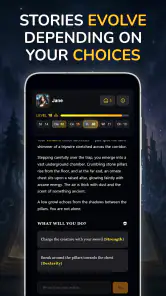
What makes the opening feel different from a conventional adventure game is the sense that my wording and priorities matter. Instead of treating every player as someone moving through the same sequence, the format invites me to decide whether my character is cautious, reckless, curious, diplomatic or selfish. I found that the best results came when I treated each choice as part of a character rather than merely hunting for the most powerful outcome.
That is an important distinction. If I approach the game like a puzzle with one correct answer, the generated nature of the adventure becomes frustrating. If I approach it as collaborative storytelling, small surprises become more valuable. A minor decision can change the tone of the next scene, and even a simple objective can become more entertaining when I give the hero a recognizable personality.
The game’s adventure focus also makes it easier to recommend to people who enjoy interactive fiction but do not want a large download or an elaborate action system. It is not trying to replace a console-scale role-playing game. Its strength is the immediate invitation to imagine, answer and continue.
A practical way to get better stories
One useful habit I developed was keeping a short mental brief for my character before starting a session. I decided what the hero wanted, what they would refuse to do and what kind of mood I wanted from the story. That small preparation made my choices more consistent, which in turn made the adventure feel less random. Players who simply tap through without a clear role may find the experience flatter than expected.
I also learned not to overcorrect every turn. If an unexpected event appeared, I usually accepted it and looked for a way to incorporate it instead of trying to force the story back onto my original plan. This is one of the less obvious trade-offs of an AI-led text adventure: flexibility is enjoyable only when I am willing to share control. The game works better when I treat surprises as prompts for improvisation, not mistakes that must immediately be erased.
Another practical use is a short evening story with a friend nearby. One person can suggest the hero’s attitude while the other chooses the immediate action, creating a lightweight shared role-playing session without preparing character sheets. It is not the same as a full tabletop game, but it can fill the gap when nobody has time to organize one.
Where the month-to-month question begins
The first week is carried by discovery. I want to see how the game reacts, test different kinds of heroes and find out whether a bold or careful approach produces a more satisfying tale. That curiosity is genuine, but curiosity has a limit. Once I understand the basic rhythm, the game needs to offer enough variation in situations and decisions to justify returning.
This is where Tales RPG faces a harder comparison with established adventure games. A conventional title may give me handcrafted scenes, memorable characters, carefully balanced progression and a defined ending. This game offers a more open narrative, but openness alone does not guarantee depth. The long-term value depends on whether I enjoy generating possibilities more than I need a tightly authored plot.
For me, the best recurring use is not an all-day campaign. It is a compact creative activity: start a new direction, play for a while, then stop before the story becomes repetitive. That makes it a good companion for commutes, waiting rooms or a quiet break, provided I am comfortable with text-led play. Someone looking for constant action, visual spectacle or a highly structured quest log will probably get more lasting value from a conventional adventure game.
What keeps a player coming back
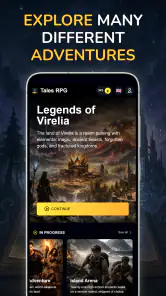
The strongest reason to return is the ability to change the premise rather than merely replay the same route. I can make a different kind of hero, adopt a different moral stance and see how that changes my relationship with the unfolding adventure. This is more meaningful than choosing a cosmetic variation because it changes how I read the situation and what kind of response I want to give.
Still, I would set realistic expectations. The game’s replay value comes from the act of imagining and steering, not from a guaranteed collection of perfectly distinct campaigns. If I need a clear reward ladder to motivate every session, the open format may not hold me for long. If I enjoy asking “what happens if I try this?” then the same flexibility can remain appealing well beyond the initial installation.
The maintenance burden is small, but attention is the real cost
From a device perspective, the entry requirements are modest. It runs on Android 6.0 or later, and the current release is version 97. The game is free to install, which makes trying it straightforward, although optional in-app purchases range from $1.49 to $34.99 per item. I would approach those purchases carefully: the core decision is not whether the game is expensive to begin, but whether spending more would genuinely improve a style of play I already enjoy.
The more important maintenance burden is mental rather than technical. A text adventure asks me to read, interpret and make a choice. That is lighter than managing a large role-playing game, but it is not passive entertainment. When I am tired and want something I can control with quick taps, this may feel like work. When I want a small imaginative challenge, the same requirement becomes the point.
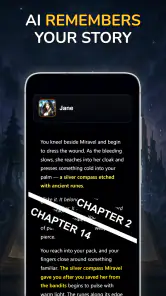
I would also avoid beginning a serious story when I know I will be interrupted every few minutes. The experience benefits from remembering the hero’s intention and the immediate context. Short sessions are fine, but constant interruptions can make the narrative feel disconnected. My preferred routine would be to play in focused bursts, then stop at a natural pause rather than repeatedly abandoning a scene halfway through.
The mature rating of 17+ matters as well. I would not treat this as a general children’s storytelling app, and parents should pay attention to that age classification before allowing younger players to use it. For adult players, the rating sets a clearer expectation that the tone may not be suitable for every audience or family setting.
Where fatigue can set in
The main source of fatigue is the same feature that creates the game’s excitement: generated flexibility. A handcrafted story usually has a strong editorial voice. Its characters behave according to established motives, and its twists are placed with deliberate timing. In an AI-driven format, the quality of a scene can depend more heavily on the direction I give and on how well the current thread holds together.
That means I sometimes have to do more imaginative repair work than I would in a traditional adventure. If a response feels slightly off, I can reinterpret it, steer the next decision or use the inconsistency as part of the fiction. This can be fun for players who enjoy improvisation, but it is a genuine weakness for anyone who wants polished, author-controlled storytelling at all times.
Another fatigue point is decision responsibility. In a normal game, the designers provide a clear framework of objectives and consequences. Here, I have more influence over the direction, but that also means I supply more of the energy. After several sessions of inventing motives and deciding how my hero should react, I may want a story that simply carries me forward.
The format can also lose impact if I use the same approach every time. Always choosing the safest response, always playing the noble hero or always trying to break the situation can make the experience predictable from my side. A useful way to extend its life is to impose a different role-playing rule for each new attempt, such as refusing violence, prioritizing curiosity or protecting an unreliable companion. These self-imposed constraints create variety without pretending the game is a completely different product.
How it compares with familiar alternatives
Compared with a fixed interactive novel, Tales RPG offers more room to improvise but less certainty that every scene will have the same polished dramatic shape. Compared with a traditional mobile role-playing game, it replaces much of the usual equipment management, map navigation and combat focus with decisions expressed through text. That makes it more accessible for readers and imagination-led players, while making it a weaker choice for people who play primarily for tactical systems or visual progression.
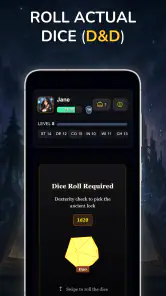
Compared with tabletop role-playing, it removes the need for a game master and a group, which is a major convenience. I can begin alone and follow an idea immediately. The trade-off is that it cannot reproduce the shared humor, negotiation and human spontaneity of friends around a table. I see it as a personal sketchbook for adventures, not a full substitute for a social campaign.
Its average rating is 4.3 from around 800 ratings, with dozens of written reviews, and the game has passed 10,000 installs. Those signs suggest that the concept has found an audience, but they do not answer the more personal question of fit. A player who values open-ended storytelling may find the appeal obvious, while someone who judges games by visual polish and fixed progression may reasonably prefer another adventure title.
Who should try it, and who should skip it
I would recommend it to adults who enjoy interactive fiction, improvising character personalities and testing unusual choices. It is especially appealing if I want a game that can become a different kind of story depending on my attitude rather than one that asks me to repeat a predetermined sequence. Writers, tabletop players between campaigns and readers who like “what if?” scenarios are natural candidates.
I would skip it if I need a strong visual presentation, reliable mechanical balance or a carefully authored plot with a known destination. I would also avoid it for younger players because of the 17+ content rating. The free entry point makes experimentation easy, but free does not mean every player will find the format satisfying, and the available purchase range is worth considering before treating it as a long-term hobby.
My long-term verdict
After the novelty fades, Tales RPG earns some space on my phone, but not as a replacement for every other adventure game. Its lasting value comes from the way it turns a short break into a small act of authorship. I can arrive with a character idea, make a few meaningful decisions and leave with the feeling that I helped create something rather than merely consumed it.
That value is strongest when I use it in moderation. I would keep several different character concepts available, play in focused sessions and accept that not every turn will land perfectly. I would also avoid spending on extras until I knew that the underlying storytelling loop had become enjoyable rather than merely novel.
DWStudio has built a distinctive adventure experience around choice and AI-assisted text. It is free to try, supports older Android devices through Android 6.0 and has enough flexibility to produce memorable moments. Its limitation is equally clear: the player must bring patience, imagination and a willingness to guide the story when it becomes uneven.
My final recommendation is therefore positive but specific. Choose Tales RPG if you want an interactive storytelling tool that feels different each time you approach it. Do not choose it expecting the certainty of a handcrafted role-playing epic. For the right player, its recurring habit is not grinding levels or collecting gear; it is returning with a new idea and seeing how far the next tale can go.
Pros
- AI-generated stories offer a different adventure on every playthrough.
- Text-based gameplay works well on older phones and uses minimal storage.
- You can shape the plot through creative
- free-form choices.
- Great for fans of tabletop RPGs and interactive fiction.
- Short sessions make it easy to play during spare moments.
Cons
- Story quality can vary significantly between different adventures.
- AI responses may occasionally be repetitive
- vague
- or inconsistent.
- The text-heavy format may not appeal to players seeking visuals.
- Progress can feel slow when the AI takes too long to advance scenes.
- Some features or content may require in-app purchases or subscriptions.

- Category
- Adventure
- Version
- 97