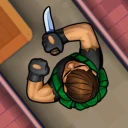
Tackle Battle:Send Them Flying
- 25.00
- 4.2
- Installs
- 1.00M
- Price
- Free
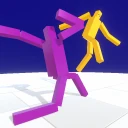
Screenshots
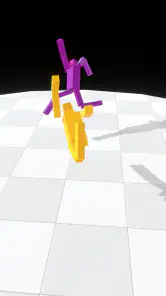
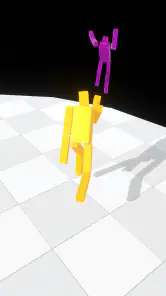
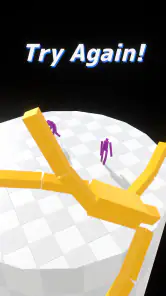
Analysis by Reviewed
I picked up Tackle Battle: Send Them Flying for the kind of short break when I want to do something active without learning a complicated ruleset. Its central idea is easy to grasp: move into an opponent, make contact, and try to send them tumbling. That direct action gives each attempt an immediate purpose, and I can see why a quick round might turn into another try. It is an action game from KAYAC Inc., available free, and its Teen age rating is worth keeping in mind if you are choosing something for a younger player.
What the first action asks of you
The basic appeal is how quickly the game puts the decision in front of you: move toward an opponent, choose when to commit, and see whether the collision works in your favor. There is no need to spend a long time learning a complicated set of rules before the central interaction makes sense. I’d still avoid treating every opening moment as a signal to rush. Taking a beat to notice where an opponent is and how much space is available makes the approach feel more considered.
That makes the first few attempts useful even when they do not go perfectly. A missed tackle gives you something concrete to reconsider—your timing or the direction of your approach—rather than leaving you wondering what the game wanted. I find that kind of clear cause and effect more inviting than an action game that throws several controls and objectives at me at once. The trade-off is just as clear: if you enjoy learning a deep move set, this straightforward start may feel too narrow.
The first tackle sets the pace
The appeal is less about mastering a long list of moves and more about judging when and where to commit. I’d treat the first few turns as practice in reading the space around the player rather than charging at every target. A tackle that connects is satisfying; one that misses makes the timing feel like the main thing to adjust. That simple feedback loop—act, see the result, try again—is the game’s strongest hook.
It suits a spare moment while waiting for a ride or taking a short break, especially if you prefer games that get to the action quickly. If you want a deep sports simulation, detailed team management, or a story to follow, this is not the right pick. Compared with many action games built around combos or lengthy progression, its appeal is the uncomplicated physical gag of a well-timed hit. The trade-off is that players who need a wide range of tactics may find the central interaction repetitive.
Gameplay That Packs a Punch
Picture this: you’re on the field, the crowd is roaring, and your mission is to tackle opponents and send them flying across the pitch. That’s Tackle Battle: Send Them Flying in a nutshell! The game offers a fun and competitive environment where you control your player with intuitive touch controls. I found myself getting lost in the game’s rhythm, trying to perfect my timing to achieve those spectacular tackles.
Reading the rhythm, not just rushing in
For me, the most useful adjustment is to treat each approach as a small decision rather than a reflex test. I watch the opponent’s movement, leave myself a moment to judge the available space, and then commit. It is a modest change, but it makes attempts easier to assess: if contact does not happen, I can think about whether I moved too early or chose a poor line instead of simply repeating the same action immediately.
More From Our News Desk

Clash of Clans Is Won Between the Battles

Android Auto Makes the Case for Quieter Car Software

MobiOffice: Transforming Mobile Productivity with Seamless Integration

EA SPORTS FC™ Mobile Soccer: Redefining Mobile Sports Gaming

How Microsoft OneDrive Became a Mobile Productivity Giant

How Google Translate Breaks Language Barriers Effortlessly
This is also a good way to keep a short session satisfying. I might give myself one narrow aim, such as making a more deliberate approach, rather than expecting every attempt to feel different. A focused goal gives repetition a purpose without pretending the game has a broad strategic layer. If you are playing in a noisy place or only half paying attention, the quick action may still be approachable, but you will get more out of it when you can watch what is happening on screen.
A Visual Treat
One of the first things that caught my eye was the vibrant graphics. The developers have done a stellar job in making the game visually appealing with bright, colorful environments and smooth animations. Each tackle feels satisfying, thanks to the detailed animations that make every successful hit look and feel impactful.
The animation matters because the main reward is immediate feedback. When a tackle lands, the movement gives the result a physical punch; when it does not, the moment is easy to read as a failed attempt rather than an obscure change in score or status. That clarity helps the central action stay legible while things are moving. I would not choose it for elaborate visual world-building, but its colorful presentation suits the playful collision at the center of the experience.
Levels and Challenges
The game isn’t just about mindless tackling; it requires strategy and precision. As you progress, the levels get more challenging, with tougher opponents and trickier terrains. I personally enjoyed the variety in the levels, which kept the gameplay fresh and engaging. There’s also a leaderboard feature that adds a competitive edge, motivating me to constantly improve my score and rank higher than my friends.
That competitive layer works best as an optional nudge. If you like comparing results, a leaderboard can give a familiar challenge an extra reason to revisit; if you do not care about ranking, the basic satisfaction of a better-timed tackle can still be enough. I would not make a leaderboard the sole reason to install it, though. The core enjoyment comes from the moment-to-moment attempt, so players who find score chasing stressful can simply focus on their own improvement.
For a better result, I’d watch the opponent’s approach for a beat before moving in, instead of swiping or steering as soon as the action begins. That small pause helps make the next attempt feel deliberate rather than random. It also gives the game a natural reset point: after a collision, I can quickly decide whether I want another go at improving my approach or whether I’ve had enough for now. This is a handy fit for short sessions, though anyone hoping to settle in for a long, varied campaign may prefer a broader action game.
Sound Design
No game is complete without an immersive sound design, and this app delivers on that front too. The sound of each tackle, the background music, and the crowd’s cheers all combine to create an engaging audio experience that enhances the overall gameplay.
The audio is most useful as part of the impact, not as a reason to keep playing by itself. When I want to focus on timing, I pay more attention to the movement and contact on screen; the sound adds atmosphere around those moments. If you usually play mobile games in a quiet shared space, you can still follow the action visually, while the audio is a welcome extra when you do have the volume on. Either way, the game’s main feedback comes from seeing what the tackle did.
Who will enjoy the loop
The game has a 4.2 average from around 1,400 ratings, with over a million installs, so there is a sizeable audience for its straightforward premise. It launched on February 4, 2025, and version 027 is listed for Android 5.1 and newer. Those details make it easy to check basic compatibility before installing, but I’d still think about the play style: the lightweight tackle-and-retry rhythm is best for someone who enjoys chasing a cleaner attempt, not someone looking for elaborate controls or a realistic take on football.
One useful way to approach it is to set a tiny goal for a session—make a more carefully timed tackle, for example—instead of expecting each round to offer a completely new challenge. That keeps the repetition purposeful. The competitive element can add motivation if comparing performance is part of the fun, but it may matter less if you prefer private, unhurried play. I’d choose this over a conventional sports game when I want an immediate burst of physical comedy; I’d choose the conventional option when teams, rules, and match strategy are the point.
Where it fits in an everyday routine
Imagine you have a few minutes before meeting someone and want something more active than scrolling, but not a game that asks you to remember a story or plan a long match. This is the sort of gap where I’d open it: make a few attempts, pay attention to whether my timing is improving, then put it away when I need to go. It has a compact goal that is easy to return to, and the action does not depend on setting aside a long stretch of uninterrupted attention.
It is less suited to a commute if you cannot reliably look at the screen or control your device comfortably. The main interaction depends on judging movement and making a deliberate approach, so playing while distracted can turn a readable challenge into guesswork. I’d also avoid treating it as background entertainment during another task; the quick feedback is more rewarding when you actually notice what happened. That distinction helps set expectations: brief play is a strength, but attention still matters.
Choosing it over another action game
Compared with action games centered on combos, aiming, or a large collection of abilities, this one keeps its focus on contact and timing. That narrower design is a benefit when I want a physical, comic payoff without studying a control scheme. It is also the reason I would not recommend it as a substitute for a fighting game with layered move choices or an action adventure with exploration. Those alternatives offer more to learn and vary; this game offers a more immediate tackle-and-retry rhythm.
It sits at an unusual angle to conventional sports games, too. A realistic football title is a better fit if you want to manage a team, follow match rules, or make decisions across a full contest. Here, I come for the individual collision and the satisfaction of judging an approach. The comparison is not about which style is better overall; it is about what you want from a short session. If the joke and impact of sending an opponent tumbling are the draw, the simplified focus is exactly the point.
Small choices that make attempts more useful
One practical habit is to change only one thing between attempts. If I rush in and miss, I might wait a moment longer on the next try rather than changing my timing, direction, and pace all at once. That makes the result easier to interpret and gives a repeated attempt a small learning purpose. It is a simple approach, but it is more satisfying than treating every failure as a cue to move faster.
I would also keep sessions modest when the action starts to feel repetitive. A short stopping point protects the game’s strongest quality—the quick impact of a well-judged tackle—from wearing thin through overplaying. If I return later, the same central interaction can feel fresh enough to try again. Players who expect each session to unlock a radically different style of play may not find that rhythm rewarding, and should look for an action game with more varied systems instead.
What to expect before downloading
The practical decision is straightforward: it is free to try, and the Teen rating is relevant if you are choosing a game for a younger person. The Android version is listed for devices running Android 5.1 or newer, so checking that requirement first is a sensible step. KAYAC Inc. is the developer, and the current version is 027. These details help with the install decision, while the more important question remains whether the central action sounds enjoyable to you.
For parents, I would consider both the age guidance and the child’s preferences rather than assuming that a colorful presentation means it will suit everyone. For a player who enjoys quick physical comedy and repeated attempts, the idea is easy to understand. For someone who prefers calm puzzles, realistic sports, or a game with a story to follow, there are better-fitting choices. The point is not to make it a one-size-fits-all recommendation: its appeal depends on enjoying a focused action loop.
In conclusion, whether you’re a casual gamer or someone looking for a new competitive challenge, Tackle Battle: Send Them Flying is worth a try. It’s easy to pick up, hard to put down, and offers endless hours of entertainment. So, if you’re ready to take your tackling skills to the next level, dive into the action and send those opponents flying!
Before you install
If you’re deciding whether to try it, the key question is not whether the premise is clear—it is—but whether repeating a focused tackle challenge sounds fun to you. Free access makes it a low-commitment experiment, and the stated Teen rating helps families make an age-appropriate choice. I’d skip it if you dislike repeated attempts, prefer quieter puzzle play, or want a sports game with authentic match structure. For everyone else, it works best as a small, self-contained diversion: play while you have a few minutes, stop when the loop stops feeling fresh, and return when the urge to land a cleaner tackle comes back.
Tackle Battle:Send Them Flying Frequently Asked Questions
Is Tackle Battle: Send Them Flying suitable for younger players?
Tackle Battle: Send Them Flying is an action game with a Teen age rating, so it may be more appropriate for teenagers than for younger children. Parents and guardians should consider that rating when deciding whether to download it for a child. The game’s central idea is tackling opponents and knocking them over, which gives its action gameplay a competitive, physical theme.
What is Tackle Battle: Send Them Flying and what are its main features?
Tackle Battle: Send Them Flying is an action-packed mobile game available on both Android and iOS platforms. It features exciting gameplay where players tackle opponents to send them flying off the arena. The game offers various levels, power-ups, and customization options, allowing players to enhance their tackling skills and compete with others globally.
Is Tackle Battle: Send Them Flying free to play, or does it require in-app purchases?
Tackle Battle: Send Them Flying is free to download and play, offering a thrilling experience without any initial cost. However, the game does include optional in-app purchases. These purchases can enhance gameplay by unlocking special items, power-ups, and cosmetic upgrades, providing additional advantages and customization options for players who choose to invest in them.
What are the system requirements for Tackle Battle: Send Them Flying?
For Android users, Tackle Battle: Send Them Flying requires Android version 5.0 or higher and a minimum of 2GB RAM for optimal performance. iOS users need to have iOS 10.0 or later installed on their devices. The game is designed to run smoothly on most modern smartphones and tablets, ensuring a seamless gaming experience.
How can I improve my skills in Tackle Battle: Send Them Flying?
Improving your skills in Tackle Battle: Send Them Flying involves practicing regularly and understanding the mechanics of tackling and timing. Players should focus on mastering the controls, learning the strengths and weaknesses of different opponents, and utilizing power-ups effectively. Participating in community forums and watching experienced players can also provide valuable tips and strategies.
Pros
- Engaging multiplayer battles.
- Vibrant and colorful graphics.
- Smooth and responsive controls.
- Variety of characters to choose from.
- Frequent updates with new features.
Cons
- Requires constant internet connection.
- In-app purchases can be expensive.
- Occasional in-game ads.
- High battery consumption.
- May lag on older devices.
- Category
- Action
- Version
- 027