Swordigo
- 15.60K
- 4.7
- Installs
- 10.00M
- Price
- Free

Screenshots
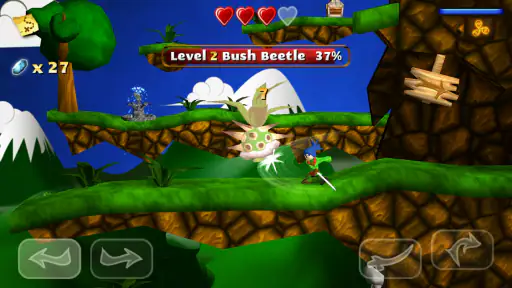
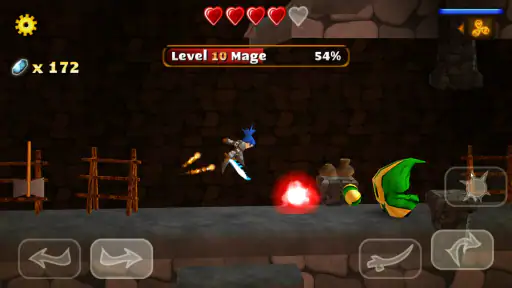
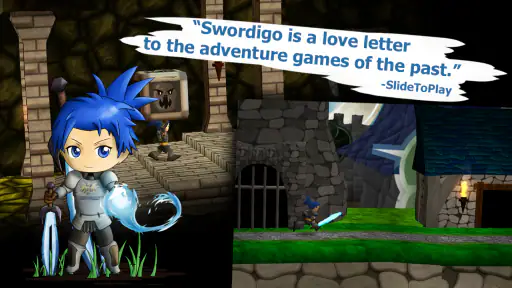
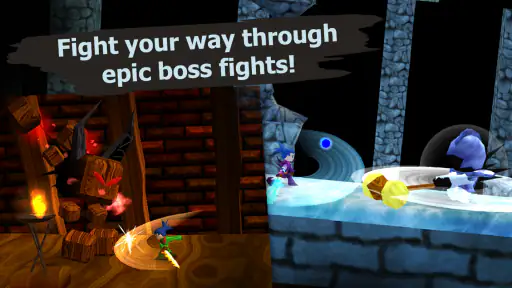
Analysis by Reviewed
I usually know within the first few minutes whether a platform adventure is going to respect my time. Swordigo made a good first impression because it gets to the important part quickly: movement, jumping, exploration, and sword swings. It is a free adventure game from Touch Foo, presented as a compact mobile journey rather than a complicated service with layers of menus around it.
The basic idea is easy to understand, but the experience is more involved than the short store wording suggests. You guide a small hero through connected areas, deal with enemies, look for routes forward, and improve your ability to survive as the journey becomes less forgiving. I found it most enjoyable when I treated it as a game of careful progress instead of rushing from one screen to the next.
What the first hour feels like
The opening is friendly to newcomers because the controls and goals become meaningful through play. You do not need to study a long rulebook before making progress. A short session can be enough to understand the rhythm: move into danger, create space, attack at the right moment, and use jumping as more than a way to climb.
That simplicity is also the reason the game works well on a phone. A touchscreen is not as precise as a physical controller, so a mobile action platformer has to keep its main actions readable. Swordigo generally does that well. I could focus on timing and positioning instead of trying to remember a large collection of commands.
Still, this is not a completely effortless game. Enemies and environmental obstacles gradually ask for better control. A jump that seemed safe during the opening can become risky when an enemy is waiting on the other side. The most useful early lesson is to stop treating every encounter as a race. Pause, observe the space, then commit.
Its adventure category matters here. This is not simply an endless runner where the screen constantly pushes you forward, and it is not a pure arcade fighting game built around repeating one short challenge. Exploration gives the action a sense of direction. I often remembered a blocked or awkward-looking route and returned to it later after becoming more capable.
Starting without overthinking the setup
Because the game is free, the first decision is straightforward: install it, open it, and begin playing. It is suitable for Everyone, which makes it a reasonable choice for a shared family device or for a younger player who wants an adventure rather than something frightening or aggressive in tone. I would still expect an adult to decide whether the sword-based action fits the particular child, but the presentation is approachable.
The current version is 1.4.12, and the game supports devices running Android 7.0 or later. That makes checking the operating system the only practical compatibility step I would handle before installing. On a supported phone or tablet, I would begin with a short session rather than trying to finish a large portion immediately. The controls feel easier to judge once your hands have settled into their positions.
There are in-app purchases priced from $1.49 to $1.99 per item. The game itself remains free to start, but I would keep that purchase detail in mind if a child is using the device. The sensible approach is to play first, decide whether the full experience suits you, and avoid assuming that every optional purchase is necessary for the basic adventure.
One practical tip helped me more than I expected: play with the phone held steadily and avoid starting your first serious attempt while walking, commuting, or multitasking. Touch controls reward consistency. If your thumb keeps landing slightly differently because you are holding the device awkwardly, mistakes can feel like a problem with the game when they are really a problem with grip.
The first meaningful success
Your first satisfying success is not merely defeating an enemy. It is the moment you pass a section that initially looks uncomfortable by combining movement and attack instead of pressing buttons randomly. I recommend making that your first goal. Learn how far the character moves, how much room a sword swing gives you, and how a jump changes your position relative to a threat.
When I reached that point, the game became much clearer. A sword attack is not a magic answer to every problem. Swinging too early can leave you badly placed, while jumping without checking the landing area can trade one danger for another. The useful habit is to enter an encounter with enough space to react. That small adjustment makes the early areas feel less chaotic.
Exploration rewards patience in a different way. If a path appears too high, too distant, or otherwise inconvenient, it is tempting to assume you have made a mistake. I found it better to continue along the obvious route and remember the unusual location. This turns confusion into a simple mental checklist: progress first, revisit suspicious paths when the game gives you a better reason to do so.
That workflow is especially helpful for players who dislike wandering. Instead of searching every corner immediately, I move forward until I reach a clear obstacle, then keep the obstacle in mind. It reduces backtracking while preserving the pleasure of discovering that an earlier problem has become manageable.
Another small but important tip is to separate combat practice from progress attempts. If you are repeatedly failing in one area, spend a few minutes learning the timing of the enemy rather than trying to force the entire section in one perfect run. Once the attack pattern feels familiar, the route usually becomes less intimidating. This is a better use of short mobile sessions than restarting in frustration.
Where new players can become confused
The biggest source of confusion is the difference between “I can see a place” and “I can reach it right now.” Platform adventures often show you interesting spaces before you have a comfortable way to deal with them, and Swordigo benefits from that sense of unfinished business. The drawback is that a first-time player may waste time repeatedly testing the same route.
My advice is to treat an awkward route as a note for later, not as a demand to solve it immediately. Try a few sensible approaches, then move on if the game is clearly steering you elsewhere. Returning with more confidence is part of the adventure’s structure, not a sign that you failed to understand the level.
Combat can cause a similar misunderstanding. If an enemy defeats you quickly, the answer is not always to attack faster. Sometimes the safer solution is to change the distance, wait for a better opening, or use the surrounding platforming space. I became more consistent once I stopped standing directly beside threats and started thinking about where I wanted to be after each swing.
Touchscreen controls also deserve an honest warning. They are convenient, but they cannot provide the tactile certainty of buttons. Players who normally enjoy console platformers may need a short adjustment period. Fast reactions are less comfortable when a thumb covers part of the screen or when the device is small. I found the game more enjoyable when I accepted that deliberate movement was part of the mobile format.
There is also a difference between a game that is difficult and a game that is unclear. Swordigo occasionally asks you to experiment, and that can feel vague if you expect every objective to be announced. I would not recommend it to someone who wants a constant stream of explicit instructions. It is better suited to a player who enjoys noticing environmental clues and remembering places that may matter later.
Progress can feel slower if you approach every room as a completionist. Searching thoroughly has value, but it can also turn a relaxed adventure into a repeated hunt for one overlooked corner. My preferred method is to make forward progress first, then explore more deeply when I am already comfortable with the local route. That keeps the game from becoming a chore.
How the journey develops
Once the opening controls feel natural, the game’s appeal shifts from learning the basics to building a personal routine. I started checking the shape of a room before moving, looking for safe landing points, and deciding whether an enemy was better handled immediately or avoided until I had more space. These are small decisions, but they give the adventure its character.
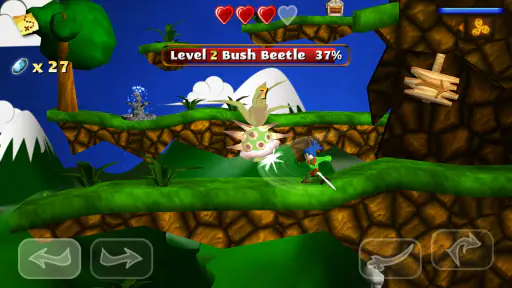
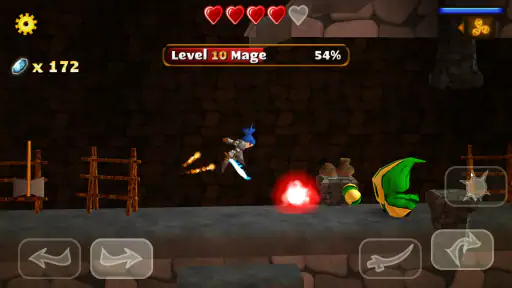
The sword is central, yet the strongest moments come from combining combat with platforming. A narrow ledge changes how you attack. A gap changes when you jump. A crowded area makes retreat just as important as offense. That combination keeps the action from becoming a button-mashing exercise and gives ordinary movement a tactical purpose.
I also like that the game supports different session lengths. You can play for a few minutes to clear a small obstacle or settle in for a longer exploration run. A realistic everyday use case is a quiet break between tasks: rather than opening a game that requires a long match or a team of other players, you can return to this adventure and work on one route or combat problem at your own pace.
That said, players looking for a modern social experience should look elsewhere. Swordigo is a solitary adventure, and its strengths are found in personal progress, exploration, and learning the game’s rhythm. It is not the right choice if your main reason for gaming is competition, cooperation with friends, constant events, or a large online community.
Compared with endless runners, it gives you more control over the pace and more reason to remember the world. Compared with large role-playing games, it is easier to pick up and less demanding of your attention. Compared with dedicated console platformers, the touchscreen controls are a compromise. I think that trade-off is worthwhile for someone who wants this kind of journey on a phone, but a controller-based alternative is preferable for players who care most about precision.
Making progress without turning it into homework
I recommend setting small goals. “Reach the next safe area,” “learn this enemy,” or “check that earlier route” is more useful than deciding to complete a huge portion of the adventure in one sitting. Small goals also make failure less discouraging because each attempt can teach you something specific.
If you are stuck, change one variable at a time. Try approaching from a different distance, alter the timing of your jump, or explore a nearby route before repeating the same attack. This sounds obvious, but it prevents the common mobile-game habit of tapping harder and hoping the result changes. Swordigo responds better to observation than to frantic input.
For younger players, I would frame it as an exploration game with sword combat and encourage them to explain what they are trying before stepping in. That makes the game a useful problem-solving activity instead of an endless sequence of retries. For adults, the same approach helps keep a short evening session relaxing rather than turning a missed jump into an argument with the screen.
Storage and device comfort are also worth considering in everyday use, even though they are not the exciting part of the review. Keep the screen clean, hold the device where both movement and attack remain easy to reach, and avoid playing in a position that makes your hands tense. These details have a noticeable effect on platforming accuracy.
The game’s popularity suggests that its straightforward design has reached a broad audience: it has passed ten million installs, with a 4.7 average from around 840 thousand ratings and roughly 16 thousand written reviews. I see those figures as evidence of lasting interest, not a guarantee that every player will enjoy the controls. The important question is whether you want a focused solo adventure rather than a highly guided or social game.
Who should play it, and who should skip it
I would recommend it to someone who wants a free adventure platformer that can be learned quickly but still rewards better timing. It is a particularly good fit for players who enjoy revisiting places, solving movement problems through experimentation, and making progress without a complicated character-building screen in the way.
It is also a sensible pick for a first-time mobile action player. The early tasks are understandable, and the game does not require you to know a long-running series before you can appreciate what is happening. If a friend asked me for a simple game with more substance than a quick arcade loop, this is one I would suggest.
I would skip it if you strongly dislike touchscreen controls, have no patience for revisiting confusing routes, or want a story delivered through constant dialogue and cinematic scenes. I would also choose a different game if online multiplayer, competitive rankings, or a large stream of new content is essential. Swordigo’s appeal comes from its contained adventure, not from being an always-changing platform.
The purchase model is another personal consideration. Since the game is free with optional items between $1.49 and $1.99, it is easy to try without committing upfront. Families should still manage purchases on the device, while adults can simply decide whether the optional spending adds enough value for their own play style. I would not install it expecting a premium console-sized production; I would install it expecting a focused mobile adventure.
My recommendation after playing
After spending time with it, I think the best way to approach Swordigo is with modest expectations and a willingness to learn its touch controls. It does not need a complicated pitch. The pleasure comes from turning an uncertain jump into a reliable one, surviving an encounter that previously stopped you, and recognizing that a strange-looking route may matter later.
Touch Foo has built a game that remains approachable while leaving room for genuine player improvement. Its age does not automatically make it the right choice for everyone, especially if you expect contemporary social features or highly precise controller input. But for a free adventure game on a compatible Android device, it offers a convincing reason to keep returning.
My practical starting plan would be simple: install it, play the opening without rushing, practice movement and sword timing separately, and mark difficult routes mentally instead of forcing them. Once you achieve that first clean passage through a troublesome section, the rest of the experience makes much more sense. If you enjoy patient exploration more than instant rewards, this is an easy game to give a fair chance.
Pros
- Smooth platforming controls work well on touchscreen devices.
- Exploration rewards curiosity with hidden areas and useful upgrades.
- Combat is simple to learn but becomes more challenging over time.
- Offline play makes it convenient for travel or limited connections.
- The colorful fantasy world has a charming
- classic adventure-game feel.
Cons
- Some sections require repeated attempts to learn enemy patterns.
- The story is fairly basic compared with modern action-adventure games.
- Touch controls can feel imprecise during fast platforming sequences.
- Progression may seem repetitive after several hours of play.
- Older devices may show occasional stuttering or longer loading times.

- Category
- Adventure
- Version
- 1.4.12