Spinner Evolution
- 64.00
- 4.5
- Installs
- 100.00K
- Price
- Free

Screenshots
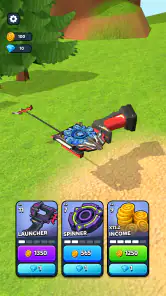
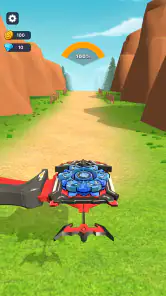
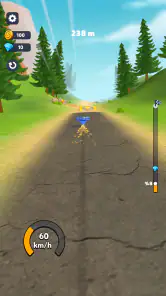
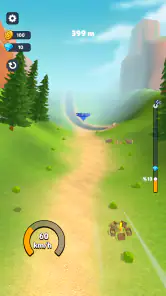
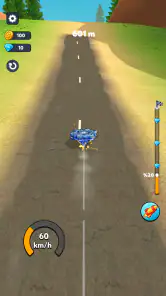
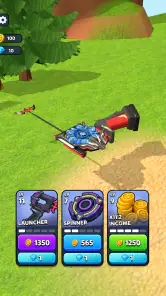
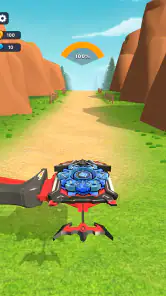
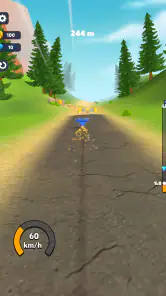
Analysis by Reviewed
I like racing games that give me something to do in the few spare minutes between other tasks, but I’m wary of ones that feel busy without offering much control. Spinner Evolution sits in an unusual spot: it is a racing game built around spinner-based progression rather than the familiar business of steering a car around a track. That makes its appeal less about mastering a conventional course and more about seeing how each action carries into the next attempt.
In my experience, the best way to approach it is as a compact loop: start an action, watch for its result, collect whatever progress that run provides, then decide whether to go again. The idea is easy to grasp, but the feel of that loop matters more than the short store summary suggests. I’d recommend it to players who enjoy incremental growth and quick bursts of play, while anyone looking for detailed driving physics or direct wheel-to-wheel competition should set expectations accordingly.
How the spinner turns a first action into a race
A different starting point from a typical racer
Most racing games ask me to focus immediately on a vehicle, a route, and the timing of turns. Spinner Evolution takes a more abstract route. Its central identity is reflected in its name: a spinner is the point of interaction, and evolution is the promise that repeated play can move things forward. That shift changes the first question from “How do I take this corner?” to “What does this action earn, and how can I use the result?”
That distinction is useful when choosing whether to try it. If I want a quick, low-commitment game where the central idea is apparent without learning a long list of racing techniques, this setup is approachable. If I want to practise braking points, compare lap lines, or feel a car respond to careful steering, a more traditional racer is a better fit. Spinner Evolution is racing-themed, but its hook is progression through spinner play rather than simulation.
What the first session is good for
I’d use the opening session to understand the relationship between an action and its result before worrying about optimizing anything. Pay attention to what changes after a run, what appears to carry forward, and what the game invites you to do next. That simple habit helps distinguish meaningful progress from animation or presentation, and it gives you a better sense of whether the core loop is satisfying to you.
A practical tip is to avoid treating every early action as a race against a clock. In games built around repeated progress, the useful question is often whether an attempt improves the next one, not whether that individual attempt feels dramatic. If the feedback makes the outcome clear, a short session can still feel complete; if you prefer every race to have a distinct course and a clear finishing contest, the abstract structure may feel thin.
Spinner Evolution is developed by HyperMonk Games and is listed as a free game. That lowers the barrier to trying its basic rhythm, though in-app purchases are available, with items ranging from $1.99 to $49.99. I’d decide whether the loop itself is enjoyable before spending anything. A purchase is hard to judge in isolation when the main question is whether repeating the spinner-and-progress cycle holds your attention.
Reading the feedback and deciding when to continue
The rhythm between action and result
The satisfying part of a progression loop is the connection between what I do and what changes afterward. Spinner Evolution’s premise puts that connection front and center: an action should lead to feedback, and that feedback should give me a reason to make another attempt. When the result is easy to read, the game can work well as a small break because I don’t need to reconstruct a complicated strategy after putting my phone down.
There is a trade-off, though. Abstract racing can make progress feel more like a sequence of upgrades or outcomes than a test of driving skill. That is not automatically a weakness; it is a different kind of reward. But players who need tactile steering, demanding tracks, or close competition may find that spinner-led feedback does not provide the same sense of personal mastery as a racer where every turn depends on their timing.
How I’d keep short play sessions useful
For an everyday use case, imagine waiting for a friend who is running late. I would open the game, make a few actions, check what has changed, and stop when the next decision is clear. This works best when I treat each visit as a small check-in rather than expecting a full racing event. It also gives me a natural stopping point: if the next attempt feels like a meaningful step, I can continue; if it feels like repetition without a new decision, I can close the game without feeling I have abandoned a long race.
Another useful approach is to notice whether the reward changes how you play. If a result encourages a different choice or makes a future attempt feel more promising, the loop has some texture. If rewards merely accumulate without affecting your decisions, the game may become more routine over time. I would use that as my personal test for whether to keep returning: not simply “Did something go up?” but “Did that change what I want to try next?”
The game’s average rating is 4.5 from around 3,000 ratings, and it has over 100,000 installs. Those figures suggest that it has found an audience, but they cannot tell me whether its particular style suits someone who prefers hands-on driving. I’d treat them as context, then judge the game by the feel of its own repeated actions rather than by expecting the conventions of a track racer.
What makes the reward worth another attempt
In a good session, reward is not just a stopping point; it creates a reason to restart. Spinner Evolution’s core appeal depends on that handoff. I complete an action, see a result, and decide whether the next round offers enough promise to continue. The loop can be compelling when progress feels legible and each return has a clear purpose. It is less compelling if I find myself repeating the same action simply because the game presents another opportunity to do so.
That makes patience a personal factor. Players who enjoy gradual improvement may be happy to let small gains add up. Players who want a dramatic finish in every session may prefer a racing game with discrete events, visible opponents, or a clear race result. I would not recommend choosing Spinner Evolution as a substitute for a competitive racer; I’d choose it when I want a lighter progression game with a racing identity.
It is also worth separating “free to start” from “free of purchase prompts or optional spending.” The game is free, but its in-app purchase range runs from $1.99 to $49.99 per item. I’d keep an eye on the purchase flow, especially if handing the device to a younger player, and decide on a spending limit beforehand. The content rating is Everyone, which makes the age classification broad, but it does not change the practical value of setting a clear purchase boundary.
When a reset works—and when it feels like friction
Returning without losing the thread
A useful mobile game lets me leave and come back without turning every interruption into a penalty. Spinner Evolution’s short-action premise is naturally suited to that pattern: I can think in small attempts rather than reserving a long block of time for a full race. For someone who plays in brief gaps during the day, that can be more convenient than a racer that expects sustained attention from the starting line to the finish.
Still, repeated play can become its own friction. If the most engaging part is the first look at a result, later sessions need to give me a fresh reason to act. I’d pay attention to whether the game keeps its progress loop readable as I return, and whether I can tell what my next useful step is. That is more helpful than chasing every available action: a clear goal makes a reset feel deliberate, while an unclear goal can make it feel like busywork.
One small but important workflow tip is to end a session after identifying the next thing you want to test, rather than stopping in the middle of a vague grind. That makes the next visit easier to begin: I return with a question, take an action, and see whether the outcome answers it. It is a simple way to preserve a sense of agency in a game whose appeal depends on repeating a central mechanic.
Who should choose another kind of racer
I would skip Spinner Evolution if my main reason for downloading a racing game is realistic handling, varied track layouts, or head-to-head driving. Those expectations point toward conventional arcade or simulation racers, where the route and vehicle control are the main event. Spinner Evolution’s distinctive focus is the spinner-led progression loop, so comparing it with a track racer on steering depth alone misses what it is trying to do—but it also does not make it a replacement for that experience.
I would also be cautious if I know I lose interest when repeated actions offer only small, incremental changes. The game’s premise asks the player to find satisfaction in action, feedback, reward, and another attempt. If that pattern sounds relaxing, it may suit a short daily routine. If it sounds like a chore, a racer with varied stages or more immediate competitive pressure is likely a better use of your time.
Compatibility and a measured recommendation
The current version is 0.3.0, and the listed minimum operating system is 7.1. I’d check that your device meets the requirement before downloading, especially if you are using an older phone or tablet. The game has been released on Jul 6, 2026, so its version number also gives useful context: it is an early-stage release, and I would approach it as a game whose current experience may continue to develop rather than assuming it has the breadth of a long-established racing series.
My verdict is that Spinner Evolution is worth a try if you want a compact game whose satisfaction comes from seeing one action lead into another. Its strongest case is convenience: a brief session can have a simple shape, and the spinner concept gives its racing identity a different angle from ordinary driving games. Its main limitation is just as clear: players who need deep vehicle control or a fresh track challenge every time may not find enough in that loop.
I’d install it for short, casual play, give the core cycle a fair chance, and decide based on whether the feedback makes me genuinely curious about the next attempt. That is the right measure here—not how closely it resembles a conventional racer, but whether its particular rhythm earns another session. For me, that makes it a promising option for progression-minded players, with the caveat that the game’s appeal depends heavily on enjoying repetition with a purpose.
Spinner Evolution Frequently Asked Questions
What is Spinner Evolution?
Spinner Evolution is a casual mobile game built around spinning and progression. Players typically collect or earn rewards through spins, then use them to unlock upgrades or move toward new stages of development. Its simple central mechanic makes it easy to understand, though the exact features and progression options can vary by version. Check the store listing and screenshots for the current release before downloading.
Is Spinner Evolution free to download and play?
Spinner Evolution may be available to download without an upfront purchase, but free-to-play games can include advertisements, optional in-app purchases, or both. These may offer extra rewards, speed up progression, or provide other bonuses, depending on the version. Review the app-store page for pricing and purchase details, and check your device’s purchase controls if you want to prevent accidental spending.
Does Spinner Evolution work offline?
Offline support depends on how the game handles its rewards, ads, and saved progress. Basic gameplay may be available without a connection in some versions, while online features or reward claims may require internet access. If you plan to play while travelling or with limited data, test the game’s available modes after installation and avoid assuming that progress will sync across devices without an account or connection.
Is Spinner Evolution suitable for children?
The game’s simple spinning and upgrade mechanics may be accessible to younger players, but suitability depends on the content, advertisements, and available purchases in the current version. Parents should review the age rating and permissions on the relevant app-store page, and consider enabling parental controls for ads or spending. Ratings and features can differ between regions and may change with updates.
How can I download Spinner Evolution safely?
Download Spinner Evolution from the official Google Play Store or Apple App Store listing when it is available for your device. Before installing, verify the app’s name, developer, age rating, and recent update information, since similarly named apps may exist. Check the requested permissions and user reviews as well. Avoid unofficial download files, which may be outdated or pose security risks.
Pros
- Simple tap controls make it easy to pick up and play.
- Short rounds suit quick breaks and casual sessions.
- The evolution theme gives progression a clear sense of purpose.
- Collecting new spinner forms adds variety to the game.
- Its straightforward rules are accessible to younger players.
Cons
- Gameplay may feel repetitive after extended play.
- Progress can require considerable time and repeated spins.
- Frequent ads may interrupt play
- depending on the version.
- The simple mechanics may not satisfy players seeking strategy.
- Some upgrades or features may be tied to in-app purchases.

- Category
- Racing
- Version
- 0.3.0