Shadow Hunter Offline Games
- 2.76K
- 4.7
- Installs
- 5.00M
- Price
- Free

Screenshots
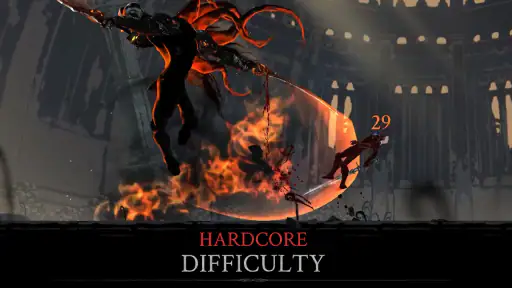
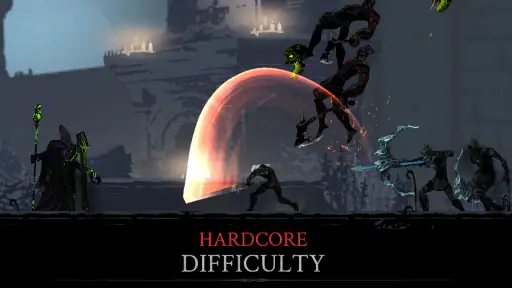
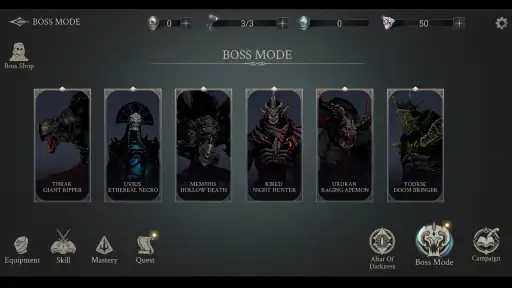
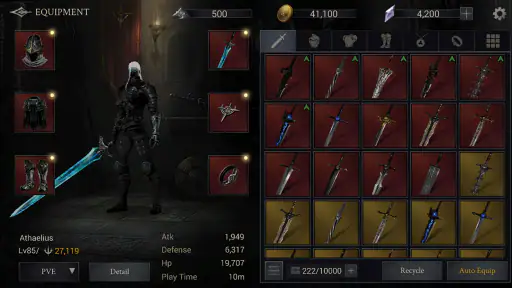
Analysis by Reviewed
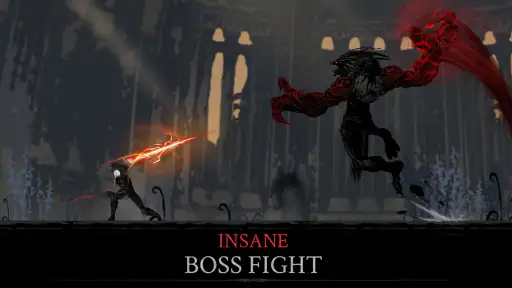
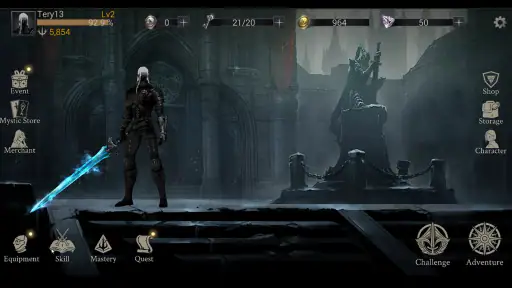
I went into Shadow Hunter Offline Games expecting a straightforward dark-fantasy action game, and that is broadly what it delivers: a focused hack-and-slash experience designed around fighting through hostile encounters rather than managing a large online world. Its biggest practical appeal is right there in the name. You can play offline, so it fits moments when I have no reliable connection, want a self-contained game during travel, or simply prefer not to deal with matchmaking and live-service interruptions.
That simplicity is also the reason I would not recommend it to everyone. This is an action game for players who enjoy direct combat, repeated battles, and a gloomy fantasy atmosphere. It is less suitable if you are looking for a relaxed puzzle game, a story-heavy role-playing adventure, or a competitive multiplayer title where your main goal is proving yourself against other players.
What the combat feels like after the first sessions
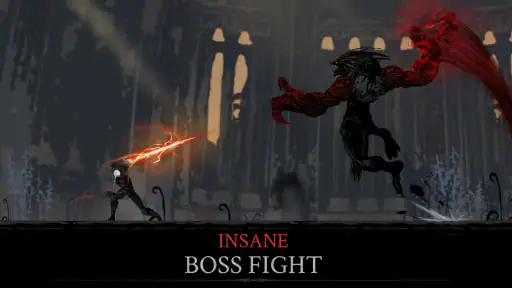
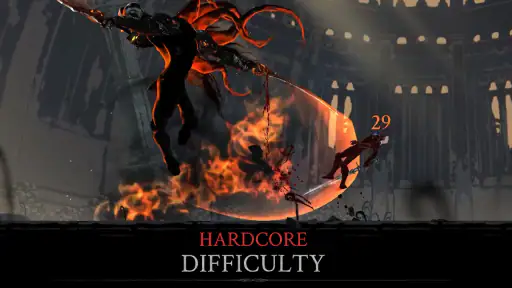
The core loop is easy to understand. I move through a dark setting, meet enemies, attack, avoid danger, and continue toward the next encounter. The hack-and-slash format makes the game immediately accessible, but it still asks for attention once enemies begin to pressure me from different directions. Button tapping may work in the opening moments, yet careless attacks quickly become less comfortable when timing and positioning matter.
One useful way to approach the game is to treat every fight as a short decision exercise rather than a race to empty an enemy's health bar. I found it more satisfying when I watched the space around my character, waited for a safer opening, and avoided committing to attacks simply because an opponent was nearby. That habit is especially helpful on a phone, where the screen can become visually busy and a rushed input can send a character into danger.
The offline design changes how I judge the pacing. I can start playing without depending on a connection, which makes it a practical choice for a commute, a flight, or a place with unreliable reception. It also gives the experience a more personal rhythm: I am not waiting for another player, checking a social feed, or worrying about whether a temporary online event is available. For me, that makes short sessions easier to begin.
There is a trade-off, though. Offline action games can feel more repetitive than online games built around constantly changing opponents or social competition. Shadow Hunter works best when I enjoy improving my own execution and moving through its dark fantasy challenges at my own pace. If I need endless variety from other players, the lack of that pressure may make the experience feel narrower.
Small habits that make the game more manageable
My first practical tip is to avoid treating every encounter as an opportunity to attack immediately. I get better results by creating a little space, identifying the most immediate threat, and then choosing whether to strike or reposition. That is a simple adjustment, but it prevents the common mobile-action mistake of turning a controlled fight into a scramble.
I also recommend playing with a clear session goal. Instead of opening the game without a plan and repeating battles until they blur together, I prefer deciding that I will learn an enemy pattern, clear a particular stretch, or test a different approach. This is particularly useful for an offline game because there is no social schedule pushing me forward. The player has to provide the structure.
A third insight is that the game should be judged as a touch-control action title, not as a console replacement. I pay more attention to screen visibility, hand position, and whether I am playing while tired. A strategy that feels precise when I am focused can become unreliable when I am holding the phone awkwardly. Shorter sessions are often better than forcing a long run after my attention has dropped.
Progression, spending, and the feeling of pressure
The game is free to download, which lowers the barrier to trying it. It also contains in-app purchases ranging from $0.99 to $99.99 per item. That range is important for anyone deciding whether the game fits their budget. I would approach the purchase system cautiously at first, play enough to understand the ordinary progression, and only then decide whether spending adds genuine enjoyment rather than simply removing an irritation.
I do not think a free entry point automatically makes a game generous, and I do not think the presence of purchases automatically makes it unfair. The meaningful question is how much pressure the player feels to buy. In my experience, the healthiest way to use a game with optional purchases is to set a personal rule before playing: either remain entirely free-to-play, or spend only a small amount that I would be comfortable treating as entertainment. That prevents a frustrating session from turning into an impulse purchase.
The upper end of the purchase range deserves particular attention. A high-priced item may be reasonable for a committed player who spends many hours with the game, but it is difficult to justify for someone who is still deciding whether the combat loop has enough variety. I would not recommend making a large purchase during the first session. The better test is whether I still enjoy the basic fighting after the novelty of the setting has worn off.
Because this is an offline-focused experience, spending should be considered in relation to personal convenience rather than social status. I am not entering a live competitive ladder where a purchase might immediately affect another person's match. That makes the fairness question different from the one I would ask about a multiplayer action game. Even so, purchase pressure can still affect my own enjoyment if progress begins to feel like a choice between patience and payment.
Is it fair for players who do not spend?
From a competitive standpoint, the offline emphasis is reassuring. I am not being placed against a real opponent whose performance may depend on money, and there is no reason to evaluate the game as though it were an esports-style contest. My success is primarily about how I handle the encounters in front of me and how I manage my own progression.
That does not mean every free player will have the same experience as a paying player. Purchases can still change convenience, pace, or access within a game, and the listed price range shows that the monetization is not limited to a token optional extra. I therefore see Shadow Hunter as reasonably comfortable for players who want a solo action game, but I would keep expectations realistic: free play may require more patience, and a purchase should not be treated as a guarantee that the game will become more enjoyable.
My advice is to separate two questions. First, do I like the combat enough to continue without spending? Second, if I do spend, am I buying a convenience that I understand, or am I trying to fix a problem with the game? If the answer to the second question is the latter, I would stop and reconsider. No purchase can replace a combat system that does not suit my taste.
Who will enjoy it, and who should skip it?
I would recommend this game to someone who wants an offline action game with a dark fantasy mood and direct, repeatable combat. It is a good match for players who like picking up a phone, playing through a few encounters, and putting it down without needing to coordinate with anyone else. It also suits people who prefer practicing their own timing over competing on a leaderboard.
A realistic everyday use case is a long train ride with inconsistent reception. I can open the game, focus on a self-contained combat session, and avoid the frustration of an online title failing to load or disconnecting. Another good situation is a short evening break when I want something more active than a puzzle but do not have the time or energy to commit to a large story-driven game.
I would skip it if my priority is a deep narrative with extensive dialogue, a constantly changing multiplayer environment, or a calm game that rarely demands quick reactions. I would also be careful if I dislike repeating combat encounters or if I tend to spend impulsively when progress slows. The free download is convenient, but the purchase range means it is worth deciding on a spending limit before the game becomes part of a daily routine.
Compared with online action games, its strongest difference is independence from a live connection. Compared with slower role-playing games, it puts more emphasis on immediate fighting. Compared with competitive arena games, it removes the need to measure every session against another human player. Those differences are not automatically advantages; they simply make the game better for a particular kind of player.
What I would check before committing to it
The content rating is Mature 17+, so I would not install it for a child or assume that its dark fantasy presentation is suitable for every family setting. That rating is a useful reminder to consider the intended audience before downloading, especially on a shared device.
The game comes from EA Publishing and has built a substantial audience, with a 4.7 average from around 126 thousand ratings and more than 5 million installs. Those figures suggest that the basic concept has found many interested players, but they do not replace my own test of the controls and pacing. A popular action game can still be the wrong fit if I dislike its particular rhythm.
The current version is 60.139.2.0, and the minimum requirement is Android 7.0. I would check the device requirement before installing, particularly on an older phone. Even when a device meets the operating-system requirement, an action game may feel less comfortable if the screen is small, the touch response is inconsistent, or the phone becomes difficult to hold during longer sessions.
I would also remember that offline play does not necessarily mean every part of the experience behaves identically without connectivity. Rather than building my expectations around assumptions, I would test the game once while connected and once in the situation where I actually plan to use it. That small check can prevent disappointment before a trip or a commute.
My trust verdict after weighing the trade-offs
My overall view is positive, with a clear condition: Shadow Hunter is worth trying when I specifically want dark-fantasy hack-and-slash combat that can be played offline. Its strongest quality is practical. It respects the kind of player who wants to play alone, at a convenient time, without making a connection the center of the experience.
I would not call it a universal recommendation. The combat loop may not satisfy players who need constant novelty, and the in-app purchase range means I would approach monetization with discipline rather than assuming that free access tells the whole story. I would play first, decide whether the ordinary progression feels rewarding, and keep spending separate from frustration.
For me, the best way to use it is as a focused mobile action game: short sessions, deliberate movement, and no expectation that a purchase will solve every weakness. If that sounds like the kind of experience you want, the free entry point makes trying it reasonable. If you are searching for a socially competitive game or a large narrative adventure, I would choose a different category instead.
My final recommendation: try it free, judge the combat before spending, and keep your expectations centered on offline solo action. That is where Shadow Hunter feels most convincing, and it is also the clearest way to decide whether its dark world and repeated battles deserve a permanent place on your phone.
Pros
- Offline play works without Wi‑Fi or mobile data.
- Fast-paced combat feels responsive and satisfying.
- Dark fantasy visuals create a strong atmosphere.
- Multiple weapons and skills encourage varied playstyles.
- Short missions make it easy to play in quick sessions.
Cons
- Repetitive enemy encounters can become predictable over time.
- Upgrade resources may take a while to collect.
- Some stages feel unbalanced in difficulty.
- The interface can feel crowded on smaller screens.
- Ads may interrupt the experience between activities.

- Category
- Action
- Version
- 60.139.2.0