School Bus Simulator Driving
- 4.66K
- 4.3
- Installs
- 10.00M
- Price
- Free
Screenshots
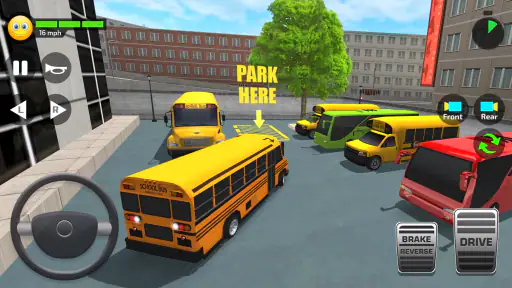
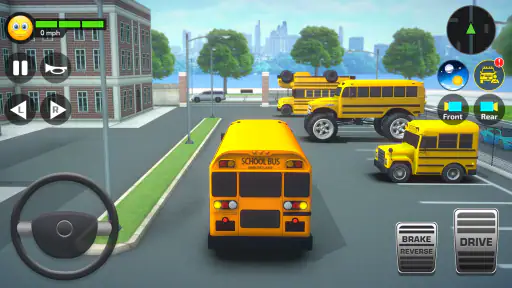
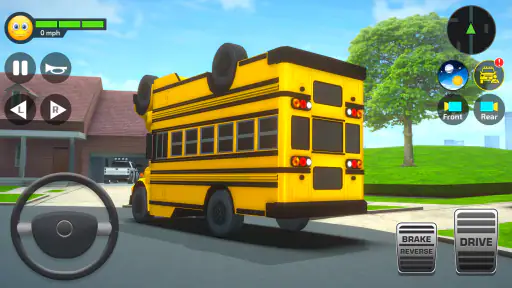
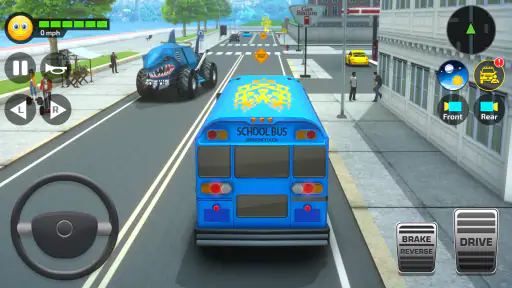
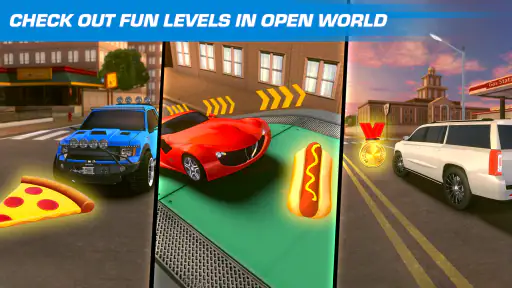
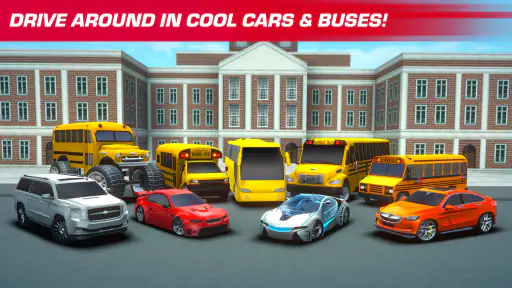
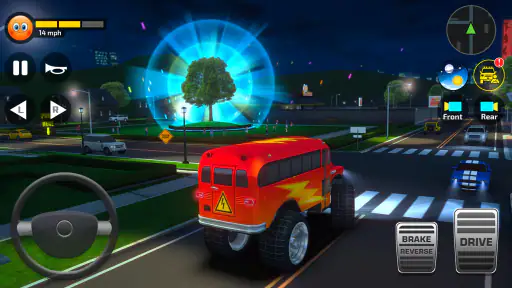
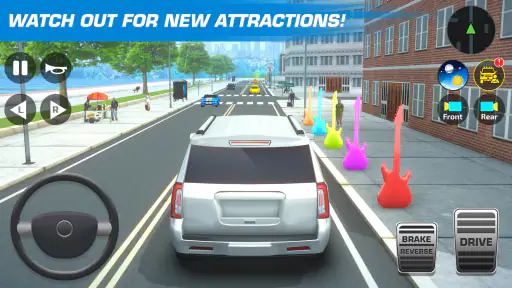
Analysis by Reviewed
School Bus Simulator Driving is the kind of racing game I open when I want a focused driving challenge rather than a fast, competitive race. Instead of chasing opponents, I spend my time learning how to handle a school bus, follow roads, and park a large vehicle with enough care to avoid turning a simple route into a frustrating mess. That slower rhythm is the main reason it stands apart from ordinary racing games.
After spending time with it, I see the game as a casual driving experience with a clear learning curve. It is free to download, aimed at Everyone, and made by Games2win.com. Its central idea is easy to understand, but controlling a bus asks for more patience than driving a small car. If you enjoy vehicle games where positioning and timing matter, this is worth considering. If you want constant speed, dramatic competition, or realistic simulation depth, you may find it too restrained.
How the driving actually feels
The first thing I noticed is that the game’s idea of speed is more about perceived momentum than raw excitement. A bus feels large, and even ordinary turns require more planning than they would in a typical arcade racer. I cannot simply swipe or steer at the last second and expect a clean result. The vehicle’s size makes corners, stops, and parking approaches feel like separate decisions.
That makes the opening sessions approachable, but not completely effortless. I found myself using the early attempts to understand how much space the bus needs before turning. A useful habit is to begin steering earlier than instinct suggests, then make small corrections instead of holding the control too long. This is especially helpful when approaching a narrow entry or lining up with a parking area.
The game is best understood as a school bus driving challenge, not a conventional racing title. Its racing category label may attract players expecting quick laps, but the real appeal is the satisfaction of completing a route cleanly. The pace gives you time to watch your position, though it can feel slow if you prefer immediate action.
One practical tip is to treat every turn as a setup for the next one. Rather than focusing only on the bus’s front, I pay attention to the rear swing and the amount of road left beside the vehicle. That small change in viewpoint prevents many avoidable mistakes. It also turns the game from simple steering into a modest exercise in spatial awareness.
The title has been available since August 23, 2016, and its current version is 8.2. Those details matter less than the way the game has aged in use: its concept remains easy to pick up, but players should approach it as a straightforward driving game rather than a modern, highly detailed simulator.
What happens during longer play sessions
The most demanding moments arrive when several small tasks overlap. I may need to keep the bus aligned, slow down before a turn, avoid clipping the edge of the road, and still reach the parking position with enough room to correct. None of these actions is overwhelming by itself. Together, they create the game’s real tension.
This is also where the difference between a quick attempt and a heavy-use session becomes noticeable. A short play period works well for a break because the objective is immediately understandable. During a longer session, repetition becomes more important. I start evaluating each attempt by what went wrong: entering too quickly, turning too late, or correcting too aggressively.
For an everyday scenario, I can see this working well during a commute break or while waiting for an appointment. I would play one or two attempts, learn from a failed parking approach, and put the phone away without needing to remember a complicated story. It is less suitable for a long evening if I need constant variety, because the core activity remains centered on driving and parking a bus.
Another useful approach is to separate route learning from precision driving. On an early attempt, I concentrate on discovering where the difficult turns and stopping points are. On the next attempt, I focus on cleaner steering and better positioning. Trying to perfect everything immediately makes the game feel more punishing than it needs to be.
Players should also consider how they hold the phone. A firm grip and an uncluttered screen help when a small correction matters. If I play while walking, in a moving vehicle, or with one hand occupied, I am more likely to oversteer. This is a game that rewards attention, so it is better suited to a stable sitting position than distracted play.
Stability, recovery, and the cost of mistakes
My impression of reliability is tied more to recovery from mistakes than to technical complexity. When a bus is badly positioned, the best response is often to slow down, create space, and correct gradually. Trying to rescue the situation with a sudden steering movement usually makes the problem worse. That recovery pattern is one of the most useful lessons the game offers.
I like that a failed attempt can still teach something concrete. If I hit an obstacle or approach a space at the wrong angle, I can usually identify the cause instead of blaming random difficulty. The game’s simple premise makes mistakes readable. That is valuable for younger players and for anyone who prefers learning through repeated short attempts.
At the same time, recovery can become frustrating when the bus is already trapped in a poor angle. A small vehicle could turn around quickly, but a school bus needs room. This is a genuine limitation: the game may test patience more than reflexes. I would not recommend it to someone who dislikes restarting after a minor positioning error.
Because the game is free, it is easy to try without committing money at the beginning. It includes in-app purchases ranging from $0.99 to $49.99 per item, so I would pay attention to any purchase prompts and decide in advance whether I want to spend anything. The free entry is appealing, but the presence of optional purchases means the experience is not necessarily identical for every player.
There is also a psychological recovery that matters. After a mistake, I found it more productive to pause briefly and replay with one specific adjustment rather than immediately repeating the same attempt. For example, I might decide to brake earlier or leave more room on the inside of a turn. That method keeps the game from becoming a cycle of hurried retries.
Who will enjoy it, and who should skip it
This is a good match for players who like casual vehicle simulation with clear, manageable objectives. It can suit someone who wants to practice careful steering, a younger player looking for an easy-to-understand driving theme, or a fan of bus games who enjoys the challenge of handling a larger vehicle.
The Everyone content rating makes it approachable for a broad audience, but that does not mean every player will enjoy its pace. Children may need help understanding why turning too sharply causes trouble, while experienced racing fans may quickly notice that the game is not built around competition or high-speed thrills.
I would skip it if my priority were realistic public transport operations, detailed traffic behavior, deep vehicle tuning, or a large open world. I would also choose another racing game if I wanted multiplayer competition, rapid lap times, or a strong progression system centered on performance. This title’s value comes from its narrow focus, not from trying to cover every part of driving.
Compared with the usual car-racing alternatives, this game asks me to be deliberate instead of aggressive. A car racer often rewards late braking, quick acceleration, and bold overtakes. Here, those instincts are less useful. Compared with a serious simulator, however, it feels more accessible and less demanding. I do not need specialist knowledge to begin; I only need to respect the bus’s size and use controlled movements.
That middle position is important. It is more thoughtful than a purely arcade driving game, but less involved than a full simulation. For me, that makes it a comfortable casual choice, provided I accept that the main reward is completing a clean maneuver rather than unlocking an elaborate driving career.
Phone demands and practical expectations
The minimum operating system is Android 7.0, which gives the game a reasonably broad compatibility range for Android users. Still, compatibility is not the same as identical performance on every phone. A newer device may feel more comfortable during longer sessions, while an older or heavily loaded phone can make any touch-based driving game less pleasant to control.
I would approach the game as a moderate, short-session download rather than something I need to keep running constantly. Its straightforward concept does not require me to treat it like a large online service. Before playing, I would close demanding background apps, make sure the screen is responsive, and keep enough free space for normal phone operation. Those are simple steps, but they reduce avoidable friction on older hardware.
Battery expectations also depend on the phone and session length. I would not assume that a few short attempts will create a serious problem, but extended play with a bright screen can always be more demanding than checking messages or reading. If battery life is important, shorter sessions are the sensible way to use it.
Storage is another practical consideration. The game has more than 10 million installs, which shows that it has reached a large audience, but popularity does not tell me how it will behave on a particular device. I would still check available space and keep the operating system reasonably maintained. On an older phone, a clean restart before playing may help more than expecting the game itself to solve every performance issue.
Controls are likely to matter more than hardware power for many players. A fast phone cannot compensate for a screen that is difficult to read or a grip that makes steering inconsistent. I prefer playing with both hands when a parking maneuver becomes tight. That gives me better control and makes the game feel less twitchy.
What the audience response suggests
The game holds a 4.3 average from around 80 thousand ratings, with roughly 4.7 thousand written reviews. I read those figures as evidence of broad interest rather than a guarantee that every player will have the same experience. A game with such a clear theme can satisfy people who specifically want bus driving while disappointing players who arrive expecting a traditional racer.
Its popularity also makes sense from an accessibility point of view. The premise is instantly recognizable, the price is free, and the age rating is Everyone. Those qualities lower the barrier to trying it. The important question is whether the player enjoys repeating careful maneuvers after the novelty of driving a bus wears off.
For me, the strongest sign of quality is not the idea alone but the way the idea creates small decisions. I have to judge turning space, approach parking with patience, and learn from the shape of each mistake. The weakest point is the limited range of activity: if I need dramatic variation, the same strengths can start to feel repetitive.
My performance verdict
School Bus Simulator Driving works best as a focused, free racing game for people who enjoy careful bus handling more than speed. I like its approachable premise and the way it turns ordinary driving into a test of positioning. It is easy to understand, but it still gives me something to improve across repeated attempts.
Its limitations are equally clear. The pace may feel too gentle for arcade-racing fans, mistakes can be annoying when there is little room to recover, and longer sessions may expose the narrowness of the central activity. The optional purchases also deserve attention before spending, especially for families sharing a device.
My recommendation is simple: try it if the idea of learning to control a large school bus sounds more appealing than racing sports cars. Start with short sessions, use early attempts to learn the route, and make one correction at a time after a failure. Skip it if you need multiplayer competition, advanced simulation systems, or nonstop speed.
In the right hands, this is a modest but enjoyable driving game. It does not need to be the most technically ambitious title in the category to be useful. Its best moments come from a clean turn, a controlled stop, and finally placing the bus where it belongs without rushing the maneuver. That focused satisfaction is exactly why I would recommend giving it a try to anyone who enjoys patient, goal-based driving.
Pros
- Simple controls make it easy for beginners to start driving.
- Multiple bus routes provide varied objectives and scenery.
- Traffic challenges add realism and require careful driving.
- Bus customization gives the game extra personalization options.
- Offline play makes it convenient without a constant internet connection.
Cons
- Repetitive missions may become predictable after extended play.
- Some vehicles and features may require in-app purchases.
- Graphics can look dated on newer phones and tablets.
- Occasional traffic or passenger behavior may feel unrealistic.
- The game may include frequent ads between activities.
- Category
- Racing
- Version
- 8.2