Putt-Putt® Saves the Zoo
- 81.00
- 4.3
- Installs
- 10.00K
- Price
- $4.99

Screenshots







Analysis by Reviewed
If you’re opening Putt-Putt® Saves the Zoo for the first time, expect a gentle point-and-click-style adventure built around helping a small car find missing zoo animals. I like how quickly the premise makes sense: the Cartown Zoo is about to open, and the baby animals need help getting back where they belong. You don’t need to know the earlier Putt-Putt games to follow along, so newcomers can start without catching up on a series first.
What to expect from the first visit
The important adjustment is to think of this as an illustrated story you explore, not a set of timed tasks. The pleasure comes from looking around, trying interactions, and gradually understanding what a scene is asking you to do. That makes it a comfortable choice for a quiet stretch at home, though it won’t satisfy someone who wants constant action or a quick win every minute.
For a first session, I’d set aside enough time to become familiar with the way the game invites you to explore, rather than expecting to finish a particular amount of the story. A child can take the lead by choosing what to inspect while an adult helps talk through the clues. If attention wanders, stopping at a natural pause is better than turning the experience into a race to complete the rescue.
Getting started without overthinking it
This is a paid casual game from Humongous Entertainment, priced at $4.99, and its age rating is Everyone. It was released on January 9, 2014; the current version is 1.5.4, and it requires iOS 7.1 or later. I’d treat it as a story-led game to explore at a relaxed pace, rather than something designed for quick competitive rounds. If you’re choosing it for a child, the simple rescue goal is easy to explain before handing over the device.
The game has a 4.3 average from around 315 ratings, with over 10,000 installs. Those figures suggest it has found an audience, but they don’t tell you whether its style will suit your household. The key question is whether you want a friendly adventure with a clear destination, or a game built around frequent action, scores, and replayable challenges. I’d choose Putt-Putt for the former.
Before buying, I’d check that the device you plan to use meets the listed iOS requirement and that a paid game fits your budget. The $4.99 price is a straightforward purchase rather than the sort of free casual game people often try on impulse. That changes the decision: it makes more sense if you already know you want a gentle story adventure, or if you’re choosing something to play together, than if you’re shopping for a quick distraction without knowing whether your child likes exploration.
A zoo adventure built around discovery
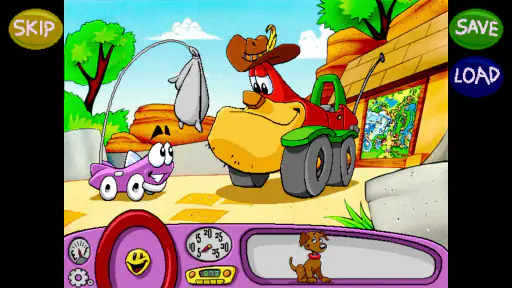
Imagine stepping into a world where your main task is to rescue zoo animals. That’s exactly what Putt-Putt® Saves the Zoo offers. You play as Putt-Putt, an adorable little car with a big heart and an even bigger sense of adventure. Your mission? To help find and rescue baby animals who’ve wandered off just before the grand opening of the Cartown Zoo.
More From Our News Desk

Weather by Xiaomi Review: Clear at a Glance, Less Clear Up Close

X Under Pressure: Can It Recover When Posting Goes Wrong?

Clash of Clans Is Won Between the Battles

Android Auto Makes the Case for Quieter Car Software

MobiOffice: Transforming Mobile Productivity with Seamless Integration

EA SPORTS FC™ Mobile Soccer: Redefining Mobile Sports Gaming
This game is all about exploration and discovery. As you navigate different parts of the zoo, you’ll encounter a variety of puzzles and obstacles. But don’t worry, they’re designed to be friendly and fun, making it perfect for kids and nostalgic adults alike. You’ll find yourself driving through lush jungles, icy tundras, and other vibrant environments, each packed with interactive elements and surprises.
Taking the first useful step
When you reach a new scene, resist the urge to tap randomly as fast as possible. I find it more useful to pause, look over the whole picture, and try the objects or characters that appear connected to the immediate problem. This gives a new player a simple routine: notice what stands out, try an interaction, and check whether the scene has changed. It also makes a small discovery feel earned rather than accidental.
A realistic way to play with a child is to let them choose the first thing to investigate while you ask what they noticed. If their choice doesn’t help, that is still useful information: you can move on to another detail without announcing that they got it wrong. The game’s calm pace makes this kind of back-and-forth easier than it would be in a game built around a timer, score, or rapid reactions.
Graphics and Soundtrack
One of the standout features of this app is its colorful, cartoonish graphics. They’ve managed to keep the original charm of the game while optimizing it for today’s devices. The visuals are bright and engaging, sure to captivate the younger audience. And let’s not forget the catchy tunes that accompany you on your journey. The soundtrack is a delightful mix of playful melodies that fit perfectly with the game’s whimsical nature.
The visual approach helps make the setting inviting, but it also means that a player has to pay attention to what is actually part of the puzzle. For a child who likes to explore every detail, the busy scenes can be a reason to linger; for someone who wants the next objective highlighted immediately, they may feel like a lot to scan. I’d encourage a new player to look carefully before asking for help, then offer a small hint rather than taking over the controls.
Why It’s Worth Your Time
What makes this app truly shine is its ability to combine educational elements with entertainment. The puzzles help young players develop problem-solving skills while the storyline encourages empathy and cooperation. Plus, it’s a great way for parents to bond with their kids over a game that’s both fun and educational.
There’s also a certain joy in seeing the zoo come to life as you complete each task. The sense of accomplishment you get when you finally manage to get all the animals back to their homes is genuinely rewarding. The game strikes a perfect balance between challenge and simplicity, making it accessible yet engaging.
One small but useful family habit is to take turns being the “noticer” and the “driver”: one person points out a detail to investigate, and the other makes the choice about what to try. It gives a younger player room to make decisions while keeping an adult involved without becoming the solver of every puzzle. I’d use that approach especially when a scene has several tempting things to inspect, because it slows the pace just enough to make the interaction feel intentional.
A first session that feels manageable
For a first-time player, I’d suggest sitting together for the opening stretch and letting the child choose where to look or what to try. When a scene has several things to inspect, take turns tapping around and talking through what changed. That makes the first useful success—finding an item or solving a small obstacle—feel like a discovery rather than a test. It also gives an adult a chance to help without taking control of every decision.
One practical trade-off is that this kind of adventure rewards curiosity more than speed. If a player expects a clear marker for every next step, they may wonder what to do after reaching a new area. I’d encourage them to look closely at the surroundings and revisit objects or characters that seem relevant. That habit is useful here, but it can feel slow to anyone who prefers direct instructions and constant forward motion.
If you’re playing in a short everyday window, such as after school or before dinner, agree on a stopping point before you begin. A natural pause after a small discovery keeps the session pleasant and makes it easier to return later. I wouldn’t set a goal like “finish the whole story tonight”; the appeal is in the little steps, and rushing can turn exploration into pressure.
How it differs from quick casual games
Many casual games are built around repeating a compact activity: match items, beat a score, or start another short round. This one is a different kind of casual experience. Its continuing rescue story and scenes to explore make it more like a shared picture-book adventure than a quick puzzle loop. That is a real advantage when you want conversation and a sense of purpose, but a drawback if you want something that works in tiny bursts with an obvious restart point.
It is also a better fit for a player who enjoys working out what to try than for someone who wants the game to explain every step. When a child is comfortable exploring, that freedom can make the discoveries more satisfying. If they become upset when they cannot immediately tell what a scene expects, a more guided activity may be kinder. I’d make the choice based on how they respond to uncertainty, not simply on whether they like animals or cartoons.
Who will enjoy it, and who may prefer something else
I’d recommend it to families who want a calm game to share, to children who enjoy animals and exploring illustrated places, and to adults who miss the feel of older computer adventures. It also works well as a short after-school activity: you can settle in together, make progress on one puzzle, and stop when attention starts to drift. The story gives the session a purpose without asking players to compete or chase a score.
On the other hand, I wouldn’t pick it for someone looking for rapid action, online competition, or a game that constantly introduces new mechanics. Compared with the usual casual games built around quick matching or repeated levels, this one leans on exploration and a continuing rescue story. That gives it more of a shared, read-and-discuss feel, but less of the instant restart-and-play loop those alternatives offer. If your child gets frustrated by searching or trying a few possibilities, an activity with clearer step-by-step prompts may be a better fit.
It may also be the wrong choice if you’re mainly looking for a game that rewards repeated short sessions with fresh rounds or score improvement. Putt-Putt is more appealing when a player wants to stay with one adventure and see what happens next. I’d choose it for a parent-and-child play session, a quiet afternoon, or an introduction to exploratory games—not as a substitute for a fast game to fill a brief wait.
Making the most of the rescue story
A helpful approach is to let the child explain what they think a scene needs before you suggest an answer. It keeps the game cooperative and turns small puzzles into chances to practise noticing details. If progress stalls, change the question from “What’s the answer?” to “What haven’t we looked at yet?” That gentle nudge preserves the sense of discovery instead of turning the session into an adult-led walkthrough.
When you do offer help, try narrowing the search rather than naming the solution. You might ask which character or object seems most connected to the problem, then let the player decide what to do. This is a small distinction, but it protects the satisfying part of the experience: noticing a clue and making a choice. If the player is tired or losing interest, though, there is no need to insist on solving everything in that sitting.
Parents may also wonder whether the game suits a child playing alone. The friendly premise and accessible puzzles make it approachable, but a younger player may still appreciate company when they’re unsure where to go next. I’d use it as a shared game at first, then see whether the child is comfortable exploring independently. The most satisfying moments come from noticing something and working out what to do with it, so stepping in too quickly can take away part of the fun.
For a first-time buyer, the practical question is whether the story-led style matches the player, rather than whether the game can compete with every newer casual release. The listed age rating is Everyone, and the relaxed premise makes it easy to introduce, but individual patience and reading or listening comfort still matter when playing together. I’d stay nearby at first, pay attention to whether the child enjoys exploring, and let that response guide whether it becomes an independent activity.
As a casual game from Humongous Entertainment, it has a narrower appeal than a collection of quick mini-games, but that focus is also its strength. The zoo setting gives the adventure a clear emotional thread, and the simple rescue purpose is easy to return to after a break. I’d recommend it when you want a gentle, cooperative experience and are happy to let curiosity set the pace. If you prefer constant prompts, rapid rounds, or competitive goals, I’d choose a different kind of game instead.
In conclusion, Putt-Putt® Saves the Zoo is a delightful app that brings back the old-school charm of classic adventure games. Whether you’re introducing it to a new generation or reliving your childhood, it’s a fun, interactive experience that’s hard to resist. So, why not give it a try? I promise it’s an adventure worth embarking on!
Putt-Putt® Saves the Zoo Frequently Asked Questions
Is Putt-Putt® Saves the Zoo suitable for a child’s first adventure game?
Putt-Putt® Saves the Zoo is a casual game built around a friendly rescue mission: the baby animals are missing just as the Cartown Zoo is about to open. Its playful premise makes it approachable for children who are new to games, while searching for animals and working through puzzles gives them simple goals to follow. The content rating is Everyone.
Who developed Putt-Putt® Saves the Zoo, and what kind of game is it?
Putt-Putt® Saves the Zoo is a casual game developed by Humongous Entertainment. It follows Putt-Putt as he sets out to find the missing baby animals before the Cartown Zoo’s grand opening. The focus is on a lighthearted adventure rather than competition, so it may appeal to families looking for a child-friendly game with a clear story and puzzle-solving tasks.
What is the main objective of Putt-Putt® Saves the Zoo?
Putt-Putt® Saves the Zoo is an engaging educational adventure game where players help Putt-Putt, a cheerful little car, rescue zoo animals before the new Cartown Zoo opens. The main objective is to solve puzzles, find missing animals, and ensure each animal is safely returned to their correct exhibit, making it both fun and educational for children.
What age group is Putt-Putt® Saves the Zoo suitable for?
Putt-Putt® Saves the Zoo is designed for young children, typically ages 3 to 8. The game features simple point-and-click mechanics, colorful graphics, and a gentle learning curve, making it accessible and enjoyable for early learners. Parents can rest assured that the content is kid-friendly and promotes problem-solving and critical thinking skills.
Can Putt-Putt® Saves the Zoo be played on both Android and iOS devices?
Yes, Putt-Putt® Saves the Zoo is available on both Android and iOS platforms. Users can easily download the game from Google Play Store for Android devices or the Apple App Store for iOS devices. It’s important to check device compatibility and ensure there’s enough storage space before downloading the game.
Pros
- Engaging storyline for children.
- Colorful and vibrant graphics.
- Easy to understand gameplay.
- Encourages problem-solving skills.
- Includes fun mini-games.
Cons
- Limited replay value for older kids.
- May be too simplistic for some.
- Graphics may seem dated.
- No multiplayer options.
- Short game duration.
- Category
- Casual
- Version
- 1.5.4