Prizefighters 2
- 1.30K
- 4.1
- Installs
- 5.00M
- Price
- Free

Screenshots
Analysis by Reviewed
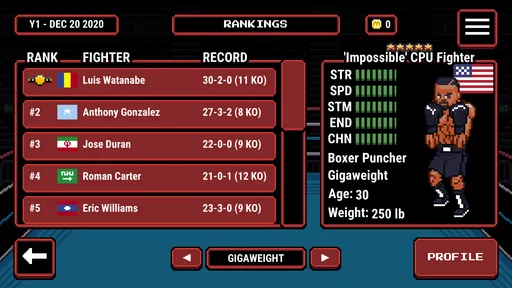
I reach for Prizefighters 2 when I want a boxing game that gets to the bout quickly and gives me a reason to think between fights. It has a retro arcade look, but the appeal is not only nostalgia: each match asks me to pay attention, and career progress gives the next one a little context. The experience is compact enough for a brief break, yet it can reward a longer session if I feel like shaping a boxer over time.
A quick match for a spare moment
For me, the appeal starts with how quickly the game gets to its central activity: boxing. You do not need to settle in for a long simulation session to understand the basic pleasure of stepping into a bout, reading an opponent, and choosing when to strike or defend. That makes it an easy fit for a short break, though career progression gives you a reason to return when you have more time. If you want a detailed, realistic boxing simulator, its arcade presentation is a clear sign to look elsewhere; if you want a compact sports game with a retro feel, it is much closer to the mark.
Gameplay That Hooks You In
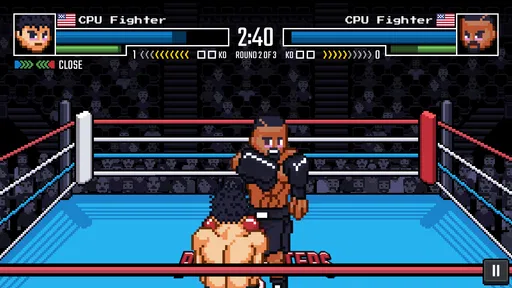
When I first launched Prizefighters 2, I was immediately hit with a wave of nostalgia. The pixelated graphics and retro sound effects transported me back to the golden days of arcade gaming. It's simple yet so engaging, making it hard to put down. The controls are intuitive, with a nice balance between simplicity and the need for strategy. You tap and swipe to throw punches, block, and dodge, which feels incredibly satisfying once you get the hang of it.
Learning the rhythm, not just the controls
The useful adjustment is to resist treating every opening as an invitation to attack. The basic touch controls are easy to pick up, but the choices around timing and defense give each exchange its shape. I find it more rewarding to watch for a moment to act than to swipe constantly; that approach also makes losses feel like feedback rather than pure bad luck. A practical tip is to focus on one habit at a time—such as remembering to defend before countering—rather than trying to master every move in the same bout. The trade-off is that anyone hoping for a deep technical boxing model may find the arcade simplicity limiting.
Training and Career Mode
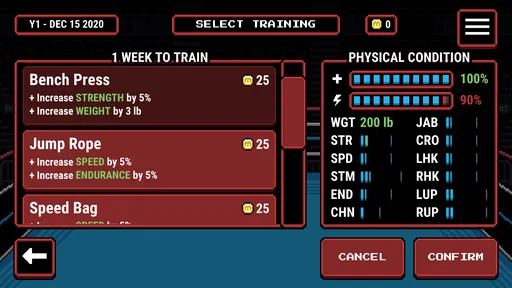
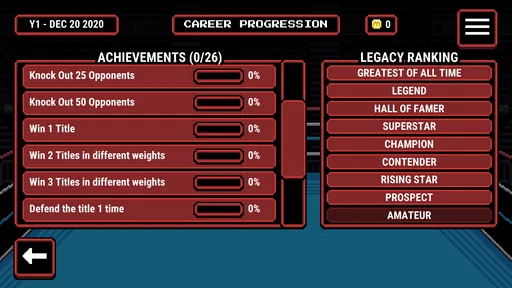
One aspect that really impressed me is the career mode. You start as an amateur boxer and work your way up to becoming a champion. Each match you win earns you experience points, which you can use to upgrade your stats. Training your fighter is crucial, and it’s not just about winning matches but also about strategic planning. Do you spend time increasing your speed, or is it power that your fighter lacks? It’s decisions like these that keep the game fresh and engaging.
That choice gives victories a purpose beyond the immediate bout: you earn progress, then decide what kind of fighter you want to build. I would avoid spreading upgrades without a plan. If a match exposes a weakness, use that as a cue for your next training decision instead of automatically boosting whichever stat sounds strongest. This creates a useful action-and-feedback loop, although players who prefer instant rewards without managing gradual development may find career mode slower than a quick arcade match.
Reading a loss and choosing what to change
A defeat can be useful when I treat it as a clue rather than a reason to repeat the same approach immediately. I ask myself whether I rushed too often, left defense aside, or invested in a fighter that does not suit the way I like to play. Then I choose one adjustment for the next attempt. This is a more reliable way to learn than changing several things at once, because it gives me a clearer sense of what actually helped.
More From Our News Desk

Weather by Xiaomi Review: Clear at a Glance, Less Clear Up Close

X Under Pressure: Can It Recover When Posting Goes Wrong?

Clash of Clans Is Won Between the Battles

Android Auto Makes the Case for Quieter Car Software

MobiOffice: Transforming Mobile Productivity with Seamless Integration

EA SPORTS FC™ Mobile Soccer: Redefining Mobile Sports Gaming
That approach also answers a practical question for new players: do you need to understand boxing to enjoy it? I do not think so. The basic actions are approachable, and the game gives you room to improve through play. A little patience helps, though; if you expect to win every bout by tapping quickly, the defensive rhythm may feel like friction until you slow down and read the exchange.
Customization and Replayability
Customization is a big part of what makes this game so addictive. You can personalize your fighter with a variety of gear and outfits, giving your character a unique look and feel. This feature, combined with the deep career mode, offers great replayability. I found myself coming back to it time and again, trying out different strategies and styles to see what works best.
For a more deliberate session, I like the idea of treating a career run as an experiment: build toward a particular style, see how it handles bouts, and change your approach when it stops working. The visual customization adds personality, while the stat choices are the part that changes how I think about progression. That distinction matters if you mainly want appearance options; the more meaningful replay comes from testing different ways to develop a fighter, not simply changing an outfit.
Progress without turning every session into a project
It is easy to make the career feel like homework if I try to optimize every decision before playing. I get more out of it by keeping a simple goal for a session: take a bout, notice one weakness, and make one considered training choice when it is time to develop the boxer. That keeps the progression connected to the action instead of becoming a separate spreadsheet-like task. It is also a useful way to stop after a satisfying milestone rather than continuing just because there is another fight available.
Players wondering whether they can enjoy it in short bursts have a straightforward option: play a match when time is tight, then leave the broader career decisions for later. The immediate bout provides the action, while career development supplies the longer thread. If you only want quick fights and have no interest in carrying progress from one session to another, that longer thread may not add much for you.
Moreover, the game features a local multiplayer mode, which is a fantastic way to test your skills against friends. Trust me, it’s a blast trying to outwit each other in the ring!
A friendly match works best with the right expectations
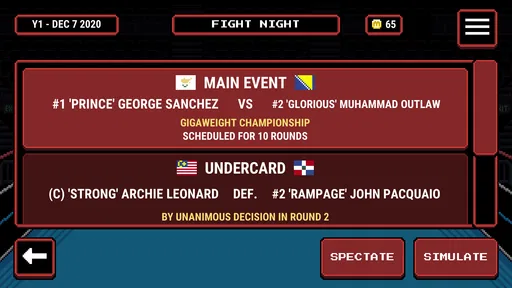
Local multiplayer makes the game a natural choice when a friend is nearby and you want a quick head-to-head activity without turning the evening into a long online competition. It also shifts the fun: career play is about building a boxer over time, while a local bout is about reading the person beside you. If you are choosing a game specifically for remote matchmaking or a large competitive community, this is not the reason I would recommend it. Its appeal here is the immediate, shared contest.
For a casual get-together, I would treat local play as a quick alternative to taking turns in a career. It gives both people a reason to pay attention to the same exchange, and a rematch can be a natural way to test whether someone has learned the other player’s habits. That makes it especially appealing when you want a shared activity without needing to coordinate a long session. If friends are not physically together, a game built around remote competition is a better match for that situation.
Graphics and Sound
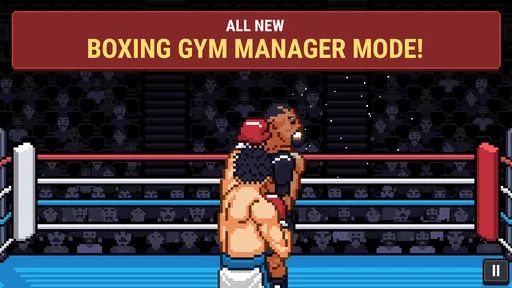
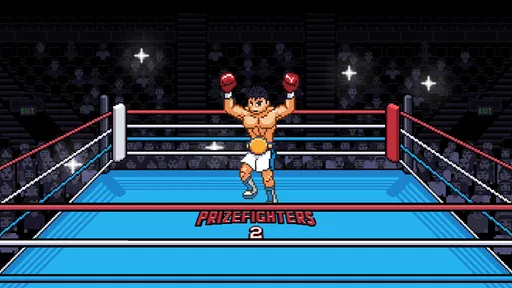
The pixel art style may not be for everyone, but I found it charming and perfectly suited to the game’s theme. The animations are smooth, and the sound effects add to the overall immersion. Sure, it doesn’t boast hyper-realistic graphics, but that’s part of its charm. It’s about capturing the essence of arcade classics, and in that regard, it succeeds brilliantly.
The presentation also helps make the action readable: the retro look keeps the focus on the fighters and their exchanges rather than on realistic spectacle. Still, taste matters. If what you enjoy most about sports games is lifelike presentation, this style may feel too deliberately old-school. I would choose it for its compact arcade character, not as a substitute for a visually realistic boxing simulation.
Where it fits among mobile sports games
Compared with mobile sports games built around teams, seasons, or realistic presentation, this one keeps the focus unusually tight: one boxer, a series of bouts, and decisions about how that fighter develops. That focus makes it easier to pick up than a game that asks me to manage a whole club or learn a more elaborate simulation. The trade-off is that players seeking licensed teams, broad season management, or lifelike visuals will find those alternatives more satisfying.
I would also separate it from a simple one-off arcade fighter. The bout itself is quick to grasp, but career progression gives repeated matches a purpose beyond chasing a high score or winning once. That structure works best if I enjoy seeing a character develop; it is less compelling if I want every session to feel entirely different. In other words, the game’s variety comes more from how I approach the boxer and the next fight than from a shift to a completely different kind of sports experience.
Who will get the most from it
I would recommend it to players who like sports games with a clear loop: enter a fight, learn from what happened, earn progress, make a training choice, and come back to see whether that choice helps. A realistic everyday use is a short break in which you play a bout, then leave the longer career decisions for a time when you can think about them. The game is less suitable if you dislike touch controls, pixel art, or gradual progression, or if you want a highly realistic rules-and-physics simulation. Compared with many sports games that emphasize licensed teams or season management, this one keeps its attention on an individual boxer and the feel of arcade fighting.
For example, I can imagine opening it while waiting for a ride or winding down after dinner: one fight is enough to make the time feel occupied, and I can stop there without needing to commit to a lengthy session. If I have more time, I can turn that same moment into a longer career session and think through the next training choice. That flexibility is a better fit for uneven pockets of free time than a sports game that only feels worthwhile when I can complete a long match or manage a full season.
The best fit is someone who likes making small adjustments and seeing whether they pay off, rather than someone who wants a fully realistic boxing lesson. I would skip it if the retro art is a deal-breaker, if touch-based action tends to frustrate you, or if your main goal is remote multiplayer. Those are not minor preferences here: they shape whether the game’s central loop feels inviting or repetitive.
Koality Game developed this free sports game, which is rated Everyone 10+. It has an average rating of 4.1 from around 16,000 ratings, and more than a million installs. The current version is 1.09.2, and it runs on Android 6.0 or later. Optional in-app purchases range from $0.99 to $4.99 per item, so I would treat spending as an extra rather than something needed to decide whether the core boxing loop suits you. Those details make it accessible to try, but the best reason to keep playing is whether you enjoy its timing and career choices.
That also makes the first session a low-pressure test: see whether the touch controls feel comfortable, whether the pixel presentation appeals to you, and whether you enjoy adjusting a fighter after a bout. The game is free to start, with optional purchases, so I would decide about spending only after learning whether the core rhythm holds my attention. For Android players, the stated minimum operating-system requirement is 6.0; the age guidance is Everyone 10+, which is worth keeping in mind when choosing a game for a younger player.
Its reception suggests that plenty of players have given it a try: it has an average rating of 4.1, with around 16,000 ratings and roughly 1.1 thousand written reviews, alongside more than a million installs. I would treat those figures as context, not a guarantee that its old-school style or touch controls will suit everyone. The useful test is still personal: do you enjoy learning the exchange and returning to improve your boxer?
Overall, Prizefighters 2 delivers a punchy, engaging experience that’s perfect for both casual gamers and boxing fans alike. The combination of strategic gameplay, customization options, and nostalgic graphics makes it a standout in the mobile gaming world. Whether you’re looking to kill some time or dive deep into a boxing career, this game has got you covered.
What keeps the loop moving for me is the change of pace between bouts: the match gives immediate feedback, career progress gives a reason to train, and the next fight lets you test the result. It is not an endless stream of new ideas, and repeated fights can feel familiar if you are not interested in improving a boxer over time. But for players who enjoy that small cycle of challenge, adjustment, and another attempt, the simplicity is a strength rather than a flaw.
So, if you’re in the mood for some retro boxing action, give Prizefighters 2 a shot. You might just find yourself hooked, cheering in the stands as your fighter lands that knockout punch!
Prizefighters 2 Frequently Asked Questions
How much storage space should I have before downloading Prizefighters 2?
It is sensible to leave some free storage on your device before installing Prizefighters 2, as with any mobile game. The amount available can vary by device and platform, so check the space shown during installation and make room if needed. Keeping spare storage also helps avoid interrupting the download or installation process.
Does Prizefighters 2 offer a single-player experience?
Yes. Prizefighters 2 includes single-player play, including a career in which you develop a boxer and work toward titles. This makes it a fit for players who prefer progressing at their own pace rather than relying on multiplayer sessions. Some online features, including multiplayer matches and leaderboard rankings, do require an internet connection.
Is Prizefighters 2 a good choice for fans of retro sports games?
Prizefighters 2 is presented as a retro-style boxing game, with an arcade feel and a focus on competing in bouts and developing a fighter. Its boxing theme and career progression give it more to explore than a quick match alone. If you enjoy sports games with a nostalgic presentation and straightforward boxing action, its style may appeal to you.
What devices can run Prizefighters 2?
Prizefighters 2 is a mobile game for Android and iOS, and the Android version requires Android 6.0 or later. Before downloading, check that your device meets the relevant platform requirements and has enough available storage for the game. The game is free to download, so you can try its retro-style boxing gameplay without an upfront purchase.
Is Prizefighters 2 suitable for younger players?
Prizefighters 2 is rated Everyone 10+ and is a sports game centered on boxing. That age rating can help parents decide whether its competitive fighting theme is appropriate for a child. The game’s retro presentation gives the matches an arcade feel, while its career and customization features offer more to explore than a single quick bout.
Pros
- Intuitive controls make gameplay accessible.
- Diverse fighting styles to master.
- Engaging career mode with customization.
- Retro graphics appeal to nostalgia lovers.
- Frequent updates enhance game experience.
Cons
- Occasional in-game ads disrupt flow.
- Limited multiplayer options.
- Some features require in-app purchases.
- Graphics may seem outdated for some.
- AI difficulty can be inconsistent.