Neopets: Tales of Dacardia
- 348.00
- 3.2
- Installs
- 10.00K
- Price
- Free

Screenshots
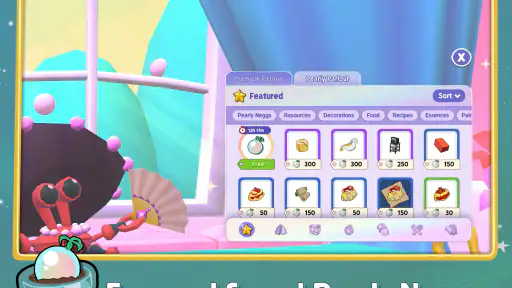
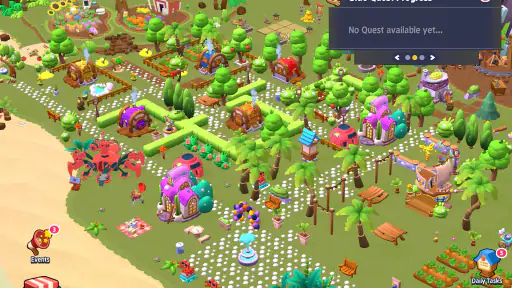
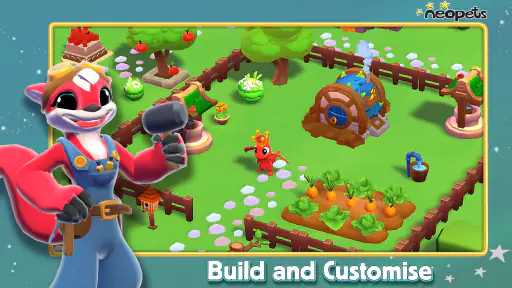
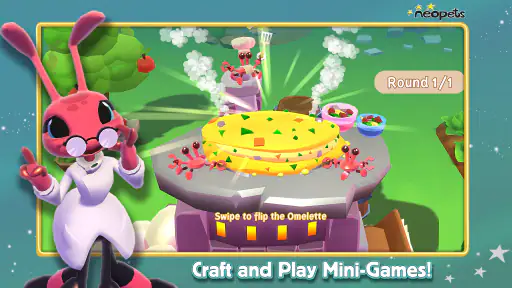
Analysis by Reviewed
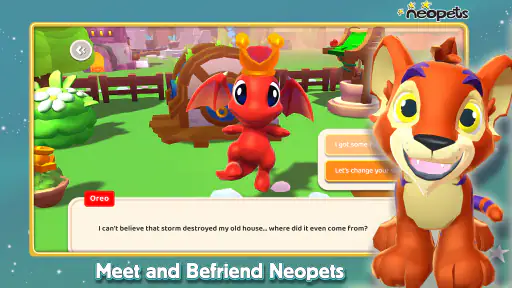
I spent time with Neopets: Tales of Dacardia as a relaxed adventure game, but what stood out most was how naturally it can fit into a shared household routine. It is the kind of game someone might open while waiting for dinner, then leave for another person to continue later. The central task is to help restore Dacardia after a mysterious storm, and that gives the experience a clear sense of purpose without making every session feel like a race.
That shared-world idea is more important than it first appears. On a common tablet, one person can focus on exploring and checking the town, while another may enjoy the decorative or rebuilding side. I would not describe it as a formal multiplayer game or a family-management tool, but it can work well as a game that different people discuss and revisit on the same device. The appeal depends on treating progress as a communal project rather than assuming that every player will have a separate adventure.
How the rebuilding adventure works in everyday play
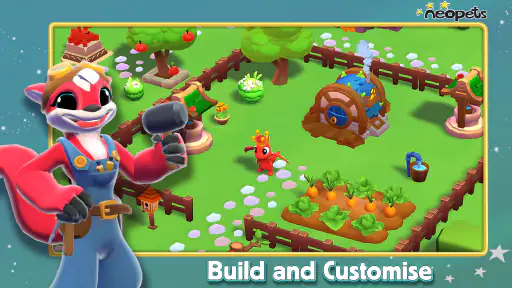
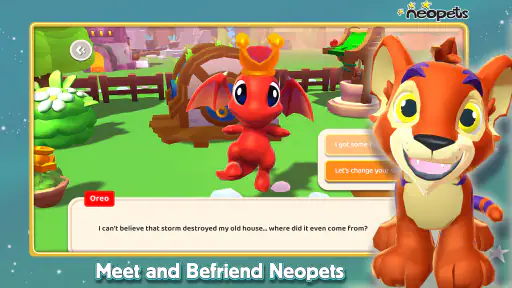
The opening premise gives the game a useful direction: Dacardia needs attention, and your role is tied to bringing the damaged setting back into shape. That framing makes the adventure feel gentler than a combat-heavy title. I found myself paying more attention to the condition and personality of the place than to chasing constant action. For players who prefer a calm objective and a world that gradually becomes more inviting, this is a strong starting point.
The game belongs to the adventure category, but it does not rely on the same rhythm as a fast platformer or a large action role-playing game. The reward comes from seeing a place develop and from deciding what deserves attention next. That makes it easier to play in short bursts. A person can check in, make progress, and stop without needing to commit to a long uninterrupted session.
That flexibility is especially useful in a household. Imagine one person using the game during a morning commute or a quiet break, then handing the device to a younger player later in the day. The second player may not approach the same tasks in the same way, but the storm-and-rebuilding premise still gives both of them a common point of reference. I like that this can create conversation without requiring everyone to play simultaneously.
There is also a practical trade-off. Shared progress can be enjoyable when everyone agrees on the direction of the town, but it becomes less comfortable when one player wants to make every decision alone. Before installing it on a family tablet, I would decide whether the game is intended for one main player or for informal turn-taking. That simple agreement prevents the usual frustration of someone opening the game and discovering that another person has changed the state of the adventure.
What makes the setting worth returning to
The strongest part of the experience is its sense of place. Dacardia is not just a background for disconnected tasks; the rebuilding premise gives the setting a reason to matter. I prefer that approach to an adventure game that sends me from one unrelated activity to another without any visible connection. Here, the idea of recovery gives ordinary progress a little more meaning.
The Neopets identity also gives the game a friendlier tone than many adventure alternatives. That does not mean it will satisfy someone looking for danger, difficult combat, or a huge open world. Its appeal is closer to gentle exploration and gradual improvement. If your ideal mobile game involves restoring a setting and spending time with its atmosphere, this is more promising than a traditional action adventure. If you want rapid reactions and constant surprises, it may feel too restrained.
One useful way to approach it is to treat the game as a low-pressure project rather than a checklist. I found that the experience is more pleasant when I take a moment to look at the state of the settlement and choose a sensible next step instead of trying to rush through everything. That mindset also makes it easier for different members of a household to contribute without competing over who can finish fastest.
Setup decisions matter more on a shared device
Because this is a free game, the initial decision to try it is simple, but the household setup deserves more thought. The title is free to download and play, while optional purchases range from $0.99 to $79.99 per item. That wide range is the detail I would discuss before letting a child play on a device connected to a payment method. The game’s free entry point is convenient, but it should not be confused with a completely cost-free environment.
I would establish a clear rule before the first session: who owns the progress, who may make purchases, and whether the device is for personal play or shared use. These are not features I am attributing to the game; they are sensible household boundaries. A shared tablet can blur responsibility quickly, especially when a player assumes that tapping a purchase option is part of normal progression.
For a single adult player, this is less complicated. I could simply decide whether optional spending fits my own budget and play style. For a family, I would keep the payment conversation outside the game and make it explicit. That is more reliable than expecting a child to understand the difference between an in-game choice and a real charge.
Another practical point is the operating-system requirement. The game needs Android or iOS at version 10 or later, so an older household device may not be suitable. I would check the tablet or phone before planning a shared installation, particularly if it has been kept for occasional use over several years. A game that sounds ideal for a family can become a source of irritation if the intended device cannot run it properly.
How I would coordinate play between household members
There is no need to turn the experience into a formal schedule, but a little coordination helps. I would suggest choosing one person as the main decision-maker for the settlement while allowing others to explore and offer suggestions. That arrangement preserves a sense of ownership without preventing casual participation. It also works better than having several people make changes randomly and then disagree about the result.
A simple routine could be enough: one player checks the current state, another handles the next agreed task, and everyone leaves the game in a predictable place. This is particularly useful when the device moves between rooms or family members. The aim is not to create rules for every tap; it is to avoid confusion about what has already been done and what still needs attention.
I would also avoid using the game as a reward that must be unlocked through household chores unless the adults are comfortable with that arrangement. The rebuilding theme can encourage cooperation, but the game should remain enjoyable rather than becoming another source of pressure. In my experience, shared games work best when participation is voluntary and players can step away without being punished socially for it.
For friends or siblings using the same device, the most important conversation is about irreversible choices. If a person is unsure whether an action changes the shared state, they should ask before committing. This is a small habit, but it protects the slower, more thoughtful style of play that makes the game appealing in the first place.
Age context and the question of trust
The content rating is Everyone, which makes the game easier to consider for a broad household audience. I would still treat that rating as a description of general content suitability, not as a replacement for supervision or a conversation about spending. A child may be perfectly comfortable with the adventure setting while still needing guidance around shared devices and optional purchases.
The game can suit a younger player who likes characters, rebuilding, and a calmer pace, but the right fit depends on patience. A child expecting constant action may lose interest, while someone who enjoys returning to a familiar place may appreciate the slower rhythm. Adults should also remember that a general audience rating does not tell them whether the game matches their child’s attention span or temperament.
Trust matters in another way when several people use one account or device. I would not assume that every family member wants the same type of progress. One person may value careful restoration, while another wants to experiment. Agreeing on boundaries is therefore more useful than simply saying that the game is suitable for everyone.
The developer is World of Neopia, Inc, and the game has reached over ten thousand installs, with an average rating of 3.2 from around one thousand one hundred ratings and three hundred forty-eight reviews. Those figures suggest a real but still relatively modest player footprint, and the rating is a useful reminder to keep expectations measured. I would approach it as a distinctive, niche adventure rather than assuming it has the polish or universal appeal of the biggest mobile releases.
Where it differs from familiar alternatives
Compared with a typical action adventure, this game is less about reflexes and more about the relationship between the player and the recovering setting. That makes it a better choice for quiet play, casual household sharing, or anyone who enjoys seeing a place improve over time. It is not the option I would choose for competitive sessions, intense combat, or a demanding challenge curve.
Compared with a conventional town-building game, its identity is more characterful and adventure-oriented. The storm gives the setting a narrative reason to rebuild, so the experience is not merely about arranging structures or maximizing output. That distinction matters if you want atmosphere and a sense of journey rather than a pure management exercise.
It also differs from a fully social game. I would not install it expecting live cooperation, competitive rankings, or a busy network of other players to define every session. Its household value comes from taking turns and talking about progress, not from assuming that everyone is connected inside the same moment. For a family that wants a shared story at home, that can be a benefit. For someone seeking constant online interaction, another category may be more suitable.
The free price is another point of comparison. It lowers the barrier to trying the adventure, but the optional purchase range means I would judge the game on its unpaid experience first. If the basic loop does not hold your attention, spending more is unlikely to solve that problem. My advice is to let the setting and rebuilding routine earn your interest naturally before considering any optional transaction.
Small habits that improve the experience
My first practical tip is to play with a clear objective for each visit. Rather than opening the game and tapping through everything available, decide whether the session is about exploring, checking the town, or moving one restoration goal forward. This keeps the slower pace from feeling vague and makes short sessions feel complete.
My second tip is to keep shared play conversational. If a child or sibling asks what should happen next, explain the choice instead of simply taking over. The rebuilding premise is well suited to this because it gives players a reason to discuss priorities. That approach turns the game into a small collaborative activity without pretending that it has formal family features.
My third tip is to separate enthusiasm from spending. Since individual in-app purchases can reach $79.99, I would never treat a purchase prompt as part of the ordinary flow of play. Set the household rule before the game is opened, and make sure the person using the device knows whom to ask. This is particularly important when several accounts or payment arrangements are involved.
My fourth tip is to check the device’s software before inviting everyone to play. The minimum operating system is version 10, and an older phone or tablet may not be the best shared platform. A newer device with enough battery and storage is not a gameplay feature I can promise, but it is a sensible way to avoid turning a relaxing game into a technical chore.
Who should install it, and who should pass
I would recommend it to players who like gentle adventure, recognizable Neopets flavor, and the satisfaction of helping a damaged place become welcoming again. It is especially appealing when the intended player enjoys returning to a persistent setting rather than finishing everything in one sitting. It can also work for a household that wants an informal shared game, provided everyone understands whose progress they are changing.
I would be more cautious for anyone who wants a deep action system, a highly competitive experience, or a fast stream of dramatic events. The calm rebuilding focus may feel slow if your favorite mobile games are built around battles, racing, or rapid rewards. I would also skip it as a shared family installation if the household cannot agree on spending and progress boundaries. The game itself may be approachable, but unclear expectations can make any shared-device title unpleasant.
The current version is 1.14.6, and the game was released on February 2, 2024. I see that as useful context rather than a reason to expect a particular level of maturity. The important question is whether the premise and pace suit you now. A version number cannot tell me whether a player will enjoy the rebuilding loop, so I would make that decision based on the kind of adventure you usually prefer.
My household verdict
After looking at it through a shared-device lens, I see Neopets: Tales of Dacardia as a pleasant option for a household that values calm, turn-based participation in the everyday sense, and a setting people can discuss together. It is not a substitute for a dedicated multiplayer game, and it does not remove the need for adults to set clear boundaries around accounts and purchases. Its best use is more modest: one person makes progress, another checks in later, and the rebuilding story becomes a small common activity.
I like the fact that the adventure has a clear emotional direction without demanding constant intensity. The storm creates a reason to care about Dacardia, while the free entry point makes it easy to discover whether the tone works for you. At the same time, the middling average rating and the broad range of optional purchase prices encourage a realistic approach. I would try it without spending, decide whether the setting genuinely holds my attention, and only then consider anything extra.
My final recommendation is therefore conditional but positive. For a patient player, a Neopets fan, or a family looking for a gentle game to revisit on one device, it is worth exploring. For someone seeking action, competition, or a fully coordinated online experience, I would choose a different adventure. In the right household, however, the best part is not simply rebuilding Dacardia; it is agreeing on how everyone gets to be part of that recovery.
Pros
- Charming art style and colorful characters suit casual players.
- Town-building tasks are easy to understand from the start.
- Frequent objectives provide a clear sense of daily progression.
- The setting offers a fresh spin on the Neopets universe.
- Playable in short sessions without demanding constant attention.
Cons
- Some upgrades and activities can require considerable waiting time.
- Progress may feel slow without spending premium currency.
- The interface can become cluttered as more features unlock.
- Limited energy or resources may interrupt longer play sessions.
- A stable internet connection is generally needed to play.

- Category
- Adventure
- Version
- 1.14.6