Mammoth Hunters
- 210.00
- 3.6
- Installs
- 1.00M
- Price
- Free

Screenshots
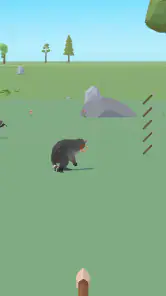
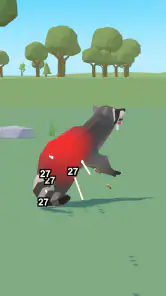
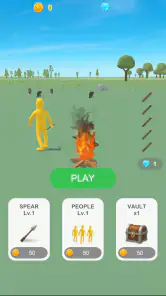
Analysis by Reviewed
I went into Mammoth Hunters expecting a quick action game built around a simple idea: face enormous animals with primitive weapons and keep pushing a small tribe forward. That basic premise is exactly what makes it easy to understand, but the experience is more interesting when you pay attention to how each encounter affects your next decision. You are not simply throwing spears at a large target. You are learning when to attack, when to stay out of danger, and how much progress is worth risking during a busy hunt.
Developed by KAYAC Inc., this free action game is aimed at players who like short, direct sessions rather than a complicated role-playing system. The mature age rating is important because the tone is built around hunting giant beasts, not gentle wildlife observation. I would recommend it to someone who wants an unusual prehistoric setting and straightforward controls, while warning fans of deep strategy games that the central idea may feel focused rather than endlessly varied.
How the hunting loop feels in everyday play
The first thing I noticed is how quickly the game communicates its objective. Stone spears, a growing tribe, and mammoths give the experience a clear identity without requiring a long explanation. That clarity helps when I only have a few minutes available. I can start a session knowing what I am trying to accomplish, rather than spending the opening minutes sorting through menus, equipment screens, or a large collection of unrelated tasks.
That makes it a natural fit for a short break, a commute with a dependable connection, or a quiet moment before bed. A typical session can be approached as one focused challenge: enter the hunt, watch the beast, commit to an attack, and try to return with enough progress to strengthen the tribe. I like that the setting gives even a simple action a sense of purpose. The spear is not just a button press; it represents the limited tools available to a vulnerable group facing something much larger.
The game’s strongest quality is its readable conflict. Mammoths are visually and conceptually imposing, so every opening feels meaningful. If I rush, I may gain speed but lose control of the situation. If I wait too long, I risk turning a manageable hunt into a drawn-out exchange. That tension gives the action more personality than a basic target-shooting exercise.
Players who enjoy repeating a familiar loop while gradually improving their decisions should feel comfortable here. The appeal comes less from discovering a huge world and more from becoming better at handling the danger in front of you. I found that useful because it keeps the focus on the hunt itself. The trade-off is that anyone looking for a large narrative campaign, extensive exploration, or many unrelated activities may find the design narrow.
What makes the tribe matter
The tribe is more than decoration because it gives the hunts a longer-term reason to continue. Growing it changes how I think about failure and success. A single encounter is no longer isolated; it becomes part of a broader attempt to move the group forward. That structure encourages me to replay a difficult situation with a different approach instead of treating a setback as wasted time.
One useful habit is to separate learning attempts from progress attempts. On the first try, I pay attention to the beast’s rhythm and identify the moments when an attack seems safest. On the next attempt, I focus on executing that plan rather than experimenting with everything at once. This two-step approach is especially helpful for players who become frustrated when a large enemy makes the action feel unpredictable.
There is also a practical trade-off in chasing faster victories. A quick attack can feel satisfying, but a cautious approach may be better when the tribe’s development is more important than showing off. I would not treat every hunt as a speed challenge. Sometimes the smarter goal is to finish consistently, learn the encounter, and avoid turning one ambitious decision into a complete loss of momentum.
Speed during normal sessions
From a player’s point of view, the game is built for immediate action rather than long preparation. The concept does not suggest a heavy simulation with many background systems running at once, and the focused design should appeal to people who dislike waiting through elaborate setup. On a device that meets the minimum operating requirement of Android 5.1, I would still keep expectations realistic: the supported operating system tells me the game is broadly accessible, but it does not guarantee identical responsiveness on every older phone.
The perceived speed depends on how much is happening during a hunt. When the screen is easy to read and the beast is the only major focus, decisions feel naturally quick. During a tense exchange, however, visual pressure can make the game seem slower even when the controls are responding normally. That distinction matters. A player may interpret a delayed decision as a performance issue when the real problem is committing to an attack while watching a large enemy move.
I recommend closing other demanding apps before a longer session on an older device. This is not a special requirement unique to the game; it is simply a sensible way to protect responsiveness in an action title. If your phone already struggles with animated games, expect more variation than you would get from a minimalist puzzle game. The prehistoric presentation is part of the appeal, and that visual activity has a cost compared with a static board or card game.
For quick play, the focused structure is a strength. I do not need to remember a complicated inventory plan after leaving the game for several hours. I can return, recall the basic objective, and start hunting again. That makes the experience more forgiving for casual players than action games that punish every break in routine with a dense collection of systems to relearn.
Where heavy use can expose friction
Longer sessions reveal a different side of the design. Repeating hunts can be enjoyable when I am trying to improve a specific decision, but the same loop may feel less fresh once I have stopped learning from it. This is the main heavy-use limitation I would mention to a friend: the game’s appeal is concentrated in the relationship between risk, timing, and tribe growth. If those elements stop providing new tension for you, playing for hours at a time may become repetitive.
That does not make it a poor choice. It simply suggests using it in focused bursts. I get more from the game when I set a small aim, such as handling a difficult encounter more carefully or advancing the tribe without unnecessary risks. Treating every session as an indefinite grind makes the limitations more noticeable.
Heavy action also places greater demands on attention than the simple premise might imply. The controls may be approachable, but the player still has to watch the enemy and choose the right moment. If you are playing while distracted, the result can feel unfair even when the mistake came from looking away. I would avoid multitasking during important hunts and reserve casual play for situations where a failed attempt will not bother you.
Another useful approach is to lower your ambition when the device is warm or the battery is already low. I cannot promise that every phone will behave the same way under those conditions, and action games generally feel less pleasant when the handset is under strain. Shorter sessions help preserve both concentration and comfort, particularly on older hardware.
Reliability and returning after a break
The game has a clear advantage when it comes to mental recovery. Because its premise is so easy to remember, returning after a few days away should be less intimidating than reopening a complex strategy game. I can recall the essential question immediately: how do I approach the next giant hunt while helping the tribe grow? That simplicity lowers the barrier to coming back.
The current version is 018, and the title has attracted more than a million installs, with an average rating of 3.6 from roughly five thousand ratings. Those figures suggest a real audience, but they also tell me not to assume universal satisfaction. A middle-range rating is consistent with a game that has a distinct appeal and clear limitations. Some players will enjoy the unusual hunting concept, while others may want more variety or a deeper progression structure.
I would judge reliability in two layers. The first is technical: whether the game opens, responds, and remains stable on your particular device. The second is design reliability: whether it gives you a predictable reason to return. The focused hunt-and-tribe loop performs better in the second area than a game that constantly changes its purpose. You know what kind of session you are getting, which is valuable when you want something uncomplicated.
Recovery from a failed hunt is also important. I prefer games where a mistake teaches me something, and this one naturally supports that mindset because the enemy is the central problem to solve. Rather than blaming a large collection of hidden systems, I can review my timing and decide whether I attacked too early, stayed too close to danger, or pursued progress too aggressively. That makes failure easier to process, even when repeating the encounter is not immediately exciting.
Still, I would not recommend it to someone who needs a highly dependable competitive experience or a long-form campaign with constant new objectives. The game’s identity is more compact. Its reliability comes from consistency of purpose, not from offering a huge amount of content for every kind of player.
Device limits and practical expectations
The minimum operating requirement is Android 5.1, which makes the game accessible to a wide range of Android users. That does not mean every compatible phone will deliver the same experience. Older devices can have less room for demanding action scenes, especially if storage is crowded, background apps are active, or the battery-saving mode is restricting performance.
I would install it on a device with enough free space for normal app operation and keep the system reasonably tidy before judging the game. If it feels sluggish immediately, I would first test it after closing unused apps and restarting the phone. These steps will not transform weak hardware into a modern gaming device, but they can remove avoidable friction.
Players using iOS should check the current compatibility details on the relevant download page before installing. For Android users, the stated minimum gives a useful starting point, but the safest expectation is still “compatible” rather than “equally smooth everywhere.” The game is free, so trying it is relatively low risk from a purchase standpoint, but your time is still worth considering if your phone regularly struggles with action titles.
Screen size can affect comfort as well. A larger display may make the giant creatures easier to follow, while a small phone can make intense movement feel more cramped. I would use headphones only if they improve your focus and do not make the session less comfortable; the core decision-making should remain understandable without turning the game into a full audiovisual commitment.
The mature rating also affects who should install it. This is not the best recommendation for children or for families looking for a harmless prehistoric game. The hunting theme and age classification make it more suitable for adults who are comfortable with a more aggressive action presentation.
Who will enjoy it, and who should choose something else
I think Mammoth Hunters works best for players who want a distinctive premise, quick access to action, and a progression reason that is easy to understand. It is especially appealing if you like games where improving your timing matters more than managing a large collection of statistics. The tribe gives each attempt a little more weight, while the mammoth encounters keep the objective visually clear.
I would also suggest it to someone who has grown tired of familiar fantasy battles and wants a setting that feels less commonly used. Stone spears and giant prehistoric animals create a different mood from sword fighters, military shooters, or superhero action games. That difference is not just cosmetic; it changes the perceived power balance. You are facing something enormous with basic tools, so caution becomes part of the fantasy.
I would steer you toward another action game if your priority is a broad campaign, frequent character customization, competitive multiplayer, or a large variety of missions. I would also suggest a calmer alternative if you want to play while distracted. This game asks for attention at the moment of attack, and casual background play can make its central challenge feel more frustrating than rewarding.
Compared with a typical endless runner, it offers a stronger sense of deliberate confrontation rather than constant forward motion. Compared with a role-playing game, it is less concerned with building a complicated character and more concerned with how you handle the immediate threat. Compared with a strategy game, it gives you less time to study a board and more pressure to react. Those comparisons explain its appeal clearly: it sits between quick arcade action and light progression, without fully becoming either a deep strategy title or a large adventure.
My performance verdict
After spending time with it, I see Mammoth Hunters as a focused free action game that earns attention through its unusual scale and simple survival question. It is not trying to be everything at once. The best sessions are the ones where I concentrate on one hunt, make a measured decision, and leave with a clearer idea of how to handle the next challenge.
Its performance expectations should remain sensible. The Android requirement is modest, but older or busy devices may not feel as comfortable as newer hardware. The compact design supports quick recovery after a break, while repeated heavy play can expose the narrowness of the central loop. That balance is the key to enjoying it: use it as a sharp, focused action experience rather than expecting an enormous prehistoric world.
The rating of 3.6 and the sizable audience suggest a game with genuine appeal but also a noticeable divide between players who connect with its premise and those who want more depth. I understand both reactions. I enjoyed the directness and the tension of facing a mammoth with limited tools, yet I would not pretend that the same structure will satisfy someone seeking constant novelty.
My recommendation is to try it if you want short, attentive hunts with a clear tribe-building purpose. It is free, runs from Android 5.1 onward, and offers a memorable alternative to more familiar action settings. Just approach it with the right expectations: its strength is the focused encounter, its main weakness is repetition during long sessions, and its best use is as a compact game you return to when you want one more careful attempt.
Pros
- Fun prehistoric survival theme with colorful visuals.
- Simple controls make it easy to start playing.
- Hunting challenges provide varied short-term objectives.
- Progression systems encourage regular play sessions.
- Suitable for casual gaming on mobile devices.
Cons
- Gameplay can become repetitive after extended sessions.
- Some upgrades may require considerable time to unlock.
- Limited depth compared with more complex hunting games.
- Performance may vary on older phones and tablets.
- In-app purchases can speed up progression.

- Category
- Action
- Version
- 018