LEGO® Hill Climb Adventures
- 304.00
- 4.1
- Installs
- 1.00M
- Price
- Free

Screenshots

Analysis by Reviewed
When I pick a mobile racer, I first ask whether I want quick reactions, careful vehicle control, or room to experiment. LEGO® Hill Climb Adventures sits between racing and playful construction, so it suits me best when I want a light challenge rather than a serious contest for speed. The LEGO theme gives the driving a toy-like personality, while the uneven routes make each run feel more involved than simply holding down the accelerator.
Who will enjoy this particular mix?
I would put this game on the shortlist for someone who likes seeing a small idea tested against a practical obstacle. It is a better fit for players who enjoy making a rough plan, trying it on a route, and learning from a clumsy result than for people who want to memorize a track and shave time off every lap. The pleasure is in the relationship between the vehicle and the terrain, not in pretending that the phone is a steering wheel in a realistic racing cockpit.
That distinction also helps families decide whether to try it together. A child who likes LEGO vehicles may be drawn in by the theme, while an adult can help turn a failed run into a simple question: what part of the route caused trouble, and what is one change worth testing? I find that approach more satisfying than taking over and trying to produce a perfect run for them. The game is also easy to understand as a shared activity because the goal is visible: get the vehicle across the challenging ground.
For a realistic everyday use, imagine opening it while waiting for a meal to arrive. I would play a short attempt, notice where the vehicle loses its composure, and either try one adjustment or put the phone away until later. That is a more natural fit than starting a session when I have only a few seconds and expect an instant burst of competition. The retry loop rewards a little attention, even if it does not demand a long, uninterrupted evening.
What kind of racing experience are you after?
This is a game from Fingersoft, and its central appeal is the combination of vehicles made from LEGO pieces and off-road driving. That distinction matters when choosing between it and a conventional racing game: here, the fun is not only reaching the end, but also seeing how your build handles the ground in front of you. If you enjoy trying an idea, noticing where it struggles, and adjusting your approach, that loop is likely to click.
It is free to download and rated for Everyone, making it an approachable option for families and casual players. There are in-app purchases, so I would treat optional spending as a choice rather than part of the basic promise. Its average rating is 4.1 from around 7,000 ratings, and it has over 1 million installs. Those figures suggest a sizeable audience, but they are less useful than asking whether you actually like the mix of construction and terrain-based driving.
The Gameplay: A Mix of Creativity and Challenge
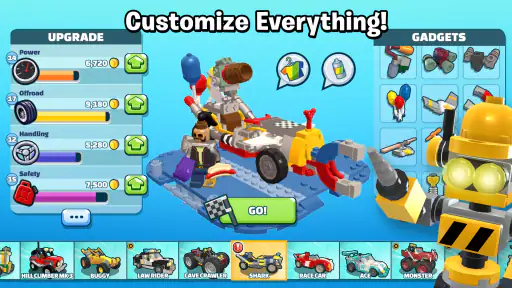
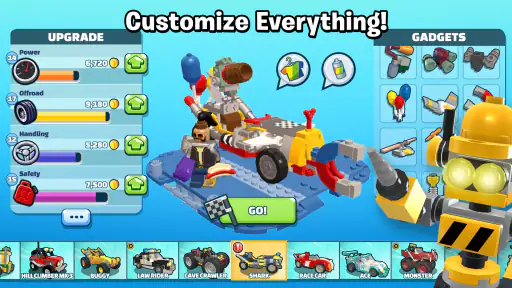
Right from the get-go, LEGO® Hill Climb Adventures throws you into an adventurous world where you get to race vehicles built from LEGO bricks. The game's mechanics are simple yet engaging. You start by building your own vehicle using a variety of LEGO pieces. The creative freedom here is immense – from a simple car to a quirky contraption that defies logic, your imagination is the only limit.
You May Like

Clash of Clans Is Won Between the Battles

Android Auto Makes the Case for Quieter Car Software

MobiOffice: Transforming Mobile Productivity with Seamless Integration

EA SPORTS FC™ Mobile Soccer: Redefining Mobile Sports Gaming

How Microsoft OneDrive Became a Mobile Productivity Giant

How Google Translate Breaks Language Barriers Effortlessly
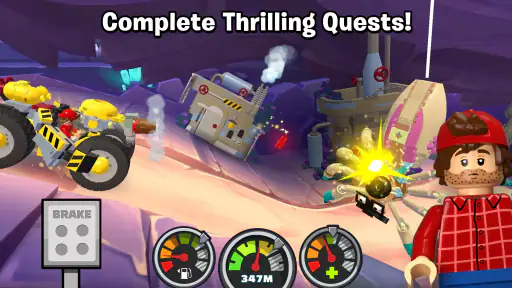
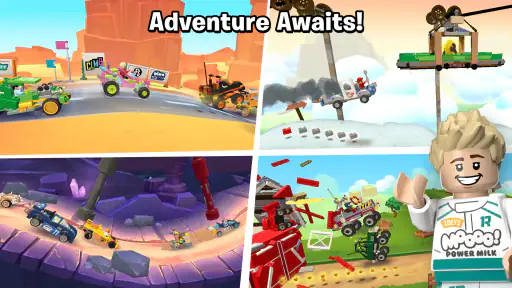
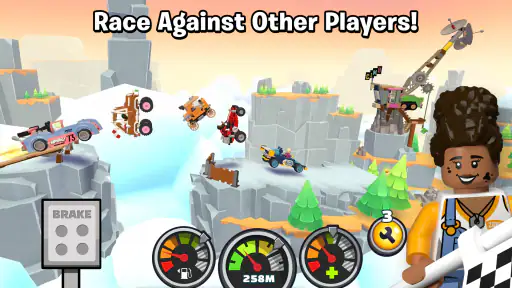
Once you've crafted your masterpiece, it's time to hit the road. The game features various terrains, each more challenging than the last. You’ll find yourself maneuvering through steep slopes, rocky paths, and sometimes even slippery surfaces. Each level requires a unique strategy, making every race a new adventure.
A useful way to approach a difficult stretch is to change one part of your design or driving plan at a time. If you alter everything at once, it becomes hard to tell what actually helped. I also like to think of a run as a test: get a feel for the route, spot the point where control becomes awkward, then make a targeted adjustment before trying again. That small habit makes experimentation feel purposeful instead of random.
There is a practical trade-off in that method: a cautious test run may not feel as exciting as pushing through at full speed, but it can make the next attempt less frustrating. When a vehicle struggles, I would first decide whether the problem seems to be the build or the way I handled that stretch. If I change both at once, a better result tells me little; if I isolate one adjustment, I can carry the lesson to another attempt. This is especially useful when a route has more than one awkward section, because a fix for one obstacle may not help with the next.
I would also resist treating a single successful vehicle as the answer to every challenge. The game's appeal comes partly from adapting, so the sensible goal is not to create an elaborate design for its own sake. A simple build that is easy to understand can be a better starting point than a complicated one: it is clearer which part of the approach needs attention when the vehicle falters. Players who enjoy that kind of small-scale troubleshooting will likely find the retries rewarding; anyone who sees rebuilding as a chore may not.
Graphics and Sound: A Feast for the Senses
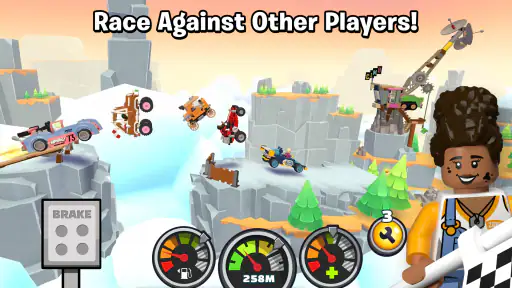
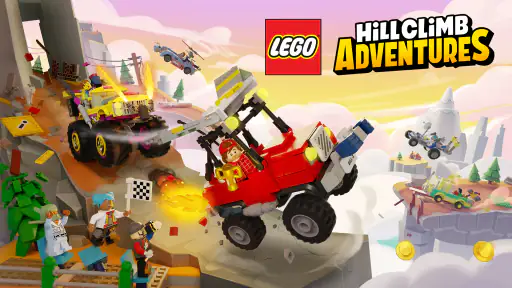
The graphics of LEGO® Hill Climb Adventures are nothing short of delightful. The vibrant colors and detailed LEGO landscapes make for a visually pleasing experience. Every brick, every piece of scenery is rendered with such care that it feels like you're playing with a real LEGO set.
The sound design complements the visuals perfectly. The revving of engines, the clattering of LEGO pieces, and the occasional triumphant tune when you complete a level add layers of excitement to the gameplay. It's a sensory feast that keeps you engaged and entertained.
The presentation is a good fit for short sessions: the bright scenery and clear toy aesthetic give the game a cheerful feel even when a route asks for patience. Still, players who want realistic motors, authentic racing circuits, or a strong competitive focus may find the LEGO look and construction angle less satisfying than a more traditional racer. I would choose this for playful problem-solving, not for a simulation of real driving.
That makes it a particularly easy recommendation for someone who wants a friendly-looking game but does not need a realistic sense of speed. The visual style supports the idea that these are playful machines tackling exaggerated terrain. It is less suited to someone who values fine-grained driving realism above character and creativity; in that case, a conventional racing title is likely to provide a more direct match. The choice is not about which style is objectively better, but about whether you want to read the route as a toy-like challenge or as a race course.
Why You’ll Keep Coming Back
What really sets LEGO® Hill Climb Adventures apart is its replayability. The game constantly offers new challenges and rewards, encouraging you to tweak your vehicles and try out different strategies. The thrill of overcoming a particularly tough level or building a vehicle that performs exceptionally well is incredibly satisfying.
Moreover, the game’s developer frequently updates the app with new content, ensuring that players always have something fresh to look forward to. Whether it's new LEGO pieces, terrains, or even special events, there's always a reason to fire up the game again.
For a practical routine, I’d play a few runs during a commute break or while waiting for an appointment, then stop when I reach a point that deserves a more considered attempt. The main trade-off is that the same retry-and-adjust rhythm can feel repetitive if you want every race to be a distinct event. I would not recommend it to someone who dislikes tinkering or would rather progress through fixed tracks without thinking about vehicle choices.
One question I would ask before installing is whether I am looking for a game I can dip into or a racing game that keeps delivering a different kind of event every time. This one can work well for a brief break, but its enjoyment depends on being willing to revisit a route and adjust your approach. If you already know that repeated attempts irritate you, the cheerful presentation may not overcome that friction. If you like gradual improvement, on the other hand, a run that initially goes badly can still feel useful because it points to a decision to reconsider.
There is also a good reason not to rush every session. If I am tired or distracted, I might make several changes without paying attention to what happened, which turns the central loop into guesswork. A better time to play is when I can focus enough to notice the troublesome part of a route. That is a modest requirement, not a demand for a long session, but it explains why the game suits a short, attentive pause better than mindless tapping while doing something else.
How it fits beside other mobile racers
Compared with arcade racers that emphasize speed and direct competition, this one puts more weight on adapting a build to uneven ground. Compared with open-ended building games, it gives experimentation a clear purpose: get a vehicle through a demanding route. That middle ground is its strongest reason to try it, but it also means neither side is served in the most focused way. If you want a pure racing challenge, choose a racer built around that; if construction without racing is the priority, a building game will leave more room for that.
The game is free, but purchases range from $0.49 to $100.00 per item, so I would check the purchase options before handing a device to a child. The current version is 2.0.4, it was released on May 29, 2024, and it requires Android 9 or later. Those details make it easier to decide whether it fits your device and household; the age rating is Everyone.
For someone comparing alternatives, the important question is what they want each minute of play to feel like. A conventional arcade racer is the clearer pick when the appeal is fast competition and a familiar focus on racing. A dedicated building game is better when the pleasure is creating without having to prove that a design can handle a course. This title sits between those expectations, and I would choose it precisely when I want a vehicle-building idea to be tested by the landscape rather than left as a display piece.
There is a cost to switching from a racing game you already know: you need to accept that the reward here is not simply mastering speed. You are also learning how your chosen vehicle behaves, and that can make progress feel less immediate. On the other hand, someone coming from a building game may need to accept a more directed goal instead of treating every construction choice as an end in itself. Neither transition is difficult to explain, but each asks you to enjoy a different kind of satisfaction.
Before downloading, I would check whether the device runs Android 9 or later and whether in-app purchases are appropriate for whoever will play. The game is free to start, but the listed purchase range is broad enough that family members should agree on spending expectations rather than assume every option is part of the free experience. Those are straightforward checks that can prevent an avoidable surprise, especially on a shared device.
It is a mobile game rather than a substitute for realistic driving practice or a serious head-to-head racing setup. That sounds obvious, but it is a useful distinction when choosing among racers: the toy construction theme is central, not a decorative layer over simulation. I would steer a player who wants authentic car handling toward a different kind of game, and a player who wants a relaxed, tactile-feeling challenge toward this one.
My recommendation
My clearest tip is to treat vehicle changes as experiments, not as a search for one perfect design. A build that feels amusing on one kind of route may not be the one I would choose for another, and learning that through short retries is part of the appeal. If you are playing with a child, taking turns suggesting one small change can make the construction side more engaging without turning the session into a lesson.
I would especially recommend it to LEGO fans who also enjoy a little trial and error, and to casual players who want a racing game with more tinkering than a standard track-based contest. I would skip it if my main priority were realistic driving, tightly focused competition, or a completely open building sandbox. Knowing that boundary makes the decision simple: this is most enjoyable when the build and the bumpy route are both part of the fun.
In conclusion, if you're looking for a game that blends creativity with thrilling adventure, LEGO® Hill Climb Adventures is a must-try. Its engaging gameplay, stunning graphics, and endless possibilities for creativity make it a standout choice for both LEGO enthusiasts and racing game fans alike. So, grab your bricks and get ready to race your way to victory!
LEGO® Hill Climb Adventures Frequently Asked Questions
Is LEGO® Hill Climb Adventures free to download, and what should I know about purchases?
LEGO® Hill Climb Adventures is free to download, so you can try its racing gameplay without paying upfront. It also includes optional in-app purchases, with items priced from $0.49 to $100.00. Purchases are not required simply to begin playing, but it is sensible to review the available options and set purchase controls if children use the device.
What is LEGO® Hill Climb Adventures all about?
LEGO® Hill Climb Adventures is an exciting racing game where players navigate through various hilly terrains using customizable LEGO vehicles. The game combines the thrill of racing with the creativity of building, allowing players to design their own vehicles and tackle challenging courses. It also features vibrant graphics and engaging gameplay, suitable for both children and adults.
Can I play LEGO® Hill Climb Adventures offline?
Yes, LEGO® Hill Climb Adventures can be played offline. This feature makes it a perfect game for long trips or areas with limited internet connectivity. However, certain features such as leaderboards and some updates may require an internet connection to access fully. It's advisable to periodically connect online to maximize the gaming experience.
Is LEGO® Hill Climb Adventures suitable for all ages?
LEGO® Hill Climb Adventures is designed to be family-friendly and suitable for players of all ages. The game features intuitive controls and engaging content that appeals to both younger players and adults. Its Everyone content rating makes it a suitable choice for a broad audience, while parents can still supervise play and manage purchases for younger children.
Are there in-app purchases in LEGO® Hill Climb Adventures?
Yes, LEGO® Hill Climb Adventures includes in-app purchases. Players can buy optional items to enrich their gaming experience. Although the game is free to download and play, these purchases can provide additional customization and gameplay features. Always ensure to manage in-app purchases, especially for younger players.
Pros
- Stunning graphics enhance gameplay.
- Wide variety of customizable vehicles.
- Challenging levels keep players engaged.
- Intuitive controls for all ages.
- Frequent updates with new content.
Cons
- In-app purchases can be expensive.
- Requires constant internet connection.
- Battery drains quickly during play.
- Limited offline capabilities.
- Occasional bugs disrupt experience.

- Category
- Racing
- Version
- 2.0.4